

Fuel giant Shell has unwrapped an electric car concept that introduces pioneering EV technology that could dramatically boost efficiency while slashing charging times to almost the amount of time it takes to fill a combustion-powered car with fuel.
Named the Triple 10 Challenge concept, Shell says its new EV takes just 10 minutes for a 10 to 80 per cent battery refill while offering unmatched efficiency of 10kWh/100km, plus a life-cycle CO2 footprint of 10 tonnes.
Thanks to its impressive efficiency, engineers were able to downsize the battery in the new concept to just 32kWh, which still provides a respectable 320km range for a small EV.
READ MORE: EV sales boom! Huge surge as oil price skyrockets and ICE popularity melts away in Europe
READ MORE: Oil price rise driving global EV surge, including the USA
READ MORE: https://evcentral.com.au/the-middle-east-war-the-price-of-oil-and-how-it-impacts-on-ev-owners-analysis-and-some-opinion/
Employing a smaller battery uses fewer resources and allows quicker charging, with a 10 to 80 per cent top-up claimed to take nine minutes and 54 seconds using a standard 175kW charger.
Existing technology from BYD is even quicker to top up, with the car giant’s latest system taking nine minutes for a 10 to 97 per cent charge. However, to achieve that speed it needs an energy-intensive 1500kW flash charger.
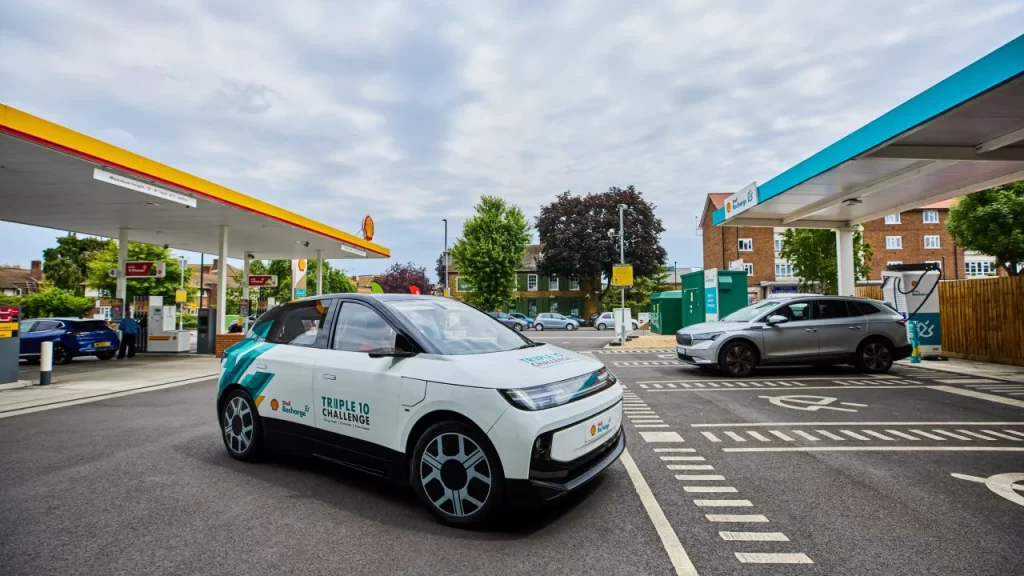
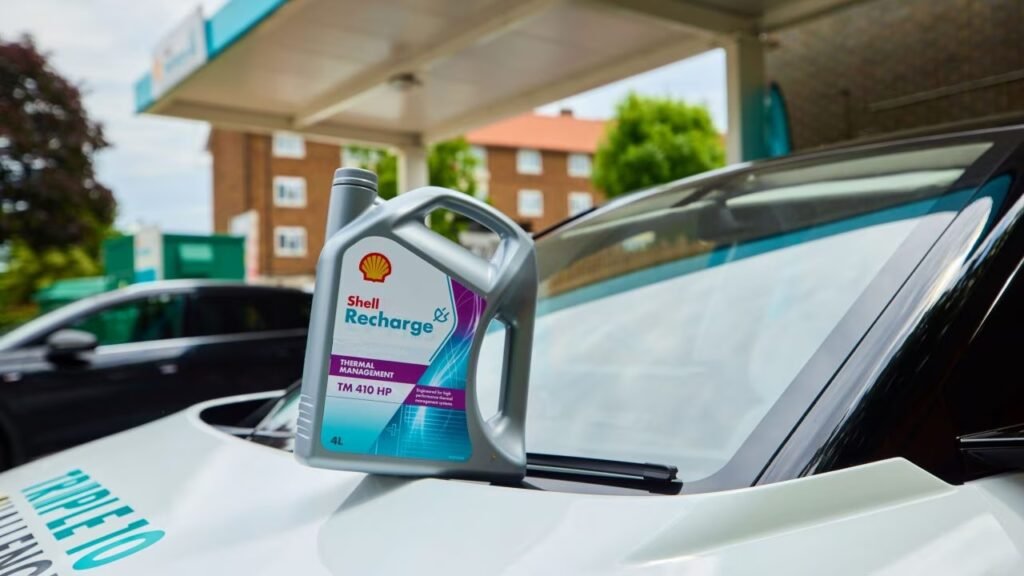
Helping unlock the concept’s high levels of efficiency and ultra-fast charging times, both the battery and electric motors are immersed in a cooling fluid rather than having coolant piped around the car.
Thanks to this novel approach, Shell engineers say the motor and battery are able to operate at their optimum temperature for more of the time, reducing energy losses and ultimately boosting efficiency.
Combining the cooling systems and employing a more compact and efficient battery design has seen costs slashed by 25 per cent compared with traditional powerpacks.
Reducing its lifetime carbon footprint, the new concept is made from low-carbon and recycled materials, with the total figure calculated using 100 per cent renewable energy over its lifetime. The final figure of 10 tonnes is around 50 per cent less than that of a current small electric car.
New innovations include using recycled aluminium for the chassis, along with a roof and wheels made from recycled carbon fibre, plus interior upholstery derived from flax.
The bad news is that Shell says it has no interest in putting its hyper-efficient EV into production.
Instead, it says the new EV is simply a proof of concept that it hopes will inspire a new generation of more efficient all-electric cars.
Developed in partnership with British engineering firm RML, the new concept isn’t the first time Shell has attempted to help the automotive industry grapple with emerging technology.
Back in 2016, it worked with original McLaren F1 designer Gordon Murray to develop the ultra-lightweight T.25 city car, which was designed to use the least amount of fuel.


