
The Upper Thames River Conservation Authority (UTRCA) hopes a newly created Wildwood Demonstration Farm will help boost farmers’ knowledge about subsurface irrigation technologies.
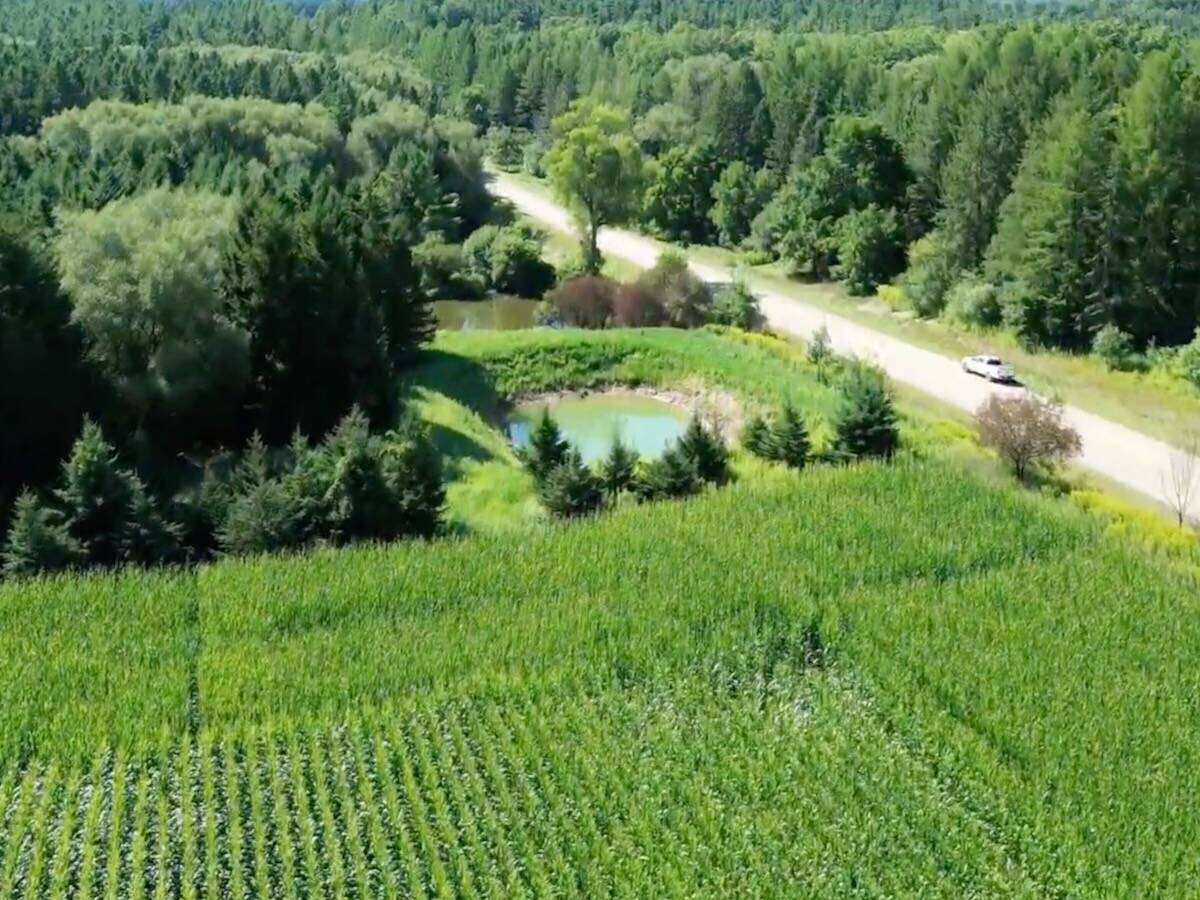
Located near St. Marys, the farm is an 18-acre, relatively flat field with poor drainage, the conservation authority said, which leads to significant ponding during wet periods, delaying field operations and reducing yield.
The field’s drainage system is powered by solar energy.
A pond was dug at the lowest corner of the field to collect water from field drainage tiles, with a solar-powered pump pushing the pond water about 375 metres to the upper edge of the field. From here, the water is released into a second network of subsurface tiles managed with a series of control gates that, when closed, maintain water within reach of the crop’s roots during dry conditions.
Subsurface irrigation research
Collecting crop yield data can’t happen without the co-operation of tenant producers R.M. Matheson Farms or the monitoring by a University of Guelph-based team led by Dr. David McCarthy, a professor in the Ontario Agricultural College’s School of Environmental Sciences.
A May 2026 article on the Ontario Agri-Food Innovation Alliance website about McCarthy’s team explains the work “started by consulting with farmers, agricultural and drainage consultants, and conservation authorities to understand what barriers there may be to adopting new best management practices” for tile drainage.
With those consultations now complete, data collection infrastructure has been installed not only at the Wildwood site but also at Agricultural Research and Innovation Ontario’s Ontario Crops Research Centre in Elora and the County of Huron’s Huronview Demonstration Farm, which is co-managed by the Huron County Soil and Crop Improvement Association and the Ausable Bayfield Conservation Authority.
The Ontario Agri-Food Innovation Alliance article stated it’s hoped the university team’s research will lead to the introduction of “new, on-farm digital tools to monitor and manage water in real time,” thereby “lower(ing) costs for farmers thanks to more sustainable use of water and nutrients.”
For now, McCarthy’s team has four years of funding through the Ontario Agri-Food Innovation Alliance, which Beth Wrona, UTRCA agricultural stewardship technician, hopes will be extended to provide ongoing, long-term insight into the system’s effects, given the year-over-year weather variability.
Community partnerships
Drainage contractor Wayne Flanigan, a long-time McCutcheon Farm Drainage employee, recently purchased the company and inherited a close relationship with the UTRCA.
The company previously did drainage installation on the conservation authority’s Thorndale Demonstration Farm, and Flanigan immediately expressed interest in collaborating on the Wildwood location.
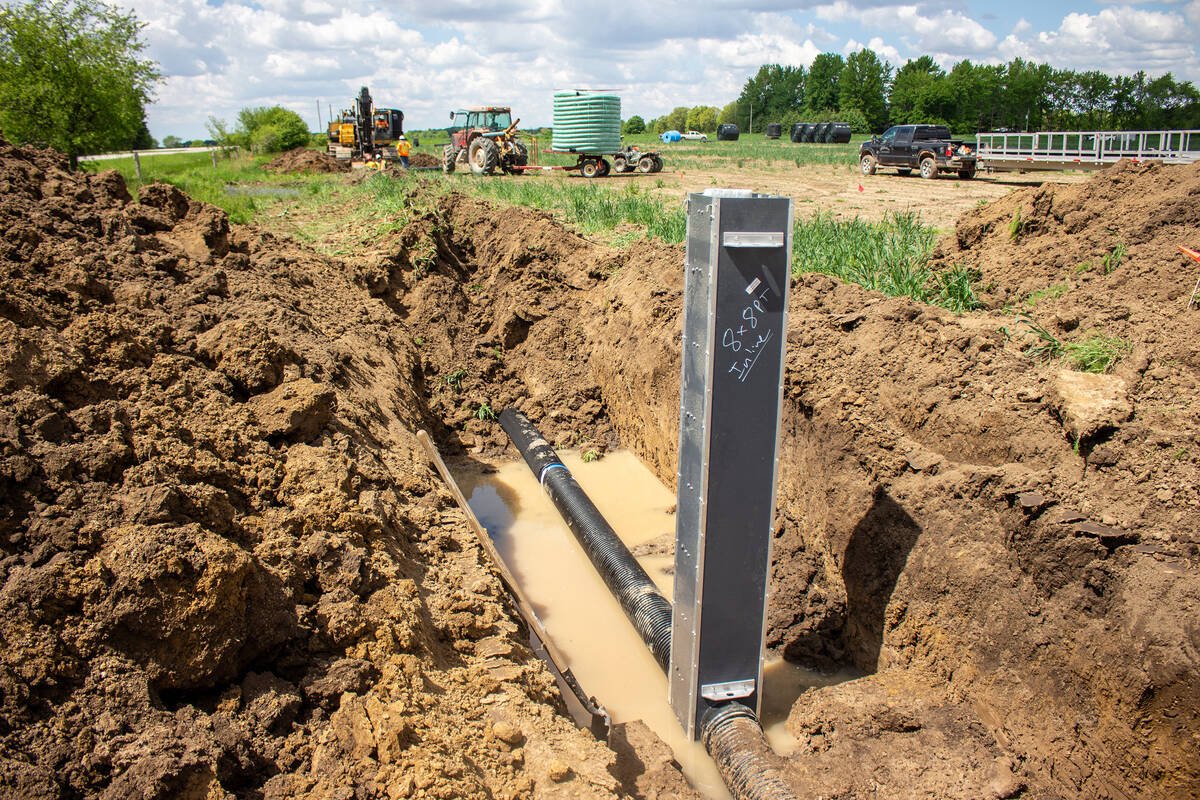
At the Thorndale Demonstration Farm, subsurface control gates were installed at regular intervals within the tile drainage installation, which was designed to follow the contours of a significantly sloping field.
Again, the control gates are closed to maintain water in the field during dry weather and opened when wet weather is forecast so it can drain to the edge-of-field tile outlet.
The challenge with that system, Flanigan told Farmtario in a recent interview, is timing.
“If you’re not proactive and close those gates soon enough, it’s too late to keep the water,” he explained.
By contrast, there’s little advantage on the flatter Wildwood site for the drainage tile to follow topographic contours. Its tiles were installed at a relatively consistent depth in a conventional pattern, with a relatively consistent slope on the pipes toward the pond.
Industry guidelines
When it comes to providing subsurface irrigation, Flanigan said there’s no established protocol to follow.
Irrigating below the ground, as opposed to above, isn’t a completely novel idea, he stressed, but the North American drainage contractor community hasn’t established ideal tile spacing for subsurface irrigation systems.
“I looked at some of the literature about it and they’ve generally been doing half the (drainage) tile spacing,” he said. “But the data isn’t really there to support it.”
Originally, UTRCA planned to use water flow, water quality and crop yield data to compare the irrigated portion of the field with the conventionally tiled lower section. Flanigan suggested adding three separate sections of subsurface irrigation tiles at spacings of 15, 20 and 25 feet for comparisons.
“This is not a tomorrow result,” agreed Flanigan, when asked how quickly he’ll be able to make recommendations to his fellow drainage contractors about ideal tile spacing for subsurface irrigation systems.
“We tiled this field last year (in 2025). The tile has to settle, the ground has to open up,” he explained. “With a three-crop rotation, there are going to be different crop needs every year of that rotation. Plus, every year can be different weather-wise.”
It will take 12 years of data to “make an informed call,” said Flanigan.
Conventional versus subsurface irrigation
That said, it’s unlikely the conservation authority, or Flanigan, will wait that long before suggesting some landowners could benefit from installing subsurface irrigation systems, given the evolving tile installation and water flow monitoring technology.
They believe the subsurface irrigation approach will grow in popularity as extreme weather events become more frequent.
Flanigan reported a recent conversation with a potato grower weighing the pros and cons of above-ground versus subsurface irrigation. If the drainage contractor is going to install field drainage tiles, the cost for subsurface irrigation may be less than the plumbing and equipment costs associated with an above-ground system.
According to Wrona, the comparison between the Wildwood plot and the UTRCA’s Thorndale site, as well as other farm properties operated by the conservation authority, provides ample evidence that “it’s not a straightforward answer” when it comes to considering subsurface irrigation.
“There are a number of factors contributing to field suitability for subirrigation, such as topography, existing tile drainage, soil type, et cetera,” she said. “But if landowners are interested in this type of practice for their own property, the best place to start is to reach out to their local conservation authority or drainage contractor for guidance.”
The post UTRCA farm drainage demo field explores subsurface irrigation appeared first on Farmtario.


