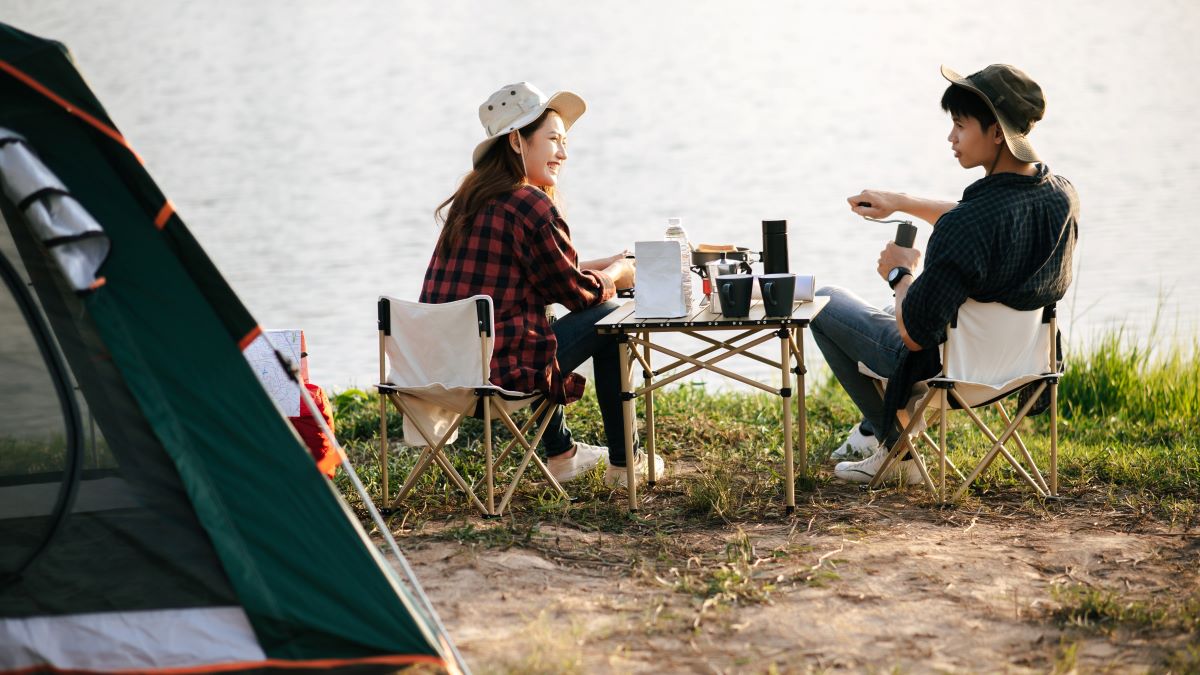
The best power source for your campsite is the one that leaves nothing behind. There are no empty fuel canisters, dead batteries, or smoke. Sunlight fits the bill, and solar-powered gear can help you camp with less impact.
Camping usually has a low impact, but little things can add up, like disposable batteries, single-use fuel canisters, and gear that gets tossed after one season. The products below use solar power and come from companies that share their environmental impact, so you can keep your devices charged, have light, stay hydrated, and eat well while leaving your campsite just as you found it.
This article includes affiliate links. If you buy something through these links, we earn a small commission that supports our Recycling Directory.
How to Charge Your Devices Without Leaving a Trace
Even when you’re off the grid, most people bring a phone for maps and photos, or a satellite messenger for safety. Solar power can handle these needs without fuel canisters or disposable batteries.
The BioLite SolarPanel 5+ and SolarPanel 10+ fold flat, clip to a pack, and carry a built-in 3,200 mAh battery, so you bank daylight and charge phones or headlamps after dark. An integrated sundial and kickstand help you square the panel to the sun, an alignment that BioLite says can reduce output by up to 30%. BioLite is Climate Neutral Certified, publishes an annual impact report, and sends a clean-energy product to a family living without electricity for every item it sells, a disclosure record most gear brands don’t match.
It’s better to skip the so-called “solar backpack.” The panels in these bags are small, stuck at the angle of your back, and usually don’t produce much power. A foldable panel you can clip on and aim at the sun works much better.
No sun for days? A biomass stove is the honest fallback. The BioLite CampStove 2+ burns twigs and pellets, and a thermoelectric generator turns some of that heat into up to 3 watts of USB power while it cooks, storing it in a 3,200 mAh battery. It earns its weight when the sky stays gray, but be clear-eyed about the tradeoff: it burns fuel, leaves ash, and produces some emissions, so it asks more of the site than solar does. Check current fire restrictions before you light anything, as much of the West sits under burn bans all summer.
Lighting Up the Night
A lantern is even more useful when it can also charge your devices. The LuminAID PackLite solar lanterns inflate from a flat pouch and recharge by sunlight or USB. The 2-in-1 models can also charge your phone. LuminAID, founded by women, has sent lights to over 100 countries through its Give Light program after disasters, from Puerto Rico to western North Carolina.
For hands-free lighting, the MPOWERD Luci Beam is a true solar headlamp, which is hard to find. It gives up to 300 lumens, switches from flashlight to headlamp, and recharges from its built-in solar panel in about eight hours of sunlight or two hours with USB. MPOWERD is a Certified B Corporation and Benefit Corporation that puts most of its revenue back into clean-energy access.
Staying Hydrated
If your campground has a water tap, fill sturdy food-grade containers at home and refill them at the site. This gives you an emergency supply and lets you avoid single-use bottles.
If you’re camping in the wilderness, you’ll need to treat the water you find. LifeStraw’s Peak Series filters are made for the backcountry. They are ultralight, fit most bottles and hydration bladders, and remove bacteria, parasites, and microplastics. The classic LifeStraw personal filter still provides up to 1,000 gallons of safe water. LifeStraw is a certified B Corp and Climate Neutral company, and every purchase helps fund a year of safe water for a child through its public give-back program.
Eating Well While Camping
You can make morning coffee without a flame using the 4Patriots Sun Kettle. It uses parabolic mirrors to heat 16.9 ounces of water to near boiling in about 45 minutes of good sunlight, then folds up to work as a thermos. There’s also a 33.8-ounce XL version for bigger groups. Since it doesn’t use a flame, it’s allowed during no-burn orders, which is helpful in fire season.
For meals, Outdoor Herbivore offers vegetarian and vegan dried foods like Basil Walnut Penne and no-cook trail salads. They use organic, mostly North American ingredients and pack them with minimal plastic in a solar-powered California facility. Many of their meals can be rehydrated with cold water, so you don’t need to cook. If you prefer to cook, a solar cooker and some solar oven recipes let you make dinner with sunlight, leaving only your dishes to clean up.
Staying Protected from Bugs
Bugs don’t care if you’re eco-friendly. When it comes to repellents, the science is clear: the CDC and EPA say that registered repellents like DEET, picaridin, IR3535, and oil of lemon eucalyptus are safe and effective when used as directed. If you want to avoid DEET, 20% picaridin gives similar protection, has no smell, and won’t damage gear or plastics like DEET can. That’s why EWG ranks it first.
No matter what you pick, check for an EPA registration number. Avoid unregistered “natural” oils, since the CDC says they haven’t been proven to work. You can also try making your own DIY or natural repellent.
The Benefit of Solar: Leaving Nothing Behind
The real benefit of solar power in the backcountry isn’t just the free energy. It’s about what you don’t have to carry or leave behind: no fuel canisters, no leaking or landfill-bound batteries, no smoke, and no ash. With a solar panel, lantern, and kettle, you can cover your power, lighting, and hot water needs for a weekend and leave your campsite just as you found it. That’s the goal to aim for.
Related Reading
- Solar Ovens: Food Almost Anywhere
- Solar Oven Recipes
- Natural Bug Spray Recipes That Actually Get the Job Done
Editor’s Note: Originally published by Kimberly Button on June 30, 2015, this article was substantially updated in July 2026
The post Don’t Leave Home Without This Green Camping Gear appeared first on Earth911.