

Car-makers around the world are abandoning more than a century of copper wiring in favour of aluminium as they search for ways to build lighter, cheaper and more efficient electric vehicles.
News agency Reuters reports Ferrari, BMW, Tesla and Stellantis are among the manufacturers either already using aluminium wiring or preparing to expand its use, with Chinese policy-makers also encouraging the switch.
While the move promises to cut manufacturing costs, the biggest advantage for EVs is weight reduction, helping improve driving range while reducing reliance on increasingly expensive copper.
READ MORE: Can you believe this? An oil company says its built a better EV that slashes recharging times
READ MORE: V2G is go for Hyundai and Kia in Australia! Vehicle to grid fitted to Korean EVs this year. It’s a big deal, but there are limitations
READ MORE: Has solid state been surpassed already?
Aluminium also costs around one-quarter as much as copper and offers similar electrical performance in many automotive applications, making it increasingly attractive as demand for EVs pushes copper prices higher.
The price of copper surged between 2024 and 2025 due to supply constraints, geopolitical uncertainty in producing countries and rising demand, particularly from EV manufacturers.
Further increasing the car industry’s interest in switching to aluminium was the spike in copper prices during January 2026, when the metal briefly approached US$15,000 (A$21,500) a tonne, almost double the price recorded two years earlier.
Ferrari was initially attracted to aluminium wiring because of its lower weight and first used it in a production model last year with its 296 supercar.
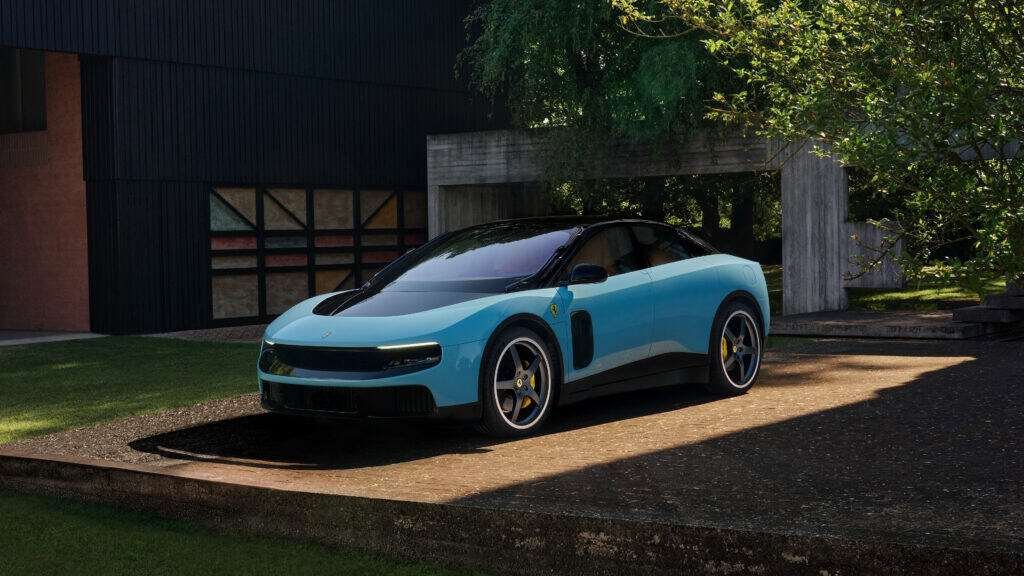
Aluminium cabling has also been extensively used in its first EV, the Luce, which made its debut last month, with Ferrari claiming the cables are around 20 per cent lighter than their copper equivalents.
Currently, aluminium is also significantly cheaper at around US$3200 (A$4600) a tonne, making it about 4.2 times less expensive than copper.
One of the pioneers of aluminium wiring is BMW, which first used the weight-saving cables in 2011 on its 1 Series hatchback and has since expanded their use across many of its hybrid and electric vehicles.
Tesla has also been an early adopter, with Reuters reporting the company has used aluminium wiring in selected applications to reduce costs and vehicle weight.
Adding its backing to the technology is Stellantis, the world’s fourth-largest car-maker, which has reportedly begun replacing copper wiring with the lighter, cheaper metal.
Despite the move to aluminium, copper will continue to have an important role in future EVs, according to Xavier Mathieu from Nexans, because it still outperforms the cheaper alternative in certain applications.
The executive from the world’s second-largest cable producer suggested car-makers could switch back to copper if its price falls to around 3.5 times that of aluminium.
In China, the government is already encouraging a more permanent shift to aluminium, with analysts suggesting legislators will help drive the replacement of around 25 to 30 per cent of copper components, by metal volume, with aluminium by 2030.
The reasoning is straightforward: reducing vehicle weight improves EV driving range, while lower material costs could help make electric cars even more competitively priced both in China and in export markets.


