
Lamb mortality is a persistent challenge for sheep producers, with losses from birth to weaning reaching up to 15 per cent.
A University of Guelph summer trial is testing whether FIRSTGro, a commercial milk replacer additive for calves created by Grober Nutrition, could help reduce losses by binding pathogens in lambs’ guts to limit absorption.
Why it matters
Lamb losses from birth to weaning can reach 15 per cent, and producers have few sheep-specific tools to fight back. Canada has no neonatal scours vaccine for sheep, so an additive that binds gut pathogens could fill a real gap.
Finding enough lambs
Dr. Charlotte Winder, assistant professor at the university’s Department of Population Medicine, said Grober’s FIRSTGro additive is designed to limit diarrhea in calves, but may be effective in sheep and goats.
“There’s been so much work on that in dairy cattle, and in sheep, there’s really not as much,” said the researcher. “Especially with so many different breeds and different management systems, we really need research specific to sheep.”
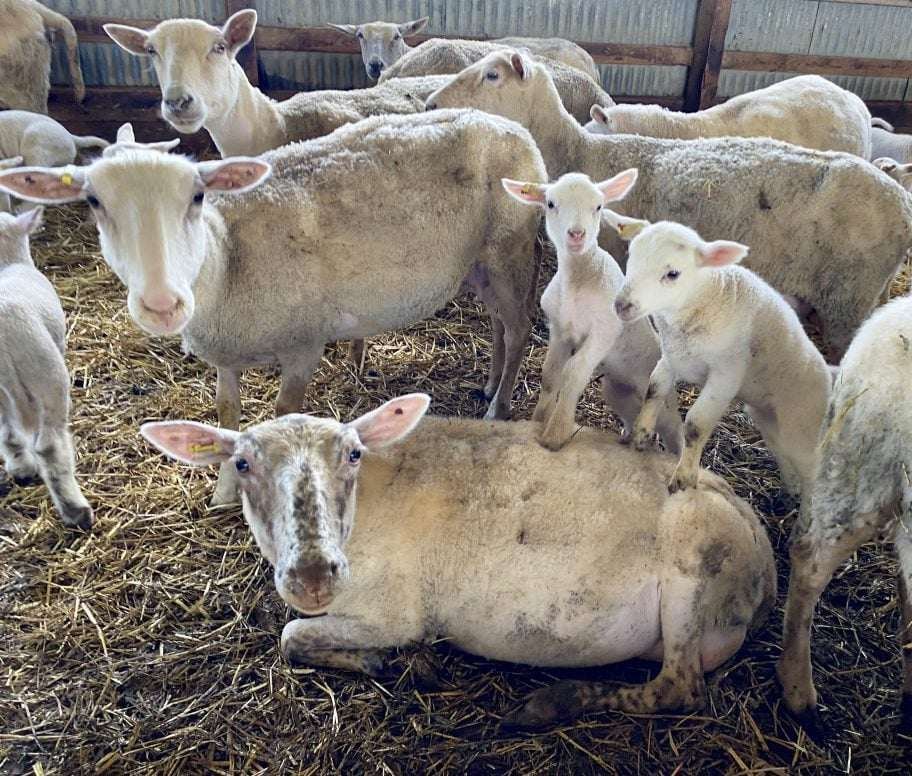
Winder collaborated with Bill McCutcheon, a Dufferin County producer with a closed, accelerated-breeding Rideau flock, to access a cohort of 11 lambs on automatic milk feeders and 217 lambs at the ewes’ side.
Farmers used to assume that if a lamb got up and sucked after birth, it was full of colostrum and would be protected, McCutcheon said.
Now, with increased understanding about colostrum quality and timeliness, that doesn’t necessarily hold.
“If there’s something we can do to enhance that immunity in those lambs, then we should be doing that,” he said. “Even if you can reduce (lamb mortality) by a third, it’s a pretty big deal, right?”
Winder said lambs on automatic milk feeders are generally more compromised and at risk; however, relying solely on auto-feeder lambs would not generate enough data.
“We just need a whole lot more lambs or a whole lot more auto feeders,” Winder explained. Adding that McCutcheon’s prolific sheep and accelerated system put lambs under more pressure because larger litters increase teat competition, compared to an annual system producing one or two lambs.
- Tested: FIRSTGro, a Grober Nutrition milk-replacer additive made for calves, given orally to bind gut pathogens in lambs
- Lambs: 228 total (11 on auto-feeders, 217 at the ewe’s side)
- Farm: Bill McCutcheon’s closed, accelerated-breeding Rideau flock in Dufferin County
- Started: May 26, to line up with lambing
- Design: 28 to 32 days; 10 ml of FIRSTGro or a matched control once daily; bloodwork on days one to four
- Results: preliminary analysis this fall, scientific paper in 2027
Inside the trial design
Bloodwork was drawn between days one and four to assess each lamb’s transfer of passive immunity and determine whether lambs with poor passive immunity received greater benefit.
The lambs were also weighed at lambing and will be weighed again at weaning to see if the trial had any impact on production gains.
Winder said within a litter, at least one lamb will receive the treatment and one the control, or a variant of that, for example, two on the treatment and one on the control for triplets.
“In theory, if it was in the milk replacer, they’d be getting it with every meal. We have some practical limitations, so we’re dosing them once a day,” Winder said. “They’re getting kind of like a little bolus of those antibodies — they may not stay in their intestine for the whole 24 hours.”
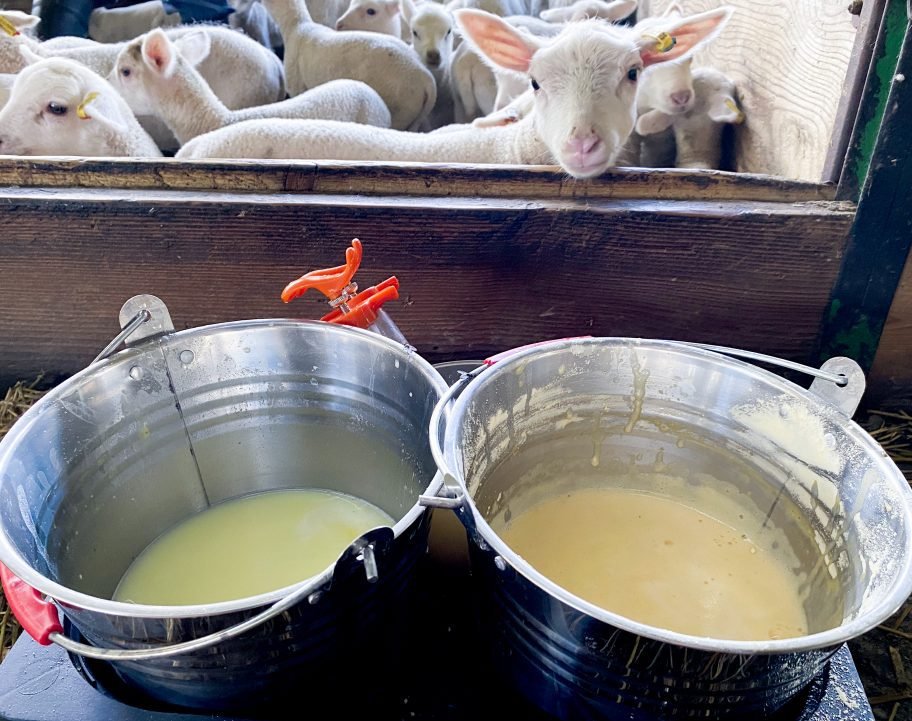
The control product provides protein and calorie content equal to that of the treatment, to limit any potential negative impact from the dosing process.
Which lambs benefit most?
With access to such a large sample size, the trial can look beyond whether the treatment was able to bind pathogens and expand into whether the transfer of passive immunity increased efficacy for certain lamb cohorts, said Winder.
For example, is it more effective in triplets and quads where there’s more competition at the teat, and less effective with single lambs who gain quickly?
“Having it over a short period of time helps control some of that other stuff that ends up becoming noise in the data,” she said, such as weather changes.
“When we do the analysis, we can look at — were more days of treatment better?” said Winder. “But the idea is, if this just helps reduce the immune system cost, then they’ve got more to fight off other things.”
A producer’s wish list
McCutcheon has a long history of collaboration with the university to provide teaching opportunities to students.
He said it’s important farmers “do our part” to help train young people and provide learning opportunities, including experiencing livestock management on commercial farms.
“Charlotte can publish lots of papers at the end of the day and help everybody reduce mortality because that’s a pretty big issue in all livestock,” he explained, adding you never know what research, or student, may unlock industry-changing results.
For example, McCutcheon would love to see an oral product developed for ewes that enhances lamb immunity through the milk.
Winder said there are specific vaccines for cattle in the dry period, but nothing similar is available for sheep.
“Vaccines for neonatal scours in sheep, they just don’t exist,” she explained. “But then we also have other problems where we have good products globally, but we don’t have them in Canada.”
Learning on the farm
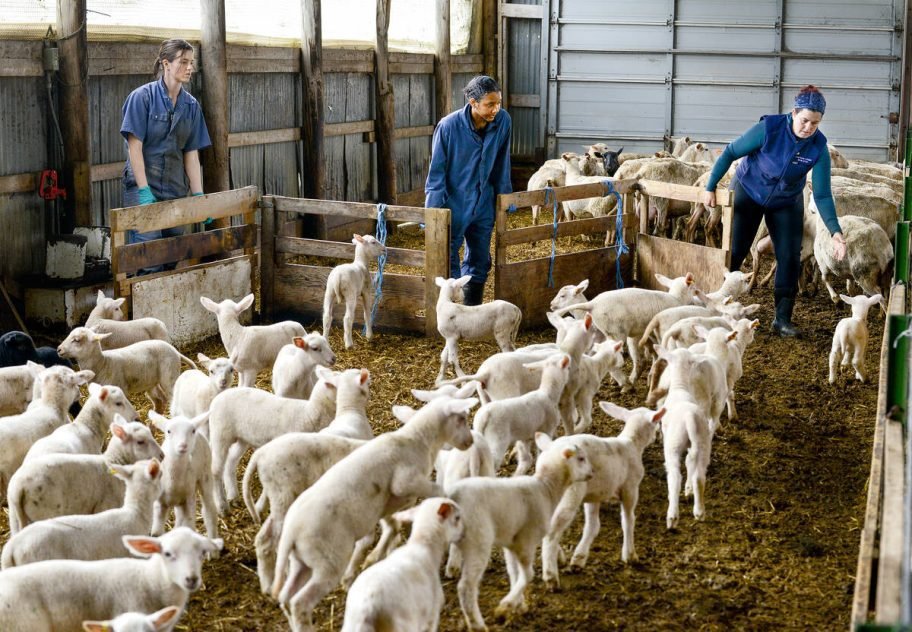
The trial is providing hands-on experience for 10 Guelph students.
Famke Alberts, who is entering her second year of veterinary school at Guelph, said exposure to on-farm management and how farmers interact with their animals has provided real-life insight into classroom learning, especially with her interests leaning toward large-animal practice.
“To get that on-farm perspective, it’s easier to understand that maybe this is why an animal went missing (from a study), or this is why an animal is in a group that doesn’t make sense,” said the research student.
Alberts said, farmers have a lot to offer, including insight on how they apply industry standards, “because they’re going to be more knowledgeable of practical results rather than, I guess, the ivory tower results.”
Raegan Rowe, who is entering her third year of animal science at Guelph, said access to on-farm research as an undergraduate is a game-changer.
“I’ve never handled any farm animals; the only thing I’ve handled was cats,” she said. “So, this was a good opportunity to learn how to connect with the animals, learn how to handle them, understand their behaviours and learn as I went to identify health conditions, limit stressors — things like that.”
That included the opportunity to perform post-mortems on lambs, determine causes of death and analyze tissue using applied knowledge.
“I do better with practical work,” Rowe said. “So, it was easier to pick up things on the farm when I was doing it rather than applying it in a test setting.”
Alberts is interested in how much information from the trial reaches the target audience.
“That’s one of the biggest challenges of research,” she said. “You can research anything and everything you want, but if it doesn’t reach the target audience, there’s no point.”
Winder expects preliminary analyses in the fall and hopes to share the results with industry through an informal, lay-language presentation, followed by a scientific paper in 2027.
The post Guelph trial tests calf additive to cut lamb deaths appeared first on Farmtario.


