

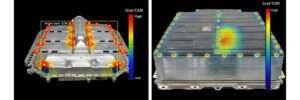
Battery recycler Altilium will deploy ReGenTrace AI, a battery analytics and digital traceability platform, as the digital operating system for its UK EV battery recycling operations. The cloud-native platform was developed by Materia AI, a start-up founded by Altilium COO Christian Marston that has been brought into the Altilium group as a fully-owned company.
The company says the software will support the scale-up of its ACT3 commercial battery recycling facility in Plymouth, automating feedstock supply and optimizing process economics.
The platform is being developed to identify battery chemistries, manufacturers, cell formats, state of health and potential safety risks before materials enter the recycling process, so batteries can be classified automatically and directed through the appropriate dismantling and recycling pathway.
After mechanical processing, predictive models will estimate the composition of black mass and forecast concentrations of lithium, nickel, cobalt, manganese, graphite and other critical minerals, along with impurities that affect downstream refining performance. Those predictions will enable the company to adjust reagent consumption, blending strategies, refining conditions and production scheduling in real time. Accuracy is expected to improve as the platform learns from operational outcomes.
Altilium says every battery, black mass shipment, intermediate product and finished battery material will be connected digitally through a single platform, providing traceability from end-of-life batteries through to the production of battery-grade cathode active material. This will support future Battery Passport requirements and give customers data on recycled content, carbon footprint and material provenance. The deployment is also intended to integrate with recell.store, Altilium’s online marketplace for used EV batteries, to enable automated battery valuation.
Altilium’s EcoCathode and EcoAnode processes convert end-of-life EV batteries and manufacturing scrap into cathode active material, cathode precursor and anode active material. The company’s Plymouth pilot plant began operating in 2025, and a planned Teesside plant would have the capacity to process scrap from more than 150,000 EVs per year, producing 30,000 metric tons of cathode active material—which the company says would meet around 20% of the UK’s expected demand by 2030.
“The UK’s leadership in battery technologies will depend on more than new factories. It will require intelligent, connected supply chains,” said Christian Marston.
Source: Altilium


