
Ten years ago, after leaving mainstream media to cultivate a new career in agricultural journalism, I began longing for newsroom camaraderie.
A home office doesn’t have the same energy as volleying ideas back and forth with colleagues.
It’s more like balancing deadlines and the demands of my (two- and four-legged) “co-workers.”
But a crop tour, a field demonstration day or a farm show? That’s straight-up newsroom-Disneyland vibes, threaded through with community and shared knowledge.
At the recent Forage Expo near Norwood, a gentleman told me it was invaluable to speak with local representatives while comparing the performance of different haying implements.
I agreed.
He had a strong foundation of understanding haymaking; the Forage Expo helped me build one. I have hayburners — uh… horses— so I understand the value of the product but not the process or the implements required to make dry hay, or silage.
Watching several manufacturers’ hay mowers, tedders, rakes and balers run side-by-side revealed the subtle, or not so subtle, differences among them. Listening as folks discussed the merits of each machine was invaluable to someone like me, who is constantly learning about agriculture.
Moreover, I love how enthusiastically everyone chats about how the crop was cut, thrown, raked and baled, especially with a total stranger asking rudimentary questions.
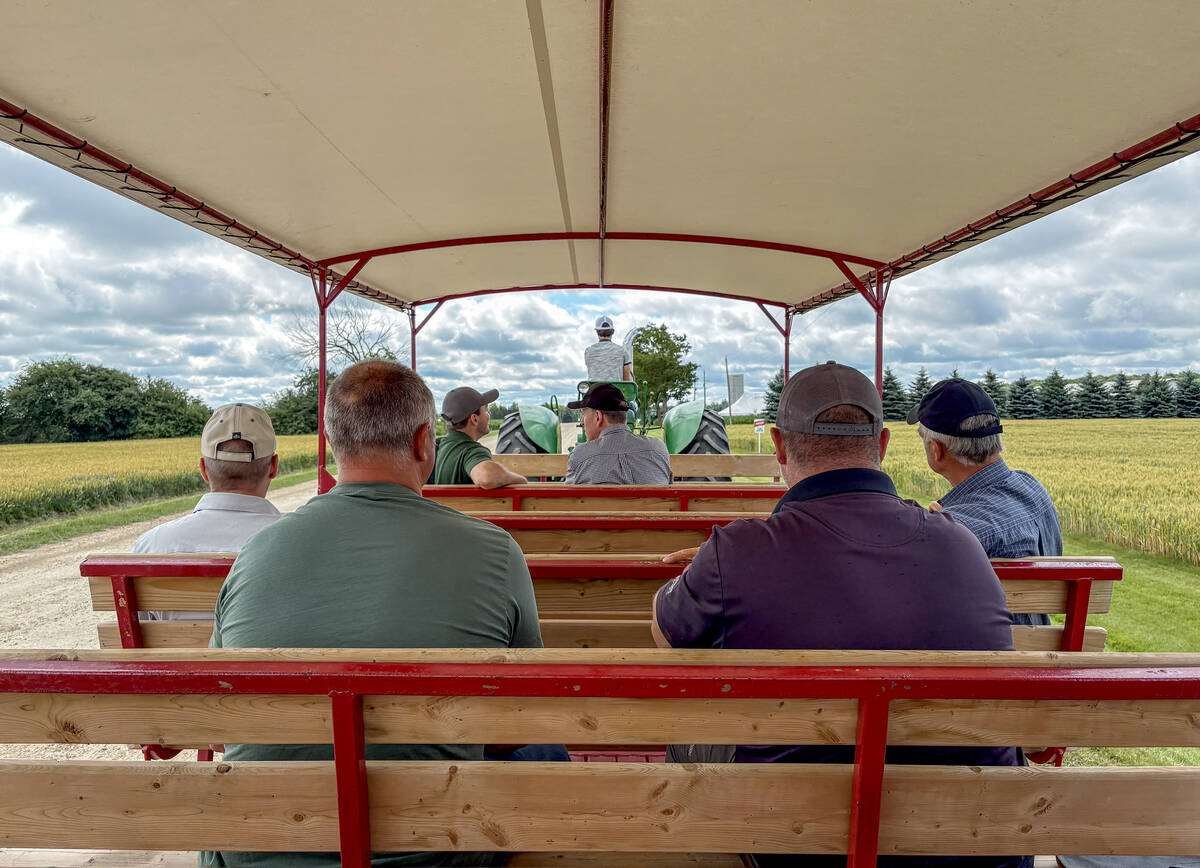
The day after the Expo, Carl Brubacher, owner ofCarlotte Ag just south of Arthur, hosted a Grand River Robotics demonstration of the Rain360 autonomous irrigation machine delivering water, nutrients and manure on corn.
The day was sweltering, but everyone was in good humour as we listened, learned and broke bread together before walking into the field for an up-close look at the machine in action.
It was enlightening, with people, once again, answering my questions patiently and without judgment, eager to help me deepen my understanding and, in turn, do my job better.
What impressed me most, though, was the curiosity, the questions and solution-focused conversations about what can be done on the farm to continually improve how food is grown while also feeding the soil.
This is the camaraderie of agricultural journalism.
You don’t find it behind the desk, but in a field, in a barn and at a farm show.
It’s where farmers share what they know and where, best of all, new and old friends alike enjoy meaningful conversations under a tree.
Like a newsroom, but deeper.
The post Finding community in the field appeared first on Farmtario.


