
Canadian dairy producers are preparing for some livestock housing requirements to become mandatory in April 2027.
The standards will include one-hour exercise periods for all cows housed in tie-stalls and social contact for all calves from birth.
Why it matters
Coming into compliance will entail management changes or possibly new construction for some operations.
They’re currently “recommended” under the proAction program, and have been since the most recent update of the National Code of Practice for the Care and Handling of Dairy Cattle came into effect on April 1, 2024. They will move to mandatory effective April 1, 2027.
ProAction is Dairy Farmers of Canada’s (DFC) national quality assurance and continuous improvement program.
Until now, farmers undergoing once-every-two-years on-site proAction validations — carried out in Ontario on a third-party basis by employees of Lactanet — have been advised of the coming requirements but not asked to comply.
What calf housing must allow
Pending calf housing requirements are explained in an article on the DFC website.
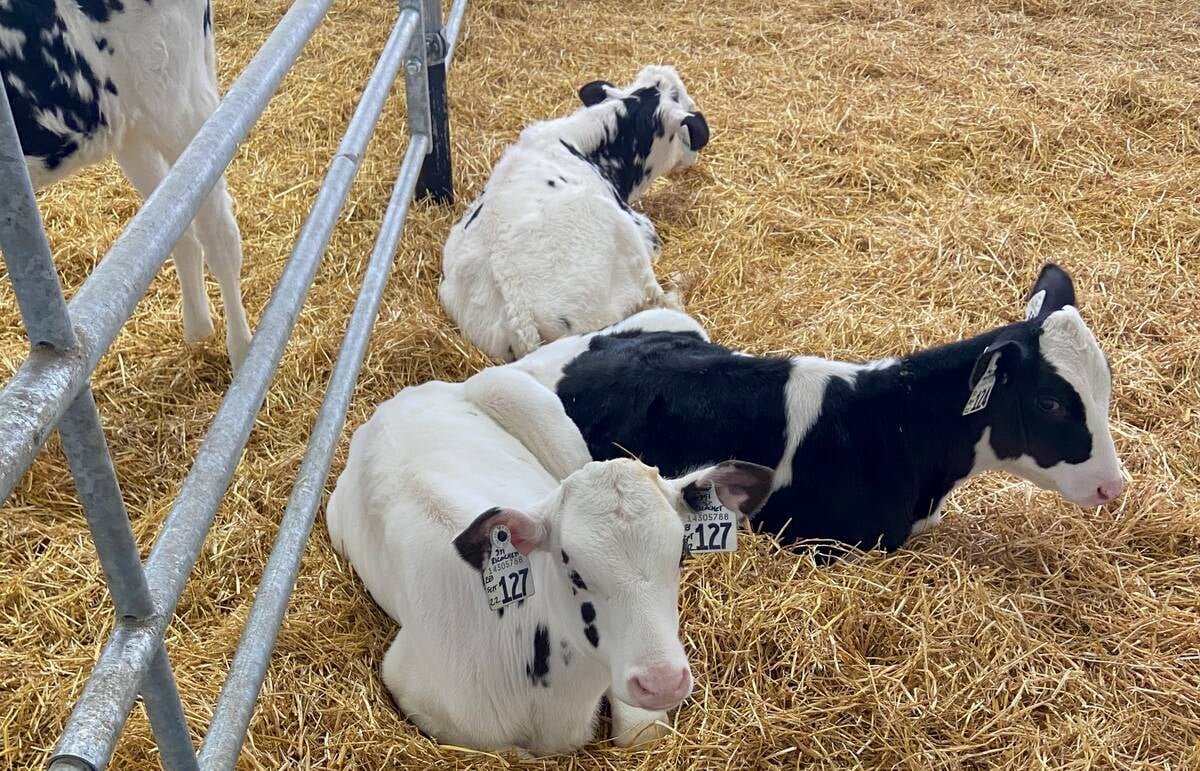
“Calves must be able to have visual contact with other cattle, stand up, lie down, turn completely around, stand fully upright without touching the top of the enclosure, adopt both sternal and lateral resting positions, and they must also be able to groom themselves,” it reads.
“For outdoor-housed calves, tethering remains an acceptable option,” the document explains, but collars made from chain, wire or baler twine will be prohibited. And tethering will only be allowed “when calves have access to sufficient outdoor space, such that the entire body can be outside the hutch; a small opening that allows only the head and neck out is not acceptable.”
Welfare exceptions
Producers will still be able to ensure isolation of sick calves to prevent disease transmission or close hutches or enclosures during severe weather.
Rules for the milking herd
For the milking herd, cows must be provided an opportunity for unrestricted movement for a minimum of 55 days between one calving and the next. These days can be consecutive or non-consecutive. They must also be provided an exercise period of at least one hour per day and their stocking density “must not normally exceed 1.1 cow per stall.”
DFC says that, “as part of the process (for updating the National Code of Practice), DFC and provincial farmer organizations tested the requirements on a sample of farms across Canada … Farmers and other participants shared valuable feedback that shaped the final requirements.”
More deadlines ahead
Speaking to Farmtario, Rebecca Lindell, DFC corporate communications specialist, said this won’t be the final time that phased-in elements of the National Code transition from recommended to mandatory under proAction.
Effective April 1, 2029, Lindell said, “cattle on all farms must calve in loose-housed maternity pens, yards, or pastures that permit them to turn around.”
And effective April 1, 2031, “stocking density must not normally exceed one cow per stall” and “calves that are healthy, thriving, and compatible must be housed in pairs or groups by four weeks of age.”
What changes when
- April 1, 2027: one hour of daily exercise for tie-stall cows, 55 days of unrestricted movement between calvings, social contact for calves from birth, stocking density not normally above 1.1 cow per stall
- April 1, 2029: all cows must calve in loose-housed maternity pens, yards or pastures that permit them to turn around
- April 1, 2031: stocking density not normally above one cow per stall, and healthy, compatible calves housed in pairs or groups by four weeks of age
Producers ready
Cees Haanstra of St. Marys, chair of Progressive Dairy Operators, a knowledge-sharing group for dairy farmers, told Farmtario producers are generally aware of the changes and prepared to come into compliance.
There hasn’t been a lot of discussion about the topic among PDO members, Haanstra says, but probably the biggest concern is the requirement for grouping or pairing of calves at an early age.
Haanstra says this was done despite research indicating the practice increases the risk of disease transmission.
“Especially with pneumonia, if we have calves that get it at a young age, we almost always sell that calf before it gets in the milking herd,” he said of his family’s Greiden Farms, noting those calves that contract the disease typically experience lifelong effects.
The PDO chair believes this — along with numerous other requirements — was included in the National Code due to a perception that it’s what consumers want. And he agrees some consumers might.
“But it’s a small number (of consumers). I think the average consumer, they don’t care about (paired or group housing of calves).”
The DFC states that by complying with proAction requirements, “farmers demonstrate excellence in … milk quality, food safety, animal care, livestock traceability, biosecurity and environment.” And the program seeks to reach consumers who “want to know more about what is in their food and where it comes from.”
The post Dairy producers prepare for livestock housing shift appeared first on Farmtario.


