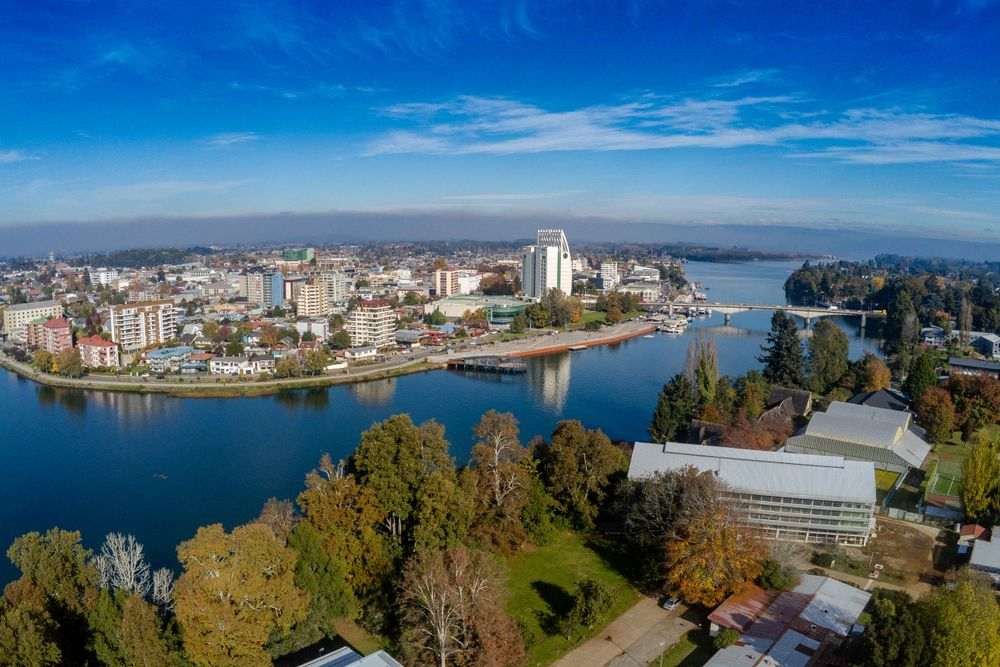
In the city of Valdivia, southern Chile, an experimental lab is coming up with practical ways to decentralise biomanufacturing.
LABVA’s ‘kitchen recipe’ approach breaks biomanufacturing out of the lab and the factory, enabling ordinary people to create biomaterials using what’s around them.
The organisation is one of the most dynamic in Chile’s biotech scene. We find out how it is using science and outreach to leverage native species for social impact.
Hyper-local biomanufacturing
LABVA – or the Laboratorio de Biomateriales de Valdivia – is an independent biomaterials lab in the capital city of Chile’s Los Ríos region.
Founded in 2020, it was the brainchild of Chilean architects Alejandro Weiss Münchmayer and María José Besoain.
Like any biomaterials lab, LABVA’s primary purpose is research. Its scientists explore the limits of what renewable materials can do, as well as develop new ones.
This research work, however, is led by a social mission: enabling ordinary people and communities to biomanufacture for themselves.
Münchmayer and Besoain’s vision was to make biomaterials hyper-local, hyper-sustainable, and hyper-accessible. One of the ways that the lab realises this is to publish open protocols for those interested in re-creating its biomaterials from scratch, using fungi, microbes, and waste.
Accessibility and sustainability go hand in hand in the LABVA philosophy. The ingredients for their biomaterials reflect the ecological context of Southern Chile and are designed to be made using species abundant in the region.
The emphasis on hyper-local biomanufacturing came partly from the founders’ awareness about their place in the global economy.
Chile lies outside the dominant centres of biotech investment in Asia, Europe, and North America. This led to the idea of making biomanufacturing more widely accessible within their own country, as well as adapted to the specific environmental features and social needs found in particular regions.
Fermenting textiles from the wineberry
LABVA’s product development work started out with a simple fermented biotextile – a fabric material that can be grown inside microorganisms.
Bacterial production like this is nothing new. Major biotech companies are investing in fermented textile fibres around the world. Yet LABVA wanted a material that could be made easily by ordinary people at a smaller scale, using what is available in their locality.
The result was Maqui – a biobased leather named after the native tree central to its manufacturing. Also known as the Chilean wineberry, the Maqui is abundant in Southern Chile.
The lab collects a unique mix of bacteria and yeasts from the tree’s leaves and fruits. This microbial mix generates a material called cellulose, which are the foundations of the new textile material.
LABVA’s Maqui bio-leather made an immediate impact on the Chilean biotech scene, winning the 2020 Brain Chile award, a national tech accelerator.
Microbes at the edge of the world
LABVA’s aim is to empower ordinary people to make the most of nature. Central to this effort is understanding the local biodiversity.
Many fungal species are in commercial use today, deployed to grow biomaterials, biopolymers, and biochemicals inside labs and factories.
Yet there are many more still waiting to be discovered. Each ecological niche on earth harbours new and potentially highly productive species that could metabolise complex chemicals with minimal inputs.
LABVA is situated in a unique region. Just south of their headquarters is the Tierra del Fuego – the windswept, rugged tip of the South American landmass. In the 19th century, the Beagle carried Darwin here, where he encountered indigenous tribes and Ice Age fossils.
Today, the forbidding coastal region remains a goldmine of bio-exploration: rich in biodiversity, with some habitats relatively untouched by human development.
In parts of their old forests, the rugged Tierra del Fuego harbours ancient ecosystems. For LABVA, this is where their hunt for useful fungal species has concentrated.
The lab is compiling an open-source list of useful fungi that people can seek out and use for themselves. The task is part of a project that aims to decentralise fungal manufacturing using open technologies.
In this project, different disciplines come together. Joining the co-founders is Fernan Federici, associate professor of synthetic biology, as well as Cristian Riquelme, a biologist, and designer Sebastian Rodriguez.
Collating scientific and design expertise can make it easier to connect basic biological research with how the resulting biomaterials will actually be used. This blend of expertise is characteristic of the lab, which stresses unified thinking across art, design, and science.
Bringing microbial analysis
LABVA’s open-source fungal list is meant to help people take bio-fabrication into their own hands. ln theory, anyone could pluck them from the wild for use in cultivating their own bio-blocks, bio-leathers and more.
Yet even armed with a list of species, the kit for identifying microbial organisms is expensive. The equipment cost means that in practice, non-profit organisations, private citizens, and community groups effectively are locked out from biomanufacturing their own materials.
LABVA’s fungal project aims to fix this lack of access. Alongside releasing a list of useful wild microbes, it is creating open-source equipment that people can use to screen organisms they collect out in the field and identify the correct species. The kit includes microscopes, PCR/LAMP, enzymes and reagents.
LABVA is not hunting out new strains for its own sake. Collecting unknown or under-utilised species from local environments can get around potential legal complications. Material Transfer Agreements and intellectual property law can pose barriers that hamper small-scale production. Hunting for new, overlooked strains can get around these.
This question of who gets to access, own, and benefit from local biological resources like bacteria has been a contentious one: biotech and pharma industries have long been criticised for lifting bio-resources once held in common and profiting from them without recompensing communities.
LABVA’s work intervenes on this, arming citizens with the biological and ecological knowledge and tools they need to meet their needs from the local biota.
Use your mussels
Using waste to build high-value materials is another of the core principles of LABVA.
This is best demonstrated by their Museel shell project, where it developed a biodegradable and circular building material for use in modular cladding – the thin, protective layer that nestles on top of insulation and concrete walls.
The material is based on the discarded shells of the Mytilus chilensis – a mussel species that is common to the region. Locals use it to make a traditional dish called the ‘cocomiento de choritos’ and the shellfish fills stalls at the local market to the brim. Once cooked, LABVA washes and grinds up the shells.
The other ingredients that go into the biobased cladding are simple : apart from the shells, alginate solution and vinegar are the other natural inputs used in creating this biobased cladding.
The simplicity of the recipes belies its practicality. For LABVA, biomaterials should be based on the local biodiversity and familiar cultural patterns. This reduces the friction of adopting new sustainable materials while respecting the natural distribution of raw materials in a particular territory.
People and place
Beyond developing biotech, LABVA’s forte lies in networking. The group regularly brings together with South American biobased researchers via its BIOPOLIMÉRICA event-platform.
First convened in Mexico in 2022, this roving conference event brings different biobased R&D projects around Latin America into contact via its exhibitions, talks, discussions, and workshops.
True to LABVA’s local emphasis, BIOPOLIMÉRICA is always located away from the capital cities – a nod to its founding purpose of generating biobased research and production outside already-wealthy regions. The next meeting is scheduled in Cuenca, Ecuador, in 2027.
At its home base in the city of Valdivia, public outreach and education are part and parcel of the lab’s work. Their events calendar is filled with open workshops on how to design biofabricated shoes or make bioplastics packaging, with some even catering to children.
Why smaller is stronger
Traditionally, the tools of microbiology were closed to all but research labs and companies. LABVA is showing that biomanufacturing can also happen outside the big centres of capital and investment.
Under its open-access philosophy, bio-manufacturing becomes something like gardening: a skill that can be deployed at many different scales, for different ends – in large public spaces or commercial nurseries, but also in private balconies and allotments.
This shift in perspective around what biomanufacturing means has implications for state-level policy. Resilience is now a keyword in climate and economic planning. Often, we assume it is something built at the largest scales: expanding factory capacity, for example, and cutting import dependence.
Yet achieving economic security on a more hostile planet also requires work on a smaller magnitude, too. Strengthening economic capabilities in individual homes and neighbourhoods will be important for building economic resilience on a disturbed planet. Smaller production lines that use local inputs can plug supply gaps quickly – especially in remote, rural areas under-served by state infrastructure.
As economic insecurity, geopolitical instability and climate impacts increasingly shape our everyday life, there will be growing demand for solutions like the ones being pioneered by LABVA – biotechnologies that ordinary people can pick up and adapt to their own needs.
The post This trail-blazing Chilean lab is bringing biotech to the masses appeared first on World Bio Market Insights.
- Source: https://worldbiomarketinsights.com/this-trail-blazing-chilean-lab-is-bringing-biotech-to-the-masses/