
Ontario farm businesses with 25 or more employees have new obligations for what goes into a job ad, following Employment Standards Act changes that took effect Jan. 1, 2026.
Amanda Ropp, Ontario Pork Industry Council board secretary, shared tips and tools to help pork producers create pay transparency and compliant job postings in a July lunch-and-learn webinar.
Ropp advised that these best practices help streamline LMIA application job advertising requirements for the foreign worker process.
“I know our experience here lately has been a tightening-up of advertising requirements and a really close look at that by the officers who are reviewing LMIA applications,” Ropp said.
Changes to the Act provide clarity on pay, vacancy status, hours — including if there are early morning, weekend and evening shift expectations — and eliminate Canadian experience requirements.
Ropp said the changes open potential to attract a new foreign and domestic applicant demographic and smooth contract negotiations and LMIA applications.
“If we can recruit people into our industry who may have worked in other industries with transferable skills, we should be open to that,” she said.
Salary ranges must be posted
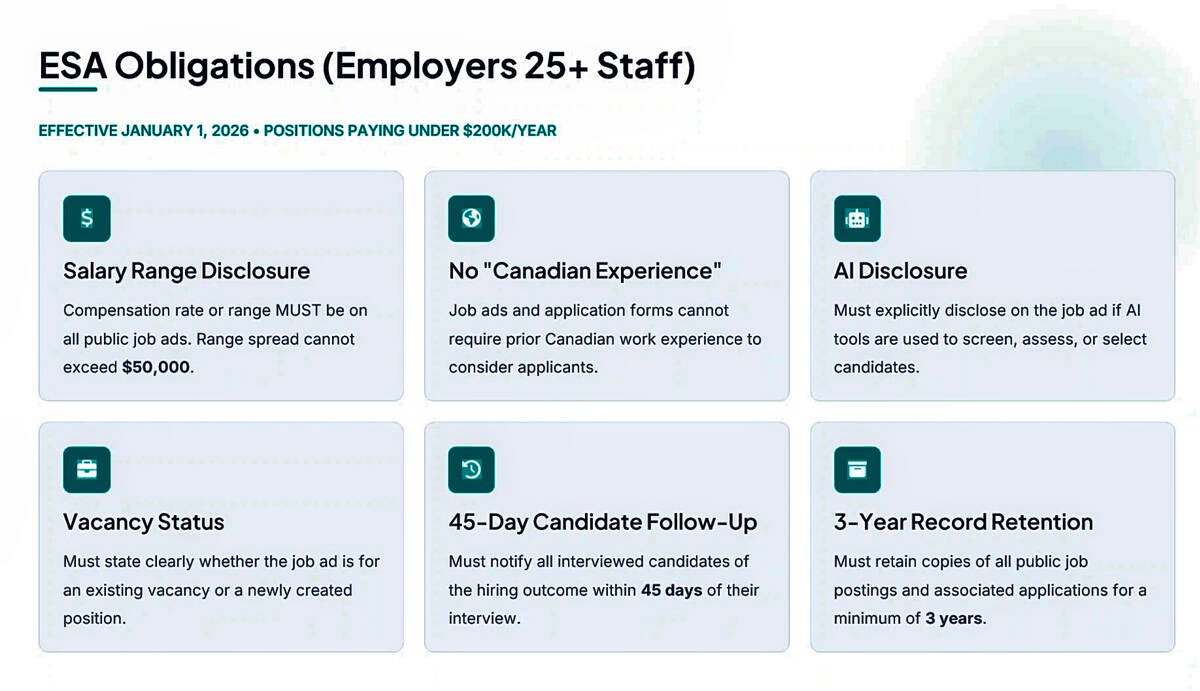
It’s now mandatory to post a reasonable and realistic salary range, not exceeding a $50,000 spread, on public ads, but that won’t limit an employer from basing pay on experience or skill set, said Ropp.
“High-level management jobs, you may have a legitimate range of $50,000, but for general farm workers, pork production technicians, other staff, use a reasonable spread,” she advised.
Ropp suggested salary range disclosure could help bolster an employer’s “brand” as honest, fair and competitive and addressing salary expectations earlier could reduce wage-negotiation-related mid-funnel dropout rates.
It also attracts serious, qualified candidates who “value transparency and competitive pay in a communicative employer,” said Ropp, adding that 75 per cent of candidates are more likely to apply to postings with an explicit compensation range.
“People absolutely have expectations,” she said. “This range disclosure, and the conversations that can go with it, actually kind of streamlines the negotiation process and your hiring process.”
Canadian experience can no longer be required
While the goal is to employ as many Canadians or permanent residents in the agricultural sector, employers can no longer require prior Canadian work experience as a qualification.
The mandate extends beyond job ads into the interview process and human rights territory, cautioned Ropp, adding that asking about previous experience in and outside of an applicant’s home country is OK.
“If we don’t mandate Canadian experience, we get a broader talent pool,” Ropp said. “So we have more highly skilled international talent, hopefully, applying for our jobs.”
AI screening must be disclosed
Technology transparency today requires employers to disclose whether AI is being used, said Ropp.
“I’m not sure how many of us in this (swine) industry are utilizing AI to sort through, screen and assess candidates,” she admitted, but if you are, “You must disclose it on the job ad.”
Vacancy status and the 45-day rule
Vacancy status requires indicating if a position exists or is being created, for example, a newly created middle-management position where the role isn’t fully defined.
This, along with providing a start date, helps applicants assess if someone is hiring immediately or building a pool of applicants for positions later.
The new regulations require a 45-day follow-up window informing interviewees of the hiring outcome. Ropp said giving candidates a decision deadline during her interview process helps align expectations.
“But the maximum amount of time between the interview and your follow-up is now 45 days,” she reiterated.
Including any job ad-related emails, phone calls, interview notes or any communication between the applicant and employer as part of your applicant record retention is recommended.
“Keep all that in a nice tidy package,” she suggested, adding that those records must be kept for a minimum of three years.
Working backwards from the LMIA
Ropp said several job advert updates are required to be Labour Market Impact Assessment (LMIA)-compliant for high- and low-wage positions.
“You almost want to work backwards,” said Ropp. “What am I going to be applying for on my LMIA if I know I’m going to rely on foreign labour? What does my job ad need to show?”
From a recruiting perspective, Ropp said the company name, job title, number of vacancies and the exact job location matching your LMIA application are important, especially if the job location differs from the business address.
A single advert can be for the same position in multiple areas and meet LMIA requirements if the job description lists each location, she added.
The salary or wage offered must also align with the LMIA application’s regional designation and relevant factors, which can be confirmed by consulting with an immigration professional.
The employment period can be casual, seasonal or permanent, but “permanent means no defined end date when the contract is signed,” Ropp said.
This supports the industry’s need for year-round employees, but not a permanent position.
To address the mandatory per-week work hours, Ropp suggests a range of 40 to 60 hours to cover the seasonal and weather-related demands of agriculture.
LMIA requires farm work ads to be posted for 14 days and 28 days for non-primary production companies on the Job Bank, using Job Match and the direct apply option. However, it’s OK to post in one other location. Ropp prefers Indeed or OPIC’s job board.
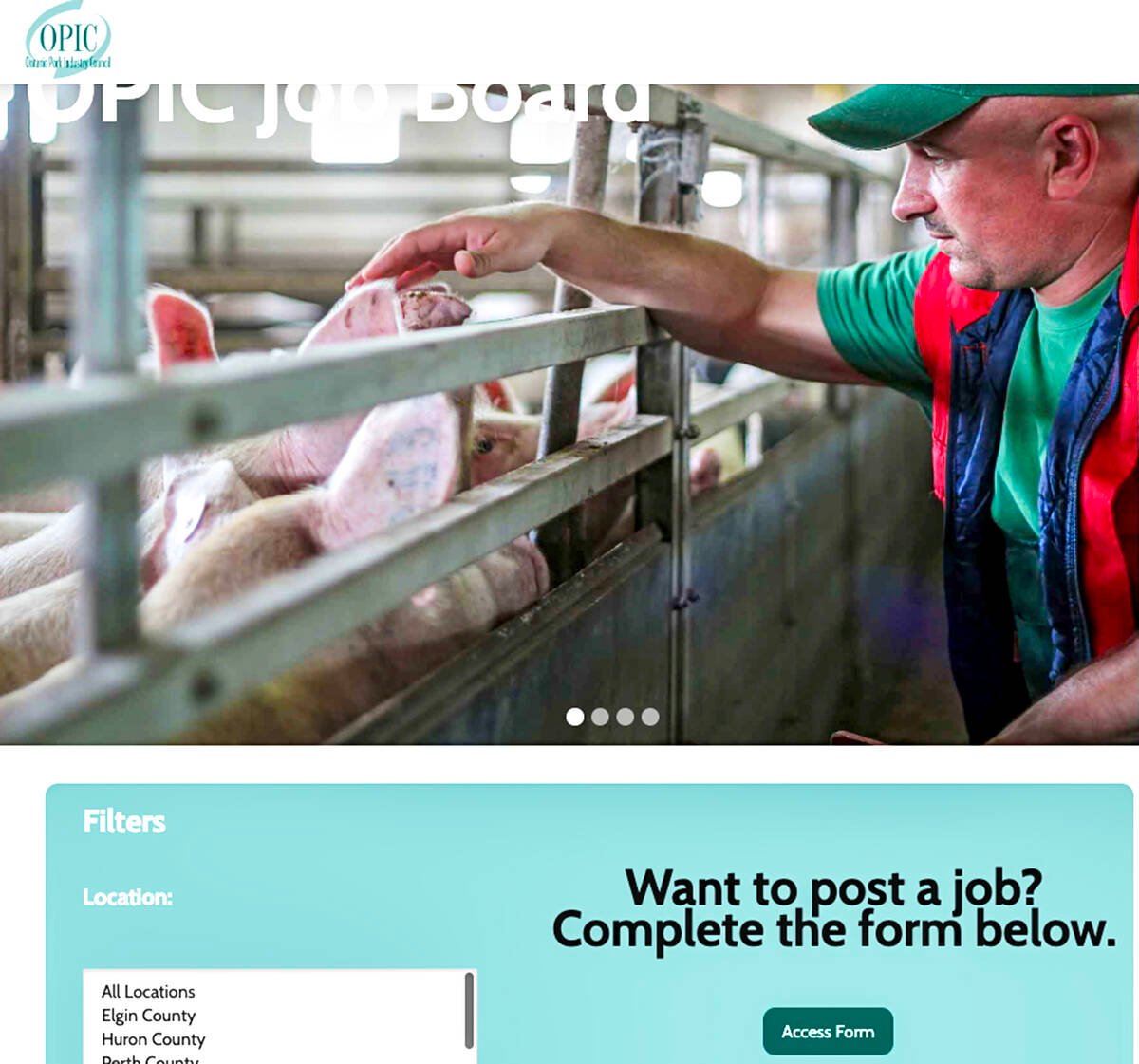
OPIC crafted a job ad template for members, providing a roadmap to ensure all the updates and LMIA requirements are met, she said.
She suggested being informed about the current advertising requirements and verifying them before posting an ad.
Overall, Ropp anticipates that the changes will create a positive move forward for applicants and employers, streamlining the hiring process.
The post What Ontario pork employers must now put in a job ad appeared first on Farmtario.


