
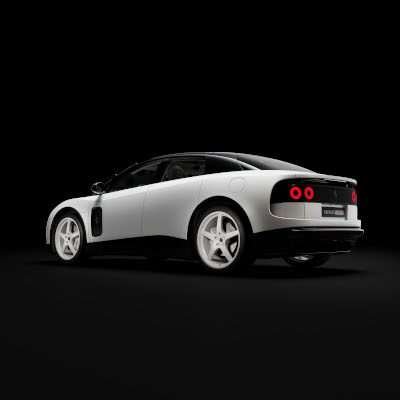
Ferrari’s first fully electric car has sold for $40 million (£29.8m) at a charity auction in California, setting a world record for the highest price paid for a new car at auction.
The one-off 2026 Ferrari Luce “Tailor Made”, known as “Chassis 0”, was sold by RM Sotheby’s during Monterey Car Week. It is the first production chassis in Ferrari’s Luce programme and was specially configured through the manufacturer’s Tailor Made personalisation programme.1
Ferrari said the $40m price surpassed the previous record for a new car at auction, set in 2025 when a bespoke Ferrari Daytona SP3 sold for $26m. Proceeds from the latest sale will go to educational initiatives through the Ferrari Foundation.2
The auction car features a semi-gloss mother-of-pearl exterior finish developed specifically for it, an interior using metallic Perla Le Mans leather, bespoke brake calipers and dedicated wheels. RM Sotheby’s had placed its value at more than $1.1m before the sale.3
The Luce, unveiled earlier this year, is Ferrari’s first series-production battery-electric vehicle. Its electric powertrain produces more than 1,000 cv in boost mode, while Ferrari gives a 0–100 km/h time of 2.5 seconds, a top speed of 310 km/h and a range of more than 530 km.4
The high-voltage battery, designed, validated and manufactured in Maranello, has a gross capacity of 122 kWh and comprises 210 cells arranged in 15 modules of 14 cells. It operates at up to 880 V and supports a maximum recharge power of 350 kW.5
The record-breaking auction has also highlighted a less familiar issue for the emerging market in collectable electric vehicles: unlike many of the mechanical components in historic cars, battery cells deteriorate with age and will eventually require replacement or other intervention.
Professor Vahid Vahidinasab, an energy sustainability and electric vehicle expert at the University of Salford, said the auction suggested electric Ferraris had already entered the collector market.
“Forty million dollars for a car that will not be delivered until next year tells you the collector market has decided electric Ferraris are history rather than novelty,” he said.6
“It also creates a problem nobody has had to solve before. This car carries 210 battery cells, which makes it the first serious collectable with a consumable part inside it. A 1960s Ferrari can be kept alive indefinitely because every component can be remade by hand. Lithium cells cannot. They lose capacity whether the car is driven or left under a dust sheet, and the cell format will be out of production long before the paint fades. That is a reality for every electric car, not just this one.”7
Vahidinasab said the issue extends beyond high-value collectable vehicles to the developing second-hand EV market, where the remaining condition and useful life of a traction battery can affect buyers’ assessment of a vehicle.
“Whoever bought this car can postpone the question for thirty years. But anyone using an electric car from any brand for work and family life faces it now, in the UK and worldwide. Ask people why they hesitate over a used electric car and the answer is rarely the driving. It is the battery: how much life is left in it and what happens if it needs replacing. That uncertainty is already pulling down second-hand values, and it grows every year as the fleet ages, and we need to be ready for it.”8
The question of how battery condition should be communicated to buyers is also attracting regulatory attention. The UK Government said last year that it had no plans to require second-hand EVs to be sold with battery-health certificates, but noted that it had worked through the UN Economic Commission for Europe on Global Technical Regulation No. 22.9
The regulation is intended to provide EV users with accessible, accurate and comparable information on battery state of health. The Government said in October 2025 that it was analysing options for implementing the regulation in the UK.10
Vahidinasab argued that independent assessment of battery condition could help address uncertainty in the second-hand market.
“The fix is not complicated. It needs a trustworthy, independent way of measuring what is left in a battery, and someone prepared to stand behind that number when the car changes hands,” he said. “Forty million dollars has just gone on one battery. The millions of others are the real challenge and we need to find an answer for our economy.”11
The $40m Luce is expected to return to Ferrari’s Maranello facilities following the auction before being delivered to its new owner in the first quarter of 2027.12
Notes
[1] RM Sotheby’s, 2026 Ferrari Luce ‘Tailor Made’, The Monterey Auction 2026. The listing identifies the vehicle as “Chassis 0”, the first production chassis of the Luce programme, and details its bespoke specification, charitable purpose and planned delivery.; [2] Reuters, “Ferrari’s bespoke Luce EV one-off fetches $40 million at charity auction”, 17 August 2026.; [3] RM Sotheby’s, op. cit; [4] Ferrari, Ferrari Elettrica, technical specifications. Ferrari gives a battery configuration of 210 cells in 15 modules, 122 kWh gross capacity, maximum voltage of 880 V and maximum charging power of 350 kW. It also specifies a 0–100 km/h time of 2.5 seconds, top speed of 310 km/h and range above 530 km.; [5] Ibid; [6] Professor Vahid Vahidinasab, energy sustainability and electric vehicle expert, University of Salford, comments supplied to the publication.; [7] Ibid; [8] Ibid; [9] UK Parliament, written answer from the Department for Transport, Electric Vehicles: Secondhand Goods, answered 24 October 2025. The Government said it had no plans at that point to mandate battery-health certificates for used EV sales and was considering UK implementation of UN Global Technical Regulation No. 22.; [10] Ibid


