
A plain wall can quietly sit in the background, but the right paint design can completely change the personality of a room. A few carefully placed lines, curves, blocks, or contrasting shades can turn an ordinary surface into a striking focal point without the expense of wallpaper or a major renovation. That is the real charm of creative wall decorating: a simple can of paint can create an effect that feels custom-made.
These 10 wall paint patterns bring personality, movement, warmth, and visual interest to bedrooms, living rooms, dining areas, home offices, hallways, and even small entryways. Some designs feel modern and dramatic, while others create a soft and welcoming atmosphere. Better still, many can be created with painter’s tape, a ruler, a level, a pencil, and a little patience.
The secret is not simply choosing beautiful colors. Proportion, placement, contrast, and the size of the room all matter. A bold pattern on one wall may become an incredible accent feature, while the same design across every wall could feel overwhelming. So, before picking up a paintbrush, take a closer look at these creative ideas. One of them may be exactly what the room has been missing.
Geometric Wall Paint Patterns for a Modern Look
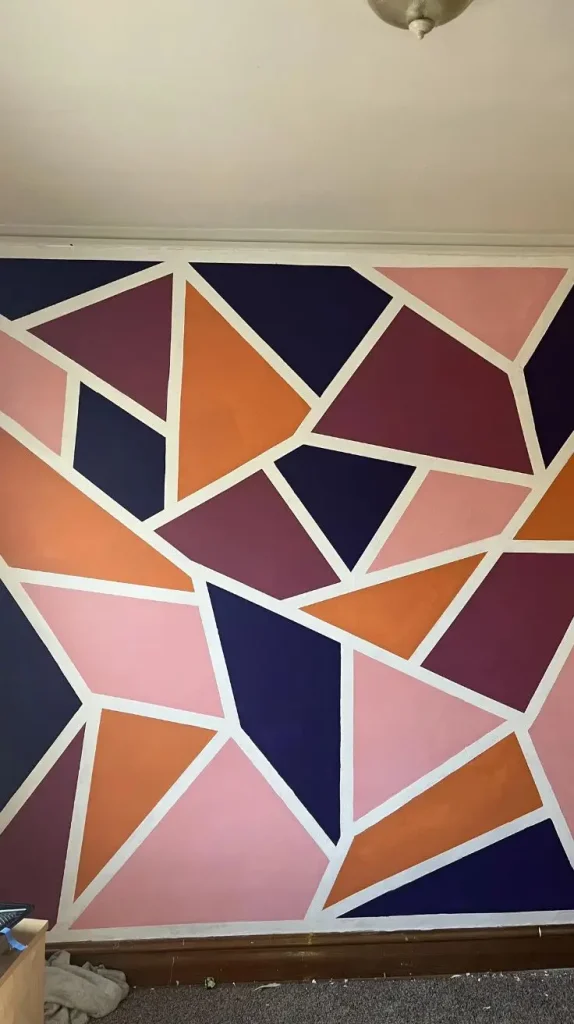
Geometric designs are among the most versatile wall paint patterns because they can create anything from a sophisticated contemporary finish to a playful statement wall. Squares, rectangles, triangles, diamonds, and irregular polygons can work together to give a flat surface a sense of movement and dimension. The design does not need to cover the entire room, either. A single accent wall behind a sofa, bed, desk, or dining table can provide plenty of visual impact.
A simple geometric design usually works best with two or three colors. For a calm appearance, pair warm white with beige and muted taupe. For something more dramatic, navy blue, charcoal gray, and cream create a rich combination. Terracotta, olive green, and soft ivory can bring an earthy quality to the room.
Painter’s tape makes this project much easier because it creates clean edges between each section. Start by sketching the layout on paper before transferring it to the wall. A level can help keep horizontal and vertical lines straight, while a measuring tape helps maintain consistent proportions.
One useful trick is to keep the background color lighter than the shapes. This allows the pattern to stand out without making the entire wall feel too heavy. For a more artistic effect, several shades from the same color family can replace high-contrast colors.
Striped Walls for a Classic and Elegant Finish
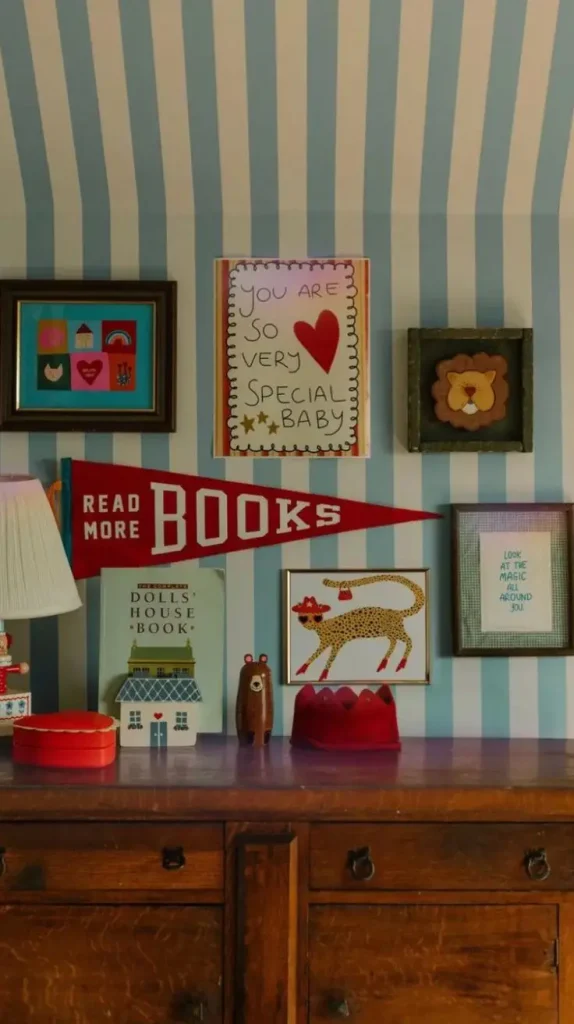
Stripes may sound simple, but they offer enormous decorating potential. Depending on their direction, width, and color combination, stripes can make a room appear taller, wider, calmer, or more energetic. Vertical stripes are particularly useful when a ceiling feels low because the eye naturally follows the lines upward.
Horizontal stripes can create a different effect. They draw attention across the room and can make a narrow wall appear broader. This makes them particularly useful in hallways, compact bedrooms, and smaller living spaces.
For an elegant finish, try combining two shades with a small difference in tone. A warm white paired with a slightly deeper cream creates subtle sophistication. For a more contemporary appearance, charcoal and light gray can produce a refined monochromatic wall.
Bold stripes also work beautifully in children’s bedrooms, playrooms, and creative spaces. Bright blue and white, coral and peach, or green and yellow can add energy without requiring elaborate artwork. Painter’s tape is essential for crisp stripes. Measure the wall carefully and mark the spacing before applying tape. Uneven measurements can make even beautiful colors look untidy.
Another approach is to use wide and narrow stripes together. This creates rhythm and prevents the wall from looking too predictable. A feature wall behind a bed or sofa is an especially effective location because the pattern naturally becomes part of the room’s focal point.
The beauty of striped walls lies in their simplicity. They require no complicated artistic skills, yet the finished effect can look remarkably polished.
Color Block Walls for a Bold Statement
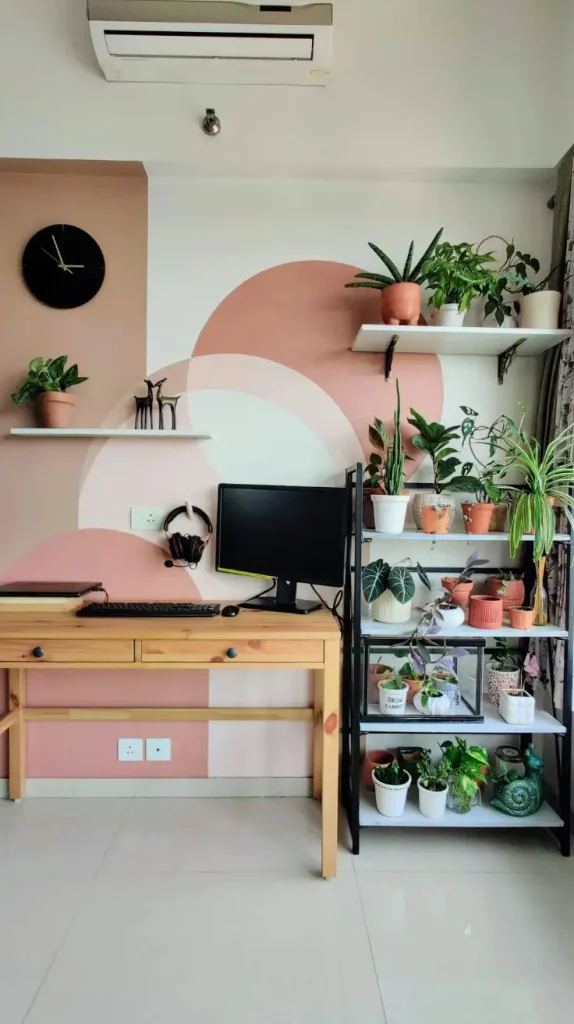
Color blocking brings a confident personality to interior design. Instead of creating a repeated pattern, large sections of different colors are placed beside one another to form a strong visual composition. This technique works particularly well for modern homes because it can define areas without adding furniture or physical partitions.
A bedroom might feature a soft beige lower section with a dusty blue upper section. A home office could use deep green behind the desk and warm white across the remaining portion. In a living room, a large block of terracotta behind a sofa can create a warm backdrop that feels intentional and stylish.
The placement of the color matters as much as the colors themselves. A horizontal division positioned slightly below the midpoint can make a wall feel more interesting than a perfectly centered line. Large vertical blocks can also create the appearance of separate zones.
Color blocking is especially helpful in open-plan spaces. A painted section behind a dining table can visually distinguish the dining area from the living room without installing a wall.
For a sophisticated look, choose shades that share a similar undertone. Warm neutrals work well together, as do cool blues and greens. When stronger contrast is desired, balance a vivid color with a quieter neutral.
Arch-Shaped Paint Designs for Soft Visual Interest
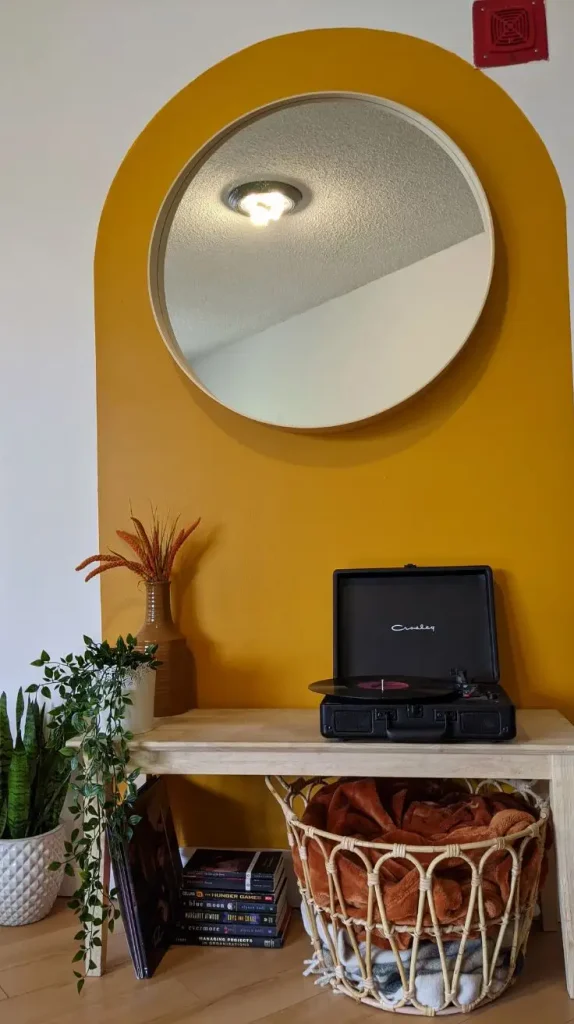
Curved painted shapes have become a popular way to introduce softness into rooms filled with straight furniture and hard architectural lines. An arch can frame a bed, reading chair, console table, mirror, or desk while creating the appearance of a custom backdrop.
This design is particularly attractive in bedrooms. A large painted arch behind the headboard can act as a visual extension of the bed and create a cozy focal point. In a home office, a smaller arch behind a desk can define the workspace and make it feel more intentional.
The color choice can completely change the mood. Terracotta creates warmth, sage green introduces a natural feeling, muted blue feels peaceful, and blush pink can bring a gentle decorative touch. Deep colors can create drama, while soft neutrals keep the effect understated.
Creating the curved top requires a little more preparation than straight lines, but the process remains accessible. A pencil, string, measuring tape, and carefully positioned guide can help create a smooth curve. Painter’s tape can then protect the surrounding surface during painting.
The arch does not have to be perfectly symmetrical to look beautiful. Slightly organic curves can create a relaxed, handmade character. For additional impact, place a round mirror, pendant light, or piece of artwork inside the painted shape. The repeated curve creates visual harmony and makes the wall feel thoughtfully designed.
A simple arch can therefore do much more than add color. It can establish a focal point, frame furniture, and soften an otherwise ordinary wall.
Ombre Walls for a Dreamy Layered Effect
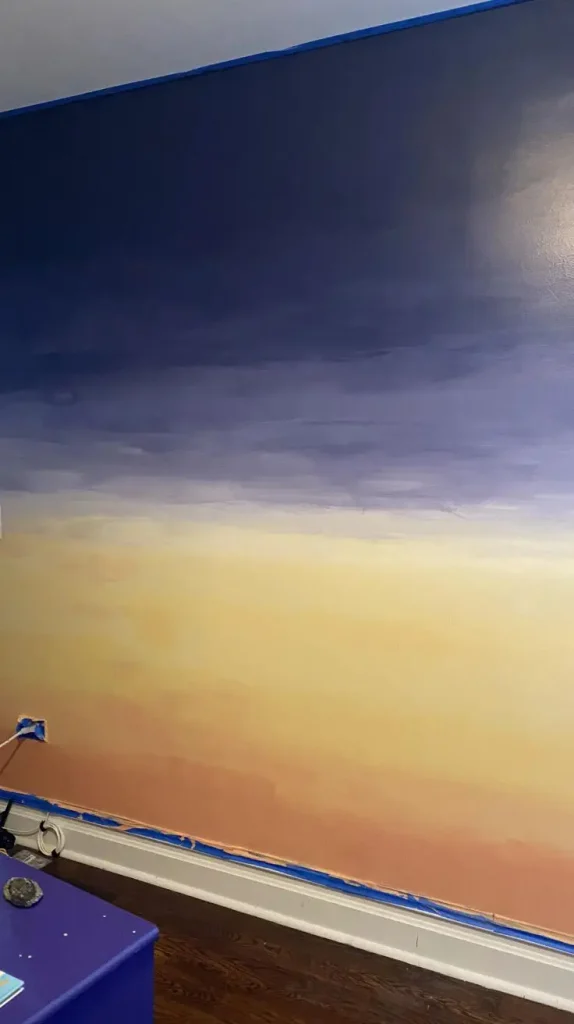
Ombre painting creates a gradual transition from one shade to another. Instead of a sharp boundary between colors, the shades gently blend together, producing a soft and atmospheric finish. This makes the technique particularly appealing for bedrooms, nurseries, meditation corners, and relaxing living spaces.
A classic version starts with a darker color near the bottom and gradually becomes lighter toward the ceiling. This can create a sense of openness and give the wall a subtle vertical flow.
Blue is a natural choice for an ombre wall because it can resemble the changing tones of the sky. Green can produce a botanical atmosphere, while peach, pink, and cream can create a warm and romantic appearance.
The key to successful ombre painting is blending while the paint remains workable. Several shades of the same base color can be prepared before painting begins. Separate horizontal sections can then be painted and blended while the edges are still wet.
This technique requires patience, but the result can be worth the extra effort. The gradual color transition adds depth without relying on strong geometric shapes or complicated artwork. An ombre wall can also become the background for minimalist furniture. A simple wooden bed, neutral sofa, or understated desk allows the color transition to remain the star.
For those who prefer subtle decorating, use closely related shades. For a stronger statement, move between more contrasting tones. Either way, the finished wall can create a calm visual journey from one color to the next.
Checkerboard Walls for Playful Character
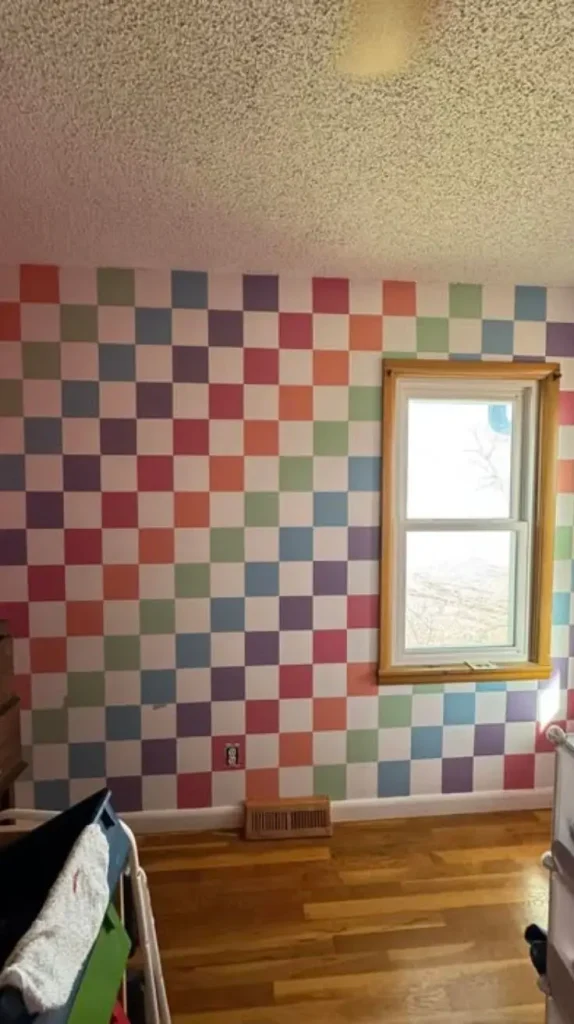
Checkerboard patterns bring instant personality to a space. Traditionally associated with black and white, this design can also use softer or more unexpected color combinations. Cream and tan create a relaxed appearance, while green and white can produce a fresh botanical feel.
The design works especially well in bedrooms, bathrooms, entryways, and creative spaces. It can also make an excellent accent wall in a home office or game room.
Creating the pattern requires accurate measurements. Begin by determining how large each square should be and marking the wall into an even grid. Painter’s tape can then separate the areas that need different colors.
One of the biggest advantages of checkerboard designs is their flexibility. Large squares create a bold contemporary statement, while smaller squares feel more intricate and decorative.
Color selection can also change the entire personality of the design. Soft neutrals make the pattern elegant rather than playful. Deep navy paired with cream can feel coastal and refined. Black and warm white create a classic appearance that suits modern interiors.
Because the pattern already contains plenty of visual activity, simple furniture usually works best nearby. Solid-colored bedding, curtains, rugs, and upholstery allow the painted wall to take center stage.
Scalloped Wall Designs for a Charming Finish
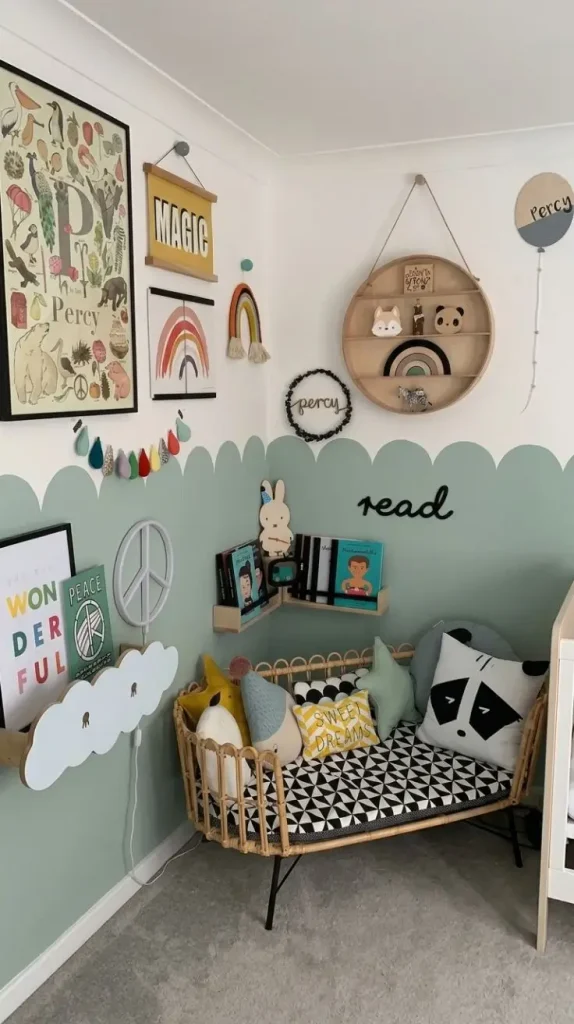
Scalloped edges introduce rounded shapes that can make a room feel softer, friendlier, and more decorative. This pattern consists of repeating semicircles along a horizontal or vertical boundary.
It works particularly well in bedrooms, children’s rooms, nurseries, craft rooms, and cozy reading corners. Yet the design can also look surprisingly sophisticated when paired with muted colors and simple furniture.
A soft sage green scalloped border against a warm white wall creates a natural appearance. Dusty rose can bring warmth, while muted blue creates a peaceful atmosphere. Neutral shades such as beige, taupe, and cream can make the pattern feel subtle enough for adult spaces.
The repeated curves can be created using a circular object as a guide. Marking each curve carefully before painting helps maintain consistency. A small mistake in spacing can become noticeable once the entire pattern is finished, so preparation matters.
Scallops do not necessarily have to run across the middle of the wall. A lower border can create the appearance of a painted wainscoting treatment, while a design near the ceiling can act as a decorative crown.
Another interesting approach is to paint the scalloped section in a darker shade of the existing wall color. This creates dimension without introducing a dramatic contrast. The charm comes from repetition. Each curve connects with the next, creating a gentle rhythm that makes the wall feel more finished and intentional.
Half-Painted Walls for a Stylish Two-Tone Effect
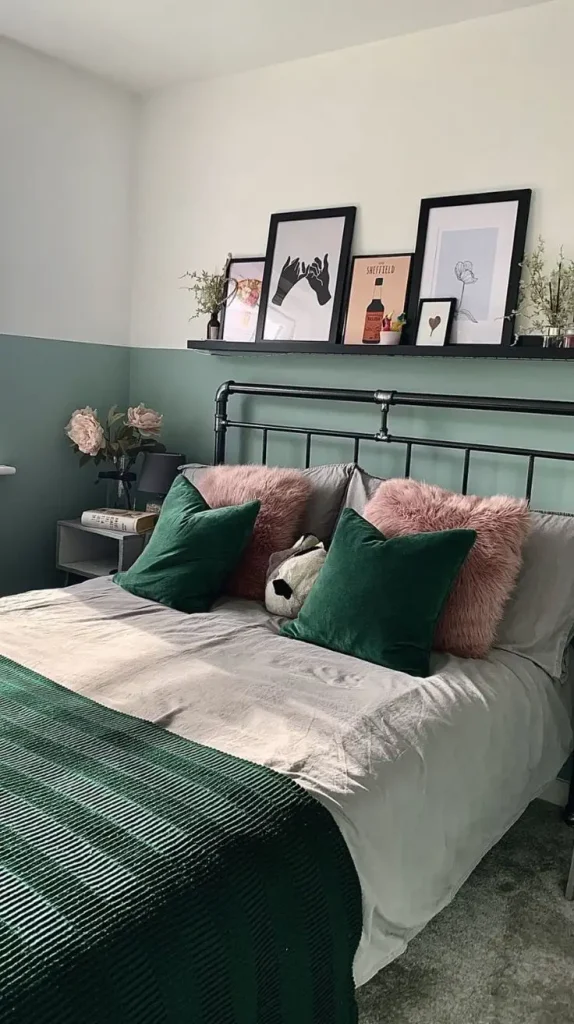
A two-tone wall offers a simple way to add color without covering the entire surface in a bold shade. The basic concept involves dividing the wall horizontally or vertically and painting each section a different color.
This approach works beautifully in dining rooms, bedrooms, entryways, and living rooms. It can also help define areas within an open-plan home.
A darker lower section can make a wall feel grounded, while a lighter upper section keeps the room feeling open. For example, warm taupe below and creamy white above can create a comfortable, timeless combination.
The dividing line does not always need to sit exactly halfway up the wall. A slightly lower line can resemble traditional wainscoting, while a higher line can create a more modern effect. Adding trim can produce a more architectural appearance, but it is not essential. A clean painted boundary can look equally attractive when carefully measured.
This design is also practical for homes where lower walls experience more wear. A darker shade on the lower portion can help disguise minor marks and everyday scuffs.
For a more contemporary interpretation, consider dividing the wall vertically. One side can carry a deep accent shade while the other remains neutral. This works particularly well behind desks, beds, or large pieces of furniture. Two-tone walls prove that decorating does not have to involve complicated patterns. Sometimes a simple division can create exactly the right amount of drama.
Diamond Patterns for a Sophisticated Accent Wall
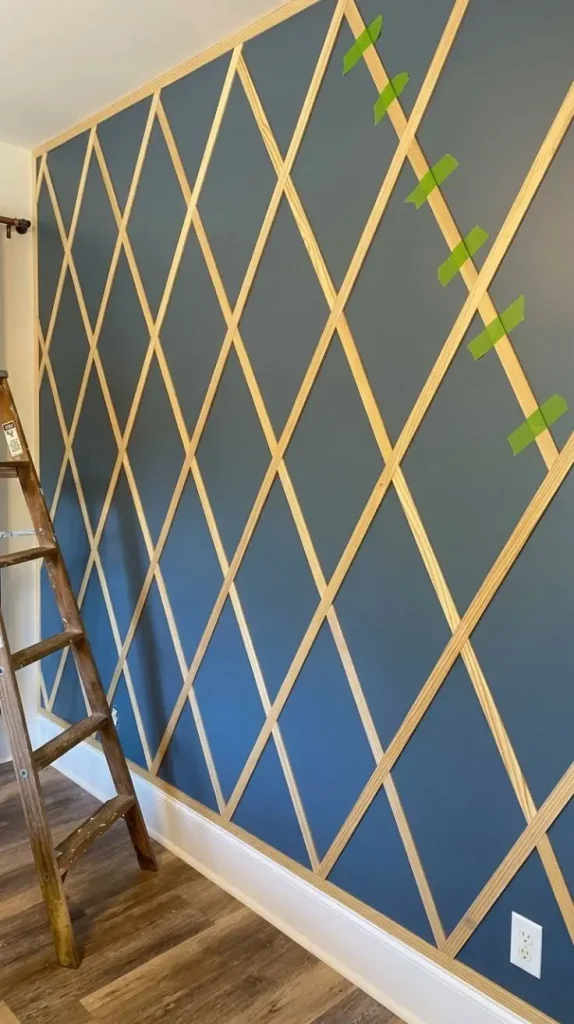
Diamond designs create a decorative effect that can range from classic to modern depending on the colors and scale. Large diamonds feel bold and contemporary, while smaller diamonds create a more detailed appearance.
This pattern can work especially well behind a bed, fireplace, dining table, or console. Because the design naturally draws the eye, it should usually be limited to one prominent wall rather than repeated throughout an entire room.
For a sophisticated finish, use two closely related shades. A slightly darker beige over a warm white background creates subtle dimension. For stronger contrast, navy and cream can produce a striking result.
Painter’s tape is the easiest way to create clean diamond shapes. Accurate measurements are important because each shape should align with the next.
The scale should match the room. Oversized diamonds can work in large rooms with generous wall space, while smaller rooms often benefit from larger, simpler shapes rather than a dense pattern.
Furniture placement can enhance the design. A bed centered against the pattern or a console placed directly in front of it creates a deliberate focal point.
Diamond walls can also work as an alternative to traditional wallpaper. The finished surface has a handcrafted quality and allows complete control over the color palette.
Freeform Abstract Shapes for an Artistic Look
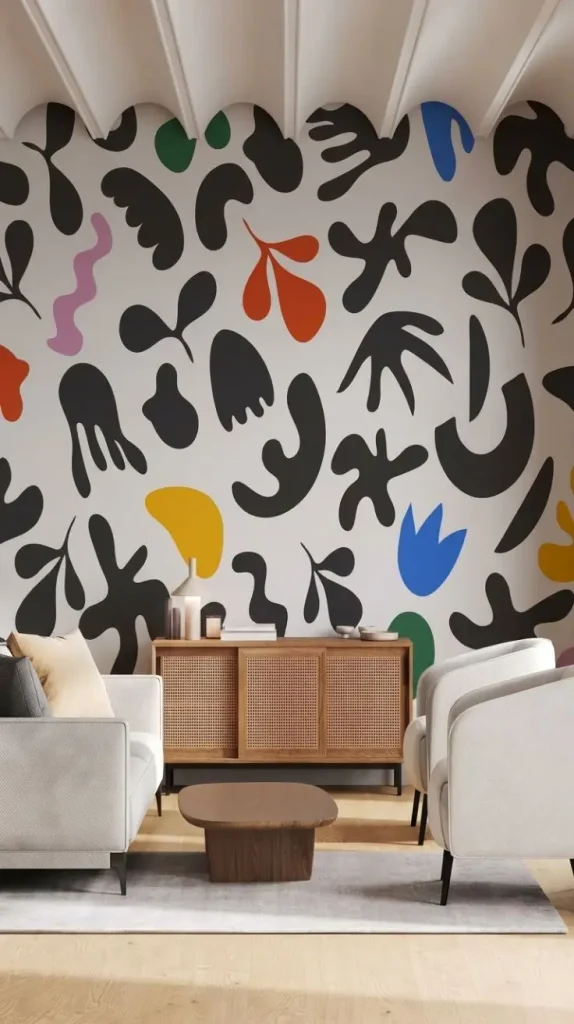
For a wall that feels expressive rather than perfectly structured, freeform abstract shapes can be an exciting choice. Organic curves, irregular blobs, sweeping lines, and overlapping color areas can create a custom mural without requiring advanced artistic training.
This style works particularly well in creative home offices, bedrooms, living rooms, studios, and children’s spaces. It also gives more freedom than highly measured geometric designs.
A successful abstract wall usually benefits from a limited color palette. Three or four shades can provide enough variety without creating visual chaos. Earthy terracotta, cream, olive, and muted brown can produce a warm natural palette. Soft blue, gray, cream, and green can create a cooler atmosphere.
The shapes can overlap slightly to create depth. Large forms can anchor the design, while smaller details fill empty areas.
Unlike a geometric pattern, abstract painting does not require every line to be perfectly straight. That makes it a forgiving project for beginners. The goal is balance rather than mathematical precision.
Still, a little planning helps. Sketch the composition first and decide where the largest shapes will sit. Consider the location of furniture, windows, doors, and artwork so the painted design works with the room instead of disappearing behind objects.
How to Choose the Right Design for the Room
Choosing among different wall paint patterns becomes easier when the room itself leads the decision. Start by considering the size, lighting, furniture, and existing color palette.
Small rooms often benefit from lighter colors and less crowded designs. Vertical stripes can make the ceiling feel taller, while large-scale shapes can prevent a compact space from feeling visually busy.
Large rooms provide more freedom. Strong geometric designs, dramatic color blocks, and oversized abstract forms can fill a broad wall beautifully.
Natural light should also influence the color palette. Rooms with abundant sunlight can handle deeper shades, while darker spaces may feel more welcoming with warm whites, soft greens, pale blues, or light beige.
Furniture matters too. A wall filled with strong patterns may compete with heavily patterned upholstery or artwork. When the room already contains visual detail, a simpler design can provide balance.
The best design does not necessarily follow the latest trend. It should make the room feel comfortable, cohesive, and welcoming.
Essential Tools for Creating Painted Wall Designs
Most beginner-friendly wall paint patterns require only a handful of supplies. Painter’s tape is especially useful for stripes, geometric designs, checkerboards, and color blocking. A measuring tape helps establish accurate spacing, while a level keeps lines straight.
A pencil can be used for light markings that guide the layout. Paint rollers are useful for large areas, while angled brushes provide better control around edges and corners.
Drop cloths protect floors and furniture from splashes. A paint tray makes larger projects easier to manage, and clean water and cloths should remain nearby for quick corrections.
Before applying paint, clean the wall and allow it to dry completely. Existing holes, cracks, or peeling areas should be repaired first. A smooth surface produces a much cleaner finished design.
Quality preparation often makes a bigger difference than expensive paint. A carefully measured pattern on a well-prepared wall can look far more polished than a rushed design using premium materials.
How to Make Wall Patterns Look Professional
The difference between a charming DIY project and a messy paint job often comes down to preparation. Measuring twice before applying tape can prevent uneven sections. A level can keep lines straight, while careful tape application reduces paint bleeding.
It also helps to test colors before committing to the entire wall. Paint can appear very different under morning sunlight, evening lamps, and cool overhead lighting.
Use painter’s tape designed for clean paint lines and press the edges firmly against the wall. When removing tape, pull it away carefully rather than ripping it quickly.
Do not rush between coats. Allowing paint to dry according to the manufacturer’s instructions helps prevent smudges and uneven coverage.
For detailed patterns, work in manageable sections. Stepping back occasionally gives a better sense of how the entire composition looks from across the room.
Most importantly, remember that the wall should support the room’s overall atmosphere. A pattern can be beautiful on its own but still feel wrong if it clashes with the furniture, flooring, lighting, or accessories.
Final Thoughts on Creative Wall Painting
These 10 wall paint patterns show just how much personality can come from a simple painted surface. Geometric shapes can bring structure, stripes can create visual height, arches can soften a room, and color blocking can establish distinct zones. Ombre finishes add atmosphere, while checkerboards, scallops, diamonds, and abstract forms offer increasingly expressive ways to decorate.
The most successful design is usually the one that feels connected to the rest of the room. Color, scale, furniture, natural light, and personal taste should work together rather than compete.
There is also no need to transform every wall. A single accent wall can create enough impact to change the entire atmosphere. Sometimes the smallest decorating decision produces the biggest transformation.
A blank wall is not merely empty space. It is an opportunity for color, creativity, texture, and personality. With careful planning and a little patience, even a beginner can create a surface that feels intentional and beautifully finished. And once the first wall is complete, the next decorating idea may be impossible to resist.


