
Manure management plays a critical role in maintaining and improving soil structure, particularly as farmers look for ways to build long-term soil health.
These changes can help soils become more resilient to soil compaction, erosion and extreme weather conditions.
However, the benefits depend on factors such as application rates, timing, nutrient content and how manure is incorporated into the soil.
Christine Brown, field crops sustainability specialist with OMAFRA, says adding livestock manure specifically to improve soil structure and build resilience in heavy clay soils against severe compaction damage can be effective. She notes manure feeds microbial populations that utilize energy from plant photosynthesis and help provide nutrients to build bigger root systems and plant biomass.
“Cropping systems that add more carbon than is removed will increase organic matter and help build soil resilience. Maintaining or better yet, building organic matter is probably the best way to build resilience against severe compaction,” she said.
Application timing
Brown said there are in-season application timing windows to be aware of to minimize compaction risks.
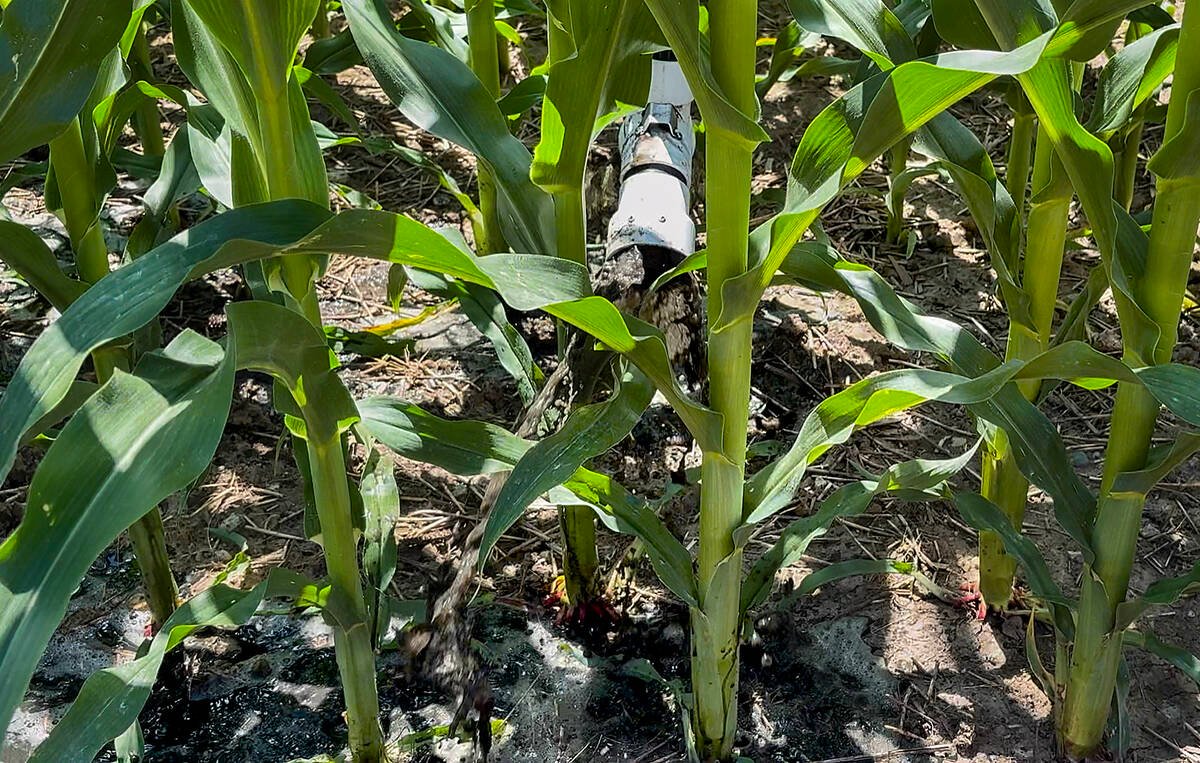
Application into a standing corn crop or after cereal harvest (wheat, oats, barley) provides the best window for manure application since soils are usually more fit, and it provides the opportunity for corn crops to utilize the nutrients most effectively and/or provides synergy from adding cover crops.
She added that application during this time has many advantages, fitting a drier time of year when soils are more fit for application compared to early spring or late fall.
The 4R principles are easier to follow with in-crop application, said Brown, since risk of nutrient loss is lower — especially if applied into a growing crop or seeding a cover crop, and usually there is more time (less rush to plant or harvest) to take manure to fields farther from storage.
“Storage capacity requirements are lower if manure is applied a few times throughout the year compared to once per year application. Labour and equipment are often less busy after wheat harvest, which helps to spread workload,” she said.
Guiding principles
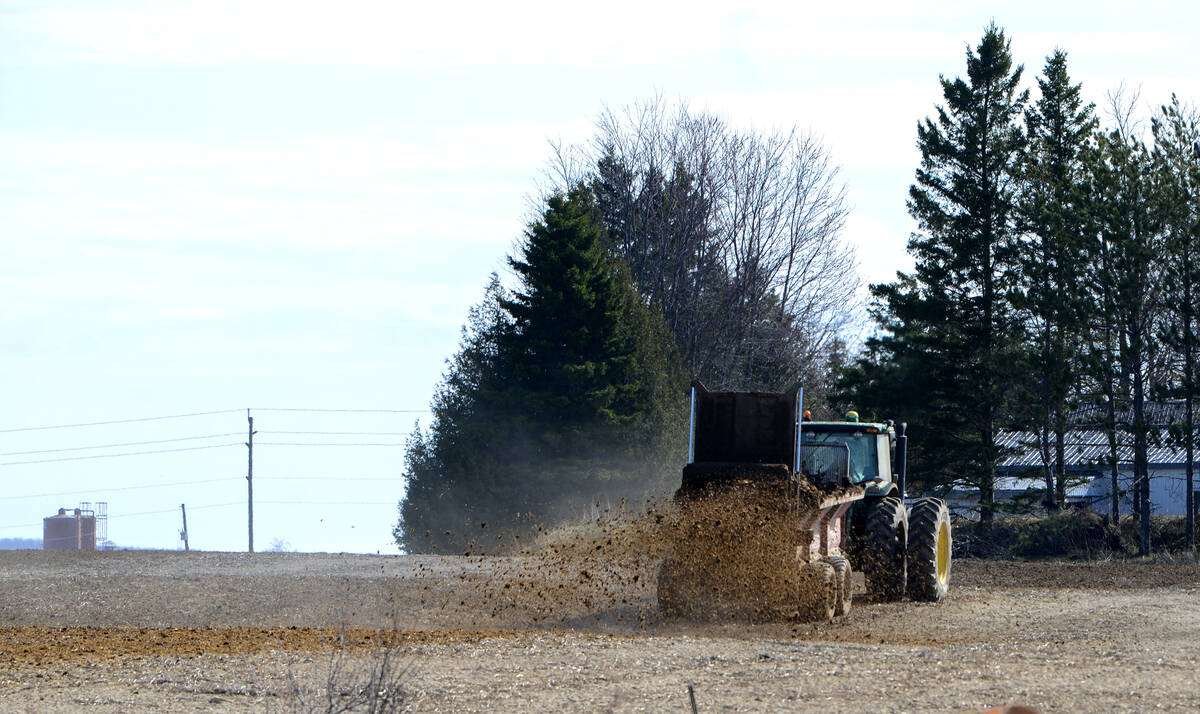
Modern application tools like drag hose systems and low-pressure radial tires are changing the way farmers address soil compaction. She said these new technologies help reduce deep compaction; however, this can lead to common-sense options being forgotten.
She offered several guiding principles to ensure soil is not compromised:
- The first pass causes the greatest damage. Establish consistent travel lanes so equipment repeatedly follows the same tracks.
- Apply to fit soils. Where possible, wait for fit soil conditions by considering soil texture and crop rotations (i.e., by having wheat in rotation when the chance of fit soils — especially clay loams — is higher).
- Match load size to field length. Plan application rates and loads so the tanker empties near the end of the field, minimizing unnecessary travel.
- Increase application width. Wider spread patterns reduce the percentage of the field affected by tire traffic.
- Apply manure to alfalfa as soon as possible after forage harvest. Applying manure before regrowth begins minimizes damage to emerging shoots.
Compaction mitigation
Brown warned that despite following these guidelines, wheel traffic is not the only potential risk for increasing compaction.
“Injection of high rates of manure into wet soils can also cause compaction, especially in heavy textured soils, where the injection unit could smear the soil and together with high manure rate,” she said.
Deep-rooting cover crops are plants used between cash crops that develop long, extensive root systems capable of penetrating deeper layers of soil than many common crops. Brown said using this method alongside manure application for breaking up or recovering soil layers damaged by heavy tanker traffic may also prove effective. This largely depends on how deep the compacted layer is (surface vs. more than one foot).
In instances of deep compaction, she said deep-rooting cover crops such as daikon radish will help restore compacted soils. She warned, however, that six weeks will not fix the problem compared to perennial crops like alfalfa that are in rotation longer.
“Manure application into standing crops allow root systems (including oats and other cover crops) to help prevent compacting the soil spaces where the roots grow compared to bare soil. It is difficult to maintain infiltration and water holding capacity where compaction has occurred and having a growing crop/cover crop will help, but determining which cover crops do the best job in ‘fixing’ compaction will depend on how deep the compaction layer is, soil texture, time in the growing season and fertility,” she said.
Pre-planning
Brown believes pre-planning is an important part of nutrient plans. She said it is important to consider how manure application is handled. A frac tank that feeds a drag hose with continuous manure may be an option that provides the least compaction risk for liquid manure.
For solid manure, she recommended stockpiling the manure in the field where it will be applied and waiting for the best possible application conditions.
Brown also advised farmers to consider how far the manure has to travel to avoid nutrient loss.
“In the U.S. there are pipelines with connections that can apply manure to any field along the pipeline. Again, for liquid manure, but saves on some of the logistics for road travel and practical distance to move manure,” she said, adding that Ontario would need standard operating procedures to make this a potential option for Ontario farmers. She said municipal red tape makes this option very difficult.
Despite dry conditions across Ontario, fields may still be too wet to support a heavy manure spreader. Brown said there are many factors that will influence the timing, adding that soil moisture conditions will not be a big consideration if it is late November and the manure storage does not have capacity to wait until spring.
“Pre-planning manure application considering the whole year instead of just considering application as a once-per-year task would help. Valuing manure for its fertility and soil health benefits changes the mindset in how manure will be managed and applied,” she said.
The post Manure isn’t just fertilizer — it’s a soil structure tool appeared first on Farmtario.


