

Global horizontal irradiance across Europe averaged 5% above the 2007–2025 norm in August 2026, extending the elevated solar resource recorded during June and July, according to analysis using the Solcast API. Nearly three quarters of the continent received above-average irradiance as persistent high pressure limited cloud formation and storm development. Much of southern England experienced Europe’s strongest positive anomalies, reaching more than 20% above average, before a change in weather patterns brought cooler and cloudier conditions to parts of western Europe during the second half of the month.
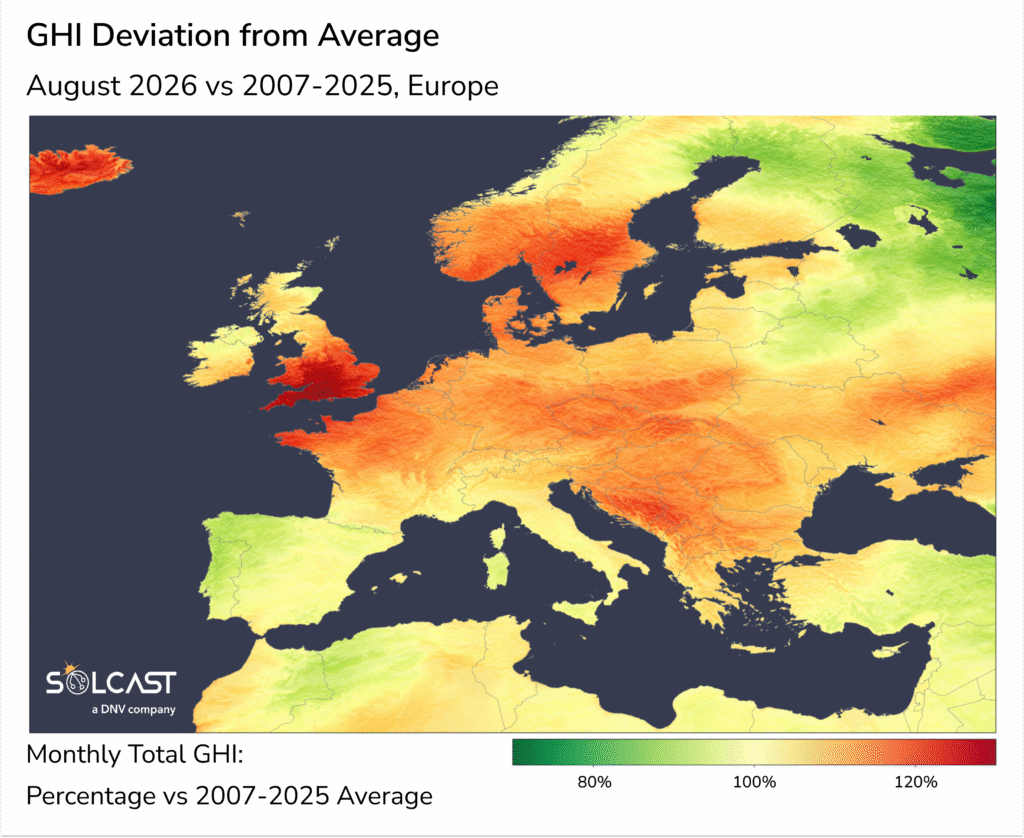
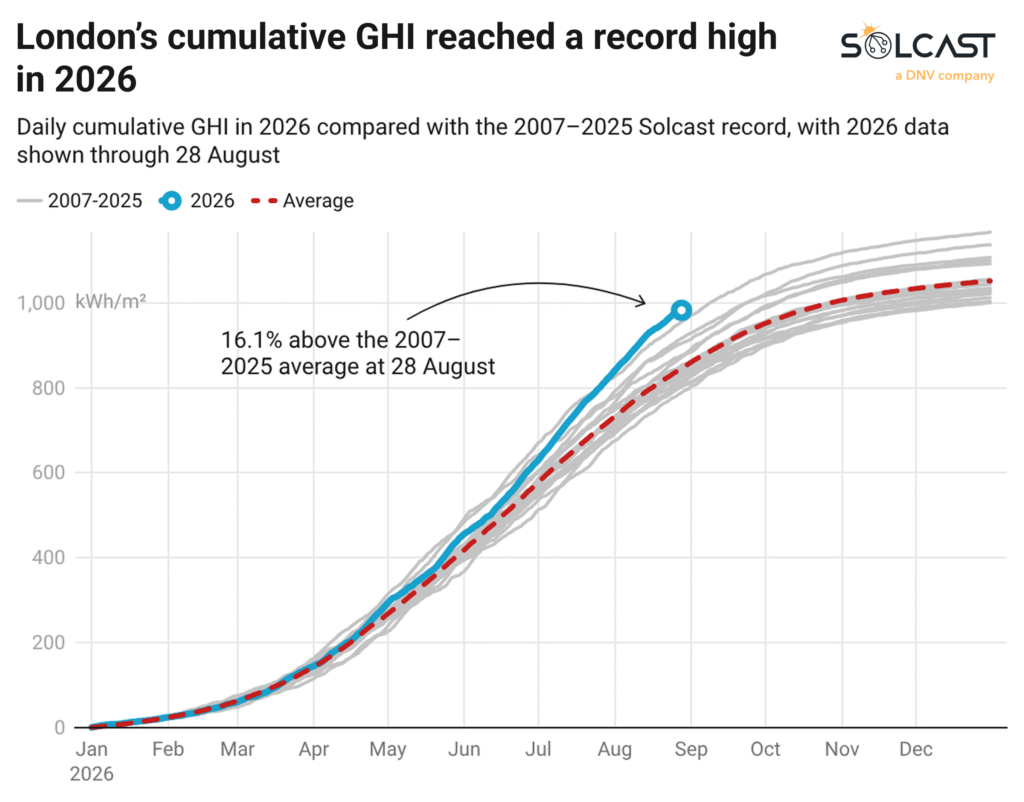
High pressure remained the main influence on Europe’s solar resource for much of August. Sinking air within the persistent system stabilised atmospheric conditions, limiting cloud formation and supporting extended periods of clear sky. Although August is typically Europe’s second-sunniest month, irradiance reached more than 20% above the seasonal norm in some regions. This marked a third consecutive month of elevated solar resource across much of western and central Europe, while London’s cumulative GHI reached a record high for this point in the year.
The unusually sunny conditions coincided with exceptional drought across parts of Europe. Southern England experienced 62 consecutive dry days through the middle of August, easily breaking the previous record of 51 days. According to the European Commission’s Joint Research Centre, critically low levels on the Rhine and Danube disrupted hydropower and nuclear generation, increasing reliance on other generation sources, including solar.
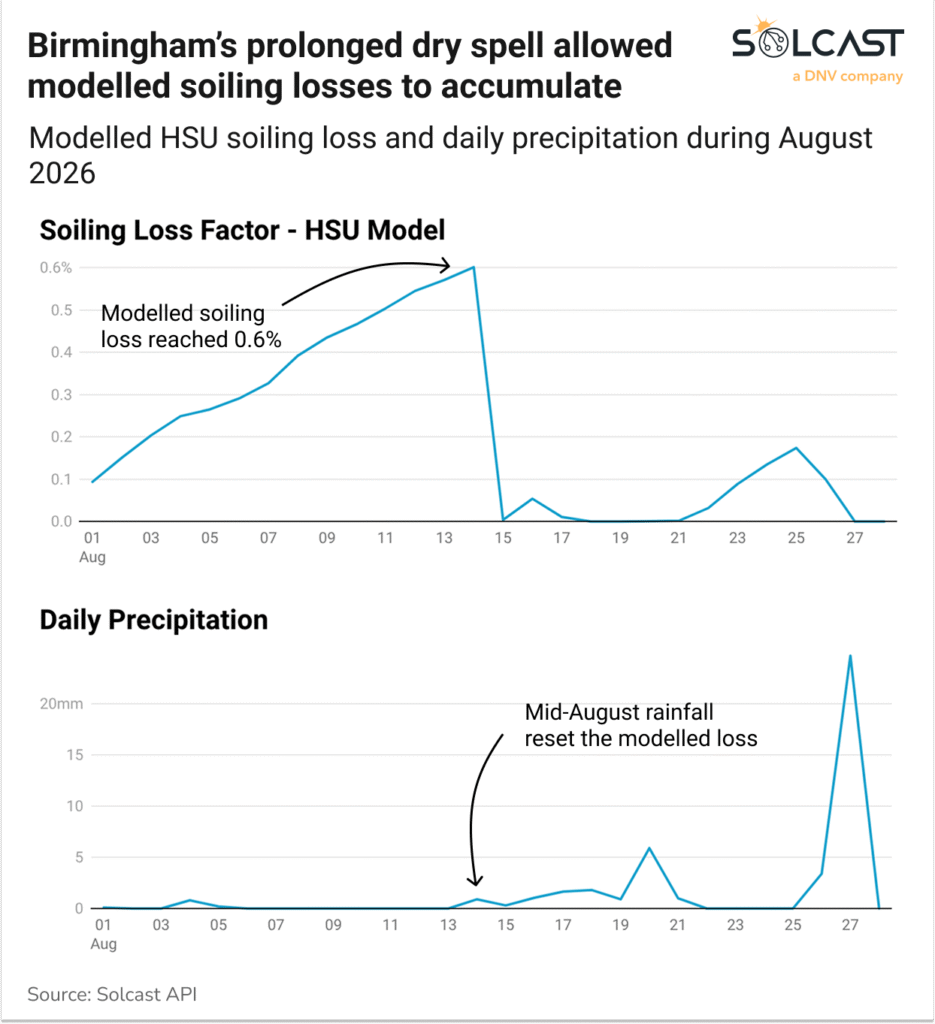
In Birmingham, the prolonged lack of rainfall provided few opportunities for natural module cleaning, allowing modelled soiling losses to accumulate before rain returned in mid-August.
The prolonged high-pressure pattern began to break down during the second half of August. As the system weakened and shifted eastward, a cold front arrived from the Atlantic and temperatures fell by more than 15 C across parts of western Europe after weeks of persistent heat and dry weather. Increasing cloud and rainfall reduced the earlier irradiance surplus as the front moved into France and Germany.
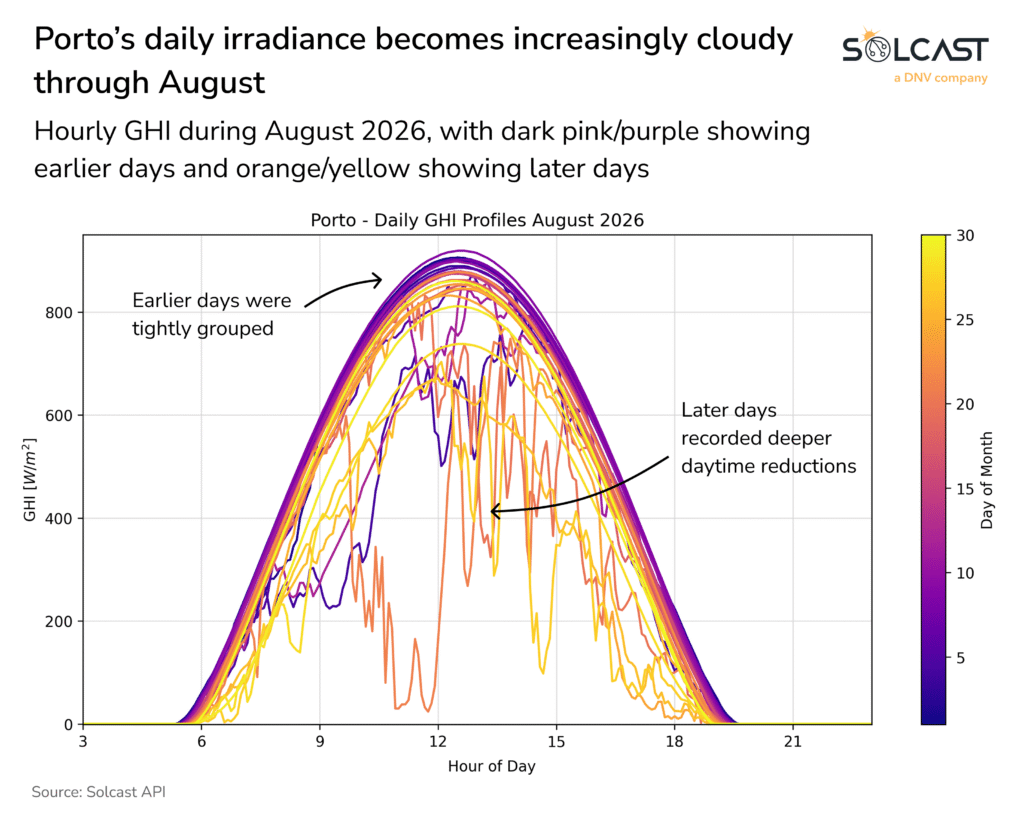
The late-month change had an uneven effect on Europe’s irradiance. Central and eastern regions retained more of their earlier surplus, while parts of southwestern Europe finished closer to or below their long-term average.
Porto’s daily irradiance profiles provide a closer view of the changing conditions in the southwest. Early-month profiles were generally more consistent, while several days around and after mid-month recorded pronounced daytime reductions.
Solcast produces these figures by tracking clouds and aerosols at 1-2km resolution globally, using satellite data and proprietary AI/ML algorithms. This data is used to drive irradiance models, enabling Solcast to calculate irradiance at high resolution, with typical bias of less than 2%, and also cloud-tracking forecasts. This data is used by more than 350 companies managing over 350 GW of solar assets globally.
The post Europe’s solar resource surplus continues before late-August cloud shift appeared first on pv magazine Global.


