

Australia’s cheapest plug-in hybrid SUV is not especially glamorous, exciting or sophisticated. But maybe that’s missing the point of the $33,990 BYD Sealion 5 Essential.
This is a sizeable five-seat SUV with more than 70km of claimed electric range, more than 1000km of combined petrol-electric range, plenty of standard equipment and enough space to perform proper family duties. And it costs $4000 less than the better-equipped Sealion 5 Premium.
Having already sampled the Premium briefly, we’ve now spent some time with the Essential too. And while the cheapest Sealion 5 certainly has some rough edges, it also makes a pretty convincing case that you don’t necessarily need to spend the extra money.
READ MORE: Confirmed: BYD Sealion 5 is Australia’s cheapest plug-in hybrid SUV, undercutting Chery Tiggo 7 and Geely Starray EM-i
READ MORE: 2026 BYD Sealion 5 Premium Review: This PHEV SUV is the Mitsubishi Lancer wagon of its generation. That’s a compliment, by the way…
READ MORE: BYD Sealion 8 PHEV priced from $56,990: First seven-seat SUV from Chinese giant undercuts most rivals
2026 BYD Sealion 5 Essential price and equipment
The BYD Sealion 5 Essential is priced at $33,990 plus on-road costs, while the Premium costs $37,990.
That makes the Essential Australia’s cheapest PHEV SUV, undercutting the likes of the Geely Starray EM-i (starting from $37,490) and Chery Tiggo 7 Super Hybrid ($39,990 drive-away).
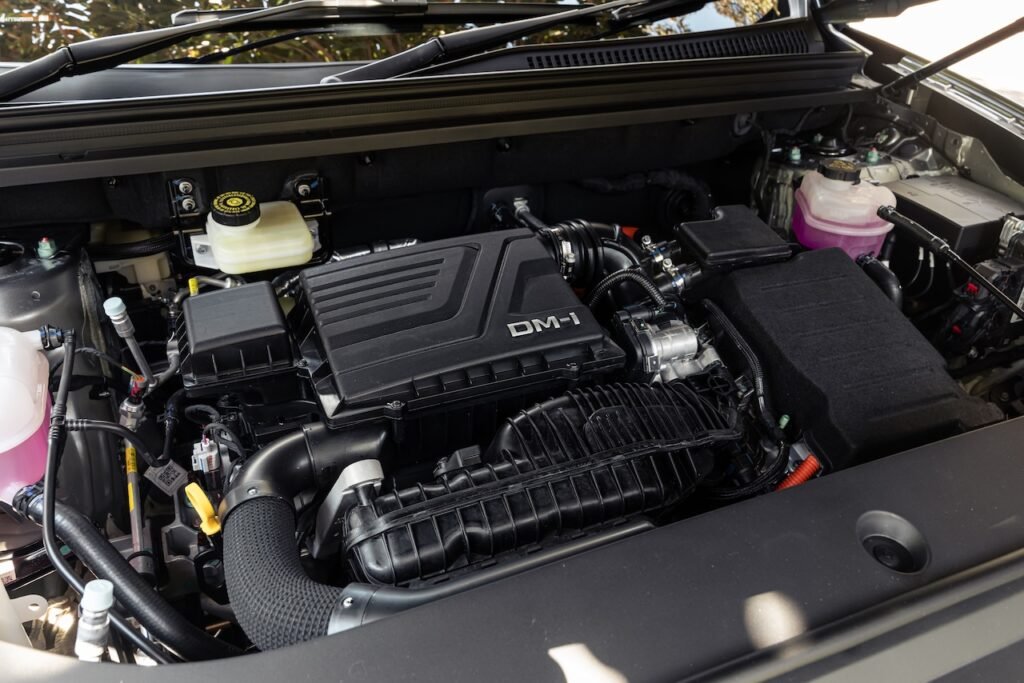
Both Sealion 5s are front-wheel drive and use BYD’s fourth-generation DM-i plug-in hybrid system, combining a naturally aspirated 1.5-litre four-cylinder petrol engine with a front-mounted electric motor.
The engine produces 72kW/122Nm, the electric motor 145kW/300Nm and combined system output is 156kW. The Essential gets from 0-100km/h in a claimed 7.7 seconds, actually making it 0.4sec quicker than the heavier Premium.
The significant mechanical difference between the two is battery size. The Essential gets a 12.9kWh BYD Blade lithium iron phosphate battery compared with 18.3kWh in the Premium.
That translates to 71km of claimed NEDC electric range for the Essential versus 100km for the Premium. Add a 52-litre petrol tank and the Essential has a claimed 1001km combined range on 95 RON fuel, just 29km short of the Premium according to BYD’s specification sheet.
Official energy consumption is 12.0kWh/100km, while claimed fuel consumption is 1.2L/100km with the battery above 25 per cent state of charge, rising to 4.5L/100km below 25 per cent. As always with a PHEV, what you actually burn depends heavily on how regularly you plug it in and how you use it.
One important limitation is charging. The Sealion 5 doesn’t offer DC fast charging and AC charging peaks at just 3.3kW. BYD says the Essential can nevertheless fully recharge in less than four hours because of its relatively small battery.
Both versions also get V2L capability, allowing the traction battery to power external electrical equipment.
For its price the Essential isn’t exactly stripped out. Standard equipment includes 18-inch alloy wheels, LED lighting, synthetic leather trim, dual-zone climate control with rear vents, wireless Apple CarPlay and Android Auto, satellite navigation, DAB radio and keyless entry and starting.
There is an 8.8-inch digital instrument display and a 10.1-inch central touchscreen, compared with the Premium’s 12.8-inch display. The Essential also makes do with six speakers instead of nine.
Spend the extra $4000 on the Premium and you also get a panoramic sunroof, powered tailgate, roof rails, 360-degree camera and front parking sensors, electrically adjustable and folding exterior mirrors, power-adjustable front seats, heating and ventilation for the driver and a 15W wireless phone charger.
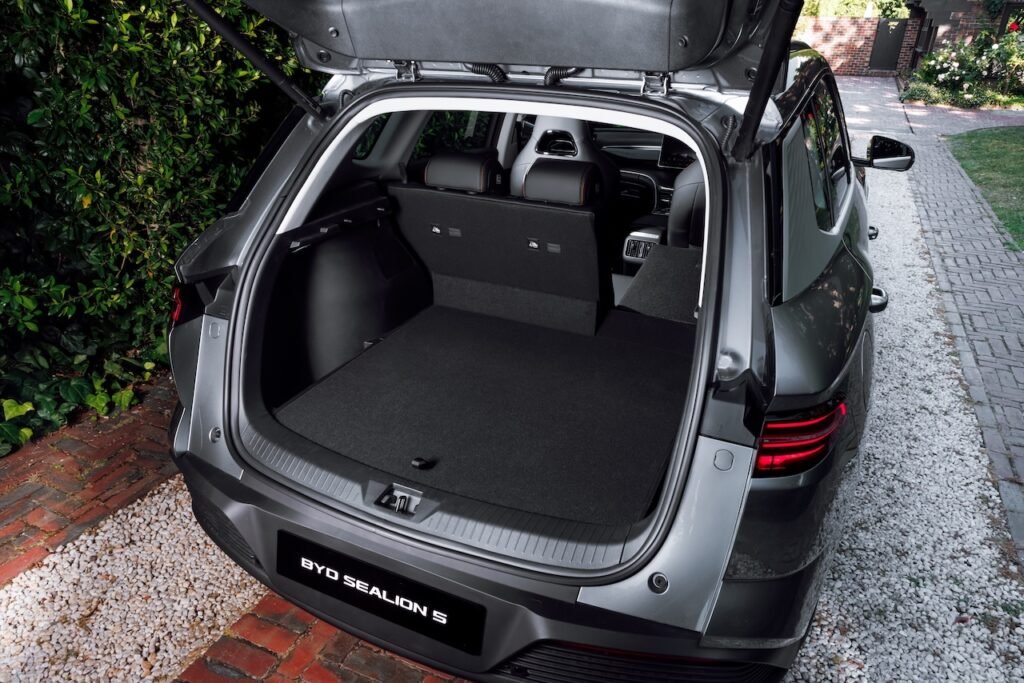
The dimensions don’t change. The Sealion 5 measures 4738mm long, 1860mm wide and 1710mm tall on a 2712mm wheelbase. Boot capacity is a useful 463 litres with five seats occupied and 1410 litres with the 60:40 rear seat folded.
Safety equipment includes seven airbags, AEB, adaptive cruise control, lane keeping assistance, blind-spot monitoring, rear cross-traffic alert and reverse AEB, rear collision warning and door-opening warning.
But there is a significant caveat: the Sealion 5 does not have an ANCAP safety rating and BYD says it is not expected to receive one. BYD’s line is that the Sealion 5 was engineered with the aim of achieving the top safety level applicable during its development, but it has not secured a place in ANCAP’s testing program.
That’s more than an academic issue. BYD sees the Sealion 5 as appealing to fleets as well as private buyers – its own launch material specifically nominates both – and many corporate and government fleets insist on a five-star ANCAP rating.
The absence of one therefore has the potential to limit the Sealion 5 in precisely the market BYD is making a concerted push into.
2026 BYD Sealion 5 Essential: What we think
There is nothing complicated about understanding the Sealion 5 Essential once you’re behind the wheel.
It’s a relatively straightforward, comfortable and practical SUV. It doesn’t pretend to be sporty and it certainly doesn’t drive that way.
The key dynamic shortfall is the steering. Even in its Comfort setting it’s unusually heavy, especially at lower speeds, and switching to Sport only adds more weight. For a vehicle whose natural habitat is likely to include plenty of suburban streets, shopping centres and office car parks, we’d prefer it substantially lighter.
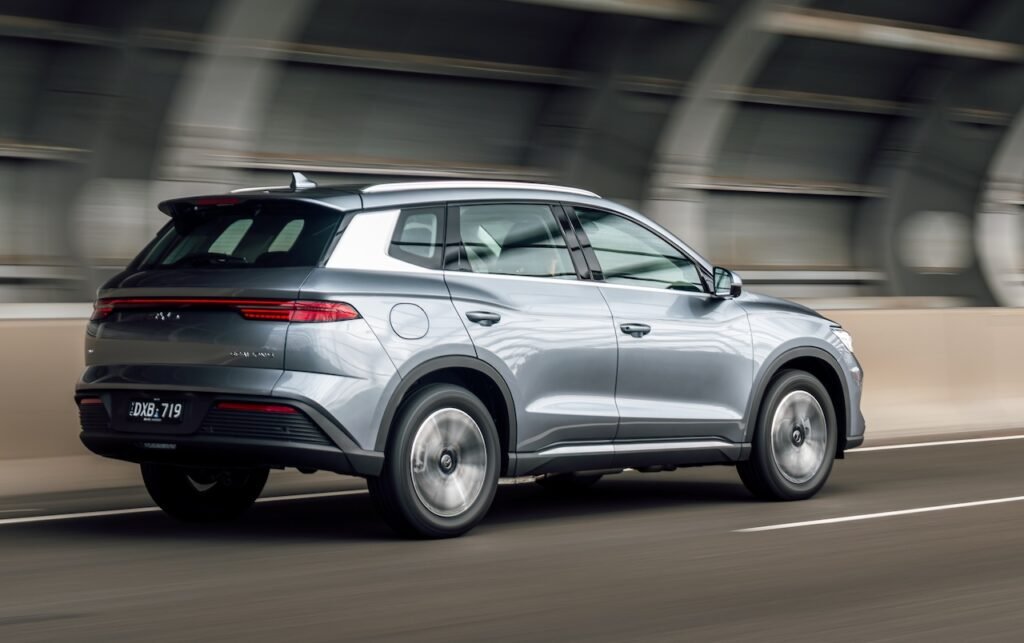
The ride is also on the firm side. The MacPherson strut front and multi-link rear suspension copes reasonably well with larger bumps, but there’s a fair bit of movement over lumpier surfaces and the Sealion 5 always feels like a relatively heavy vehicle.
Which it is. The Essential weighs 1724kg, although that’s 61kg less than the Premium.
It isn’t particularly nimble. Push harder and there’s plenty of body movement and the fairly flat driver’s seat doesn’t offer much lateral support. Better to settle back and drive the Sealion 5 at the pace it seems designed for.
Performance is adequate rather than memorable. The electric motor gives it reasonable initial response, but it doesn’t feel especially quick. Once the battery is depleted and the petrol engine is working harder, you hear more of it. The engine isn’t horribly intrusive, but there’s enough noise under acceleration to remind you this isn’t an EV.
There’s also substantial tyre noise on coarse-chip surfaces from the 225/60 R18 Hankooks.
None of which makes the Essential unpleasant. It’s simply not a vehicle that encourages you to drive for the sake of driving.
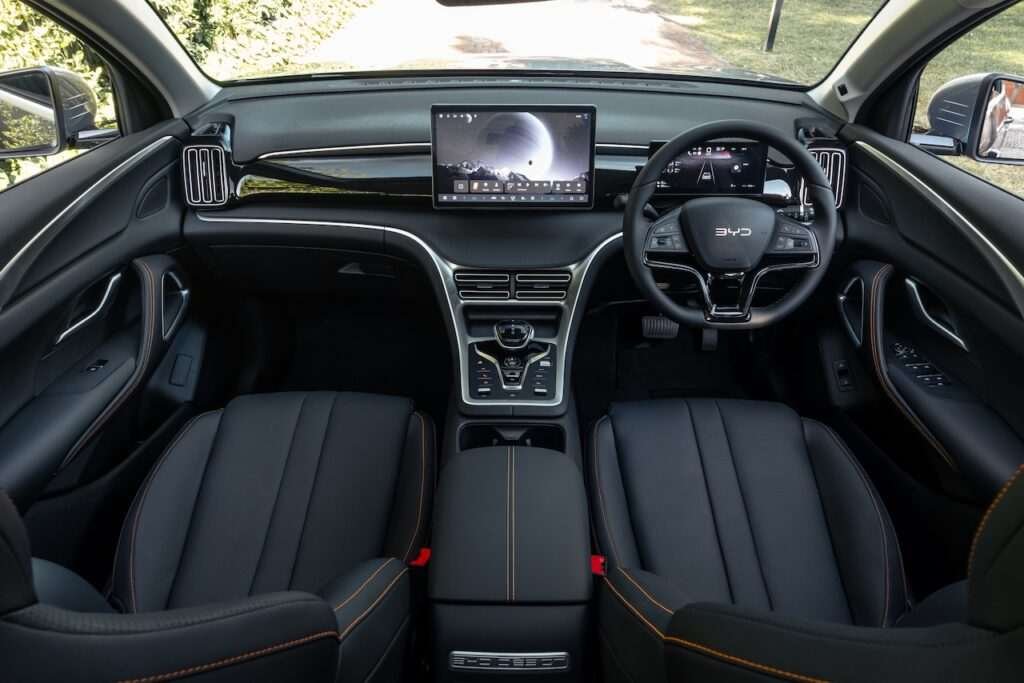
The cabin makes a stronger case. Presentation is pretty good considering the price, with a soft-touch upper dash, contrasting trim and stitching and enough variation in materials to prevent the interior feeling cheap.
There are also proper physical controls on the centre console for some regularly used functions, including climate control, drive modes and demisting, rather than forcing absolutely everything through the touchscreen.
Some functions still require a dive into BYD’s menus and the 8.8-inch driver’s display is small and can be difficult to read at a glance. The Essential’s 10.1-inch centre screen also looks noticeably more modest than the displays appearing in many newer Chinese vehicles.
But perhaps that’s another example of the Sealion 5 spending money where it matters.
There’s reasonable storage up-front, useful door bins and USB-A and USB-C connections. The front seats are manually adjustable in the Essential and the steering wheel adjusts manually for reach and rake, although we couldn’t get quite as much reach from it as we’d have liked.
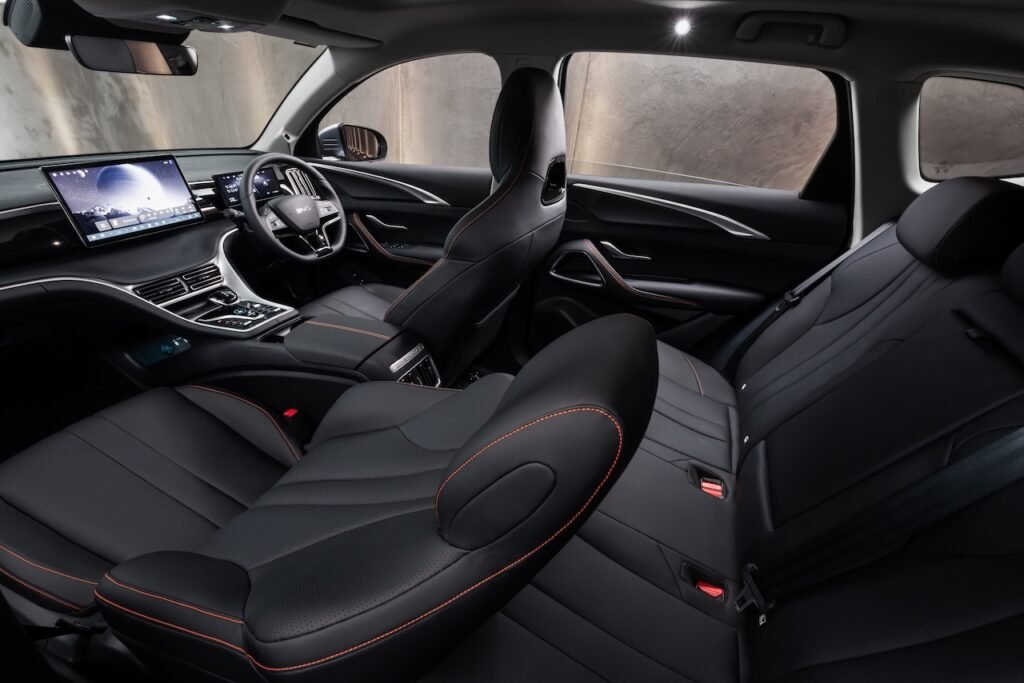
The rear is similarly sensible. There’s adequate knee room behind an adult driving position, decent-sized windows, rear air vents, USB-A and USB-C ports, dual map pockets and a fold-down centre armrest with cupholders. The centre seating position is noticeably higher and harder than the outer pair.
The Essential also has a manual tailgate rather than the Premium’s powered version. The luggage compartment offers storage beneath the floor and smaller bins on either side.
2026 BYD Sealion 5 Essential: Verdict
The Sealion 5 Essential’s greatest strength is that it knows its job.
It’s not especially refined, enjoyable or sophisticated to drive. The steering is too heavy, tyre noise can be substantial and the petrol engine becomes obvious when it’s asked to work hard. The absence of an ANCAP rating is also a concern, particularly for a vehicle BYD hopes to sell into fleets.
But $33,990 buys a roomy five-seat SUV, useful equipment, a 71km claimed electric range and a PHEV system capable of travelling long distances on a full battery and tank. And while the Premium is undoubtedly nicer, the Essential retains enough of the important stuff to make that extra $4000 look optional rather than essential.
SCORE: 3.5/5
2026 BYD Sealion 5 Essential price and specifications
Price: $33,990 plus on-road costs
Basics: PHEV, 5 seats, 5 doors, medium SUV, FWD
EV range: 71km (NEDC)
Combined range: 1001km (NEDC)
Battery capacity: 12.9kWh BYD Blade LFP
Battery warranty: Eight years/160,000km
Energy consumption: 12.0kWh/100km (claimed)
Fuel consumption: 1.2L/100km with 25-100 per cent SOC; 4.5L/100km below 25 per cent SOC
Powertrain: 1.5-litre naturally aspirated four-cylinder petrol, 72kW/122Nm
Motor: Front-mounted permanent-magnet synchronous motor, 145kW/300Nm
Combined output: 156kW
Transmission: Single speed automatic
AC charging: 3.3kW
DC charging: Not available
V2L: Yes
0-100km/h: 7.7 seconds


