A car with 600km of range that takes 40 minutes to fast charge can easily lose to one with 500km that takes 18.
Yet the two figures sit in separate rows of the brochure, leaving the buyer to weigh them up unassisted.
So we combined them into a single number that anyone can understand: how long a 1000km run would take, driving and charging included.
Using data supplied by carloop, we have calculated a road trip time for every electric vehicle currently sold in Australia.
carloop’s 10-80 per cent fast-charging figures are derived from its own charging data and calculations using supplied figures rather than simply taken from a manufacturer claim, which matters here: charging speed is the variable that drives the result.
A more economical EV that doesn’t have as high a peak DC charge rate may actually be quicker on a road trip because it’s using less electricity.
This table shows the estimated 1000km road trip times for every EV currently on sale in Australia.
644 km of highway range, which is 80% of the 805 km official figure from a 108.7kWh battery — sitting on 110km/h costs more than the test cycle allows.
Set off full and drive to 10%: 580 km before the first stop.
Each 10 to 80% charge takes 21 minutes and adds 451 km.
1 stop to cover 1,000km, 24 minutes plugged in altogether. A part charge is quicker than its share suggests, because 10 to 80% is fastest at the low end.
Arrives with 50 km in hand, topped up at the stop already being made rather than a stop of its own.
10 hours driving plus 24 minutes charging = 10h 24m.
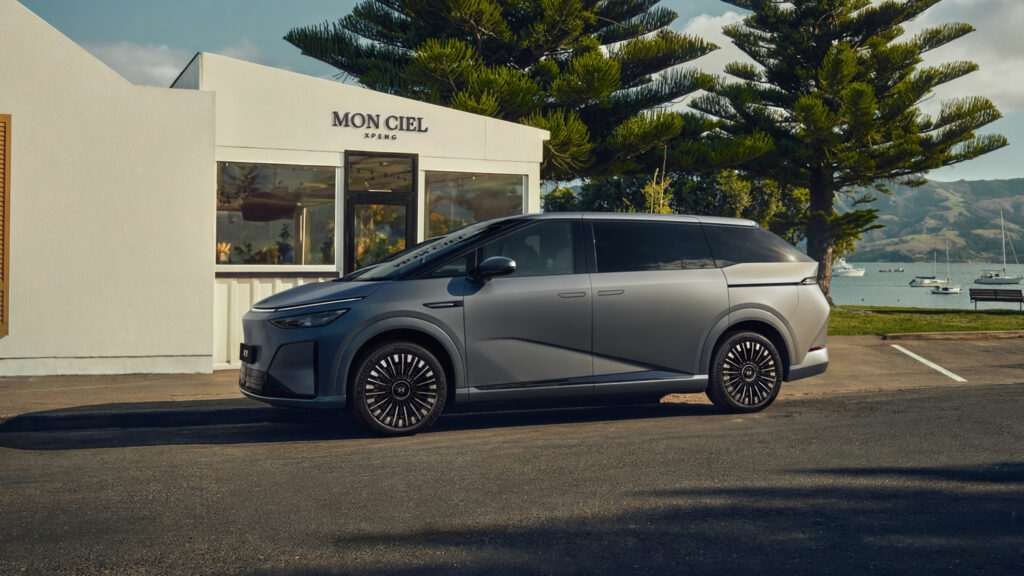
Xpeng X9 AWD Performance
2
Excellent
436 km of highway range, which is 80% of the 545 km official figure from a 106kWh battery — sitting on 110km/h costs more than the test cycle allows.
Set off full and drive to 10%: 392 km before the first stop.
Each 10 to 80% charge takes 12 minutes and adds 305 km.
2 stops to cover 1,000km, 28 minutes plugged in altogether. A part charge is quicker than its share suggests, because 10 to 80% is fastest at the low end.
Arrives with 50 km in hand, topped up at the stop already being made rather than a stop of its own.
10 hours driving plus 28 minutes charging = 10h 28m.
Xpeng X9 FWD Standard Range
3
Excellent
428 km of highway range, which is 80% of the 535 km official figure from a 93kWh battery — sitting on 110km/h costs more than the test cycle allows.
Set off full and drive to 10%: 385 km before the first stop.
Each 10 to 80% charge takes 12 minutes and adds 300 km.
3 stops to cover 1,000km, 29 minutes plugged in altogether. A part charge is quicker than its share suggests, because 10 to 80% is fastest at the low end.
Arrives with 50 km in hand, topped up at the stop already being made rather than a stop of its own.
10 hours driving plus 29 minutes charging = 10h 29m.
514 km of highway range, which is 80% of the 642 km official figure from a 108kWh battery — sitting on 110km/h costs more than the test cycle allows.
Set off full and drive to 10%: 463 km before the first stop.
Each 10 to 80% charge takes 16 minutes and adds 360 km.
2 stops to cover 1,000km, 29 minutes plugged in altogether. A part charge is quicker than its share suggests, because 10 to 80% is fastest at the low end.
Arrives with 50 km in hand, topped up at the stop already being made rather than a stop of its own.
10 hours driving plus 29 minutes charging = 10h 29m.
498 km of highway range, which is 80% of the 623 km official figure from a 108kWh battery — sitting on 110km/h costs more than the test cycle allows.
Set off full and drive to 10%: 448 km before the first stop.
Each 10 to 80% charge takes 16 minutes and adds 349 km.
2 stops to cover 1,000km, 31 minutes plugged in altogether. A part charge is quicker than its share suggests, because 10 to 80% is fastest at the low end.
Arrives with 50 km in hand, topped up at the stop already being made rather than a stop of its own.
10 hours driving plus 31 minutes charging = 10h 31m.
530 km of highway range, which is 80% of the 663 km official figure from a 85kWh battery — sitting on 110km/h costs more than the test cycle allows.
Set off full and drive to 10%: 477 km before the first stop.
Each 10 to 80% charge takes 18 minutes and adds 371 km.
2 stops to cover 1,000km, 31 minutes plugged in altogether. A part charge is quicker than its share suggests, because 10 to 80% is fastest at the low end.
Arrives with 50 km in hand, topped up at the stop already being made rather than a stop of its own.
10 hours driving plus 31 minutes charging = 10h 31m.
492 km of highway range, which is 80% of the 615 km official figure from a 94kWh battery — sitting on 110km/h costs more than the test cycle allows.
Set off full and drive to 10%: 443 km before the first stop.
Each 10 to 80% charge takes 16 minutes and adds 344 km.
2 stops to cover 1,000km, 31 minutes plugged in altogether. A part charge is quicker than its share suggests, because 10 to 80% is fastest at the low end.
Arrives with 50 km in hand, topped up at the stop already being made rather than a stop of its own.
10 hours driving plus 31 minutes charging = 10h 31m.
491 km of highway range, which is 80% of the 614 km official figure from a 74kWh battery — sitting on 110km/h costs more than the test cycle allows.
Set off full and drive to 10%: 442 km before the first stop.
Each 10 to 80% charge takes 16 minutes and adds 344 km.
2 stops to cover 1,000km, 31 minutes plugged in altogether. A part charge is quicker than its share suggests, because 10 to 80% is fastest at the low end.
Arrives with 50 km in hand, topped up at the stop already being made rather than a stop of its own.
10 hours driving plus 31 minutes charging = 10h 31m.
408 km of highway range, which is 80% of the 510 km official figure from a 80kWh battery — sitting on 110km/h costs more than the test cycle allows.
Set off full and drive to 10%: 367 km before the first stop.
Each 10 to 80% charge takes 12 minutes and adds 286 km.
3 stops to cover 1,000km, 31 minutes plugged in altogether. A part charge is quicker than its share suggests, because 10 to 80% is fastest at the low end.
Arrives with 50 km in hand, topped up at the stop already being made rather than a stop of its own.
10 hours driving plus 31 minutes charging = 10h 31m.
542 km of highway range, which is 80% of the 678 km official figure from a 97kWh battery — sitting on 110km/h costs more than the test cycle allows.
Set off full and drive to 10%: 488 km before the first stop.
Each 10 to 80% charge takes 19 minutes and adds 379 km.
2 stops to cover 1,000km, 32 minutes plugged in altogether. A part charge is quicker than its share suggests, because 10 to 80% is fastest at the low end.
Arrives with 50 km in hand, topped up at the stop already being made rather than a stop of its own.
10 hours driving plus 32 minutes charging = 10h 32m.
514 km of highway range, which is 80% of the 642 km official figure from a 97kWh battery — sitting on 110km/h costs more than the test cycle allows.
Set off full and drive to 10%: 463 km before the first stop.
Each 10 to 80% charge takes 19 minutes and adds 360 km.
2 stops to cover 1,000km, 35 minutes plugged in altogether. A part charge is quicker than its share suggests, because 10 to 80% is fastest at the low end.
Arrives with 50 km in hand, topped up at the stop already being made rather than a stop of its own.
10 hours driving plus 35 minutes charging = 10h 35m.
504 km of highway range, which is 80% of the 630 km official figure from a 97kWh battery — sitting on 110km/h costs more than the test cycle allows.
Set off full and drive to 10%: 454 km before the first stop.
Each 10 to 80% charge takes 19 minutes and adds 353 km.
2 stops to cover 1,000km, 36 minutes plugged in altogether. A part charge is quicker than its share suggests, because 10 to 80% is fastest at the low end.
Arrives with 50 km in hand, topped up at the stop already being made rather than a stop of its own.
10 hours driving plus 36 minutes charging = 10h 36m.
600 km of highway range, which is 80% of the 750 km official figure from a 75kWh battery — sitting on 110km/h costs more than the test cycle allows.
Set off full and drive to 10%: 540 km before the first stop.
Each 10 to 80% charge takes 27 minutes and adds 420 km.
2 stops to cover 1,000km, 37 minutes plugged in altogether. A part charge is quicker than its share suggests, because 10 to 80% is fastest at the low end.
Arrives with 50 km in hand, topped up at the stop already being made rather than a stop of its own.
10 hours driving plus 37 minutes charging = 10h 37m.
436 km of highway range, which is 80% of the 545 km official figure from a 74kWh battery — sitting on 110km/h costs more than the test cycle allows.
Set off full and drive to 10%: 392 km before the first stop.
Each 10 to 80% charge takes 16 minutes and adds 305 km.
2 stops to cover 1,000km, 37 minutes plugged in altogether. A part charge is quicker than its share suggests, because 10 to 80% is fastest at the low end.
Arrives with 50 km in hand, topped up at the stop already being made rather than a stop of its own.
10 hours driving plus 37 minutes charging = 10h 37m.
384 km of highway range, which is 80% of the 480 km official figure from a 71kWh battery — sitting on 110km/h costs more than the test cycle allows.
Set off full and drive to 10%: 346 km before the first stop.
Each 10 to 80% charge takes 13 minutes and adds 269 km.
3 stops to cover 1,000km, 37 minutes plugged in altogether. A part charge is quicker than its share suggests, because 10 to 80% is fastest at the low end.
Arrives with 50 km in hand, topped up at the stop already being made rather than a stop of its own.
10 hours driving plus 37 minutes charging = 10h 37m.
490 km of highway range, which is 80% of the 613 km official figure from a 97kWh battery — sitting on 110km/h costs more than the test cycle allows.
Set off full and drive to 10%: 441 km before the first stop.
Each 10 to 80% charge takes 19 minutes and adds 343 km.
2 stops to cover 1,000km, 37 minutes plugged in altogether. A part charge is quicker than its share suggests, because 10 to 80% is fastest at the low end.
Arrives with 50 km in hand, topped up at the stop already being made rather than a stop of its own.
10 hours driving plus 37 minutes charging = 10h 37m.
Polestar 5 Dual Motor
2
Excellent
536 km of highway range, which is 80% of the 670 km official figure from a 106kWh battery — sitting on 110km/h costs more than the test cycle allows.
Set off full and drive to 10%: 482 km before the first stop.
Each 10 to 80% charge takes 22 minutes and adds 375 km.
2 stops to cover 1,000km, 38 minutes plugged in altogether. A part charge is quicker than its share suggests, because 10 to 80% is fastest at the low end.
Arrives with 50 km in hand, topped up at the stop already being made rather than a stop of its own.
10 hours driving plus 38 minutes charging = 10h 38m.
488 km of highway range, which is 80% of the 610 km official figure from a 97kWh battery — sitting on 110km/h costs more than the test cycle allows.
Set off full and drive to 10%: 439 km before the first stop.
Each 10 to 80% charge takes 19 minutes and adds 342 km.
2 stops to cover 1,000km, 38 minutes plugged in altogether. A part charge is quicker than its share suggests, because 10 to 80% is fastest at the low end.
Arrives with 50 km in hand, topped up at the stop already being made rather than a stop of its own.
10 hours driving plus 38 minutes charging = 10h 38m.
Volvo EX60 Ultra P10 AWD
2
Excellent
488 km of highway range, which is 80% of the 610 km official figure from a 91kWh battery — sitting on 110km/h costs more than the test cycle allows.
Set off full and drive to 10%: 439 km before the first stop.
Each 10 to 80% charge takes 19 minutes and adds 342 km.
2 stops to cover 1,000km, 38 minutes plugged in altogether. A part charge is quicker than its share suggests, because 10 to 80% is fastest at the low end.
Arrives with 50 km in hand, topped up at the stop already being made rather than a stop of its own.
10 hours driving plus 38 minutes charging = 10h 38m.
449 km of highway range, which is 80% of the 561 km official figure from a 80kWh battery — sitting on 110km/h costs more than the test cycle allows.
Set off full and drive to 10%: 404 km before the first stop.
Each 10 to 80% charge takes 17 minutes and adds 314 km.
2 stops to cover 1,000km, 38 minutes plugged in altogether. A part charge is quicker than its share suggests, because 10 to 80% is fastest at the low end.
Arrives with 50 km in hand, topped up at the stop already being made rather than a stop of its own.
10 hours driving plus 38 minutes charging = 10h 38m.
Volvo EX60 Ultra P6 RWD
2
Excellent
480 km of highway range, which is 80% of the 600 km official figure from a 80kWh battery — sitting on 110km/h costs more than the test cycle allows.
Set off full and drive to 10%: 432 km before the first stop.
Each 10 to 80% charge takes 19 minutes and adds 336 km.
2 stops to cover 1,000km, 39 minutes plugged in altogether. A part charge is quicker than its share suggests, because 10 to 80% is fastest at the low end.
Arrives with 50 km in hand, topped up at the stop already being made rather than a stop of its own.
10 hours driving plus 39 minutes charging = 10h 39m.
478 km of highway range, which is 80% of the 597 km official figure from a 97kWh battery — sitting on 110km/h costs more than the test cycle allows.
Set off full and drive to 10%: 430 km before the first stop.
Each 10 to 80% charge takes 19 minutes and adds 335 km.
2 stops to cover 1,000km, 39 minutes plugged in altogether. A part charge is quicker than its share suggests, because 10 to 80% is fastest at the low end.
Arrives with 50 km in hand, topped up at the stop already being made rather than a stop of its own.
10 hours driving plus 39 minutes charging = 10h 39m.
508 km of highway range, which is 80% of the 635 km official figure from a 82.6kWh battery — sitting on 110km/h costs more than the test cycle allows.
Set off full and drive to 10%: 457 km before the first stop.
Each 10 to 80% charge takes 21 minutes and adds 356 km.
2 stops to cover 1,000km, 39 minutes plugged in altogether. A part charge is quicker than its share suggests, because 10 to 80% is fastest at the low end.
Arrives with 50 km in hand, topped up at the stop already being made rather than a stop of its own.
10 hours driving plus 39 minutes charging = 10h 39m.
415 km of highway range, which is 80% of the 519 km official figure from a 74kWh battery — sitting on 110km/h costs more than the test cycle allows.
Set off full and drive to 10%: 374 km before the first stop.
Each 10 to 80% charge takes 16 minutes and adds 291 km.
3 stops to cover 1,000km, 41 minutes plugged in altogether. A part charge is quicker than its share suggests, because 10 to 80% is fastest at the low end.
Arrives with 50 km in hand, topped up at the stop already being made rather than a stop of its own.
10 hours driving plus 41 minutes charging = 10h 41m.
Volvo ES90
2
Excellent
520 km of highway range, which is 80% of the 650 km official figure from a 88kWh battery — sitting on 110km/h costs more than the test cycle allows.
Set off full and drive to 10%: 468 km before the first stop.
Each 10 to 80% charge takes 23 minutes and adds 364 km.
2 stops to cover 1,000km, 41 minutes plugged in altogether. A part charge is quicker than its share suggests, because 10 to 80% is fastest at the low end.
Arrives with 50 km in hand, topped up at the stop already being made rather than a stop of its own.
10 hours driving plus 41 minutes charging = 10h 41m.
504 km of highway range, which is 80% of the 630 km official figure from a 94.4kWh battery — sitting on 110km/h costs more than the test cycle allows.
Set off full and drive to 10%: 454 km before the first stop.
Each 10 to 80% charge takes 22 minutes and adds 353 km.
2 stops to cover 1,000km, 41 minutes plugged in altogether. A part charge is quicker than its share suggests, because 10 to 80% is fastest at the low end.
Arrives with 50 km in hand, topped up at the stop already being made rather than a stop of its own.
10 hours driving plus 41 minutes charging = 10h 41m.
415 km of highway range, which is 80% of the 519 km official figure from a 74kWh battery — sitting on 110km/h costs more than the test cycle allows.
Set off full and drive to 10%: 374 km before the first stop.
Each 10 to 80% charge takes 17 minutes and adds 291 km.
3 stops to cover 1,000km, 43 minutes plugged in altogether. A part charge is quicker than its share suggests, because 10 to 80% is fastest at the low end.
Arrives with 50 km in hand, topped up at the stop already being made rather than a stop of its own.
10 hours driving plus 43 minutes charging = 10h 43m.
545 km of highway range, which is 80% of the 681 km official figure from a 82kWh battery — sitting on 110km/h costs more than the test cycle allows.
Set off full and drive to 10%: 491 km before the first stop.
Each 10 to 80% charge takes 27 minutes and adds 382 km.
2 stops to cover 1,000km, 45 minutes plugged in altogether. A part charge is quicker than its share suggests, because 10 to 80% is fastest at the low end.
Arrives with 50 km in hand, topped up at the stop already being made rather than a stop of its own.
10 hours driving plus 45 minutes charging = 10h 45m.
Audi Q6 SQ6 Sportback e-tron
2
Excellent
463 km of highway range, which is 80% of the 579 km official figure from a 94.9kWh battery — sitting on 110km/h costs more than the test cycle allows.
Set off full and drive to 10%: 417 km before the first stop.
Each 10 to 80% charge takes 21 minutes and adds 324 km.
2 stops to cover 1,000km, 45 minutes plugged in altogether. A part charge is quicker than its share suggests, because 10 to 80% is fastest at the low end.
Arrives with 50 km in hand, topped up at the stop already being made rather than a stop of its own.
10 hours driving plus 45 minutes charging = 10h 45m.
456 km of highway range, which is 80% of the 570 km official figure from a 87.5kWh battery — sitting on 110km/h costs more than the test cycle allows.
Set off full and drive to 10%: 410 km before the first stop.
Each 10 to 80% charge takes 21 minutes and adds 319 km.
2 stops to cover 1,000km, 46 minutes plugged in altogether. A part charge is quicker than its share suggests, because 10 to 80% is fastest at the low end.
Arrives with 50 km in hand, topped up at the stop already being made rather than a stop of its own.
10 hours driving plus 46 minutes charging = 10h 46m.
Audi Q6 Sportback e-tron quattro
2
Very good
455 km of highway range, which is 80% of the 569 km official figure from a 94.9kWh battery — sitting on 110km/h costs more than the test cycle allows.
Set off full and drive to 10%: 410 km before the first stop.
Each 10 to 80% charge takes 21 minutes and adds 319 km.
2 stops to cover 1,000km, 46 minutes plugged in altogether. A part charge is quicker than its share suggests, because 10 to 80% is fastest at the low end.
Arrives with 50 km in hand, topped up at the stop already being made rather than a stop of its own.
10 hours driving plus 46 minutes charging = 10h 46m.
381 km of highway range, which is 80% of the 476 km official figure from a 80kWh battery — sitting on 110km/h costs more than the test cycle allows.
Set off full and drive to 10%: 343 km before the first stop.
Each 10 to 80% charge takes 16 minutes and adds 267 km.
3 stops to cover 1,000km, 46 minutes plugged in altogether. A part charge is quicker than its share suggests, because 10 to 80% is fastest at the low end.
Arrives with 50 km in hand, topped up at the stop already being made rather than a stop of its own.
10 hours driving plus 46 minutes charging = 10h 46m.
Audi Q6 e-tron Performance, SQ6 e-tron
2
Very good
446 km of highway range, which is 80% of the 558 km official figure from a 94.9kWh battery — sitting on 110km/h costs more than the test cycle allows.
Set off full and drive to 10%: 401 km before the first stop.
Each 10 to 80% charge takes 21 minutes and adds 312 km.
2 stops to cover 1,000km, 47 minutes plugged in altogether. A part charge is quicker than its share suggests, because 10 to 80% is fastest at the low end.
Arrives with 50 km in hand, topped up at the stop already being made rather than a stop of its own.
10 hours driving plus 47 minutes charging = 10h 47m.
Polestar 5 Performance
2
Very good
460 km of highway range, which is 80% of the 575 km official figure from a 106kWh battery — sitting on 110km/h costs more than the test cycle allows.
Set off full and drive to 10%: 414 km before the first stop.
Each 10 to 80% charge takes 22 minutes and adds 322 km.
2 stops to cover 1,000km, 47 minutes plugged in altogether. A part charge is quicker than its share suggests, because 10 to 80% is fastest at the low end.
Arrives with 50 km in hand, topped up at the stop already being made rather than a stop of its own.
10 hours driving plus 47 minutes charging = 10h 47m.
403 km of highway range, which is 80% of the 504 km official figure from a 80kWh battery — sitting on 110km/h costs more than the test cycle allows.
Set off full and drive to 10%: 363 km before the first stop.
Each 10 to 80% charge takes 18 minutes and adds 282 km.
3 stops to cover 1,000km, 48 minutes plugged in altogether. A part charge is quicker than its share suggests, because 10 to 80% is fastest at the low end.
Arrives with 50 km in hand, topped up at the stop already being made rather than a stop of its own.
10 hours driving plus 48 minutes charging = 10h 48m.
480 km of highway range, which is 80% of the 600 km official figure from a 106kWh battery — sitting on 110km/h costs more than the test cycle allows.
Set off full and drive to 10%: 432 km before the first stop.
Each 10 to 80% charge takes 24 minutes and adds 336 km.
2 stops to cover 1,000km, 49 minutes plugged in altogether. A part charge is quicker than its share suggests, because 10 to 80% is fastest at the low end.
Arrives with 50 km in hand, topped up at the stop already being made rather than a stop of its own.
10 hours driving plus 49 minutes charging = 10h 49m.
381 km of highway range, which is 80% of the 476 km official figure from a 80kWh battery — sitting on 110km/h costs more than the test cycle allows.
Set off full and drive to 10%: 343 km before the first stop.
Each 10 to 80% charge takes 17 minutes and adds 267 km.
3 stops to cover 1,000km, 49 minutes plugged in altogether. A part charge is quicker than its share suggests, because 10 to 80% is fastest at the low end.
Arrives with 50 km in hand, topped up at the stop already being made rather than a stop of its own.
10 hours driving plus 49 minutes charging = 10h 49m.
Audi Q6 e-tron quattro
3
Very good
434 km of highway range, which is 80% of the 542 km official figure from a 94.9kWh battery — sitting on 110km/h costs more than the test cycle allows.
Set off full and drive to 10%: 391 km before the first stop.
Each 10 to 80% charge takes 21 minutes and adds 304 km.
3 stops to cover 1,000km, 49 minutes plugged in altogether. A part charge is quicker than its share suggests, because 10 to 80% is fastest at the low end.
Arrives with 50 km in hand, topped up at the stop already being made rather than a stop of its own.
10 hours driving plus 49 minutes charging = 10h 49m.
390 km of highway range, which is 80% of the 487 km official figure from a 80kWh battery — sitting on 110km/h costs more than the test cycle allows.
Set off full and drive to 10%: 351 km before the first stop.
Each 10 to 80% charge takes 18 minutes and adds 273 km.
3 stops to cover 1,000km, 51 minutes plugged in altogether. A part charge is quicker than its share suggests, because 10 to 80% is fastest at the low end.
Arrives with 50 km in hand, topped up at the stop already being made rather than a stop of its own.
10 hours driving plus 51 minutes charging = 10h 51m.
354 km of highway range, which is 80% of the 443 km official figure from a 73kWh battery — sitting on 110km/h costs more than the test cycle allows.
Set off full and drive to 10%: 319 km before the first stop.
Each 10 to 80% charge takes 16 minutes and adds 248 km.
3 stops to cover 1,000km, 51 minutes plugged in altogether. A part charge is quicker than its share suggests, because 10 to 80% is fastest at the low end.
Arrives with 50 km in hand, topped up at the stop already being made rather than a stop of its own.
10 hours driving plus 51 minutes charging = 10h 51m.
387 km of highway range, which is 80% of the 484 km official figure from a 80kWh battery — sitting on 110km/h costs more than the test cycle allows.
Set off full and drive to 10%: 348 km before the first stop.
Each 10 to 80% charge takes 18 minutes and adds 271 km.
3 stops to cover 1,000km, 51 minutes plugged in altogether. A part charge is quicker than its share suggests, because 10 to 80% is fastest at the low end.
Arrives with 50 km in hand, topped up at the stop already being made rather than a stop of its own.
10 hours driving plus 51 minutes charging = 10h 51m.
364 km of highway range, which is 80% of the 455 km official figure from a 74kWh battery — sitting on 110km/h costs more than the test cycle allows.
Set off full and drive to 10%: 328 km before the first stop.
Each 10 to 80% charge takes 17 minutes and adds 255 km.
3 stops to cover 1,000km, 52 minutes plugged in altogether. A part charge is quicker than its share suggests, because 10 to 80% is fastest at the low end.
Arrives with 50 km in hand, topped up at the stop already being made rather than a stop of its own.
10 hours driving plus 52 minutes charging = 10h 52m.
363 km of highway range, which is 80% of the 454 km official figure from a 80kWh battery — sitting on 110km/h costs more than the test cycle allows.
Set off full and drive to 10%: 327 km before the first stop.
Each 10 to 80% charge takes 17 minutes and adds 254 km.
3 stops to cover 1,000km, 52 minutes plugged in altogether. A part charge is quicker than its share suggests, because 10 to 80% is fastest at the low end.
Arrives with 50 km in hand, topped up at the stop already being made rather than a stop of its own.
10 hours driving plus 52 minutes charging = 10h 52m.
505 km of highway range, which is 80% of the 631 km official figure from a 107.8kWh battery — sitting on 110km/h costs more than the test cycle allows.
Set off full and drive to 10%: 455 km before the first stop.
Each 10 to 80% charge takes 28 minutes and adds 354 km.
2 stops to cover 1,000km, 53 minutes plugged in altogether. A part charge is quicker than its share suggests, because 10 to 80% is fastest at the low end.
Arrives with 50 km in hand, topped up at the stop already being made rather than a stop of its own.
10 hours driving plus 53 minutes charging = 10h 53m.
358 km of highway range, which is 80% of the 448 km official figure from a 80kWh battery — sitting on 110km/h costs more than the test cycle allows.
Set off full and drive to 10%: 322 km before the first stop.
Each 10 to 80% charge takes 17 minutes and adds 251 km.
3 stops to cover 1,000km, 53 minutes plugged in altogether. A part charge is quicker than its share suggests, because 10 to 80% is fastest at the low end.
Arrives with 50 km in hand, topped up at the stop already being made rather than a stop of its own.
10 hours driving plus 53 minutes charging = 10h 53m.
416 km of highway range, which is 80% of the 520 km official figure from a 82.5kWh battery — sitting on 110km/h costs more than the test cycle allows.
Set off full and drive to 10%: 374 km before the first stop.
Each 10 to 80% charge takes 21 minutes and adds 291 km.
3 stops to cover 1,000km, 53 minutes plugged in altogether. A part charge is quicker than its share suggests, because 10 to 80% is fastest at the low end.
Arrives with 50 km in hand, topped up at the stop already being made rather than a stop of its own.
10 hours driving plus 53 minutes charging = 10h 53m.
340 km of highway range, which is 80% of the 425 km official figure from a 80kWh battery — sitting on 110km/h costs more than the test cycle allows.
Set off full and drive to 10%: 306 km before the first stop.
Each 10 to 80% charge takes 16 minutes and adds 238 km.
3 stops to cover 1,000km, 54 minutes plugged in altogether. A part charge is quicker than its share suggests, because 10 to 80% is fastest at the low end.
Arrives with 50 km in hand, topped up at the stop already being made rather than a stop of its own.
10 hours driving plus 54 minutes charging = 10h 54m.
448 km of highway range, which is 80% of the 560 km official figure from a 78kWh battery — sitting on 110km/h costs more than the test cycle allows.
Set off full and drive to 10%: 403 km before the first stop.
Each 10 to 80% charge takes 24 minutes and adds 314 km.
2 stops to cover 1,000km, 54 minutes plugged in altogether. A part charge is quicker than its share suggests, because 10 to 80% is fastest at the low end.
Arrives with 50 km in hand, topped up at the stop already being made rather than a stop of its own.
10 hours driving plus 54 minutes charging = 10h 54m.
423 km of highway range, which is 80% of the 529 km official figure from a 96kWh battery — sitting on 110km/h costs more than the test cycle allows.
Set off full and drive to 10%: 381 km before the first stop.
Each 10 to 80% charge takes 22 minutes and adds 296 km.
3 stops to cover 1,000km, 54 minutes plugged in altogether. A part charge is quicker than its share suggests, because 10 to 80% is fastest at the low end.
Arrives with 50 km in hand, topped up at the stop already being made rather than a stop of its own.
10 hours driving plus 54 minutes charging = 10h 54m.
480 km of highway range, which is 80% of the 600 km official figure from a 75kWh battery — sitting on 110km/h costs more than the test cycle allows.
Set off full and drive to 10%: 432 km before the first stop.
Each 10 to 80% charge takes 27 minutes and adds 336 km.
2 stops to cover 1,000km, 55 minutes plugged in altogether. A part charge is quicker than its share suggests, because 10 to 80% is fastest at the low end.
Arrives with 50 km in hand, topped up at the stop already being made rather than a stop of its own.
10 hours driving plus 55 minutes charging = 10h 55m.
488 km of highway range, which is 80% of the 610 km official figure from a 94kWh battery — sitting on 110km/h costs more than the test cycle allows.
Set off full and drive to 10%: 439 km before the first stop.
Each 10 to 80% charge takes 28 minutes and adds 342 km.
2 stops to cover 1,000km, 55 minutes plugged in altogether. A part charge is quicker than its share suggests, because 10 to 80% is fastest at the low end.
Arrives with 50 km in hand, topped up at the stop already being made rather than a stop of its own.
10 hours driving plus 55 minutes charging = 10h 55m.
346 km of highway range, which is 80% of the 433 km official figure from a 93.4kWh battery — sitting on 110km/h costs more than the test cycle allows.
Set off full and drive to 10%: 311 km before the first stop.
Each 10 to 80% charge takes 17 minutes and adds 242 km.
3 stops to cover 1,000km, 56 minutes plugged in altogether. A part charge is quicker than its share suggests, because 10 to 80% is fastest at the low end.
Arrives with 50 km in hand, topped up at the stop already being made rather than a stop of its own.
10 hours driving plus 56 minutes charging = 10h 56m.
343 km of highway range, which is 80% of the 429 km official figure from a 54kWh battery — sitting on 110km/h costs more than the test cycle allows.
Set off full and drive to 10%: 309 km before the first stop.
Each 10 to 80% charge takes 17 minutes and adds 240 km.
3 stops to cover 1,000km, 56 minutes plugged in altogether. A part charge is quicker than its share suggests, because 10 to 80% is fastest at the low end.
Arrives with 50 km in hand, topped up at the stop already being made rather than a stop of its own.
10 hours driving plus 56 minutes charging = 10h 56m.
524 km of highway range, which is 80% of the 655 km official figure from a 90kWh battery — sitting on 110km/h costs more than the test cycle allows.
Set off full and drive to 10%: 472 km before the first stop.
Each 10 to 80% charge takes 32 minutes and adds 367 km.
2 stops to cover 1,000km, 57 minutes plugged in altogether. A part charge is quicker than its share suggests, because 10 to 80% is fastest at the low end.
Arrives with 50 km in hand, topped up at the stop already being made rather than a stop of its own.
10 hours driving plus 57 minutes charging = 10h 57m.
410 km of highway range, which is 80% of the 513 km official figure from a 96kWh battery — sitting on 110km/h costs more than the test cycle allows.
Set off full and drive to 10%: 369 km before the first stop.
Each 10 to 80% charge takes 22 minutes and adds 287 km.
3 stops to cover 1,000km, 57 minutes plugged in altogether. A part charge is quicker than its share suggests, because 10 to 80% is fastest at the low end.
Arrives with 50 km in hand, topped up at the stop already being made rather than a stop of its own.
10 hours driving plus 57 minutes charging = 10h 57m.
520 km of highway range, which is 80% of the 650 km official figure from a 107kWh battery — sitting on 110km/h costs more than the test cycle allows.
Set off full and drive to 10%: 468 km before the first stop.
Each 10 to 80% charge takes 32 minutes and adds 364 km.
2 stops to cover 1,000km, 57 minutes plugged in altogether. A part charge is quicker than its share suggests, because 10 to 80% is fastest at the low end.
Arrives with 50 km in hand, topped up at the stop already being made rather than a stop of its own.
10 hours driving plus 57 minutes charging = 10h 57m.
464 km of highway range, which is 80% of the 580 km official figure from a 75kWh battery — sitting on 110km/h costs more than the test cycle allows.
Set off full and drive to 10%: 418 km before the first stop.
Each 10 to 80% charge takes 27 minutes and adds 325 km.
2 stops to cover 1,000km, 57 minutes plugged in altogether. A part charge is quicker than its share suggests, because 10 to 80% is fastest at the low end.
Arrives with 50 km in hand, topped up at the stop already being made rather than a stop of its own.
10 hours driving plus 57 minutes charging = 10h 57m.
407 km of highway range, which is 80% of the 509 km official figure from a 96kWh battery — sitting on 110km/h costs more than the test cycle allows.
Set off full and drive to 10%: 366 km before the first stop.
Each 10 to 80% charge takes 22 minutes and adds 285 km.
3 stops to cover 1,000km, 58 minutes plugged in altogether. A part charge is quicker than its share suggests, because 10 to 80% is fastest at the low end.
Arrives with 50 km in hand, topped up at the stop already being made rather than a stop of its own.
10 hours driving plus 58 minutes charging = 10h 58m.
307 km of highway range, which is 80% of the 384 km official figure from a 53kWh battery — sitting on 110km/h costs more than the test cycle allows.
Set off full and drive to 10%: 276 km before the first stop.
Each 10 to 80% charge takes 15 minutes and adds 215 km.
4 stops to cover 1,000km, 58 minutes plugged in altogether. A part charge is quicker than its share suggests, because 10 to 80% is fastest at the low end.
Arrives with 50 km in hand, topped up at the stop already being made rather than a stop of its own.
10 hours driving plus 58 minutes charging = 10h 58m.
Audi Q6 Sportback e-tron
3
Very good
391 km of highway range, which is 80% of the 489 km official figure from a 75.8kWh battery — sitting on 110km/h costs more than the test cycle allows.
Set off full and drive to 10%: 352 km before the first stop.
Each 10 to 80% charge takes 21 minutes and adds 274 km.
3 stops to cover 1,000km, 59 minutes plugged in altogether. A part charge is quicker than its share suggests, because 10 to 80% is fastest at the low end.
Arrives with 50 km in hand, topped up at the stop already being made rather than a stop of its own.
10 hours driving plus 59 minutes charging = 10h 59m.
457 km of highway range, which is 80% of the 571 km official figure from a 75kWh battery — sitting on 110km/h costs more than the test cycle allows.
Set off full and drive to 10%: 411 km before the first stop.
Each 10 to 80% charge takes 27 minutes and adds 320 km.
2 stops to cover 1,000km, 59 minutes plugged in altogether. A part charge is quicker than its share suggests, because 10 to 80% is fastest at the low end.
Arrives with 50 km in hand, topped up at the stop already being made rather than a stop of its own.
10 hours driving plus 59 minutes charging = 10h 59m.
464 km of highway range, which is 80% of the 580 km official figure from a 94kWh battery — sitting on 110km/h costs more than the test cycle allows.
Set off full and drive to 10%: 418 km before the first stop.
Each 10 to 80% charge takes 28 minutes and adds 325 km.
2 stops to cover 1,000km, 60 minutes plugged in altogether. A part charge is quicker than its share suggests, because 10 to 80% is fastest at the low end.
Arrives with 50 km in hand, topped up at the stop already being made rather than a stop of its own.
339 km of highway range, which is 80% of the 424 km official figure from a 80kWh battery — sitting on 110km/h costs more than the test cycle allows.
Set off full and drive to 10%: 305 km before the first stop.
Each 10 to 80% charge takes 18 minutes and adds 237 km.
3 stops to cover 1,000km, 60 minutes plugged in altogether. A part charge is quicker than its share suggests, because 10 to 80% is fastest at the low end.
Arrives with 50 km in hand, topped up at the stop already being made rather than a stop of its own.
490 km of highway range, which is 80% of the 612 km official figure from a 78kWh battery — sitting on 110km/h costs more than the test cycle allows.
Set off full and drive to 10%: 441 km before the first stop.
Each 10 to 80% charge takes 31 minutes and adds 343 km.
2 stops to cover 1,000km, 61 minutes plugged in altogether. A part charge is quicker than its share suggests, because 10 to 80% is fastest at the low end.
Arrives with 50 km in hand, topped up at the stop already being made rather than a stop of its own.
10 hours driving plus 61 minutes charging = 11h 01m.
Audi Q8 55 e-tron
2
Very good
466 km of highway range, which is 80% of the 582 km official figure from a 106kWh battery — sitting on 110km/h costs more than the test cycle allows.
Set off full and drive to 10%: 419 km before the first stop.
Each 10 to 80% charge takes 29 minutes and adds 326 km.
2 stops to cover 1,000km, 61 minutes plugged in altogether. A part charge is quicker than its share suggests, because 10 to 80% is fastest at the low end.
Arrives with 50 km in hand, topped up at the stop already being made rather than a stop of its own.
10 hours driving plus 61 minutes charging = 11h 01m.
376 km of highway range, which is 80% of the 470 km official figure from a 58kWh battery — sitting on 110km/h costs more than the test cycle allows.
Set off full and drive to 10%: 338 km before the first stop.
Each 10 to 80% charge takes 21 minutes and adds 263 km.
3 stops to cover 1,000km, 62 minutes plugged in altogether. A part charge is quicker than its share suggests, because 10 to 80% is fastest at the low end.
Arrives with 50 km in hand, topped up at the stop already being made rather than a stop of its own.
10 hours driving plus 62 minutes charging = 11h 02m.
Skoda Enyaq Coupe Sportline 85
2
Very good
449 km of highway range, which is 80% of the 561 km official figure from a 77kWh battery — sitting on 110km/h costs more than the test cycle allows.
Set off full and drive to 10%: 404 km before the first stop.
Each 10 to 80% charge takes 28 minutes and adds 314 km.
2 stops to cover 1,000km, 62 minutes plugged in altogether. A part charge is quicker than its share suggests, because 10 to 80% is fastest at the low end.
Arrives with 50 km in hand, topped up at the stop already being made rather than a stop of its own.
10 hours driving plus 62 minutes charging = 11h 02m.
410 km of highway range, which is 80% of the 512 km official figure from a 96kWh battery — sitting on 110km/h costs more than the test cycle allows.
Set off full and drive to 10%: 369 km before the first stop.
Each 10 to 80% charge takes 24 minutes and adds 287 km.
3 stops to cover 1,000km, 63 minutes plugged in altogether. A part charge is quicker than its share suggests, because 10 to 80% is fastest at the low end.
Arrives with 50 km in hand, topped up at the stop already being made rather than a stop of its own.
10 hours driving plus 63 minutes charging = 11h 03m.
448 km of highway range, which is 80% of the 560 km official figure from a 101.7kWh battery — sitting on 110km/h costs more than the test cycle allows.
Set off full and drive to 10%: 403 km before the first stop.
Each 10 to 80% charge takes 28 minutes and adds 314 km.
2 stops to cover 1,000km, 63 minutes plugged in altogether. A part charge is quicker than its share suggests, because 10 to 80% is fastest at the low end.
Arrives with 50 km in hand, topped up at the stop already being made rather than a stop of its own.
10 hours driving plus 63 minutes charging = 11h 03m.
408 km of highway range, which is 80% of the 510 km official figure from a 75.3kWh battery — sitting on 110km/h costs more than the test cycle allows.
Set off full and drive to 10%: 367 km before the first stop.
Each 10 to 80% charge takes 24 minutes and adds 286 km.
3 stops to cover 1,000km, 63 minutes plugged in altogether. A part charge is quicker than its share suggests, because 10 to 80% is fastest at the low end.
Arrives with 50 km in hand, topped up at the stop already being made rather than a stop of its own.
10 hours driving plus 63 minutes charging = 11h 03m.
488 km of highway range, which is 80% of the 610 km official figure from a 107kWh battery — sitting on 110km/h costs more than the test cycle allows.
Set off full and drive to 10%: 439 km before the first stop.
Each 10 to 80% charge takes 32 minutes and adds 342 km.
2 stops to cover 1,000km, 63 minutes plugged in altogether. A part charge is quicker than its share suggests, because 10 to 80% is fastest at the low end.
Arrives with 50 km in hand, topped up at the stop already being made rather than a stop of its own.
10 hours driving plus 63 minutes charging = 11h 03m.
416 km of highway range, which is 80% of the 520 km official figure from a 57.5kWh battery — sitting on 110km/h costs more than the test cycle allows.
Set off full and drive to 10%: 374 km before the first stop.
Each 10 to 80% charge takes 25 minutes and adds 291 km.
3 stops to cover 1,000km, 64 minutes plugged in altogether. A part charge is quicker than its share suggests, because 10 to 80% is fastest at the low end.
Arrives with 50 km in hand, topped up at the stop already being made rather than a stop of its own.
10 hours driving plus 64 minutes charging = 11h 04m.
466 km of highway range, which is 80% of the 582 km official figure from a 81.2kWh battery — sitting on 110km/h costs more than the test cycle allows.
Set off full and drive to 10%: 419 km before the first stop.
Each 10 to 80% charge takes 30 minutes and adds 326 km.
2 stops to cover 1,000km, 64 minutes plugged in altogether. A part charge is quicker than its share suggests, because 10 to 80% is fastest at the low end.
Arrives with 50 km in hand, topped up at the stop already being made rather than a stop of its own.
10 hours driving plus 64 minutes charging = 11h 04m.
466 km of highway range, which is 80% of the 582 km official figure from a 110kWh battery — sitting on 110km/h costs more than the test cycle allows.
Set off full and drive to 10%: 419 km before the first stop.
Each 10 to 80% charge takes 30 minutes and adds 326 km.
2 stops to cover 1,000km, 64 minutes plugged in altogether. A part charge is quicker than its share suggests, because 10 to 80% is fastest at the low end.
Arrives with 50 km in hand, topped up at the stop already being made rather than a stop of its own.
10 hours driving plus 64 minutes charging = 11h 04m.
404 km of highway range, which is 80% of the 505 km official figure from a 96kWh battery — sitting on 110km/h costs more than the test cycle allows.
Set off full and drive to 10%: 364 km before the first stop.
Each 10 to 80% charge takes 24 minutes and adds 283 km.
3 stops to cover 1,000km, 64 minutes plugged in altogether. A part charge is quicker than its share suggests, because 10 to 80% is fastest at the low end.
Arrives with 50 km in hand, topped up at the stop already being made rather than a stop of its own.
10 hours driving plus 64 minutes charging = 11h 04m.
Audi Q6 e-tron
3
Very good
366 km of highway range, which is 80% of the 458 km official figure from a 75.8kWh battery — sitting on 110km/h costs more than the test cycle allows.
Set off full and drive to 10%: 329 km before the first stop.
Each 10 to 80% charge takes 21 minutes and adds 256 km.
3 stops to cover 1,000km, 64 minutes plugged in altogether. A part charge is quicker than its share suggests, because 10 to 80% is fastest at the low end.
Arrives with 50 km in hand, topped up at the stop already being made rather than a stop of its own.
10 hours driving plus 64 minutes charging = 11h 04m.
473 km of highway range, which is 80% of the 591 km official figure from a 78kWh battery — sitting on 110km/h costs more than the test cycle allows.
Set off full and drive to 10%: 426 km before the first stop.
Each 10 to 80% charge takes 31 minutes and adds 331 km.
2 stops to cover 1,000km, 64 minutes plugged in altogether. A part charge is quicker than its share suggests, because 10 to 80% is fastest at the low end.
Arrives with 50 km in hand, topped up at the stop already being made rather than a stop of its own.
10 hours driving plus 64 minutes charging = 11h 04m.
Skoda Enyaq Sportline 85
2
Very good
438 km of highway range, which is 80% of the 547 km official figure from a 77kWh battery — sitting on 110km/h costs more than the test cycle allows.
Set off full and drive to 10%: 394 km before the first stop.
Each 10 to 80% charge takes 28 minutes and adds 307 km.
2 stops to cover 1,000km, 65 minutes plugged in altogether. A part charge is quicker than its share suggests, because 10 to 80% is fastest at the low end.
Arrives with 50 km in hand, topped up at the stop already being made rather than a stop of its own.
10 hours driving plus 65 minutes charging = 11h 05m.
435 km of highway range, which is 80% of the 544 km official figure from a 77kWh battery — sitting on 110km/h costs more than the test cycle allows.
Set off full and drive to 10%: 392 km before the first stop.
Each 10 to 80% charge takes 28 minutes and adds 305 km.
2 stops to cover 1,000km, 65 minutes plugged in altogether. A part charge is quicker than its share suggests, because 10 to 80% is fastest at the low end.
Arrives with 50 km in hand, topped up at the stop already being made rather than a stop of its own.
10 hours driving plus 65 minutes charging = 11h 05m.
468 km of highway range, which is 80% of the 585 km official figure from a 105.2kWh battery — sitting on 110km/h costs more than the test cycle allows.
Set off full and drive to 10%: 421 km before the first stop.
Each 10 to 80% charge takes 31 minutes and adds 328 km.
2 stops to cover 1,000km, 65 minutes plugged in altogether. A part charge is quicker than its share suggests, because 10 to 80% is fastest at the low end.
Arrives with 50 km in hand, topped up at the stop already being made rather than a stop of its own.
10 hours driving plus 65 minutes charging = 11h 05m.
Volkswagen ID.5 Pro
3
Very good
434 km of highway range, which is 80% of the 543 km official figure from a 77kWh battery — sitting on 110km/h costs more than the test cycle allows.
Set off full and drive to 10%: 391 km before the first stop.
Each 10 to 80% charge takes 28 minutes and adds 304 km.
3 stops to cover 1,000km, 65 minutes plugged in altogether. A part charge is quicker than its share suggests, because 10 to 80% is fastest at the low end.
Arrives with 50 km in hand, topped up at the stop already being made rather than a stop of its own.
10 hours driving plus 65 minutes charging = 11h 05m.
456 km of highway range, which is 80% of the 570 km official figure from a 107kWh battery — sitting on 110km/h costs more than the test cycle allows.
Set off full and drive to 10%: 410 km before the first stop.
Each 10 to 80% charge takes 30 minutes and adds 319 km.
2 stops to cover 1,000km, 65 minutes plugged in altogether. A part charge is quicker than its share suggests, because 10 to 80% is fastest at the low end.
Arrives with 50 km in hand, topped up at the stop already being made rather than a stop of its own.
10 hours driving plus 65 minutes charging = 11h 05m.
453 km of highway range, which is 80% of the 566 km official figure from a 74.7kWh battery — sitting on 110km/h costs more than the test cycle allows.
Set off full and drive to 10%: 408 km before the first stop.
Each 10 to 80% charge takes 30 minutes and adds 317 km.
2 stops to cover 1,000km, 66 minutes plugged in altogether. A part charge is quicker than its share suggests, because 10 to 80% is fastest at the low end.
Arrives with 50 km in hand, topped up at the stop already being made rather than a stop of its own.
10 hours driving plus 66 minutes charging = 11h 06m.
483 km of highway range, which is 80% of the 604 km official figure from a 78kWh battery — sitting on 110km/h costs more than the test cycle allows.
Set off full and drive to 10%: 435 km before the first stop.
Each 10 to 80% charge takes 33 minutes and adds 338 km.
2 stops to cover 1,000km, 66 minutes plugged in altogether. A part charge is quicker than its share suggests, because 10 to 80% is fastest at the low end.
Arrives with 50 km in hand, topped up at the stop already being made rather than a stop of its own.
10 hours driving plus 66 minutes charging = 11h 06m.
424 km of highway range, which is 80% of the 530 km official figure from a 102kWh battery — sitting on 110km/h costs more than the test cycle allows.
Set off full and drive to 10%: 382 km before the first stop.
Each 10 to 80% charge takes 27 minutes and adds 297 km.
3 stops to cover 1,000km, 66 minutes plugged in altogether. A part charge is quicker than its share suggests, because 10 to 80% is fastest at the low end.
Arrives with 50 km in hand, topped up at the stop already being made rather than a stop of its own.
10 hours driving plus 66 minutes charging = 11h 06m.
348 km of highway range, which is 80% of the 435 km official figure from a 66kWh battery — sitting on 110km/h costs more than the test cycle allows.
Set off full and drive to 10%: 313 km before the first stop.
Each 10 to 80% charge takes 21 minutes and adds 244 km.
3 stops to cover 1,000km, 68 minutes plugged in altogether. A part charge is quicker than its share suggests, because 10 to 80% is fastest at the low end.
Arrives with 50 km in hand, topped up at the stop already being made rather than a stop of its own.
10 hours driving plus 68 minutes charging = 11h 08m.
440 km of highway range, which is 80% of the 550 km official figure from a 90kWh battery — sitting on 110km/h costs more than the test cycle allows.
Set off full and drive to 10%: 396 km before the first stop.
Each 10 to 80% charge takes 30 minutes and adds 308 km.
2 stops to cover 1,000km, 69 minutes plugged in altogether. A part charge is quicker than its share suggests, because 10 to 80% is fastest at the low end.
Arrives with 50 km in hand, topped up at the stop already being made rather than a stop of its own.
10 hours driving plus 69 minutes charging = 11h 09m.
Skoda Enyaq Coupe RS
3
Very good
424 km of highway range, which is 80% of the 530 km official figure from a 77kWh battery — sitting on 110km/h costs more than the test cycle allows.
Set off full and drive to 10%: 382 km before the first stop.
Each 10 to 80% charge takes 28 minutes and adds 297 km.
3 stops to cover 1,000km, 69 minutes plugged in altogether. A part charge is quicker than its share suggests, because 10 to 80% is fastest at the low end.
Arrives with 50 km in hand, topped up at the stop already being made rather than a stop of its own.
10 hours driving plus 69 minutes charging = 11h 09m.
460 km of highway range, which is 80% of the 575 km official figure from a 90kWh battery — sitting on 110km/h costs more than the test cycle allows.
Set off full and drive to 10%: 414 km before the first stop.
Each 10 to 80% charge takes 32 minutes and adds 322 km.
2 stops to cover 1,000km, 69 minutes plugged in altogether. A part charge is quicker than its share suggests, because 10 to 80% is fastest at the low end.
Arrives with 50 km in hand, topped up at the stop already being made rather than a stop of its own.
10 hours driving plus 69 minutes charging = 11h 09m.
Skoda Elroq 85 Select, 130 Years Edition
3
Very good
423 km of highway range, which is 80% of the 529 km official figure from a 77kWh battery — sitting on 110km/h costs more than the test cycle allows.
Set off full and drive to 10%: 381 km before the first stop.
Each 10 to 80% charge takes 28 minutes and adds 296 km.
3 stops to cover 1,000km, 69 minutes plugged in altogether. A part charge is quicker than its share suggests, because 10 to 80% is fastest at the low end.
Arrives with 50 km in hand, topped up at the stop already being made rather than a stop of its own.
10 hours driving plus 69 minutes charging = 11h 09m.
448 km of highway range, which is 80% of the 560 km official figure from a 118kWh battery — sitting on 110km/h costs more than the test cycle allows.
Set off full and drive to 10%: 403 km before the first stop.
Each 10 to 80% charge takes 31 minutes and adds 314 km.
2 stops to cover 1,000km, 69 minutes plugged in altogether. A part charge is quicker than its share suggests, because 10 to 80% is fastest at the low end.
Arrives with 50 km in hand, topped up at the stop already being made rather than a stop of its own.
10 hours driving plus 69 minutes charging = 11h 09m.
421 km of highway range, which is 80% of the 526 km official figure from a 107.8kWh battery — sitting on 110km/h costs more than the test cycle allows.
Set off full and drive to 10%: 379 km before the first stop.
Each 10 to 80% charge takes 28 minutes and adds 295 km.
3 stops to cover 1,000km, 70 minutes plugged in altogether. A part charge is quicker than its share suggests, because 10 to 80% is fastest at the low end.
Arrives with 50 km in hand, topped up at the stop already being made rather than a stop of its own.
10 hours driving plus 70 minutes charging = 11h 10m.
Skoda Enyaq RS
3
Very good
418 km of highway range, which is 80% of the 523 km official figure from a 77kWh battery — sitting on 110km/h costs more than the test cycle allows.
Set off full and drive to 10%: 376 km before the first stop.
Each 10 to 80% charge takes 28 minutes and adds 293 km.
3 stops to cover 1,000km, 70 minutes plugged in altogether. A part charge is quicker than its share suggests, because 10 to 80% is fastest at the low end.
Arrives with 50 km in hand, topped up at the stop already being made rather than a stop of its own.
10 hours driving plus 70 minutes charging = 11h 10m.
500 km of highway range, which is 80% of the 625 km official figure from a 87kWh battery — sitting on 110km/h costs more than the test cycle allows.
Set off full and drive to 10%: 450 km before the first stop.
Each 10 to 80% charge takes 37 minutes and adds 350 km.
2 stops to cover 1,000km, 71 minutes plugged in altogether. A part charge is quicker than its share suggests, because 10 to 80% is fastest at the low end.
Arrives with 50 km in hand, topped up at the stop already being made rather than a stop of its own.
10 hours driving plus 71 minutes charging = 11h 11m.
Volkswagen ID.5 GTX
3
Very good
418 km of highway range, which is 80% of the 522 km official figure from a 79kWh battery — sitting on 110km/h costs more than the test cycle allows.
Set off full and drive to 10%: 376 km before the first stop.
Each 10 to 80% charge takes 28 minutes and adds 293 km.
3 stops to cover 1,000km, 71 minutes plugged in altogether. A part charge is quicker than its share suggests, because 10 to 80% is fastest at the low end.
Arrives with 50 km in hand, topped up at the stop already being made rather than a stop of its own.
10 hours driving plus 71 minutes charging = 11h 11m.
Mazda CX-6E
3
Very good
387 km of highway range, which is 80% of the 484 km official figure from a 78kWh battery — sitting on 110km/h costs more than the test cycle allows.
Set off full and drive to 10%: 348 km before the first stop.
Each 10 to 80% charge takes 25 minutes and adds 271 km.
3 stops to cover 1,000km, 71 minutes plugged in altogether. A part charge is quicker than its share suggests, because 10 to 80% is fastest at the low end.
Arrives with 50 km in hand, topped up at the stop already being made rather than a stop of its own.
10 hours driving plus 71 minutes charging = 11h 11m.
441 km of highway range, which is 80% of the 551 km official figure from a 78kWh battery — sitting on 110km/h costs more than the test cycle allows.
Set off full and drive to 10%: 397 km before the first stop.
Each 10 to 80% charge takes 31 minutes and adds 309 km.
2 stops to cover 1,000km, 71 minutes plugged in altogether. A part charge is quicker than its share suggests, because 10 to 80% is fastest at the low end.
Arrives with 50 km in hand, topped up at the stop already being made rather than a stop of its own.
10 hours driving plus 71 minutes charging = 11h 11m.
407 km of highway range, which is 80% of the 509 km official figure from a 77kWh battery — sitting on 110km/h costs more than the test cycle allows.
Set off full and drive to 10%: 366 km before the first stop.
Each 10 to 80% charge takes 27 minutes and adds 285 km.
3 stops to cover 1,000km, 71 minutes plugged in altogether. A part charge is quicker than its share suggests, because 10 to 80% is fastest at the low end.
Arrives with 50 km in hand, topped up at the stop already being made rather than a stop of its own.
10 hours driving plus 71 minutes charging = 11h 11m.
439 km of highway range, which is 80% of the 549 km official figure from a 105.2kWh battery — sitting on 110km/h costs more than the test cycle allows.
Set off full and drive to 10%: 395 km before the first stop.
Each 10 to 80% charge takes 31 minutes and adds 307 km.
2 stops to cover 1,000km, 71 minutes plugged in altogether. A part charge is quicker than its share suggests, because 10 to 80% is fastest at the low end.
Arrives with 50 km in hand, topped up at the stop already being made rather than a stop of its own.
10 hours driving plus 71 minutes charging = 11h 11m.
448 km of highway range, which is 80% of the 560 km official figure from a 107kWh battery — sitting on 110km/h costs more than the test cycle allows.
Set off full and drive to 10%: 403 km before the first stop.
Each 10 to 80% charge takes 32 minutes and adds 314 km.
2 stops to cover 1,000km, 72 minutes plugged in altogether. A part charge is quicker than its share suggests, because 10 to 80% is fastest at the low end.
Arrives with 50 km in hand, topped up at the stop already being made rather than a stop of its own.
10 hours driving plus 72 minutes charging = 11h 12m.
373 km of highway range, which is 80% of the 466 km official figure from a 57.5kWh battery — sitting on 110km/h costs more than the test cycle allows.
Set off full and drive to 10%: 336 km before the first stop.
Each 10 to 80% charge takes 24 minutes and adds 261 km.
3 stops to cover 1,000km, 72 minutes plugged in altogether. A part charge is quicker than its share suggests, because 10 to 80% is fastest at the low end.
Arrives with 50 km in hand, topped up at the stop already being made rather than a stop of its own.
10 hours driving plus 72 minutes charging = 11h 12m.
Mercedes-Benz EQE SUV 350
2
Very good
446 km of highway range, which is 80% of the 558 km official figure from a 89kWh battery — sitting on 110km/h costs more than the test cycle allows.
Set off full and drive to 10%: 401 km before the first stop.
Each 10 to 80% charge takes 32 minutes and adds 312 km.
2 stops to cover 1,000km, 72 minutes plugged in altogether. A part charge is quicker than its share suggests, because 10 to 80% is fastest at the low end.
Arrives with 50 km in hand, topped up at the stop already being made rather than a stop of its own.
10 hours driving plus 72 minutes charging = 11h 12m.
444 km of highway range, which is 80% of the 555 km official figure from a 90kWh battery — sitting on 110km/h costs more than the test cycle allows.
Set off full and drive to 10%: 400 km before the first stop.
Each 10 to 80% charge takes 32 minutes and adds 311 km.
2 stops to cover 1,000km, 72 minutes plugged in altogether. A part charge is quicker than its share suggests, because 10 to 80% is fastest at the low end.
Arrives with 50 km in hand, topped up at the stop already being made rather than a stop of its own.
10 hours driving plus 72 minutes charging = 11h 12m.
472 km of highway range, which is 80% of the 590 km official figure from a 101.7kWh battery — sitting on 110km/h costs more than the test cycle allows.
Set off full and drive to 10%: 425 km before the first stop.
Each 10 to 80% charge takes 35 minutes and adds 330 km.
2 stops to cover 1,000km, 73 minutes plugged in altogether. A part charge is quicker than its share suggests, because 10 to 80% is fastest at the low end.
Arrives with 50 km in hand, topped up at the stop already being made rather than a stop of its own.
10 hours driving plus 73 minutes charging = 11h 13m.
426 km of highway range, which is 80% of the 533 km official figure from a 74.7kWh battery — sitting on 110km/h costs more than the test cycle allows.
Set off full and drive to 10%: 383 km before the first stop.
Each 10 to 80% charge takes 30 minutes and adds 298 km.
3 stops to cover 1,000km, 73 minutes plugged in altogether. A part charge is quicker than its share suggests, because 10 to 80% is fastest at the low end.
Arrives with 50 km in hand, topped up at the stop already being made rather than a stop of its own.
10 hours driving plus 73 minutes charging = 11h 13m.
390 km of highway range, which is 80% of the 487 km official figure from a 86kWh battery — sitting on 110km/h costs more than the test cycle allows.
Set off full and drive to 10%: 351 km before the first stop.
Each 10 to 80% charge takes 26 minutes and adds 273 km.
3 stops to cover 1,000km, 73 minutes plugged in altogether. A part charge is quicker than its share suggests, because 10 to 80% is fastest at the low end.
Arrives with 50 km in hand, topped up at the stop already being made rather than a stop of its own.
10 hours driving plus 73 minutes charging = 11h 13m.
480 km of highway range, which is 80% of the 600 km official figure from a 88kWh battery — sitting on 110km/h costs more than the test cycle allows.
Set off full and drive to 10%: 432 km before the first stop.
Each 10 to 80% charge takes 36 minutes and adds 336 km.
2 stops to cover 1,000km, 73 minutes plugged in altogether. A part charge is quicker than its share suggests, because 10 to 80% is fastest at the low end.
Arrives with 50 km in hand, topped up at the stop already being made rather than a stop of its own.
10 hours driving plus 73 minutes charging = 11h 13m.
409 km of highway range, which is 80% of the 511 km official figure from a 77kWh battery — sitting on 110km/h costs more than the test cycle allows.
Set off full and drive to 10%: 368 km before the first stop.
Each 10 to 80% charge takes 28 minutes and adds 286 km.
3 stops to cover 1,000km, 73 minutes plugged in altogether. A part charge is quicker than its share suggests, because 10 to 80% is fastest at the low end.
Arrives with 50 km in hand, topped up at the stop already being made rather than a stop of its own.
10 hours driving plus 73 minutes charging = 11h 13m.
450 km of highway range, which is 80% of the 563 km official figure from a 78kWh battery — sitting on 110km/h costs more than the test cycle allows.
Set off full and drive to 10%: 405 km before the first stop.
Each 10 to 80% charge takes 33 minutes and adds 315 km.
2 stops to cover 1,000km, 73 minutes plugged in altogether. A part charge is quicker than its share suggests, because 10 to 80% is fastest at the low end.
Arrives with 50 km in hand, topped up at the stop already being made rather than a stop of its own.
10 hours driving plus 73 minutes charging = 11h 13m.
Lexus ES350e
3
Very good
408 km of highway range, which is 80% of the 510 km official figure from a 70kWh battery — sitting on 110km/h costs more than the test cycle allows.
Set off full and drive to 10%: 367 km before the first stop.
Each 10 to 80% charge takes 28 minutes and adds 286 km.
3 stops to cover 1,000km, 73 minutes plugged in altogether. A part charge is quicker than its share suggests, because 10 to 80% is fastest at the low end.
Arrives with 50 km in hand, topped up at the stop already being made rather than a stop of its own.
10 hours driving plus 73 minutes charging = 11h 13m.
447 km of highway range, which is 80% of the 559 km official figure from a 78kWh battery — sitting on 110km/h costs more than the test cycle allows.
Set off full and drive to 10%: 402 km before the first stop.
Each 10 to 80% charge takes 33 minutes and adds 313 km.
2 stops to cover 1,000km, 74 minutes plugged in altogether. A part charge is quicker than its share suggests, because 10 to 80% is fastest at the low end.
Arrives with 50 km in hand, topped up at the stop already being made rather than a stop of its own.
10 hours driving plus 74 minutes charging = 11h 14m.
386 km of highway range, which is 80% of the 482 km official figure from a 65kWh battery — sitting on 110km/h costs more than the test cycle allows.
Set off full and drive to 10%: 347 km before the first stop.
Each 10 to 80% charge takes 26 minutes and adds 270 km.
3 stops to cover 1,000km, 74 minutes plugged in altogether. A part charge is quicker than its share suggests, because 10 to 80% is fastest at the low end.
Arrives with 50 km in hand, topped up at the stop already being made rather than a stop of its own.
10 hours driving plus 74 minutes charging = 11h 14m.
395 km of highway range, which is 80% of the 494 km official figure from a 77kWh battery — sitting on 110km/h costs more than the test cycle allows.
Set off full and drive to 10%: 356 km before the first stop.
Each 10 to 80% charge takes 27 minutes and adds 277 km.
3 stops to cover 1,000km, 74 minutes plugged in altogether. A part charge is quicker than its share suggests, because 10 to 80% is fastest at the low end.
Arrives with 50 km in hand, topped up at the stop already being made rather than a stop of its own.
10 hours driving plus 74 minutes charging = 11h 14m.
394 km of highway range, which is 80% of the 493 km official figure from a 80.7kWh battery — sitting on 110km/h costs more than the test cycle allows.
Set off full and drive to 10%: 355 km before the first stop.
Each 10 to 80% charge takes 27 minutes and adds 276 km.
3 stops to cover 1,000km, 74 minutes plugged in altogether. A part charge is quicker than its share suggests, because 10 to 80% is fastest at the low end.
Arrives with 50 km in hand, topped up at the stop already being made rather than a stop of its own.
10 hours driving plus 74 minutes charging = 11h 14m.
Mercedes-Benz EQE SUV 300
3
Very good
434 km of highway range, which is 80% of the 543 km official figure from a 89kWh battery — sitting on 110km/h costs more than the test cycle allows.
Set off full and drive to 10%: 391 km before the first stop.
Each 10 to 80% charge takes 32 minutes and adds 304 km.
3 stops to cover 1,000km, 75 minutes plugged in altogether. A part charge is quicker than its share suggests, because 10 to 80% is fastest at the low end.
Arrives with 50 km in hand, topped up at the stop already being made rather than a stop of its own.
10 hours driving plus 75 minutes charging = 11h 15m.
440 km of highway range, which is 80% of the 550 km official figure from a 89kWh battery — sitting on 110km/h costs more than the test cycle allows.
Set off full and drive to 10%: 396 km before the first stop.
Each 10 to 80% charge takes 33 minutes and adds 308 km.
2 stops to cover 1,000km, 76 minutes plugged in altogether. A part charge is quicker than its share suggests, because 10 to 80% is fastest at the low end.
Arrives with 50 km in hand, topped up at the stop already being made rather than a stop of its own.
10 hours driving plus 76 minutes charging = 11h 16m.
Subaru Uncharted
3
Good
418 km of highway range, which is 80% of the 522 km official figure from a 74.7kWh battery — sitting on 110km/h costs more than the test cycle allows.
Set off full and drive to 10%: 376 km before the first stop.
Each 10 to 80% charge takes 30 minutes and adds 293 km.
3 stops to cover 1,000km, 76 minutes plugged in altogether. A part charge is quicker than its share suggests, because 10 to 80% is fastest at the low end.
Arrives with 50 km in hand, topped up at the stop already being made rather than a stop of its own.
10 hours driving plus 76 minutes charging = 11h 16m.
414 km of highway range, which is 80% of the 517 km official figure from a 74.7kWh battery — sitting on 110km/h costs more than the test cycle allows.
Set off full and drive to 10%: 373 km before the first stop.
Each 10 to 80% charge takes 30 minutes and adds 290 km.
3 stops to cover 1,000km, 77 minutes plugged in altogether. A part charge is quicker than its share suggests, because 10 to 80% is fastest at the low end.
Arrives with 50 km in hand, topped up at the stop already being made rather than a stop of its own.
10 hours driving plus 77 minutes charging = 11h 17m.
413 km of highway range, which is 80% of the 516 km official figure from a 81.2kWh battery — sitting on 110km/h costs more than the test cycle allows.
Set off full and drive to 10%: 372 km before the first stop.
Each 10 to 80% charge takes 30 minutes and adds 289 km.
3 stops to cover 1,000km, 77 minutes plugged in altogether. A part charge is quicker than its share suggests, because 10 to 80% is fastest at the low end.
Arrives with 50 km in hand, topped up at the stop already being made rather than a stop of its own.
10 hours driving plus 77 minutes charging = 11h 17m.
369 km of highway range, which is 80% of the 461 km official figure from a 84kWh battery — sitting on 110km/h costs more than the test cycle allows.
Set off full and drive to 10%: 332 km before the first stop.
Each 10 to 80% charge takes 26 minutes and adds 258 km.
3 stops to cover 1,000km, 79 minutes plugged in altogether. A part charge is quicker than its share suggests, because 10 to 80% is fastest at the low end.
Arrives with 50 km in hand, topped up at the stop already being made rather than a stop of its own.
10 hours driving plus 79 minutes charging = 11h 19m.
BYD Atto 3 Evo Premium
3
Good
408 km of highway range, which is 80% of the 510 km official figure from a 74.9kWh battery — sitting on 110km/h costs more than the test cycle allows.
Set off full and drive to 10%: 367 km before the first stop.
Each 10 to 80% charge takes 30 minutes and adds 286 km.
3 stops to cover 1,000km, 79 minutes plugged in altogether. A part charge is quicker than its share suggests, because 10 to 80% is fastest at the low end.
Arrives with 50 km in hand, topped up at the stop already being made rather than a stop of its own.
10 hours driving plus 79 minutes charging = 11h 19m.
408 km of highway range, which is 80% of the 510 km official figure from a 90kWh battery — sitting on 110km/h costs more than the test cycle allows.
Set off full and drive to 10%: 367 km before the first stop.
Each 10 to 80% charge takes 30 minutes and adds 286 km.
3 stops to cover 1,000km, 79 minutes plugged in altogether. A part charge is quicker than its share suggests, because 10 to 80% is fastest at the low end.
Arrives with 50 km in hand, topped up at the stop already being made rather than a stop of its own.
10 hours driving plus 79 minutes charging = 11h 19m.
408 km of highway range, which is 80% of the 510 km official figure from a 81.9kWh battery — sitting on 110km/h costs more than the test cycle allows.
Set off full and drive to 10%: 367 km before the first stop.
Each 10 to 80% charge takes 30 minutes and adds 286 km.
3 stops to cover 1,000km, 79 minutes plugged in altogether. A part charge is quicker than its share suggests, because 10 to 80% is fastest at the low end.
Arrives with 50 km in hand, topped up at the stop already being made rather than a stop of its own.
10 hours driving plus 79 minutes charging = 11h 19m.
405 km of highway range, which is 80% of the 506 km official figure from a 81.2kWh battery — sitting on 110km/h costs more than the test cycle allows.
Set off full and drive to 10%: 365 km before the first stop.
Each 10 to 80% charge takes 30 minutes and adds 284 km.
3 stops to cover 1,000km, 80 minutes plugged in altogether. A part charge is quicker than its share suggests, because 10 to 80% is fastest at the low end.
Arrives with 50 km in hand, topped up at the stop already being made rather than a stop of its own.
10 hours driving plus 80 minutes charging = 11h 20m.
Cupra Tavascan V, Endurance
3
Good
427 km of highway range, which is 80% of the 534 km official figure from a 77kWh battery — sitting on 110km/h costs more than the test cycle allows.
Set off full and drive to 10%: 384 km before the first stop.
Each 10 to 80% charge takes 33 minutes and adds 299 km.
3 stops to cover 1,000km, 80 minutes plugged in altogether. A part charge is quicker than its share suggests, because 10 to 80% is fastest at the low end.
Arrives with 50 km in hand, topped up at the stop already being made rather than a stop of its own.
10 hours driving plus 80 minutes charging = 11h 20m.
384 km of highway range, which is 80% of the 480 km official figure from a 64kWh battery — sitting on 110km/h costs more than the test cycle allows.
Set off full and drive to 10%: 346 km before the first stop.
Each 10 to 80% charge takes 28 minutes and adds 269 km.
3 stops to cover 1,000km, 80 minutes plugged in altogether. A part charge is quicker than its share suggests, because 10 to 80% is fastest at the low end.
Arrives with 50 km in hand, topped up at the stop already being made rather than a stop of its own.
10 hours driving plus 80 minutes charging = 11h 20m.
352 km of highway range, which is 80% of the 440 km official figure from a 64kWh battery — sitting on 110km/h costs more than the test cycle allows.
Set off full and drive to 10%: 317 km before the first stop.
Each 10 to 80% charge takes 25 minutes and adds 246 km.
3 stops to cover 1,000km, 80 minutes plugged in altogether. A part charge is quicker than its share suggests, because 10 to 80% is fastest at the low end.
Arrives with 50 km in hand, topped up at the stop already being made rather than a stop of its own.
10 hours driving plus 80 minutes charging = 11h 20m.
372 km of highway range, which is 80% of the 465 km official figure from a 80.7kWh battery — sitting on 110km/h costs more than the test cycle allows.
Set off full and drive to 10%: 335 km before the first stop.
Each 10 to 80% charge takes 27 minutes and adds 260 km.
3 stops to cover 1,000km, 81 minutes plugged in altogether. A part charge is quicker than its share suggests, because 10 to 80% is fastest at the low end.
Arrives with 50 km in hand, topped up at the stop already being made rather than a stop of its own.
10 hours driving plus 81 minutes charging = 11h 21m.
360 km of highway range, which is 80% of the 450 km official figure from a 86kWh battery — sitting on 110km/h costs more than the test cycle allows.
Set off full and drive to 10%: 324 km before the first stop.
Each 10 to 80% charge takes 26 minutes and adds 252 km.
3 stops to cover 1,000km, 81 minutes plugged in altogether. A part charge is quicker than its share suggests, because 10 to 80% is fastest at the low end.
Arrives with 50 km in hand, topped up at the stop already being made rather than a stop of its own.
10 hours driving plus 81 minutes charging = 11h 21m.
358 km of highway range, which is 80% of the 448 km official figure from a 93.4kWh battery — sitting on 110km/h costs more than the test cycle allows.
Set off full and drive to 10%: 322 km before the first stop.
Each 10 to 80% charge takes 26 minutes and adds 251 km.
3 stops to cover 1,000km, 82 minutes plugged in altogether. A part charge is quicker than its share suggests, because 10 to 80% is fastest at the low end.
Arrives with 50 km in hand, topped up at the stop already being made rather than a stop of its own.
10 hours driving plus 82 minutes charging = 11h 22m.
Mercedes-Benz EQA 250+
3
Good
397 km of highway range, which is 80% of the 496 km official figure from a 70.5kWh battery — sitting on 110km/h costs more than the test cycle allows.
Set off full and drive to 10%: 357 km before the first stop.
Each 10 to 80% charge takes 30 minutes and adds 278 km.
3 stops to cover 1,000km, 82 minutes plugged in altogether. A part charge is quicker than its share suggests, because 10 to 80% is fastest at the low end.
Arrives with 50 km in hand, topped up at the stop already being made rather than a stop of its own.
10 hours driving plus 82 minutes charging = 11h 22m.
355 km of highway range, which is 80% of the 444 km official figure from a 84kWh battery — sitting on 110km/h costs more than the test cycle allows.
Set off full and drive to 10%: 320 km before the first stop.
Each 10 to 80% charge takes 26 minutes and adds 249 km.
3 stops to cover 1,000km, 82 minutes plugged in altogether. A part charge is quicker than its share suggests, because 10 to 80% is fastest at the low end.
Arrives with 50 km in hand, topped up at the stop already being made rather than a stop of its own.
10 hours driving plus 82 minutes charging = 11h 22m.
376 km of highway range, which is 80% of the 470 km official figure from a 64kWh battery — sitting on 110km/h costs more than the test cycle allows.
Set off full and drive to 10%: 338 km before the first stop.
Each 10 to 80% charge takes 28 minutes and adds 263 km.
3 stops to cover 1,000km, 83 minutes plugged in altogether. A part charge is quicker than its share suggests, because 10 to 80% is fastest at the low end.
Arrives with 50 km in hand, topped up at the stop already being made rather than a stop of its own.
10 hours driving plus 83 minutes charging = 11h 23m.
456 km of highway range, which is 80% of the 570 km official figure from a 82.5kWh battery — sitting on 110km/h costs more than the test cycle allows.
Set off full and drive to 10%: 410 km before the first stop.
Each 10 to 80% charge takes 38 minutes and adds 319 km.
2 stops to cover 1,000km, 83 minutes plugged in altogether. A part charge is quicker than its share suggests, because 10 to 80% is fastest at the low end.
Arrives with 50 km in hand, topped up at the stop already being made rather than a stop of its own.
10 hours driving plus 83 minutes charging = 11h 23m.
364 km of highway range, which is 80% of the 455 km official figure from a 62kWh battery — sitting on 110km/h costs more than the test cycle allows.
Set off full and drive to 10%: 328 km before the first stop.
Each 10 to 80% charge takes 27 minutes and adds 255 km.
3 stops to cover 1,000km, 83 minutes plugged in altogether. A part charge is quicker than its share suggests, because 10 to 80% is fastest at the low end.
Arrives with 50 km in hand, topped up at the stop already being made rather than a stop of its own.
10 hours driving plus 83 minutes charging = 11h 23m.
Lexus ES500e
3
Good
372 km of highway range, which is 80% of the 465 km official figure from a 70kWh battery — sitting on 110km/h costs more than the test cycle allows.
Set off full and drive to 10%: 335 km before the first stop.
Each 10 to 80% charge takes 28 minutes and adds 260 km.
3 stops to cover 1,000km, 84 minutes plugged in altogether. A part charge is quicker than its share suggests, because 10 to 80% is fastest at the low end.
Arrives with 50 km in hand, topped up at the stop already being made rather than a stop of its own.
10 hours driving plus 84 minutes charging = 11h 24m.
444 km of highway range, which is 80% of the 555 km official figure from a 84kWh battery — sitting on 110km/h costs more than the test cycle allows.
Set off full and drive to 10%: 400 km before the first stop.
Each 10 to 80% charge takes 37 minutes and adds 311 km.
2 stops to cover 1,000km, 84 minutes plugged in altogether. A part charge is quicker than its share suggests, because 10 to 80% is fastest at the low end.
Arrives with 50 km in hand, topped up at the stop already being made rather than a stop of its own.
10 hours driving plus 84 minutes charging = 11h 24m.
390 km of highway range, which is 80% of the 488 km official figure from a 74.7kWh battery — sitting on 110km/h costs more than the test cycle allows.
Set off full and drive to 10%: 351 km before the first stop.
Each 10 to 80% charge takes 30 minutes and adds 273 km.
3 stops to cover 1,000km, 84 minutes plugged in altogether. A part charge is quicker than its share suggests, because 10 to 80% is fastest at the low end.
Arrives with 50 km in hand, topped up at the stop already being made rather than a stop of its own.
10 hours driving plus 84 minutes charging = 11h 24m.
390 km of highway range, which is 80% of the 488 km official figure from a 71kWh battery — sitting on 110km/h costs more than the test cycle allows.
Set off full and drive to 10%: 351 km before the first stop.
Each 10 to 80% charge takes 30 minutes and adds 273 km.
3 stops to cover 1,000km, 84 minutes plugged in altogether. A part charge is quicker than its share suggests, because 10 to 80% is fastest at the low end.
Arrives with 50 km in hand, topped up at the stop already being made rather than a stop of its own.
10 hours driving plus 84 minutes charging = 11h 24m.
361 km of highway range, which is 80% of the 451 km official figure from a 59kWh battery — sitting on 110km/h costs more than the test cycle allows.
Set off full and drive to 10%: 325 km before the first stop.
Each 10 to 80% charge takes 27 minutes and adds 253 km.
3 stops to cover 1,000km, 84 minutes plugged in altogether. A part charge is quicker than its share suggests, because 10 to 80% is fastest at the low end.
Arrives with 50 km in hand, topped up at the stop already being made rather than a stop of its own.
10 hours driving plus 84 minutes charging = 11h 24m.
380 km of highway range, which is 80% of the 475 km official figure from a 67kWh battery — sitting on 110km/h costs more than the test cycle allows.
Set off full and drive to 10%: 342 km before the first stop.
Each 10 to 80% charge takes 29 minutes and adds 266 km.
3 stops to cover 1,000km, 84 minutes plugged in altogether. A part charge is quicker than its share suggests, because 10 to 80% is fastest at the low end.
Arrives with 50 km in hand, topped up at the stop already being made rather than a stop of its own.
10 hours driving plus 84 minutes charging = 11h 24m.
380 km of highway range, which is 80% of the 475 km official figure from a 64.7kWh battery — sitting on 110km/h costs more than the test cycle allows.
Set off full and drive to 10%: 342 km before the first stop.
Each 10 to 80% charge takes 29 minutes and adds 266 km.
3 stops to cover 1,000km, 84 minutes plugged in altogether. A part charge is quicker than its share suggests, because 10 to 80% is fastest at the low end.
Arrives with 50 km in hand, topped up at the stop already being made rather than a stop of its own.
10 hours driving plus 84 minutes charging = 11h 24m.
321 km of highway range, which is 80% of the 401 km official figure from a 55kWh battery — sitting on 110km/h costs more than the test cycle allows.
Set off full and drive to 10%: 289 km before the first stop.
Each 10 to 80% charge takes 23 minutes and adds 225 km.
4 stops to cover 1,000km, 84 minutes plugged in altogether. A part charge is quicker than its share suggests, because 10 to 80% is fastest at the low end.
Arrives with 50 km in hand, topped up at the stop already being made rather than a stop of its own.
10 hours driving plus 84 minutes charging = 11h 24m.
348 km of highway range, which is 80% of the 435 km official figure from a 65kWh battery — sitting on 110km/h costs more than the test cycle allows.
Set off full and drive to 10%: 313 km before the first stop.
Each 10 to 80% charge takes 26 minutes and adds 244 km.
3 stops to cover 1,000km, 85 minutes plugged in altogether. A part charge is quicker than its share suggests, because 10 to 80% is fastest at the low end.
Arrives with 50 km in hand, topped up at the stop already being made rather than a stop of its own.
10 hours driving plus 85 minutes charging = 11h 25m.
347 km of highway range, which is 80% of the 434 km official figure from a 66kWh battery — sitting on 110km/h costs more than the test cycle allows.
Set off full and drive to 10%: 312 km before the first stop.
Each 10 to 80% charge takes 26 minutes and adds 243 km.
3 stops to cover 1,000km, 85 minutes plugged in altogether. A part charge is quicker than its share suggests, because 10 to 80% is fastest at the low end.
Arrives with 50 km in hand, topped up at the stop already being made rather than a stop of its own.
10 hours driving plus 85 minutes charging = 11h 25m.
368 km of highway range, which is 80% of the 460 km official figure from a 64kWh battery — sitting on 110km/h costs more than the test cycle allows.
Set off full and drive to 10%: 331 km before the first stop.
Each 10 to 80% charge takes 28 minutes and adds 258 km.
3 stops to cover 1,000km, 85 minutes plugged in altogether. A part charge is quicker than its share suggests, because 10 to 80% is fastest at the low end.
Arrives with 50 km in hand, topped up at the stop already being made rather than a stop of its own.
10 hours driving plus 85 minutes charging = 11h 25m.
404 km of highway range, which is 80% of the 505 km official figure from a 90kWh battery — sitting on 110km/h costs more than the test cycle allows.
Set off full and drive to 10%: 364 km before the first stop.
Each 10 to 80% charge takes 32 minutes and adds 283 km.
3 stops to cover 1,000km, 85 minutes plugged in altogether. A part charge is quicker than its share suggests, because 10 to 80% is fastest at the low end.
Arrives with 50 km in hand, topped up at the stop already being made rather than a stop of its own.
10 hours driving plus 85 minutes charging = 11h 25m.
Audi Q8 Sportback 55 e-tron
3
Good
377 km of highway range, which is 80% of the 471 km official figure from a 106kWh battery — sitting on 110km/h costs more than the test cycle allows.
Set off full and drive to 10%: 339 km before the first stop.
Each 10 to 80% charge takes 29 minutes and adds 264 km.
3 stops to cover 1,000km, 85 minutes plugged in altogether. A part charge is quicker than its share suggests, because 10 to 80% is fastest at the low end.
Arrives with 50 km in hand, topped up at the stop already being made rather than a stop of its own.
10 hours driving plus 85 minutes charging = 11h 25m.
409 km of highway range, which is 80% of the 511 km official figure from a 77kWh battery — sitting on 110km/h costs more than the test cycle allows.
Set off full and drive to 10%: 368 km before the first stop.
Each 10 to 80% charge takes 33 minutes and adds 286 km.
3 stops to cover 1,000km, 86 minutes plugged in altogether. A part charge is quicker than its share suggests, because 10 to 80% is fastest at the low end.
Arrives with 50 km in hand, topped up at the stop already being made rather than a stop of its own.
10 hours driving plus 86 minutes charging = 11h 26m.
352 km of highway range, which is 80% of the 440 km official figure from a 59kWh battery — sitting on 110km/h costs more than the test cycle allows.
Set off full and drive to 10%: 317 km before the first stop.
Each 10 to 80% charge takes 27 minutes and adds 246 km.
3 stops to cover 1,000km, 87 minutes plugged in altogether. A part charge is quicker than its share suggests, because 10 to 80% is fastest at the low end.
Arrives with 50 km in hand, topped up at the stop already being made rather than a stop of its own.
10 hours driving plus 87 minutes charging = 11h 27m.
Smart #1 Premium
3
Good
352 km of highway range, which is 80% of the 440 km official figure from a 62kWh battery — sitting on 110km/h costs more than the test cycle allows.
Set off full and drive to 10%: 317 km before the first stop.
Each 10 to 80% charge takes 27 minutes and adds 246 km.
3 stops to cover 1,000km, 87 minutes plugged in altogether. A part charge is quicker than its share suggests, because 10 to 80% is fastest at the low end.
Arrives with 50 km in hand, topped up at the stop already being made rather than a stop of its own.
10 hours driving plus 87 minutes charging = 11h 27m.
MG MGS5 Essence 62
3
Good
340 km of highway range, which is 80% of the 425 km official figure from a 62.1kWh battery — sitting on 110km/h costs more than the test cycle allows.
Set off full and drive to 10%: 306 km before the first stop.
Each 10 to 80% charge takes 26 minutes and adds 238 km.
3 stops to cover 1,000km, 87 minutes plugged in altogether. A part charge is quicker than its share suggests, because 10 to 80% is fastest at the low end.
Arrives with 50 km in hand, topped up at the stop already being made rather than a stop of its own.
10 hours driving plus 87 minutes charging = 11h 27m.
380 km of highway range, which is 80% of the 475 km official figure from a 68.4kWh battery — sitting on 110km/h costs more than the test cycle allows.
Set off full and drive to 10%: 342 km before the first stop.
Each 10 to 80% charge takes 30 minutes and adds 266 km.
3 stops to cover 1,000km, 87 minutes plugged in altogether. A part charge is quicker than its share suggests, because 10 to 80% is fastest at the low end.
Arrives with 50 km in hand, topped up at the stop already being made rather than a stop of its own.
10 hours driving plus 87 minutes charging = 11h 27m.
370 km of highway range, which is 80% of the 463 km official figure from a 66.5kWh battery — sitting on 110km/h costs more than the test cycle allows.
Set off full and drive to 10%: 333 km before the first stop.
Each 10 to 80% charge takes 29 minutes and adds 259 km.
3 stops to cover 1,000km, 87 minutes plugged in altogether. A part charge is quicker than its share suggests, because 10 to 80% is fastest at the low end.
Arrives with 50 km in hand, topped up at the stop already being made rather than a stop of its own.
10 hours driving plus 87 minutes charging = 11h 27m.
406 km of highway range, which is 80% of the 507 km official figure from a 90.6kWh battery — sitting on 110km/h costs more than the test cycle allows.
Set off full and drive to 10%: 365 km before the first stop.
Each 10 to 80% charge takes 33 minutes and adds 284 km.
3 stops to cover 1,000km, 87 minutes plugged in altogether. A part charge is quicker than its share suggests, because 10 to 80% is fastest at the low end.
Arrives with 50 km in hand, topped up at the stop already being made rather than a stop of its own.
10 hours driving plus 87 minutes charging = 11h 27m.
370 km of highway range, which is 80% of the 462 km official figure from a 63.8kWh battery — sitting on 110km/h costs more than the test cycle allows.
Set off full and drive to 10%: 333 km before the first stop.
Each 10 to 80% charge takes 29 minutes and adds 259 km.
3 stops to cover 1,000km, 87 minutes plugged in altogether. A part charge is quicker than its share suggests, because 10 to 80% is fastest at the low end.
Arrives with 50 km in hand, topped up at the stop already being made rather than a stop of its own.
10 hours driving plus 87 minutes charging = 11h 27m.
348 km of highway range, which is 80% of the 435 km official figure from a 62kWh battery — sitting on 110km/h costs more than the test cycle allows.
Set off full and drive to 10%: 313 km before the first stop.
Each 10 to 80% charge takes 27 minutes and adds 244 km.
3 stops to cover 1,000km, 88 minutes plugged in altogether. A part charge is quicker than its share suggests, because 10 to 80% is fastest at the low end.
Arrives with 50 km in hand, topped up at the stop already being made rather than a stop of its own.
10 hours driving plus 88 minutes charging = 11h 28m.
437 km of highway range, which is 80% of the 546 km official figure from a 88.1kWh battery — sitting on 110km/h costs more than the test cycle allows.
Set off full and drive to 10%: 393 km before the first stop.
Each 10 to 80% charge takes 38 minutes and adds 306 km.
2 stops to cover 1,000km, 88 minutes plugged in altogether. A part charge is quicker than its share suggests, because 10 to 80% is fastest at the low end.
Arrives with 50 km in hand, topped up at the stop already being made rather than a stop of its own.
10 hours driving plus 88 minutes charging = 11h 28m.
424 km of highway range, which is 80% of the 530 km official figure from a 102kWh battery — sitting on 110km/h costs more than the test cycle allows.
Set off full and drive to 10%: 382 km before the first stop.
Each 10 to 80% charge takes 36 minutes and adds 297 km.
3 stops to cover 1,000km, 88 minutes plugged in altogether. A part charge is quicker than its share suggests, because 10 to 80% is fastest at the low end.
Arrives with 50 km in hand, topped up at the stop already being made rather than a stop of its own.
10 hours driving plus 88 minutes charging = 11h 28m.
Cupra Tavascan VZ
3
Good
399 km of highway range, which is 80% of the 499 km official figure from a 77kWh battery — sitting on 110km/h costs more than the test cycle allows.
Set off full and drive to 10%: 359 km before the first stop.
Each 10 to 80% charge takes 33 minutes and adds 279 km.
3 stops to cover 1,000km, 89 minutes plugged in altogether. A part charge is quicker than its share suggests, because 10 to 80% is fastest at the low end.
Arrives with 50 km in hand, topped up at the stop already being made rather than a stop of its own.
10 hours driving plus 89 minutes charging = 11h 29m.
358 km of highway range, which is 80% of the 447 km official figure from a 64.7kWh battery — sitting on 110km/h costs more than the test cycle allows.
Set off full and drive to 10%: 322 km before the first stop.
Each 10 to 80% charge takes 29 minutes and adds 251 km.
3 stops to cover 1,000km, 91 minutes plugged in altogether. A part charge is quicker than its share suggests, because 10 to 80% is fastest at the low end.
Arrives with 50 km in hand, topped up at the stop already being made rather than a stop of its own.
10 hours driving plus 91 minutes charging = 11h 31m.
Volvo EX40 Ultra Single Motor
4
Good
330 km of highway range, which is 80% of the 412 km official figure from a 66kWh battery — sitting on 110km/h costs more than the test cycle allows.
Set off full and drive to 10%: 297 km before the first stop.
Each 10 to 80% charge takes 26 minutes and adds 231 km.
4 stops to cover 1,000km, 91 minutes plugged in altogether. A part charge is quicker than its share suggests, because 10 to 80% is fastest at the low end.
Arrives with 50 km in hand, topped up at the stop already being made rather than a stop of its own.
10 hours driving plus 91 minutes charging = 11h 31m.
Smart #1 Pro+
3
Good
336 km of highway range, which is 80% of the 420 km official figure from a 62kWh battery — sitting on 110km/h costs more than the test cycle allows.
Set off full and drive to 10%: 302 km before the first stop.
Each 10 to 80% charge takes 27 minutes and adds 235 km.
3 stops to cover 1,000km, 92 minutes plugged in altogether. A part charge is quicker than its share suggests, because 10 to 80% is fastest at the low end.
Arrives with 50 km in hand, topped up at the stop already being made rather than a stop of its own.
10 hours driving plus 92 minutes charging = 11h 32m.
320 km of highway range, which is 80% of the 400 km official figure from a 64kWh battery — sitting on 110km/h costs more than the test cycle allows.
Set off full and drive to 10%: 288 km before the first stop.
Each 10 to 80% charge takes 25 minutes and adds 224 km.
4 stops to cover 1,000km, 92 minutes plugged in altogether. A part charge is quicker than its share suggests, because 10 to 80% is fastest at the low end.
Arrives with 50 km in hand, topped up at the stop already being made rather than a stop of its own.
10 hours driving plus 92 minutes charging = 11h 32m.
344 km of highway range, which is 80% of the 430 km official figure from a 60.7kWh battery — sitting on 110km/h costs more than the test cycle allows.
Set off full and drive to 10%: 310 km before the first stop.
Each 10 to 80% charge takes 28 minutes and adds 241 km.
3 stops to cover 1,000km, 92 minutes plugged in altogether. A part charge is quicker than its share suggests, because 10 to 80% is fastest at the low end.
Arrives with 50 km in hand, topped up at the stop already being made rather than a stop of its own.
10 hours driving plus 92 minutes charging = 11h 32m.
412 km of highway range, which is 80% of the 515 km official figure from a 91kWh battery — sitting on 110km/h costs more than the test cycle allows.
Set off full and drive to 10%: 371 km before the first stop.
Each 10 to 80% charge takes 36 minutes and adds 288 km.
3 stops to cover 1,000km, 93 minutes plugged in altogether. A part charge is quicker than its share suggests, because 10 to 80% is fastest at the low end.
Arrives with 50 km in hand, topped up at the stop already being made rather than a stop of its own.
10 hours driving plus 93 minutes charging = 11h 33m.
MG MGS6 Essence RWD
3
Good
424 km of highway range, which is 80% of the 530 km official figure from a 74.3kWh battery — sitting on 110km/h costs more than the test cycle allows.
Set off full and drive to 10%: 382 km before the first stop.
Each 10 to 80% charge takes 38 minutes and adds 297 km.
3 stops to cover 1,000km, 93 minutes plugged in altogether. A part charge is quicker than its share suggests, because 10 to 80% is fastest at the low end.
Arrives with 50 km in hand, topped up at the stop already being made rather than a stop of its own.
10 hours driving plus 93 minutes charging = 11h 33m.
332 km of highway range, which is 80% of the 415 km official figure from a 62kWh battery — sitting on 110km/h costs more than the test cycle allows.
Set off full and drive to 10%: 299 km before the first stop.
Each 10 to 80% charge takes 27 minutes and adds 232 km.
4 stops to cover 1,000km, 93 minutes plugged in altogether. A part charge is quicker than its share suggests, because 10 to 80% is fastest at the low end.
Arrives with 50 km in hand, topped up at the stop already being made rather than a stop of its own.
10 hours driving plus 93 minutes charging = 11h 33m.
360 km of highway range, which is 80% of the 450 km official figure from a 68.4kWh battery — sitting on 110km/h costs more than the test cycle allows.
Set off full and drive to 10%: 324 km before the first stop.
Each 10 to 80% charge takes 30 minutes and adds 252 km.
3 stops to cover 1,000km, 94 minutes plugged in altogether. A part charge is quicker than its share suggests, because 10 to 80% is fastest at the low end.
Arrives with 50 km in hand, topped up at the stop already being made rather than a stop of its own.
10 hours driving plus 94 minutes charging = 11h 34m.
360 km of highway range, which is 80% of the 450 km official figure from a 60kWh battery — sitting on 110km/h costs more than the test cycle allows.
Set off full and drive to 10%: 324 km before the first stop.
Each 10 to 80% charge takes 30 minutes and adds 252 km.
3 stops to cover 1,000km, 94 minutes plugged in altogether. A part charge is quicker than its share suggests, because 10 to 80% is fastest at the low end.
Arrives with 50 km in hand, topped up at the stop already being made rather than a stop of its own.
10 hours driving plus 94 minutes charging = 11h 34m.
Skoda Elroq 60 Select
4
Good
316 km of highway range, which is 80% of the 395 km official figure from a 59kWh battery — sitting on 110km/h costs more than the test cycle allows.
Set off full and drive to 10%: 284 km before the first stop.
Each 10 to 80% charge takes 25 minutes and adds 221 km.
4 stops to cover 1,000km, 94 minutes plugged in altogether. A part charge is quicker than its share suggests, because 10 to 80% is fastest at the low end.
Arrives with 50 km in hand, topped up at the stop already being made rather than a stop of its own.
10 hours driving plus 94 minutes charging = 11h 34m.
346 km of highway range, which is 80% of the 433 km official figure from a 63.8kWh battery — sitting on 110km/h costs more than the test cycle allows.
Set off full and drive to 10%: 311 km before the first stop.
Each 10 to 80% charge takes 29 minutes and adds 242 km.
3 stops to cover 1,000km, 95 minutes plugged in altogether. A part charge is quicker than its share suggests, because 10 to 80% is fastest at the low end.
Arrives with 50 km in hand, topped up at the stop already being made rather than a stop of its own.
10 hours driving plus 95 minutes charging = 11h 35m.
365 km of highway range, which is 80% of the 456 km official figure from a 55kWh battery — sitting on 110km/h costs more than the test cycle allows.
Set off full and drive to 10%: 329 km before the first stop.
Each 10 to 80% charge takes 31 minutes and adds 256 km.
3 stops to cover 1,000km, 95 minutes plugged in altogether. A part charge is quicker than its share suggests, because 10 to 80% is fastest at the low end.
Arrives with 50 km in hand, topped up at the stop already being made rather than a stop of its own.
10 hours driving plus 95 minutes charging = 11h 35m.
317 km of highway range, which is 80% of the 396 km official figure from a 51kWh battery — sitting on 110km/h costs more than the test cycle allows.
Set off full and drive to 10%: 285 km before the first stop.
Each 10 to 80% charge takes 26 minutes and adds 222 km.
4 stops to cover 1,000km, 97 minutes plugged in altogether. A part charge is quicker than its share suggests, because 10 to 80% is fastest at the low end.
Arrives with 50 km in hand, topped up at the stop already being made rather than a stop of its own.
10 hours driving plus 97 minutes charging = 11h 37m.
368 km of highway range, which is 80% of the 460 km official figure from a 61.4kWh battery — sitting on 110km/h costs more than the test cycle allows.
Set off full and drive to 10%: 331 km before the first stop.
Each 10 to 80% charge takes 32 minutes and adds 258 km.
3 stops to cover 1,000km, 97 minutes plugged in altogether. A part charge is quicker than its share suggests, because 10 to 80% is fastest at the low end.
Arrives with 50 km in hand, topped up at the stop already being made rather than a stop of its own.
10 hours driving plus 97 minutes charging = 11h 37m.
350 km of highway range, which is 80% of the 437 km official figure from a 81.9kWh battery — sitting on 110km/h costs more than the test cycle allows.
Set off full and drive to 10%: 315 km before the first stop.
Each 10 to 80% charge takes 30 minutes and adds 245 km.
3 stops to cover 1,000km, 97 minutes plugged in altogether. A part charge is quicker than its share suggests, because 10 to 80% is fastest at the low end.
Arrives with 50 km in hand, topped up at the stop already being made rather than a stop of its own.
10 hours driving plus 97 minutes charging = 11h 37m.
Mercedes-Benz EQE SUV AMG 53 4MATIC+
3
Good
376 km of highway range, which is 80% of the 470 km official figure from a 90.6kWh battery — sitting on 110km/h costs more than the test cycle allows.
Set off full and drive to 10%: 338 km before the first stop.
Each 10 to 80% charge takes 33 minutes and adds 263 km.
3 stops to cover 1,000km, 97 minutes plugged in altogether. A part charge is quicker than its share suggests, because 10 to 80% is fastest at the low end.
Arrives with 50 km in hand, topped up at the stop already being made rather than a stop of its own.
10 hours driving plus 97 minutes charging = 11h 37m.
349 km of highway range, which is 80% of the 436 km official figure from a 64kWh battery — sitting on 110km/h costs more than the test cycle allows.
Set off full and drive to 10%: 314 km before the first stop.
Each 10 to 80% charge takes 30 minutes and adds 244 km.
3 stops to cover 1,000km, 97 minutes plugged in altogether. A part charge is quicker than its share suggests, because 10 to 80% is fastest at the low end.
Arrives with 50 km in hand, topped up at the stop already being made rather than a stop of its own.
10 hours driving plus 97 minutes charging = 11h 37m.
344 km of highway range, which is 80% of the 430 km official figure from a 58.3kWh battery — sitting on 110km/h costs more than the test cycle allows.
Set off full and drive to 10%: 310 km before the first stop.
Each 10 to 80% charge takes 30 minutes and adds 241 km.
3 stops to cover 1,000km, 99 minutes plugged in altogether. A part charge is quicker than its share suggests, because 10 to 80% is fastest at the low end.
Arrives with 50 km in hand, topped up at the stop already being made rather than a stop of its own.
10 hours driving plus 99 minutes charging = 11h 39m.
Smart #1 BRABUS
4
Good
320 km of highway range, which is 80% of the 400 km official figure from a 62kWh battery — sitting on 110km/h costs more than the test cycle allows.
Set off full and drive to 10%: 288 km before the first stop.
Each 10 to 80% charge takes 27 minutes and adds 224 km.
4 stops to cover 1,000km, 99 minutes plugged in altogether. A part charge is quicker than its share suggests, because 10 to 80% is fastest at the low end.
Arrives with 50 km in hand, topped up at the stop already being made rather than a stop of its own.
10 hours driving plus 99 minutes charging = 11h 39m.
334 km of highway range, which is 80% of the 417 km official figure from a 64.7kWh battery — sitting on 110km/h costs more than the test cycle allows.
Set off full and drive to 10%: 301 km before the first stop.
Each 10 to 80% charge takes 29 minutes and adds 234 km.
3 stops to cover 1,000km, 99 minutes plugged in altogether. A part charge is quicker than its share suggests, because 10 to 80% is fastest at the low end.
Arrives with 50 km in hand, topped up at the stop already being made rather than a stop of its own.
10 hours driving plus 99 minutes charging = 11h 39m.
Forthing Taikon 5
3
Good
342 km of highway range, which is 80% of the 427 km official figure from a 64.4kWh battery — sitting on 110km/h costs more than the test cycle allows.
Set off full and drive to 10%: 308 km before the first stop.
Each 10 to 80% charge takes 30 minutes and adds 239 km.
3 stops to cover 1,000km, 100 minutes plugged in altogether. A part charge is quicker than its share suggests, because 10 to 80% is fastest at the low end.
Arrives with 50 km in hand, topped up at the stop already being made rather than a stop of its own.
10 hours driving plus 100 minutes charging = 11h 40m.
400 km of highway range, which is 80% of the 500 km official figure from a 84kWh battery — sitting on 110km/h costs more than the test cycle allows.
Set off full and drive to 10%: 360 km before the first stop.
Each 10 to 80% charge takes 37 minutes and adds 280 km.
3 stops to cover 1,000km, 100 minutes plugged in altogether. A part charge is quicker than its share suggests, because 10 to 80% is fastest at the low end.
Arrives with 50 km in hand, topped up at the stop already being made rather than a stop of its own.
10 hours driving plus 100 minutes charging = 11h 40m.
289 km of highway range, which is 80% of the 361 km official figure from a 55kWh battery — sitting on 110km/h costs more than the test cycle allows.
Set off full and drive to 10%: 260 km before the first stop.
Each 10 to 80% charge takes 24 minutes and adds 202 km.
4 stops to cover 1,000km, 101 minutes plugged in altogether. A part charge is quicker than its share suggests, because 10 to 80% is fastest at the low end.
Arrives with 50 km in hand, topped up at the stop already being made rather than a stop of its own.
10 hours driving plus 101 minutes charging = 11h 41m.
Denza D9
3
Good
416 km of highway range, which is 80% of the 520 km official figure from a 103kWh battery — sitting on 110km/h costs more than the test cycle allows.
Set off full and drive to 10%: 374 km before the first stop.
Each 10 to 80% charge takes 40 minutes and adds 291 km.
3 stops to cover 1,000km, 102 minutes plugged in altogether. A part charge is quicker than its share suggests, because 10 to 80% is fastest at the low end.
Arrives with 50 km in hand, topped up at the stop already being made rather than a stop of its own.
10 hours driving plus 102 minutes charging = 11h 42m.
354 km of highway range, which is 80% of the 443 km official figure from a 74.4kWh battery — sitting on 110km/h costs more than the test cycle allows.
Set off full and drive to 10%: 319 km before the first stop.
Each 10 to 80% charge takes 32 minutes and adds 248 km.
3 stops to cover 1,000km, 102 minutes plugged in altogether. A part charge is quicker than its share suggests, because 10 to 80% is fastest at the low end.
Arrives with 50 km in hand, topped up at the stop already being made rather than a stop of its own.
10 hours driving plus 102 minutes charging = 11h 42m.
322 km of highway range, which is 80% of the 403 km official figure from a 39kWh battery — sitting on 110km/h costs more than the test cycle allows.
Set off full and drive to 10%: 290 km before the first stop.
Each 10 to 80% charge takes 28 minutes and adds 225 km.
4 stops to cover 1,000km, 102 minutes plugged in altogether. A part charge is quicker than its share suggests, because 10 to 80% is fastest at the low end.
Arrives with 50 km in hand, topped up at the stop already being made rather than a stop of its own.
10 hours driving plus 102 minutes charging = 11h 42m.
336 km of highway range, which is 80% of the 420 km official figure from a 69.9kWh battery — sitting on 110km/h costs more than the test cycle allows.
Set off full and drive to 10%: 302 km before the first stop.
Each 10 to 80% charge takes 30 minutes and adds 235 km.
3 stops to cover 1,000km, 102 minutes plugged in altogether. A part charge is quicker than its share suggests, because 10 to 80% is fastest at the low end.
Arrives with 50 km in hand, topped up at the stop already being made rather than a stop of its own.
10 hours driving plus 102 minutes charging = 11h 42m.
Mercedes-Benz EQA 350 4MATIC
4
Good
329 km of highway range, which is 80% of the 411 km official figure from a 66.5kWh battery — sitting on 110km/h costs more than the test cycle allows.
Set off full and drive to 10%: 296 km before the first stop.
Each 10 to 80% charge takes 29 minutes and adds 230 km.
4 stops to cover 1,000km, 102 minutes plugged in altogether. A part charge is quicker than its share suggests, because 10 to 80% is fastest at the low end.
Arrives with 50 km in hand, topped up at the stop already being made rather than a stop of its own.
10 hours driving plus 102 minutes charging = 11h 42m.
Jaecoo Omoda J5
4
Good
322 km of highway range, which is 80% of the 402 km official figure from a 58.9kWh battery — sitting on 110km/h costs more than the test cycle allows.
Set off full and drive to 10%: 290 km before the first stop.
Each 10 to 80% charge takes 28 minutes and adds 225 km.
4 stops to cover 1,000km, 102 minutes plugged in altogether. A part charge is quicker than its share suggests, because 10 to 80% is fastest at the low end.
Arrives with 50 km in hand, topped up at the stop already being made rather than a stop of its own.
10 hours driving plus 102 minutes charging = 11h 42m.
336 km of highway range, which is 80% of the 420 km official figure from a 75kWh battery — sitting on 110km/h costs more than the test cycle allows.
Set off full and drive to 10%: 302 km before the first stop.
Each 10 to 80% charge takes 31 minutes and adds 235 km.
3 stops to cover 1,000km, 105 minutes plugged in altogether. A part charge is quicker than its share suggests, because 10 to 80% is fastest at the low end.
Arrives with 50 km in hand, topped up at the stop already being made rather than a stop of its own.
10 hours driving plus 105 minutes charging = 11h 45m.
322 km of highway range, which is 80% of the 403 km official figure from a 49kWh battery — sitting on 110km/h costs more than the test cycle allows.
Set off full and drive to 10%: 290 km before the first stop.
Each 10 to 80% charge takes 29 minutes and adds 225 km.
4 stops to cover 1,000km, 105 minutes plugged in altogether. A part charge is quicker than its share suggests, because 10 to 80% is fastest at the low end.
Arrives with 50 km in hand, topped up at the stop already being made rather than a stop of its own.
10 hours driving plus 105 minutes charging = 11h 45m.
344 km of highway range, which is 80% of the 430 km official figure from a 60kWh battery — sitting on 110km/h costs more than the test cycle allows.
Set off full and drive to 10%: 310 km before the first stop.
Each 10 to 80% charge takes 32 minutes and adds 241 km.
3 stops to cover 1,000km, 106 minutes plugged in altogether. A part charge is quicker than its share suggests, because 10 to 80% is fastest at the low end.
Arrives with 50 km in hand, topped up at the stop already being made rather than a stop of its own.
10 hours driving plus 106 minutes charging = 11h 46m.
329 km of highway range, which is 80% of the 411 km official figure from a 64kWh battery — sitting on 110km/h costs more than the test cycle allows.
Set off full and drive to 10%: 296 km before the first stop.
Each 10 to 80% charge takes 30 minutes and adds 230 km.
4 stops to cover 1,000km, 106 minutes plugged in altogether. A part charge is quicker than its share suggests, because 10 to 80% is fastest at the low end.
Arrives with 50 km in hand, topped up at the stop already being made rather than a stop of its own.
10 hours driving plus 106 minutes charging = 11h 46m.
349 km of highway range, which is 80% of the 436 km official figure from a 55kWh battery — sitting on 110km/h costs more than the test cycle allows.
Set off full and drive to 10%: 314 km before the first stop.
Each 10 to 80% charge takes 33 minutes and adds 244 km.
3 stops to cover 1,000km, 107 minutes plugged in altogether. A part charge is quicker than its share suggests, because 10 to 80% is fastest at the low end.
Arrives with 50 km in hand, topped up at the stop already being made rather than a stop of its own.
10 hours driving plus 107 minutes charging = 11h 47m.
MG MGS6 Essence AWD
3
Good
388 km of highway range, which is 80% of the 485 km official figure from a 74.3kWh battery — sitting on 110km/h costs more than the test cycle allows.
Set off full and drive to 10%: 349 km before the first stop.
Each 10 to 80% charge takes 38 minutes and adds 272 km.
3 stops to cover 1,000km, 107 minutes plugged in altogether. A part charge is quicker than its share suggests, because 10 to 80% is fastest at the low end.
Arrives with 50 km in hand, topped up at the stop already being made rather than a stop of its own.
10 hours driving plus 107 minutes charging = 11h 47m.
325 km of highway range, which is 80% of the 406 km official figure from a 49kWh battery — sitting on 110km/h costs more than the test cycle allows.
Set off full and drive to 10%: 293 km before the first stop.
Each 10 to 80% charge takes 30 minutes and adds 228 km.
4 stops to cover 1,000km, 108 minutes plugged in altogether. A part charge is quicker than its share suggests, because 10 to 80% is fastest at the low end.
Arrives with 50 km in hand, topped up at the stop already being made rather than a stop of its own.
10 hours driving plus 108 minutes charging = 11h 48m.
386 km of highway range, which is 80% of the 482 km official figure from a 82.5kWh battery — sitting on 110km/h costs more than the test cycle allows.
Set off full and drive to 10%: 347 km before the first stop.
Each 10 to 80% charge takes 38 minutes and adds 270 km.
3 stops to cover 1,000km, 108 minutes plugged in altogether. A part charge is quicker than its share suggests, because 10 to 80% is fastest at the low end.
Arrives with 50 km in hand, topped up at the stop already being made rather than a stop of its own.
10 hours driving plus 108 minutes charging = 11h 48m.
376 km of highway range, which is 80% of the 470 km official figure from a 84kWh battery — sitting on 110km/h costs more than the test cycle allows.
Set off full and drive to 10%: 338 km before the first stop.
Each 10 to 80% charge takes 37 minutes and adds 263 km.
3 stops to cover 1,000km, 109 minutes plugged in altogether. A part charge is quicker than its share suggests, because 10 to 80% is fastest at the low end.
Arrives with 50 km in hand, topped up at the stop already being made rather than a stop of its own.
10 hours driving plus 109 minutes charging = 11h 49m.
Skoda Enyaq 60 Select
4
Good
328 km of highway range, which is 80% of the 410 km official figure from a 58kWh battery — sitting on 110km/h costs more than the test cycle allows.
Set off full and drive to 10%: 295 km before the first stop.
Each 10 to 80% charge takes 31 minutes and adds 230 km.
4 stops to cover 1,000km, 110 minutes plugged in altogether. A part charge is quicker than its share suggests, because 10 to 80% is fastest at the low end.
Arrives with 50 km in hand, topped up at the stop already being made rather than a stop of its own.
10 hours driving plus 110 minutes charging = 11h 50m.
348 km of highway range, which is 80% of the 435 km official figure from a 61.7kWh battery — sitting on 110km/h costs more than the test cycle allows.
Set off full and drive to 10%: 313 km before the first stop.
Each 10 to 80% charge takes 34 minutes and adds 244 km.
3 stops to cover 1,000km, 111 minutes plugged in altogether. A part charge is quicker than its share suggests, because 10 to 80% is fastest at the low end.
Arrives with 50 km in hand, topped up at the stop already being made rather than a stop of its own.
10 hours driving plus 111 minutes charging = 11h 51m.
347 km of highway range, which is 80% of the 434 km official figure from a 116kWh battery — sitting on 110km/h costs more than the test cycle allows.
Set off full and drive to 10%: 312 km before the first stop.
Each 10 to 80% charge takes 34 minutes and adds 243 km.
3 stops to cover 1,000km, 111 minutes plugged in altogether. A part charge is quicker than its share suggests, because 10 to 80% is fastest at the low end.
Arrives with 50 km in hand, topped up at the stop already being made rather than a stop of its own.
10 hours driving plus 111 minutes charging = 11h 51m.
392 km of highway range, which is 80% of the 490 km official figure from a 71kWh battery — sitting on 110km/h costs more than the test cycle allows.
Set off full and drive to 10%: 353 km before the first stop.
Each 10 to 80% charge takes 40 minutes and adds 274 km.
3 stops to cover 1,000km, 111 minutes plugged in altogether. A part charge is quicker than its share suggests, because 10 to 80% is fastest at the low end.
Arrives with 50 km in hand, topped up at the stop already being made rather than a stop of its own.
10 hours driving plus 111 minutes charging = 11h 51m.
KGM Torres
3
Fair
370 km of highway range, which is 80% of the 462 km official figure from a 79kWh battery — sitting on 110km/h costs more than the test cycle allows.
Set off full and drive to 10%: 333 km before the first stop.
Each 10 to 80% charge takes 37 minutes and adds 259 km.
3 stops to cover 1,000km, 112 minutes plugged in altogether. A part charge is quicker than its share suggests, because 10 to 80% is fastest at the low end.
Arrives with 50 km in hand, topped up at the stop already being made rather than a stop of its own.
10 hours driving plus 112 minutes charging = 11h 52m.
324 km of highway range, which is 80% of the 405 km official figure from a 52.8kWh battery — sitting on 110km/h costs more than the test cycle allows.
Set off full and drive to 10%: 292 km before the first stop.
Each 10 to 80% charge takes 31 minutes and adds 227 km.
4 stops to cover 1,000km, 112 minutes plugged in altogether. A part charge is quicker than its share suggests, because 10 to 80% is fastest at the low end.
Arrives with 50 km in hand, topped up at the stop already being made rather than a stop of its own.
10 hours driving plus 112 minutes charging = 11h 52m.
390 km of highway range, which is 80% of the 487 km official figure from a 87kWh battery — sitting on 110km/h costs more than the test cycle allows.
Set off full and drive to 10%: 351 km before the first stop.
Each 10 to 80% charge takes 40 minutes and adds 273 km.
3 stops to cover 1,000km, 112 minutes plugged in altogether. A part charge is quicker than its share suggests, because 10 to 80% is fastest at the low end.
Arrives with 50 km in hand, topped up at the stop already being made rather than a stop of its own.
10 hours driving plus 112 minutes charging = 11h 52m.
Volvo EX40 Ultra Twin Motor
4
Fair
320 km of highway range, which is 80% of the 400 km official figure from a 75kWh battery — sitting on 110km/h costs more than the test cycle allows.
Set off full and drive to 10%: 288 km before the first stop.
Each 10 to 80% charge takes 31 minutes and adds 224 km.
4 stops to cover 1,000km, 114 minutes plugged in altogether. A part charge is quicker than its share suggests, because 10 to 80% is fastest at the low end.
Arrives with 50 km in hand, topped up at the stop already being made rather than a stop of its own.
10 hours driving plus 114 minutes charging = 11h 54m.
Denza D9 AWD
3
Fair
384 km of highway range, which is 80% of the 480 km official figure from a 103kWh battery — sitting on 110km/h costs more than the test cycle allows.
Set off full and drive to 10%: 346 km before the first stop.
Each 10 to 80% charge takes 40 minutes and adds 269 km.
3 stops to cover 1,000km, 115 minutes plugged in altogether. A part charge is quicker than its share suggests, because 10 to 80% is fastest at the low end.
Arrives with 50 km in hand, topped up at the stop already being made rather than a stop of its own.
10 hours driving plus 115 minutes charging = 11h 55m.
274 km of highway range, which is 80% of the 342 km official figure from a 46.3kWh battery — sitting on 110km/h costs more than the test cycle allows.
Set off full and drive to 10%: 247 km before the first stop.
Each 10 to 80% charge takes 26 minutes and adds 192 km.
4 stops to cover 1,000km, 116 minutes plugged in altogether. A part charge is quicker than its share suggests, because 10 to 80% is fastest at the low end.
Arrives with 50 km in hand, topped up at the stop already being made rather than a stop of its own.
10 hours driving plus 116 minutes charging = 11h 56m.
365 km of highway range, which is 80% of the 456 km official figure from a 82.5kWh battery — sitting on 110km/h costs more than the test cycle allows.
Set off full and drive to 10%: 329 km before the first stop.
Each 10 to 80% charge takes 38 minutes and adds 256 km.
3 stops to cover 1,000km, 117 minutes plugged in altogether. A part charge is quicker than its share suggests, because 10 to 80% is fastest at the low end.
Arrives with 50 km in hand, topped up at the stop already being made rather than a stop of its own.
10 hours driving plus 117 minutes charging = 11h 57m.
320 km of highway range, which is 80% of the 400 km official figure from a 60kWh battery — sitting on 110km/h costs more than the test cycle allows.
Set off full and drive to 10%: 288 km before the first stop.
Each 10 to 80% charge takes 32 minutes and adds 224 km.
4 stops to cover 1,000km, 118 minutes plugged in altogether. A part charge is quicker than its share suggests, because 10 to 80% is fastest at the low end.
Arrives with 50 km in hand, topped up at the stop already being made rather than a stop of its own.
10 hours driving plus 118 minutes charging = 11h 58m.
MG MGS5 Essence 49
5
Fair
268 km of highway range, which is 80% of the 335 km official figure from a 47.1kWh battery — sitting on 110km/h costs more than the test cycle allows.
Set off full and drive to 10%: 241 km before the first stop.
Each 10 to 80% charge takes 26 minutes and adds 188 km.
5 stops to cover 1,000km, 120 minutes plugged in altogether. A part charge is quicker than its share suggests, because 10 to 80% is fastest at the low end.
Arrives with 50 km in hand, topped up at the stop already being made rather than a stop of its own.
404 km of highway range, which is 80% of the 505 km official figure from a 64.8kWh battery — sitting on 110km/h costs more than the test cycle allows.
Set off full and drive to 10%: 364 km before the first stop.
Each 10 to 80% charge takes 45 minutes and adds 283 km.
3 stops to cover 1,000km, 120 minutes plugged in altogether. A part charge is quicker than its share suggests, because 10 to 80% is fastest at the low end.
Arrives with 50 km in hand, topped up at the stop already being made rather than a stop of its own.
369 km of highway range, which is 80% of the 461 km official figure from a 91kWh battery — sitting on 110km/h costs more than the test cycle allows.
Set off full and drive to 10%: 332 km before the first stop.
Each 10 to 80% charge takes 40 minutes and adds 258 km.
3 stops to cover 1,000km, 121 minutes plugged in altogether. A part charge is quicker than its share suggests, because 10 to 80% is fastest at the low end.
Arrives with 50 km in hand, topped up at the stop already being made rather than a stop of its own.
10 hours driving plus 121 minutes charging = 12h 01m.
Mercedes-Benz eSprinter 420 LWB
3
Fair
382 km of highway range, which is 80% of the 478 km official figure — sitting on 110km/h costs more than the test cycle allows.
Set off full and drive to 10%: 344 km before the first stop.
Each 10 to 80% charge takes 42 minutes and adds 267 km.
3 stops to cover 1,000km, 121 minutes plugged in altogether. A part charge is quicker than its share suggests, because 10 to 80% is fastest at the low end.
Arrives with 50 km in hand, topped up at the stop already being made rather than a stop of its own.
10 hours driving plus 121 minutes charging = 12h 01m.
336 km of highway range, which is 80% of the 420 km official figure from a 80.6kWh battery — sitting on 110km/h costs more than the test cycle allows.
Set off full and drive to 10%: 302 km before the first stop.
Each 10 to 80% charge takes 36 minutes and adds 235 km.
3 stops to cover 1,000km, 122 minutes plugged in altogether. A part charge is quicker than its share suggests, because 10 to 80% is fastest at the low end.
Arrives with 50 km in hand, topped up at the stop already being made rather than a stop of its own.
10 hours driving plus 122 minutes charging = 12h 02m.
370 km of highway range, which is 80% of the 463 km official figure from a 64.8kWh battery — sitting on 110km/h costs more than the test cycle allows.
Set off full and drive to 10%: 333 km before the first stop.
Each 10 to 80% charge takes 41 minutes and adds 259 km.
3 stops to cover 1,000km, 123 minutes plugged in altogether. A part charge is quicker than its share suggests, because 10 to 80% is fastest at the low end.
Arrives with 50 km in hand, topped up at the stop already being made rather than a stop of its own.
10 hours driving plus 123 minutes charging = 12h 03m.
376 km of highway range, which is 80% of the 470 km official figure from a 73kWh battery — sitting on 110km/h costs more than the test cycle allows.
Set off full and drive to 10%: 338 km before the first stop.
Each 10 to 80% charge takes 42 minutes and adds 263 km.
3 stops to cover 1,000km, 124 minutes plugged in altogether. A part charge is quicker than its share suggests, because 10 to 80% is fastest at the low end.
Arrives with 50 km in hand, topped up at the stop already being made rather than a stop of its own.
10 hours driving plus 124 minutes charging = 12h 04m.
340 km of highway range, which is 80% of the 425 km official figure from a 75kWh battery — sitting on 110km/h costs more than the test cycle allows.
Set off full and drive to 10%: 306 km before the first stop.
Each 10 to 80% charge takes 37 minutes and adds 238 km.
3 stops to cover 1,000km, 124 minutes plugged in altogether. A part charge is quicker than its share suggests, because 10 to 80% is fastest at the low end.
Arrives with 50 km in hand, topped up at the stop already being made rather than a stop of its own.
10 hours driving plus 124 minutes charging = 12h 04m.
360 km of highway range, which is 80% of the 450 km official figure from a 71kWh battery — sitting on 110km/h costs more than the test cycle allows.
Set off full and drive to 10%: 324 km before the first stop.
Each 10 to 80% charge takes 40 minutes and adds 252 km.
3 stops to cover 1,000km, 125 minutes plugged in altogether. A part charge is quicker than its share suggests, because 10 to 80% is fastest at the low end.
Arrives with 50 km in hand, topped up at the stop already being made rather than a stop of its own.
10 hours driving plus 125 minutes charging = 12h 05m.
298 km of highway range, which is 80% of the 372 km official figure from a 71kWh battery — sitting on 110km/h costs more than the test cycle allows.
Set off full and drive to 10%: 268 km before the first stop.
Each 10 to 80% charge takes 31 minutes and adds 209 km.
4 stops to cover 1,000km, 126 minutes plugged in altogether. A part charge is quicker than its share suggests, because 10 to 80% is fastest at the low end.
Arrives with 50 km in hand, topped up at the stop already being made rather than a stop of its own.
10 hours driving plus 126 minutes charging = 12h 06m.
288 km of highway range, which is 80% of the 360 km official figure from a 46kWh battery — sitting on 110km/h costs more than the test cycle allows.
Set off full and drive to 10%: 259 km before the first stop.
Each 10 to 80% charge takes 30 minutes and adds 202 km.
4 stops to cover 1,000km, 126 minutes plugged in altogether. A part charge is quicker than its share suggests, because 10 to 80% is fastest at the low end.
Arrives with 50 km in hand, topped up at the stop already being made rather than a stop of its own.
10 hours driving plus 126 minutes charging = 12h 06m.
249 km of highway range, which is 80% of the 311 km official figure from a 37.3kWh battery — sitting on 110km/h costs more than the test cycle allows.
Set off full and drive to 10%: 224 km before the first stop.
Each 10 to 80% charge takes 25 minutes and adds 174 km.
5 stops to cover 1,000km, 127 minutes plugged in altogether. A part charge is quicker than its share suggests, because 10 to 80% is fastest at the low end.
Arrives with 50 km in hand, topped up at the stop already being made rather than a stop of its own.
10 hours driving plus 127 minutes charging = 12h 07m.
380 km of highway range, which is 80% of the 475 km official figure from a 76kWh battery — sitting on 110km/h costs more than the test cycle allows.
Set off full and drive to 10%: 342 km before the first stop.
Each 10 to 80% charge takes 45 minutes and adds 266 km.
3 stops to cover 1,000km, 131 minutes plugged in altogether. A part charge is quicker than its share suggests, because 10 to 80% is fastest at the low end.
Arrives with 50 km in hand, topped up at the stop already being made rather than a stop of its own.
10 hours driving plus 131 minutes charging = 12h 11m.
308 km of highway range, which is 80% of the 385 km official figure from a 61.7kWh battery — sitting on 110km/h costs more than the test cycle allows.
Set off full and drive to 10%: 277 km before the first stop.
Each 10 to 80% charge takes 34 minutes and adds 216 km.
4 stops to cover 1,000km, 132 minutes plugged in altogether. A part charge is quicker than its share suggests, because 10 to 80% is fastest at the low end.
Arrives with 50 km in hand, topped up at the stop already being made rather than a stop of its own.
10 hours driving plus 132 minutes charging = 12h 12m.
333 km of highway range, which is 80% of the 416 km official figure from a 67kWh battery — sitting on 110km/h costs more than the test cycle allows.
Set off full and drive to 10%: 300 km before the first stop.
Each 10 to 80% charge takes 39 minutes and adds 233 km.
4 stops to cover 1,000km, 134 minutes plugged in altogether. A part charge is quicker than its share suggests, because 10 to 80% is fastest at the low end.
Arrives with 50 km in hand, topped up at the stop already being made rather than a stop of its own.
10 hours driving plus 134 minutes charging = 12h 14m.
308 km of highway range, which is 80% of the 385 km official figure from a 63kWh battery — sitting on 110km/h costs more than the test cycle allows.
Set off full and drive to 10%: 277 km before the first stop.
Each 10 to 80% charge takes 35 minutes and adds 216 km.
4 stops to cover 1,000km, 136 minutes plugged in altogether. A part charge is quicker than its share suggests, because 10 to 80% is fastest at the low end.
Arrives with 50 km in hand, topped up at the stop already being made rather than a stop of its own.
10 hours driving plus 136 minutes charging = 12h 16m.
320 km of highway range, which is 80% of the 400 km official figure from a 61.9kWh battery — sitting on 110km/h costs more than the test cycle allows.
Set off full and drive to 10%: 288 km before the first stop.
Each 10 to 80% charge takes 37 minutes and adds 224 km.
4 stops to cover 1,000km, 136 minutes plugged in altogether. A part charge is quicker than its share suggests, because 10 to 80% is fastest at the low end.
Arrives with 50 km in hand, topped up at the stop already being made rather than a stop of its own.
10 hours driving plus 136 minutes charging = 12h 16m.
342 km of highway range, which is 80% of the 427 km official figure from a 60.5kWh battery — sitting on 110km/h costs more than the test cycle allows.
Set off full and drive to 10%: 308 km before the first stop.
Each 10 to 80% charge takes 41 minutes and adds 239 km.
3 stops to cover 1,000km, 137 minutes plugged in altogether. A part charge is quicker than its share suggests, because 10 to 80% is fastest at the low end.
Arrives with 50 km in hand, topped up at the stop already being made rather than a stop of its own.
10 hours driving plus 137 minutes charging = 12h 17m.
BYD Atto 3 Evo Dynamic
3
Fair
336 km of highway range, which is 80% of the 420 km official figure from a 60kWh battery — sitting on 110km/h costs more than the test cycle allows.
Set off full and drive to 10%: 302 km before the first stop.
Each 10 to 80% charge takes 41 minutes and adds 235 km.
3 stops to cover 1,000km, 139 minutes plugged in altogether. A part charge is quicker than its share suggests, because 10 to 80% is fastest at the low end.
Arrives with 50 km in hand, topped up at the stop already being made rather than a stop of its own.
10 hours driving plus 139 minutes charging = 12h 19m.
253 km of highway range, which is 80% of the 316 km official figure from a 41.9kWh battery — sitting on 110km/h costs more than the test cycle allows.
Set off full and drive to 10%: 228 km before the first stop.
Each 10 to 80% charge takes 28 minutes and adds 177 km.
5 stops to cover 1,000km, 140 minutes plugged in altogether. A part charge is quicker than its share suggests, because 10 to 80% is fastest at the low end.
Arrives with 50 km in hand, topped up at the stop already being made rather than a stop of its own.
10 hours driving plus 140 minutes charging = 12h 20m.
304 km of highway range, which is 80% of the 380 km official figure from a 81kWh battery — sitting on 110km/h costs more than the test cycle allows.
Set off full and drive to 10%: 274 km before the first stop.
Each 10 to 80% charge takes 36 minutes and adds 213 km.
4 stops to cover 1,000km, 142 minutes plugged in altogether. A part charge is quicker than its share suggests, because 10 to 80% is fastest at the low end.
Arrives with 50 km in hand, topped up at the stop already being made rather than a stop of its own.
10 hours driving plus 142 minutes charging = 12h 22m.
355 km of highway range, which is 80% of the 444 km official figure from a 64.8kWh battery — sitting on 110km/h costs more than the test cycle allows.
Set off full and drive to 10%: 320 km before the first stop.
Each 10 to 80% charge takes 45 minutes and adds 249 km.
3 stops to cover 1,000km, 143 minutes plugged in altogether. A part charge is quicker than its share suggests, because 10 to 80% is fastest at the low end.
Arrives with 50 km in hand, topped up at the stop already being made rather than a stop of its own.
10 hours driving plus 143 minutes charging = 12h 23m.
262 km of highway range, which is 80% of the 327 km official figure from a 39kWh battery — sitting on 110km/h costs more than the test cycle allows.
Set off full and drive to 10%: 236 km before the first stop.
Each 10 to 80% charge takes 30 minutes and adds 183 km.
5 stops to cover 1,000km, 143 minutes plugged in altogether. A part charge is quicker than its share suggests, because 10 to 80% is fastest at the low end.
Arrives with 50 km in hand, topped up at the stop already being made rather than a stop of its own.
10 hours driving plus 143 minutes charging = 12h 23m.
Farizon SV SWB LR
4
Fair
301 km of highway range, which is 80% of the 376 km official figure from a 83kWh battery — sitting on 110km/h costs more than the test cycle allows.
Set off full and drive to 10%: 271 km before the first stop.
Each 10 to 80% charge takes 36 minutes and adds 211 km.
4 stops to cover 1,000km, 144 minutes plugged in altogether. A part charge is quicker than its share suggests, because 10 to 80% is fastest at the low end.
Arrives with 50 km in hand, topped up at the stop already being made rather than a stop of its own.
10 hours driving plus 144 minutes charging = 12h 24m.
Farizon F3E Cab Chassis, Tray
5
Fair
251 km of highway range, which is 80% of the 314 km official figure from a 72.8kWh battery — sitting on 110km/h costs more than the test cycle allows.
Set off full and drive to 10%: 226 km before the first stop.
Each 10 to 80% charge takes 30 minutes and adds 176 km.
5 stops to cover 1,000km, 151 minutes plugged in altogether. A part charge is quicker than its share suggests, because 10 to 80% is fastest at the low end.
Arrives with 50 km in hand, topped up at the stop already being made rather than a stop of its own.
10 hours driving plus 151 minutes charging = 12h 31m.
Renault Kangoo
5
Fair
228 km of highway range, which is 80% of the 285 km official figure from a 44kWh battery — sitting on 110km/h costs more than the test cycle allows.
Set off full and drive to 10%: 205 km before the first stop.
Each 10 to 80% charge takes 27 minutes and adds 160 km.
5 stops to cover 1,000km, 151 minutes plugged in altogether. A part charge is quicker than its share suggests, because 10 to 80% is fastest at the low end.
Arrives with 50 km in hand, topped up at the stop already being made rather than a stop of its own.
10 hours driving plus 151 minutes charging = 12h 31m.
Mercedes-Benz eSprinter 420 Medium
5
Fair
263 km of highway range, which is 80% of the 329 km official figure — sitting on 110km/h costs more than the test cycle allows.
Set off full and drive to 10%: 237 km before the first stop.
Each 10 to 80% charge takes 32 minutes and adds 184 km.
5 stops to cover 1,000km, 151 minutes plugged in altogether. A part charge is quicker than its share suggests, because 10 to 80% is fastest at the low end.
Arrives with 50 km in hand, topped up at the stop already being made rather than a stop of its own.
10 hours driving plus 151 minutes charging = 12h 31m.
248 km of highway range, which is 80% of the 310 km official figure from a 43.2kWh battery — sitting on 110km/h costs more than the test cycle allows.
Set off full and drive to 10%: 223 km before the first stop.
Each 10 to 80% charge takes 30 minutes and adds 174 km.
5 stops to cover 1,000km, 153 minutes plugged in altogether. A part charge is quicker than its share suggests, because 10 to 80% is fastest at the low end.
Arrives with 50 km in hand, topped up at the stop already being made rather than a stop of its own.
10 hours driving plus 153 minutes charging = 12h 33m.
248 km of highway range, which is 80% of the 310 km official figure from a 38.5kWh battery — sitting on 110km/h costs more than the test cycle allows.
Set off full and drive to 10%: 223 km before the first stop.
Each 10 to 80% charge takes 30 minutes and adds 174 km.
5 stops to cover 1,000km, 153 minutes plugged in altogether. A part charge is quicker than its share suggests, because 10 to 80% is fastest at the low end.
Arrives with 50 km in hand, topped up at the stop already being made rather than a stop of its own.
10 hours driving plus 153 minutes charging = 12h 33m.
Farizon SV LWB LR
4
Fair
284 km of highway range, which is 80% of the 355 km official figure from a 83kWh battery — sitting on 110km/h costs more than the test cycle allows.
Set off full and drive to 10%: 256 km before the first stop.
Each 10 to 80% charge takes 36 minutes and adds 199 km.
4 stops to cover 1,000km, 154 minutes plugged in altogether. A part charge is quicker than its share suggests, because 10 to 80% is fastest at the low end.
Arrives with 50 km in hand, topped up at the stop already being made rather than a stop of its own.
10 hours driving plus 154 minutes charging = 12h 34m.
276 km of highway range, which is 80% of the 345 km official figure from a 47.1kWh battery — sitting on 110km/h costs more than the test cycle allows.
Set off full and drive to 10%: 248 km before the first stop.
Each 10 to 80% charge takes 35 minutes and adds 193 km.
4 stops to cover 1,000km, 155 minutes plugged in altogether. A part charge is quicker than its share suggests, because 10 to 80% is fastest at the low end.
Arrives with 50 km in hand, topped up at the stop already being made rather than a stop of its own.
10 hours driving plus 155 minutes charging = 12h 35m.
Farizon V7E Extended Range
5
Fair
263 km of highway range, which is 80% of the 329 km official figure from a 66kWh battery — sitting on 110km/h costs more than the test cycle allows.
Set off full and drive to 10%: 237 km before the first stop.
Each 10 to 80% charge takes 33 minutes and adds 184 km.
5 stops to cover 1,000km, 156 minutes plugged in altogether. A part charge is quicker than its share suggests, because 10 to 80% is fastest at the low end.
Arrives with 50 km in hand, topped up at the stop already being made rather than a stop of its own.
10 hours driving plus 156 minutes charging = 12h 36m.
Renault Master
4
Fair
327 km of highway range, which is 80% of the 409 km official figure from a 87kWh battery — sitting on 110km/h costs more than the test cycle allows.
Set off full and drive to 10%: 294 km before the first stop.
Each 10 to 80% charge takes 45 minutes and adds 229 km.
4 stops to cover 1,000km, 160 minutes plugged in altogether. A part charge is quicker than its share suggests, because 10 to 80% is fastest at the low end.
Arrives with 50 km in hand, topped up at the stop already being made rather than a stop of its own.
10 hours driving plus 160 minutes charging = 12h 40m.
Fiat Abarth
6
Fair
202 km of highway range, which is 80% of the 253 km official figure from a 37.8kWh battery — sitting on 110km/h costs more than the test cycle allows.
Set off full and drive to 10%: 182 km before the first stop.
Each 10 to 80% charge takes 25 minutes and adds 141 km.
6 stops to cover 1,000km, 163 minutes plugged in altogether. A part charge is quicker than its share suggests, because 10 to 80% is fastest at the low end.
Arrives with 50 km in hand, topped up at the stop already being made rather than a stop of its own.
10 hours driving plus 163 minutes charging = 12h 43m.
234 km of highway range, which is 80% of the 293 km official figure from a 46kWh battery — sitting on 110km/h costs more than the test cycle allows.
Set off full and drive to 10%: 211 km before the first stop.
Each 10 to 80% charge takes 30 minutes and adds 164 km.
5 stops to cover 1,000km, 163 minutes plugged in altogether. A part charge is quicker than its share suggests, because 10 to 80% is fastest at the low end.
Arrives with 50 km in hand, topped up at the stop already being made rather than a stop of its own.
10 hours driving plus 163 minutes charging = 12h 43m.
206 km of highway range, which is 80% of the 258 km official figure from a 46.3kWh battery — sitting on 110km/h costs more than the test cycle allows.
Set off full and drive to 10%: 185 km before the first stop.
Each 10 to 80% charge takes 26 minutes and adds 144 km.
6 stops to cover 1,000km, 166 minutes plugged in altogether. A part charge is quicker than its share suggests, because 10 to 80% is fastest at the low end.
Arrives with 50 km in hand, topped up at the stop already being made rather than a stop of its own.
10 hours driving plus 166 minutes charging = 12h 46m.
316 km of highway range, which is 80% of the 395 km official figure from a 59.8kWh battery — sitting on 110km/h costs more than the test cycle allows.
Set off full and drive to 10%: 284 km before the first stop.
Each 10 to 80% charge takes 45 minutes and adds 221 km.
4 stops to cover 1,000km, 168 minutes plugged in altogether. A part charge is quicker than its share suggests, because 10 to 80% is fastest at the low end.
Arrives with 50 km in hand, topped up at the stop already being made rather than a stop of its own.
10 hours driving plus 168 minutes charging = 12h 48m.
Farizon SV SLWB HR
4
Poor
318 km of highway range, which is 80% of the 398 km official figure from a 106kWh battery — sitting on 110km/h costs more than the test cycle allows.
Set off full and drive to 10%: 286 km before the first stop.
Each 10 to 80% charge takes 46 minutes and adds 223 km.
4 stops to cover 1,000km, 170 minutes plugged in altogether. A part charge is quicker than its share suggests, because 10 to 80% is fastest at the low end.
Arrives with 50 km in hand, topped up at the stop already being made rather than a stop of its own.
10 hours driving plus 170 minutes charging = 12h 50m.
276 km of highway range, which is 80% of the 345 km official figure from a 45.1kWh battery — sitting on 110km/h costs more than the test cycle allows.
Set off full and drive to 10%: 248 km before the first stop.
Each 10 to 80% charge takes 39 minutes and adds 193 km.
4 stops to cover 1,000km, 171 minutes plugged in altogether. A part charge is quicker than its share suggests, because 10 to 80% is fastest at the low end.
Arrives with 50 km in hand, topped up at the stop already being made rather than a stop of its own.
10 hours driving plus 171 minutes charging = 12h 51m.
Mercedes-Benz EQV
4
Poor
290 km of highway range, which is 80% of the 363 km official figure from a 90kWh battery — sitting on 110km/h costs more than the test cycle allows.
Set off full and drive to 10%: 261 km before the first stop.
Each 10 to 80% charge takes 41 minutes and adds 203 km.
4 stops to cover 1,000km, 171 minutes plugged in altogether. A part charge is quicker than its share suggests, because 10 to 80% is fastest at the low end.
Arrives with 50 km in hand, topped up at the stop already being made rather than a stop of its own.
10 hours driving plus 171 minutes charging = 12h 51m.
246 km of highway range, which is 80% of the 307 km official figure from a 68kWh battery — sitting on 110km/h costs more than the test cycle allows.
Set off full and drive to 10%: 221 km before the first stop.
Each 10 to 80% charge takes 34 minutes and adds 172 km.
5 stops to cover 1,000km, 176 minutes plugged in altogether. A part charge is quicker than its share suggests, because 10 to 80% is fastest at the low end.
Arrives with 50 km in hand, topped up at the stop already being made rather than a stop of its own.
10 hours driving plus 176 minutes charging = 12h 56m.
246 km of highway range, which is 80% of the 307 km official figure from a 68kWh battery — sitting on 110km/h costs more than the test cycle allows.
Set off full and drive to 10%: 221 km before the first stop.
Each 10 to 80% charge takes 34 minutes and adds 172 km.
5 stops to cover 1,000km, 176 minutes plugged in altogether. A part charge is quicker than its share suggests, because 10 to 80% is fastest at the low end.
Arrives with 50 km in hand, topped up at the stop already being made rather than a stop of its own.
10 hours driving plus 176 minutes charging = 12h 56m.
Farizon SV LWB HR
5
Poor
255 km of highway range, which is 80% of the 319 km official figure from a 83kWh battery — sitting on 110km/h costs more than the test cycle allows.
Set off full and drive to 10%: 230 km before the first stop.
Each 10 to 80% charge takes 36 minutes and adds 179 km.
5 stops to cover 1,000km, 178 minutes plugged in altogether. A part charge is quicker than its share suggests, because 10 to 80% is fastest at the low end.
Arrives with 50 km in hand, topped up at the stop already being made rather than a stop of its own.
10 hours driving plus 178 minutes charging = 12h 58m.
272 km of highway range, which is 80% of the 340 km official figure from a 44.9kWh battery — sitting on 110km/h costs more than the test cycle allows.
Set off full and drive to 10%: 245 km before the first stop.
Each 10 to 80% charge takes 40 minutes and adds 190 km.
4 stops to cover 1,000km, 180 minutes plugged in altogether. A part charge is quicker than its share suggests, because 10 to 80% is fastest at the low end.
Arrives with 50 km in hand, topped up at the stop already being made rather than a stop of its own.
10 hours driving plus 180 minutes charging = 13h.
Farizon V7E Standard Range
7
Poor
192 km of highway range, which is 80% of the 240 km official figure from a 50kWh battery — sitting on 110km/h costs more than the test cycle allows.
Set off full and drive to 10%: 173 km before the first stop.
Each 10 to 80% charge takes 26 minutes and adds 134 km.
7 stops to cover 1,000km, 181 minutes plugged in altogether. A part charge is quicker than its share suggests, because 10 to 80% is fastest at the low end.
Arrives with 50 km in hand, topped up at the stop already being made rather than a stop of its own.
10 hours driving plus 181 minutes charging = 13h 01m.
296 km of highway range, which is 80% of the 370 km official figure from a 48.6kWh battery — sitting on 110km/h costs more than the test cycle allows.
Set off full and drive to 10%: 266 km before the first stop.
Each 10 to 80% charge takes 45 minutes and adds 207 km.
4 stops to cover 1,000km, 183 minutes plugged in altogether. A part charge is quicker than its share suggests, because 10 to 80% is fastest at the low end.
Arrives with 50 km in hand, topped up at the stop already being made rather than a stop of its own.
10 hours driving plus 183 minutes charging = 13h 03m.
Volkswagen Transporter
5
Poor
254 km of highway range, which is 80% of the 317 km official figure from a 64kWh battery — sitting on 110km/h costs more than the test cycle allows.
Set off full and drive to 10%: 229 km before the first stop.
Each 10 to 80% charge takes 38 minutes and adds 178 km.
5 stops to cover 1,000km, 189 minutes plugged in altogether. A part charge is quicker than its share suggests, because 10 to 80% is fastest at the low end.
Arrives with 50 km in hand, topped up at the stop already being made rather than a stop of its own.
10 hours driving plus 189 minutes charging = 13h 09m.
Mercedes-Benz eVito 129
5
Poor
266 km of highway range, which is 80% of the 332 km official figure from a 90kWh battery — sitting on 110km/h costs more than the test cycle allows.
Set off full and drive to 10%: 239 km before the first stop.
Each 10 to 80% charge takes 41 minutes and adds 186 km.
5 stops to cover 1,000km, 191 minutes plugged in altogether. A part charge is quicker than its share suggests, because 10 to 80% is fastest at the low end.
Arrives with 50 km in hand, topped up at the stop already being made rather than a stop of its own.
10 hours driving plus 191 minutes charging = 13h 11m.
336 km of highway range, which is 80% of the 420 km official figure from a 59.3kWh battery — sitting on 110km/h costs more than the test cycle allows.
Set off full and drive to 10%: 302 km before the first stop.
Each 10 to 80% charge takes 58 minutes and adds 235 km.
3 stops to cover 1,000km, 197 minutes plugged in altogether. A part charge is quicker than its share suggests, because 10 to 80% is fastest at the low end.
Arrives with 50 km in hand, topped up at the stop already being made rather than a stop of its own.
10 hours driving plus 197 minutes charging = 13h 17m.
Farizon F3E Cargo Box
6
Poor
200 km of highway range, which is 80% of the 250 km official figure from a 72.8kWh battery — sitting on 110km/h costs more than the test cycle allows.
Set off full and drive to 10%: 180 km before the first stop.
Each 10 to 80% charge takes 30 minutes and adds 140 km.
6 stops to cover 1,000km, 198 minutes plugged in altogether. A part charge is quicker than its share suggests, because 10 to 80% is fastest at the low end.
Arrives with 50 km in hand, topped up at the stop already being made rather than a stop of its own.
10 hours driving plus 198 minutes charging = 13h 18m.
200 km of highway range, which is 80% of the 250 km official figure from a 59.2kWh battery — sitting on 110km/h costs more than the test cycle allows.
Set off full and drive to 10%: 180 km before the first stop.
Each 10 to 80% charge takes 30 minutes and adds 140 km.
6 stops to cover 1,000km, 198 minutes plugged in altogether. A part charge is quicker than its share suggests, because 10 to 80% is fastest at the low end.
Arrives with 50 km in hand, topped up at the stop already being made rather than a stop of its own.
10 hours driving plus 198 minutes charging = 13h 18m.
275 km of highway range, which is 80% of the 344 km official figure from a 47.8kWh battery — sitting on 110km/h costs more than the test cycle allows.
Set off full and drive to 10%: 248 km before the first stop.
Each 10 to 80% charge takes 45 minutes and adds 193 km.
4 stops to cover 1,000km, 200 minutes plugged in altogether. A part charge is quicker than its share suggests, because 10 to 80% is fastest at the low end.
Arrives with 50 km in hand, topped up at the stop already being made rather than a stop of its own.
10 hours driving plus 200 minutes charging = 13h 20m.
LDV eDeliver5 LWB High Roof
5
Poor
262 km of highway range, which is 80% of the 328 km official figure from a 88kWh battery — sitting on 110km/h costs more than the test cycle allows.
Set off full and drive to 10%: 236 km before the first stop.
Each 10 to 80% charge takes 43 minutes and adds 183 km.
5 stops to cover 1,000km, 204 minutes plugged in altogether. A part charge is quicker than its share suggests, because 10 to 80% is fastest at the low end.
Arrives with 50 km in hand, topped up at the stop already being made rather than a stop of its own.
10 hours driving plus 204 minutes charging = 13h 24m.
LDV eDeliver7 LWB High Roof
5
Poor
262 km of highway range, which is 80% of the 328 km official figure from a 88kWh battery — sitting on 110km/h costs more than the test cycle allows.
Set off full and drive to 10%: 236 km before the first stop.
Each 10 to 80% charge takes 43 minutes and adds 183 km.
5 stops to cover 1,000km, 204 minutes plugged in altogether. A part charge is quicker than its share suggests, because 10 to 80% is fastest at the low end.
Arrives with 50 km in hand, topped up at the stop already being made rather than a stop of its own.
10 hours driving plus 204 minutes charging = 13h 24m.
Peugeot e-Expert
5
Poor
264 km of highway range, which is 80% of the 330 km official figure from a 68kWh battery — sitting on 110km/h costs more than the test cycle allows.
Set off full and drive to 10%: 238 km before the first stop.
Each 10 to 80% charge takes 45 minutes and adds 185 km.
5 stops to cover 1,000km, 212 minutes plugged in altogether. A part charge is quicker than its share suggests, because 10 to 80% is fastest at the low end.
Arrives with 50 km in hand, topped up at the stop already being made rather than a stop of its own.
10 hours driving plus 212 minutes charging = 13h 32m.
LDV eDeliver5 SWB Low Roof
5
Poor
254 km of highway range, which is 80% of the 318 km official figure from a 77kWh battery — sitting on 110km/h costs more than the test cycle allows.
Set off full and drive to 10%: 229 km before the first stop.
Each 10 to 80% charge takes 43 minutes and adds 178 km.
5 stops to cover 1,000km, 213 minutes plugged in altogether. A part charge is quicker than its share suggests, because 10 to 80% is fastest at the low end.
Arrives with 50 km in hand, topped up at the stop already being made rather than a stop of its own.
10 hours driving plus 213 minutes charging = 13h 33m.
LDV eDeliver7 SWB Low Roof
5
Poor
254 km of highway range, which is 80% of the 318 km official figure from a 77kWh battery — sitting on 110km/h costs more than the test cycle allows.
Set off full and drive to 10%: 229 km before the first stop.
Each 10 to 80% charge takes 43 minutes and adds 178 km.
5 stops to cover 1,000km, 213 minutes plugged in altogether. A part charge is quicker than its share suggests, because 10 to 80% is fastest at the low end.
Arrives with 50 km in hand, topped up at the stop already being made rather than a stop of its own.
10 hours driving plus 213 minutes charging = 13h 33m.
320 km of highway range, which is 80% of the 400 km official figure from a 59.3kWh battery — sitting on 110km/h costs more than the test cycle allows.
Set off full and drive to 10%: 288 km before the first stop.
Each 10 to 80% charge takes 58 minutes and adds 224 km.
4 stops to cover 1,000km, 213 minutes plugged in altogether. A part charge is quicker than its share suggests, because 10 to 80% is fastest at the low end.
Arrives with 50 km in hand, topped up at the stop already being made rather than a stop of its own.
10 hours driving plus 213 minutes charging = 13h 33m.
Mercedes-Benz eVito 112
7
Poor
174 km of highway range, which is 80% of the 217 km official figure from a 60kWh battery — sitting on 110km/h costs more than the test cycle allows.
Set off full and drive to 10%: 157 km before the first stop.
Each 10 to 80% charge takes 28 minutes and adds 122 km.
7 stops to cover 1,000km, 218 minutes plugged in altogether. A part charge is quicker than its share suggests, because 10 to 80% is fastest at the low end.
Arrives with 50 km in hand, topped up at the stop already being made rather than a stop of its own.
10 hours driving plus 218 minutes charging = 13h 38m.
LDV eDeliver5 LWB Low Roof
5
Poor
248 km of highway range, which is 80% of the 310 km official figure from a 77kWh battery — sitting on 110km/h costs more than the test cycle allows.
Set off full and drive to 10%: 223 km before the first stop.
Each 10 to 80% charge takes 43 minutes and adds 174 km.
5 stops to cover 1,000km, 220 minutes plugged in altogether. A part charge is quicker than its share suggests, because 10 to 80% is fastest at the low end.
Arrives with 50 km in hand, topped up at the stop already being made rather than a stop of its own.
10 hours driving plus 220 minutes charging = 13h 40m.
LDV eDeliver7 LWB Low Roof
5
Poor
248 km of highway range, which is 80% of the 310 km official figure from a 77kWh battery — sitting on 110km/h costs more than the test cycle allows.
Set off full and drive to 10%: 223 km before the first stop.
Each 10 to 80% charge takes 43 minutes and adds 174 km.
5 stops to cover 1,000km, 220 minutes plugged in altogether. A part charge is quicker than its share suggests, because 10 to 80% is fastest at the low end.
Arrives with 50 km in hand, topped up at the stop already being made rather than a stop of its own.
10 hours driving plus 220 minutes charging = 13h 40m.
202 km of highway range, which is 80% of the 252 km official figure from a 35.4kWh battery — sitting on 110km/h costs more than the test cycle allows.
Set off full and drive to 10%: 182 km before the first stop.
Each 10 to 80% charge takes 35 minutes and adds 141 km.
6 stops to cover 1,000km, 229 minutes plugged in altogether. A part charge is quicker than its share suggests, because 10 to 80% is fastest at the low end.
Arrives with 50 km in hand, topped up at the stop already being made rather than a stop of its own.
10 hours driving plus 229 minutes charging = 13h 49m.
176 km of highway range, which is 80% of the 220 km official figure from a 30kWh battery — sitting on 110km/h costs more than the test cycle allows.
Set off full and drive to 10%: 158 km before the first stop.
Each 10 to 80% charge takes 30 minutes and adds 123 km.
7 stops to cover 1,000km, 230 minutes plugged in altogether. A part charge is quicker than its share suggests, because 10 to 80% is fastest at the low end.
Arrives with 50 km in hand, topped up at the stop already being made rather than a stop of its own.
10 hours driving plus 230 minutes charging = 13h 50m.
LDV eDeliver9 cab-chassis, LWB Medium Roof
6
Poor
224 km of highway range, which is 80% of the 280 km official figure from a 65kWh battery — sitting on 110km/h costs more than the test cycle allows.
Set off full and drive to 10%: 202 km before the first stop.
Each 10 to 80% charge takes 41 minutes and adds 157 km.
6 stops to cover 1,000km, 237 minutes plugged in altogether. A part charge is quicker than its share suggests, because 10 to 80% is fastest at the low end.
Arrives with 50 km in hand, topped up at the stop already being made rather than a stop of its own.
10 hours driving plus 237 minutes charging = 13h 57m.
248 km of highway range, which is 80% of the 310 km official figure from a 47.8kWh battery — sitting on 110km/h costs more than the test cycle allows.
Set off full and drive to 10%: 223 km before the first stop.
Each 10 to 80% charge takes 47 minutes and adds 174 km.
5 stops to cover 1,000km, 240 minutes plugged in altogether. A part charge is quicker than its share suggests, because 10 to 80% is fastest at the low end.
Arrives with 50 km in hand, topped up at the stop already being made rather than a stop of its own.
10 hours driving plus 240 minutes charging = 14h.
Honda Super-One
8
Poor
165 km of highway range, which is 80% of the 206 km official figure from a 28kWh battery — sitting on 110km/h costs more than the test cycle allows.
Set off full and drive to 10%: 149 km before the first stop.
Each 10 to 80% charge takes 31 minutes and adds 116 km.
8 stops to cover 1,000km, 258 minutes plugged in altogether. A part charge is quicker than its share suggests, because 10 to 80% is fastest at the low end.
Arrives with 50 km in hand, topped up at the stop already being made rather than a stop of its own.
10 hours driving plus 258 minutes charging = 14h 18m.
Lexus UX
3
Poor
352 km of highway range, which is 80% of the 440 km official figure from a 64kWh battery — sitting on 110km/h costs more than the test cycle allows.
Set off full and drive to 10%: 317 km before the first stop.
Each 10 to 80% charge takes 82 minutes and adds 246 km.
3 stops to cover 1,000km, 263 minutes plugged in altogether. A part charge is quicker than its share suggests, because 10 to 80% is fastest at the low end.
Arrives with 50 km in hand, topped up at the stop already being made rather than a stop of its own.
10 hours driving plus 263 minutes charging = 14h 23m.
LDV eDeliver9 LWB High Roof
6
Poor
220 km of highway range, which is 80% of the 275 km official figure from a 88.5kWh battery — sitting on 110km/h costs more than the test cycle allows.
Set off full and drive to 10%: 198 km before the first stop.
Each 10 to 80% charge takes 46 minutes and adds 154 km.
6 stops to cover 1,000km, 272 minutes plugged in altogether. A part charge is quicker than its share suggests, because 10 to 80% is fastest at the low end.
Arrives with 50 km in hand, topped up at the stop already being made rather than a stop of its own.
10 hours driving plus 272 minutes charging = 14h 32m.
152 km of highway range, which is 80% of the 190 km official figure from a 59.2kWh battery — sitting on 110km/h costs more than the test cycle allows.
Set off full and drive to 10%: 137 km before the first stop.
Each 10 to 80% charge takes 30 minutes and adds 106 km.
9 stops to cover 1,000km, 273 minutes plugged in altogether. A part charge is quicker than its share suggests, because 10 to 80% is fastest at the low end.
Arrives with 50 km in hand, topped up at the stop already being made rather than a stop of its own.
10 hours driving plus 273 minutes charging = 14h 33m.
A 1,000km run at 100km/h averaged, with highway range taken as 80% of the official figure. You set off full, stop at 10%, and leave at 80%, where fast charging tails off. Stops are only counted where the distance needs one. Updated 2 September 2026.
(function () {
var tables = document.querySelectorAll(‘[data-evc-towing]’);
Array.prototype.forEach.call(tables, function (wrap) {
var tbody = wrap.querySelector(‘tbody’);
if (!tbody) return;
/*
* Rows travel in pairs where a table has expandable working: the data
* row carries the sort keys, and the panel beneath it belongs to that
* row. Sorting the raw row list scattered the panels and detached
* them from their parents, because they carry no keys of their own.
*/
var items = [];
Array.prototype.forEach.call(tbody.rows, function (row) {
if (row.classList.contains(‘evc-rt-working’)) {
if (items.length) items[items.length – 1].extra = row;
return;
}
items.push({ row: row, extra: null });
});
if (items.length < 3) return;
bar.addEventListener(‘click’, function (e) {
var btn = e.target.closest(‘button[data-sort]’);
if (!btn) return;
var mode = btn.dataset.sort;
Array.prototype.forEach.call(bar.querySelectorAll(‘button[data-sort]’), function (b) {
b.classList.toggle(‘on’, b === btn);
b.setAttribute(‘aria-pressed’, b === btn);
});
items.slice().sort(function (a, b) {
if (mode === ‘name’) {
return a.row.dataset.name.localeCompare(b.row.dataset.name);
}
var d = (+b.row.dataset.cap) – (+a.row.dataset.cap);
return d || a.row.dataset.name.localeCompare(b.row.dataset.name);
}).forEach(function (it) {
tbody.appendChild(it.row);
if (it.extra) tbody.appendChild(it.extra);
});
});
});
})();
(function () {
document.addEventListener(‘click’, function (e) {
var btn = e.target.closest(‘.evc-rt-time’);
if (!btn) return;
var row = btn.closest(‘tr’);
var next = row && row.nextElementSibling;
if (!next || !next.classList.contains(‘evc-rt-working’)) return;
var open = next.hasAttribute(‘hidden’);
if (open) { next.removeAttribute(‘hidden’); } else { next.setAttribute(‘hidden’, ”); }
btn.setAttribute(‘aria-expanded’, open ? ‘true’ : ‘false’);
row.classList.toggle(‘evc-rt-open’, open);
});
})();
Between the best and the worst there is more than three hours.
Some cars may have less range, but faster charging – and that faster charging is what can make the difference and shave crucial minutes off the overall time.
In many instances, on a long run, how fast a car charges matters more than how far it goes between charges.
How we calculated the 1000km charge times
Every one of those numbers rests on assumptions.
For energy use, we assume freeway cruising at 110km/h, the maximum limit across most of Australia – and the speed you’re likely to target if you’re doing 1000km in a single hit.
It’s also a speed that isn’t very friendly to an EV.
Because EVs are so efficient around town, aerodynamic drag has a bigger impact on a freeway.
Blame it on physics.
If you double your speed you quadruple your aero drag.
So, at 100km/h the car is having to work four times harder to push the air out of the way than it did at 50km/h.
That’s why we’ve pulled back the estimated range you’ll achieve at freeway speeds.
XPeng X9.
To make the calculation easy we’ve assumed highway range is 80 per cent of the official WLTP claimed range figure.
During our extensive EV testing we’ve found that’s pretty close to what you’d expect, albeit tending towards the conservative side.
For the estimated time, we assume an average of 100km/h.
It’s almost impossible to average 110km/h over a full day, once you factor in towns, roadworks, an 80 zone here and there and the plethora of caravans that can slow things down.
Ten hours of driving is the result, and it is identical for every car in the table.
Really, then, the thing that separates them is charging time.
And once you’re on a road trip, we assume you’ll never charge back to 100 per cent until you get home or at a slow overnight charger, all because the last part of the top-up takes too long.
You’re better off using the lower state-of-charge levels to maximise charging speed (that’s the reason manufacturers typically quote charge times between 10-80 or 20-80 per cent).
A 600km car therefore covers about 432km on its first leg (we assume you left from home with the battery at 100 per cent), then about 336km between each stop thereafter (we assume a 10-80 per cent charge, or 70 per cent of 432km).
Where our 1000km charging model is optimistic
Yes, we know what you’re thinking.
There’s never a charger exactly where I want it.
And – yep – in many instances we agree.
But for the purposes of this model we’ve assumed a fast charger appears exactly where you need one.
On the Hume and the Pacific Highways – Melbourne to Sydney to Brisbane – you will find decent high-power chargers reasonably spaced, and the model may not be far off reality.
2027 Cayenne Electric Turbo.
But the chance of a working, unoccupied 350kW charger sitting precisely where your car hits 10 per cent is remote.
Treat the number as a best case built on an ideal network, not a schedule.
There is a second simplification. We use one fast-charge figure per car, and every EV behaves differently across the state of charge.
Most pull hard at the low end and taper as they fill, some hold peak power far longer than others, and battery temperature moves all of it.
carloop’s figure assumes that tapered charging curve rather than a peak-power claim, so it already reflects how a car actually fills rather than how quickly it can be made to look good for a moment.
We have allowed for this to a degree – a partial top-up is credited as slightly quicker than its share of the full window, because it happens in the fast part of the curve. It remains an approximation.
But, we’ve also been conservative
It’s not all about best-case scenarios with our 1000km trip time estimates.
We require you to arrive with 50km still in hand, for example.
We start every leg from 10 per cent, when in reality most drivers stop with more than that left.
Mercedes-Benz CLA 200.
And because arriving with a buffer should not be able to invent a stop that no human would make, any small top-up needed at the end is added to the previous stop rather than sent to a fresh charger.
The thinking is that someone would rather spend another few minutes adding that 10 or 20km of range rather than factoring in another stop for what is essentially a splash-and-dash.
The result sits somewhere between an ideal run and a real one — closer to what a well-planned trip looks like than what a badly planned one does.
What our 1000km time estimate is good for
No, we’re not pretending this is the tool for you in planning your next big EV adventure.
Often the software in an electric car does a terrific job of planning your charge locations and times with the aim of reducing the overall charge time; it knows where the chargers are, how powerful they are and what your car is capable of.
This tool is all about the showroom.
2026 Zeekr 7X.
It converts two often-heavily-marketed speci into one number that reflects how the car will actually behave on the day you hit the long road, and it exposes cars whose impressive range hides a slow charging curve.
On this measure the fastest-charging cars in the country are barely slower than a petrol car over a long day, and the slowest turn a big drive into a genuine planning exercise.
Which is worth knowing before you sign, rather than somewhere out the back of Bourke…