
An Alberta wool producer says U.S. tariffs threaten his value-added business.
For the past three years, Happy Valley Farms Ltd. near Lethbridge has been moving wool and finished products back and forth across the border. About 90 per cent of the company’s saddle pads end up in the U.S. market.
Jeff Jacobs said the 50 per cent tariff imposed by U.S. President Donald Trump has created a lot of uncertainty.
“We take our wool and we scour and clean it down there, and then we bring it back into Canada to make it into a horse saddle pad,” he said.
“Then when we try to send it back, now we’re getting hit with 50 per cent tariffs.”
The wool must cross borders more than once because of different production capacity. He said the business doesn’t work at such a high tariff, and he is considering his options. That could include setting up in Buffalo, New York.
Jacobs said greasy, or raw, wool will continue to move tariff-free.
WHY IT MATTERS: Trump has placed 50 per cent tariffs on a long list of Canadian products after the two countries failed to reach a trade deal. The tariffs took effect Aug. 22 and affect some products that moved tariff-free under the Canada-United States-Mexico Agreement.
Jacobs thinks Unity Saddle Pads just got caught up in the tariff war because it’s a finished product.
Like many, he has been dealing with the tariff uncertainty for 18 months.
“I can’t tell you how many times I’ve run to the border to try and get stuff across before the tariffs,” he said.
“They always back off, but this time they didn’t.”
Canada’s wool industry is small, but consumer demand has resulted in global resurgence. Processing capacity is extremely limited in both Canada and the U.S., particularly at scale.
Lidiya Beida, national manager of programs and communications for the Canadian Wool Council and the Campaign for Wool, said sheep and wool producers can look at the situation two ways. There is an impact on those selling to the U.S., but there is also a larger philosophical question about how the wool sector should think of itself.
“It’s a premium material,” she said.
“If you buy a wool sweater or a wool blanket for your house, you’re going to have that product for years and years. We’re at that advantage of having a really good story and a really strong case to support the few companies that are left in Canada and the few that are trying to bring this economy back to where it used to be.”
According to federal data, in 2025 all exports of greasy wool, worth $102,737, went to the U.S. Total imports were worth $51,988; 56 per cent was from Nepal and 44 per cent from the U.S.
The wool imports that the U.S. included in its 50 per cent tariff line were worth about US$86,121 last year. Fifty-two per cent was from Australia and 48 per cent from Canada.
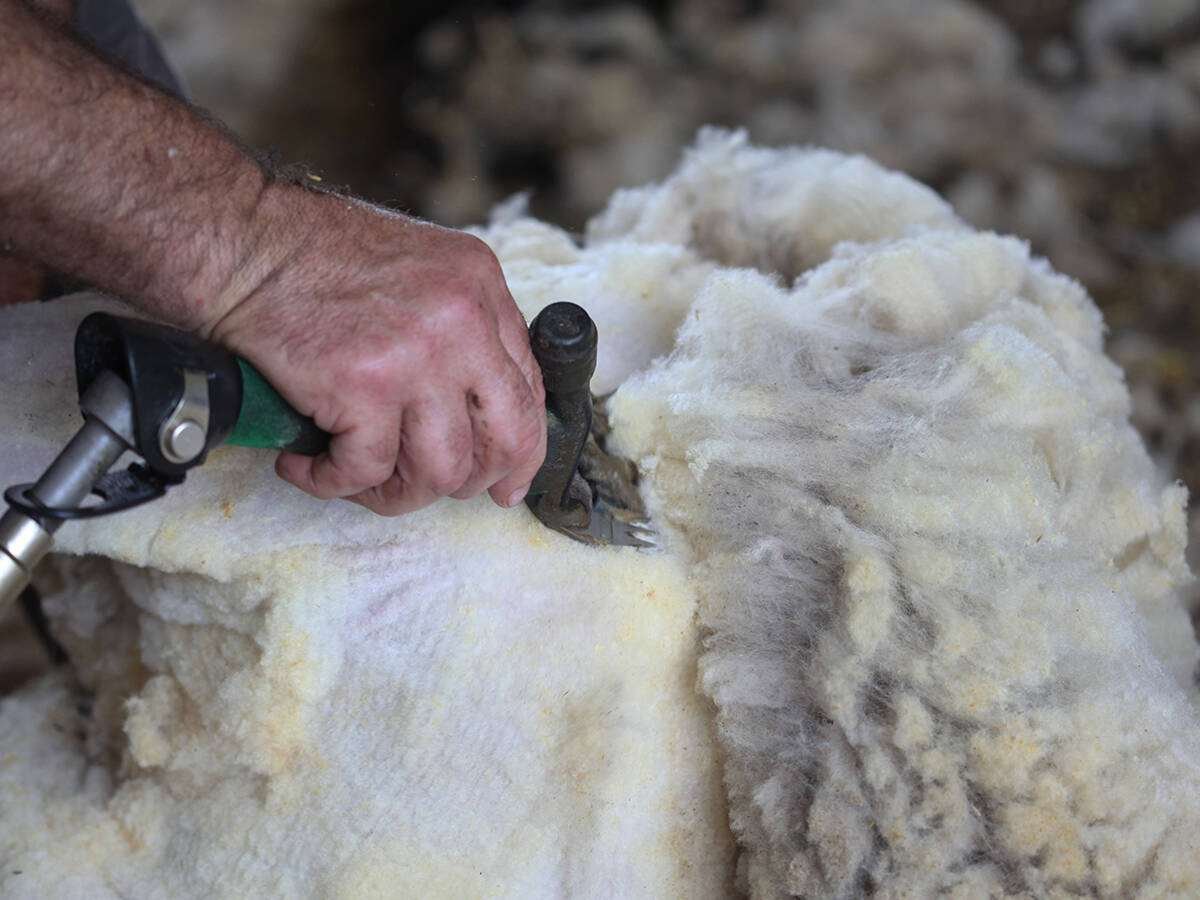
The 50 per cent tariff imposed by U.S. President Donald Trump has created a lot of uncertainty for an Alberta company that sells saddle pads made from wool into the U.S. market. Photo: File
Right now, the Canadian Co-operative Wool Growers, which typically collects and exports wool, is not exporting at all.
The latest data from Statistics Canada said Canadian producers sold 556 tonnes in 2024, and used 46.9 tonnes on farm. The value is $288,000.
Jacobs and others are trying to boost production of fine wool for the Canadian industry overall.
He and business partner Mike Easton recently purchased the most expensive ram at an Australian auction in order to import semen for their flock.
They raise Rambouillet, known for finer wool, and bought a Merino ram at the Roemahkita Poll Merino sale. They plan to use the ram’s genetics to improve wool quality. Jacobs said Australian wool is the “gold standard.”
“There’s a push globally to use wool, but it’s got to be the right kind of wool,” Jacobs said.
“We’ve got 5,000 of those sheep in Alberta and that’s about it, of the kind of wool they want on the world market.”
He’d like that number to be 20,000 or more.
Canadian Wool Collective board chair Anna Hunter said it’s time to reinvest in domestic processing and build on the work of farmers, small mills and businesses.
The post How U.S. wool tariffs weigh on this Canadian business appeared first on Farmtario.


