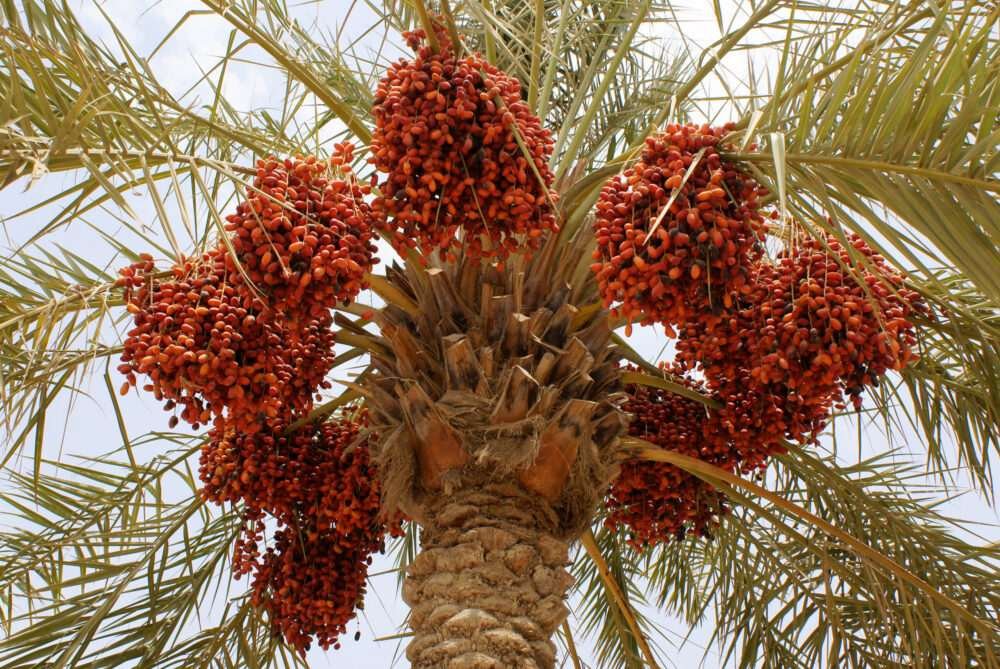
Saudi Arabia is home to about 37 million date palms, and companies are now finding new value in what’s left after harvest.
Date palm residues are being turned into engineered wood, furniture and biodegradable plastics, while researchers explore further industrial uses. At Aramco, scientists have developed a material made from date pits to help prevent fluid losses during drilling operations.
Faisal Al-Howikan, CEO of Jarid Al-Mustaqbal Co., said discarded palm fronds are shredded and compressed into boards. These started out as souvenirs, then expanded into trays for cafes and restaurants, and now furniture like tables and chairs. The company is also experimenting with grinding fronds into powder to create bioplastic for items such as cutlery and water bottles.
Separately, Polymeron is converting agricultural waste, including date residues, into biodegradable plastic pellets. CEO Rodrigo Jimenez Sandoval said the goal was to tackle Saudi Arabia’s roughly 3 million tonnes of annual plastic waste. Unlike oxo-degradable plastics, which break into microplastics, Polymeron’s material is designed to fully biodegrade.
Sandoval said applying the technology across part of the Jeddah market could replace around 21,000 tonnes of conventional plastic and cut about 44,000 tonnes of carbon dioxide emissions. He added that agricultural waste could become a new revenue stream for farmers through collection and processing.
Cost remains a challenge. While locally made bioplastics avoid import costs and oil price volatility, they still cost more than conventional plastics. Sandoval said new government policies supporting degradable materials could help close that gap, though scaling production will require heavy investment in machinery and continued research.
The post Date palm waste turns into bioplastic in Saudi Arabia appeared first on World Bio Market Insights.