

A LOT of people asked me why I had swapped my usual Porsche Taycans, Macans and Hyundais with N badges for a goods van that looks like it’s auditioning for a part in a new sci-fi sequel. The Sixth Element, perhaps, or Judge Dreddlocks.
It was a question I found hard to answer myself at first, because I couldn’t recall what I was thinking when I agreed to it, but then I remembered that I became very interested in the idea of the Kia PV5 – rather than the actual reality of driving it – when it was launched a few months ago.
Yes, replacing as many ICE cars as possible on our roads is important to CO2, but how big a shift would it be to also replace what feels like 10 zillion Amazon/Australia Post/cranky plumber vans as well?
At first blush, it seems like range would be an issue, because surely these vans are constantly driving vast distances, but Kia pointed out that, in fact, van driving is very much an inner-city, constant start-stop activity and that, because they work in defined areas, the average delivery man doesn’t actually do that many kilometres per day, and thus the claimed 416km range of the PV5 should be more than adequate.
At this point during the launch the Kia people asked if I’d like to go for a drive around Sydney in their natty-looking van, but I remembered I needed to comb my foot hair and demurred, but promised to drive it a for a Whole Week at some later date.
And lo, here we are.
READ MORE: New price leader! Kia PV5 Passenger electric people mover incoming with seven seats and long range battery
READ MORE: 2026 Kia PV5 Cargo Review: Funky van takes on Toyota Hiace, Hyundai Staria Load and Ford Transit with compelling EV drivetrain
READ MORE: Kia PV5 pricing confirmed: Cheapest EV van yet achieves price parity with Toyota HiAce and other dirty diesels
Day One: Three into two does not go
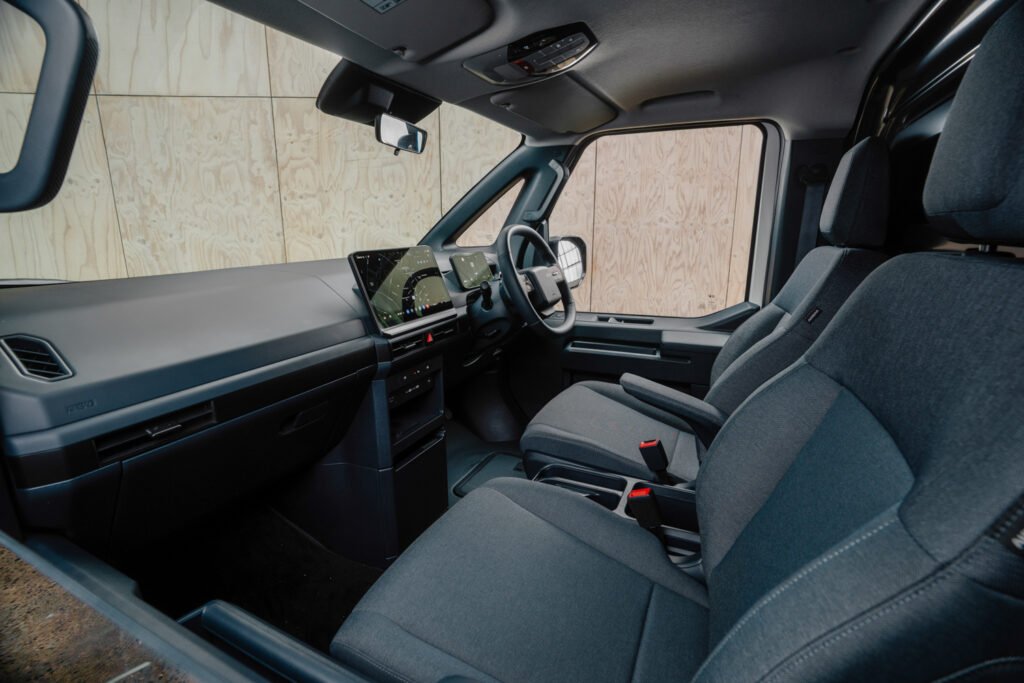
Look, if I say that I didn’t realise there were going to be no seats in the back of the Kia PV5, I’ll look like an idiot, so let’s not say that. But I can honestly say I was shocked to see that the Kia only has two seats in the front, when mosts delivery vans offer a bench-style three-seat arrangement.
This caused conniptions in my house, because this was the only car in the fleet for the week and thus taking the entire family anywhere at the same time was going to be tricky, and no one wanted to try lying in the dark, jail-cell like solitary confinement of the load area (something about rules and seatbelts, I think).
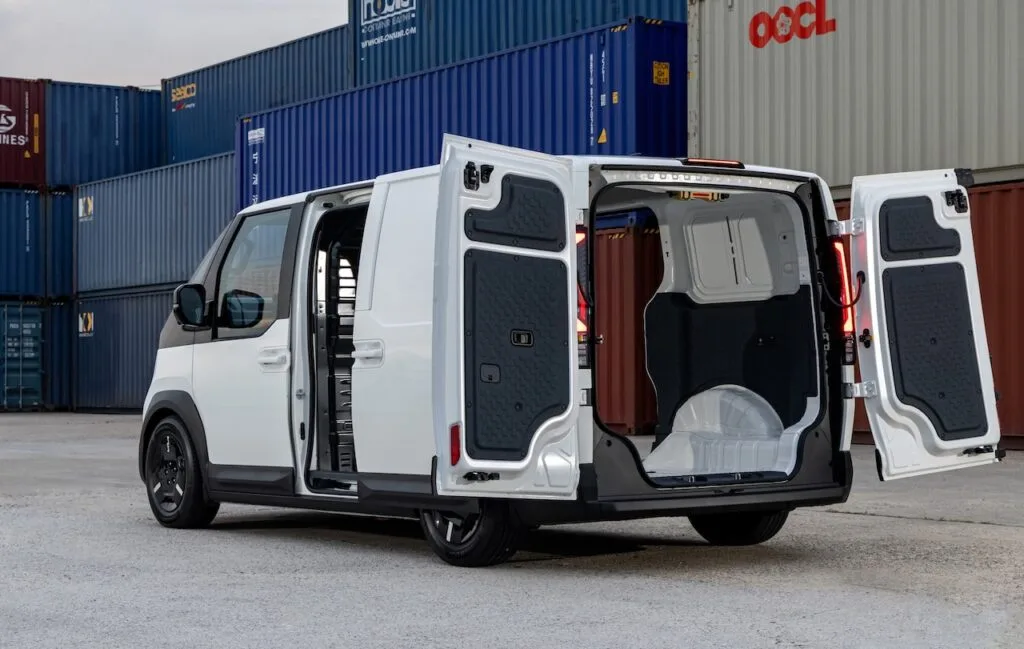
There also seemed to be quite some resistance to being seen in said van, as my teen daughter asked me whether I intended to use it to snatch children.
I tried to change the subject by pointing out how snazzy and adventurous the design was. This did not help and was met with the rejoinder that they should, perhaps, have designed it with three seats in the front.
Day Two: Best Van Ever
In terms of what the PV5 is like to drive, I had quickly decided it was the best delivery van I’ve ever taken the wheel of. It is, of course, also the worst, because it’s the only one.
The advantages of the electric drivetrain – a single permanent magnet synchronous motor driving the front wheels with a 71.2kWh battery making 120kW and 250Nm – are instantly clear, however. Vans like this are usually clattery noise boxes, but the PV5 is quiet and swift, indeed, with the usual EV punch it feels more aggressively capable than its figures suggest. As a white van driver, I felt an overpowering desire to sit on the bumper of other drivers as closely as possible, and it was easy to do so.
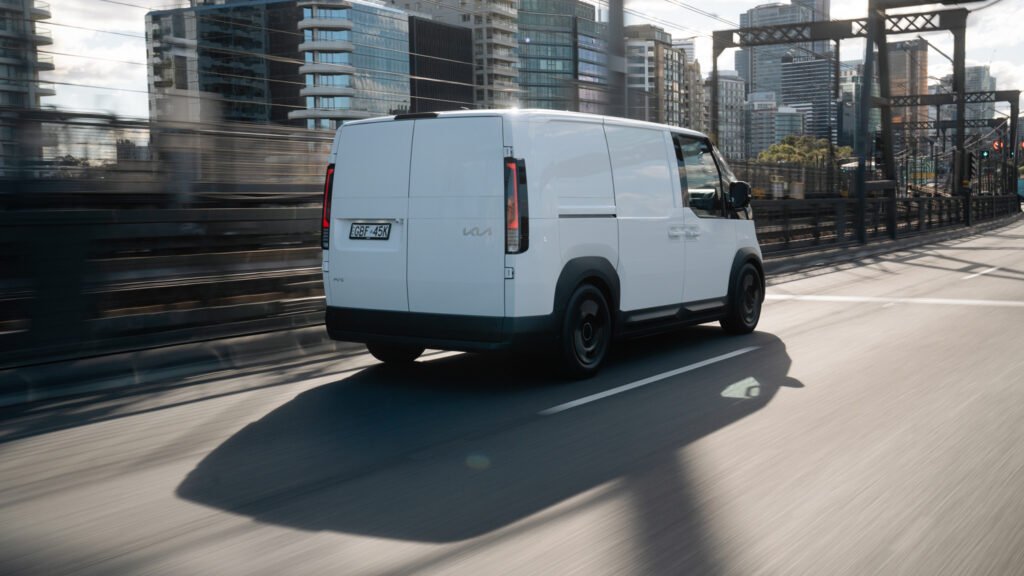
In terms of the ride and handling — supposedly locally tuned for our conditions by Kia’s very brightest suspension gurus — it’s still a van. Much like a ute, I imagine it probably rides better, and kangaroo hops over speed bumps a lot less, with significant weight in the back, but for the first two days I’d had nothing but air back there, and the rattle and roll of it was causing me to be uncomfortably aware of the rolling of my fat rolls.
Gross.
Day Three: Yes, I am manly
Look, I’m forced to go to Bunnings far more than I’d like, because aside from the sausages, I hate the place and its suggestion selling ways, and the fact that people are allowed to take their stupid dogs in and run them around.
But what frustrates me the most is the Tradie’s Entrance, a more convenient portal to my personal hell where proper tradies and real blokes are allowed to drive their utes and vans right into the shop and thus pick up important things, like pool salt and chlorine, with ease.
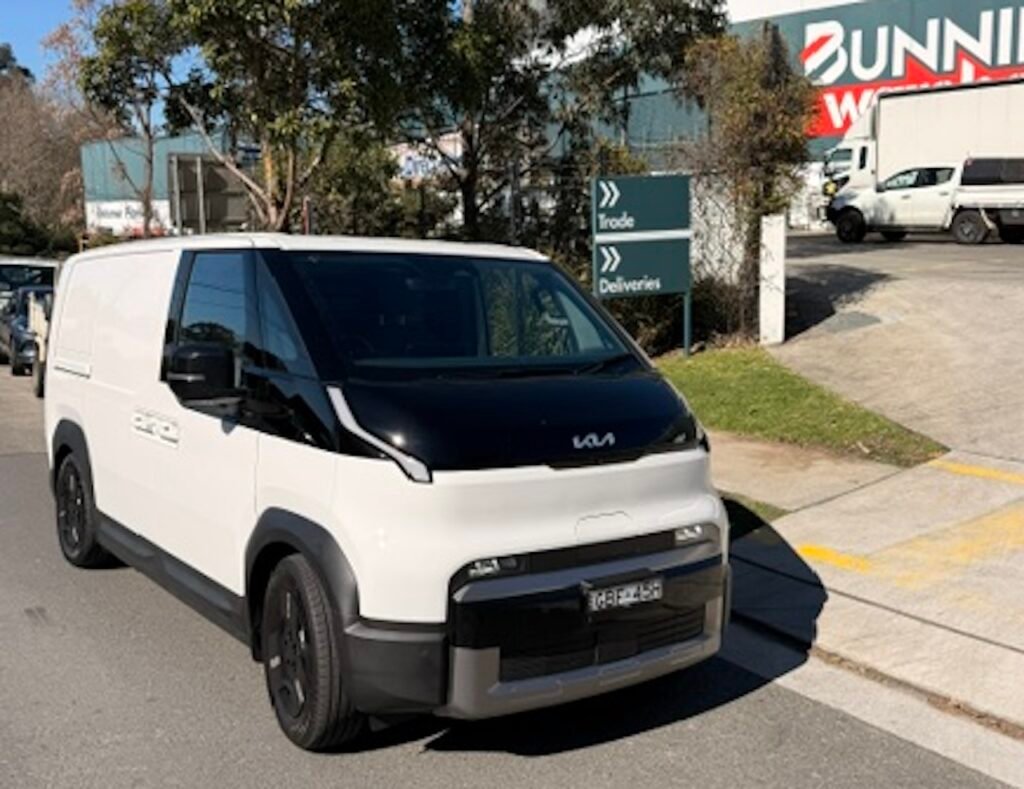
With the PV5 in my hands I thought I was finally going to be able to join these uber men and waltz in with ease, but perhaps I should have thought to don some high-vis first, because it did not go well.
Access denied pretty much sums it up.
Still, I hung around the Bunnings car park for a while, just nodding at other men and slamming the rear doors of my van in a manly way, so that I could at least pretend I was one of them. If only I got paid as well as a tradie.
Speaking of which, bargain hunters will be impressed to hear that the PV5 is only $55,990 plus on-road costs, which is a steal, kind of, but I think some of the money was saved on that third seat.
Day Four: Would I buy the competitors?
So I’ve given this some thought and I must say it’s hard to go past the Volkswagen ID. Buzz Cargo, which really is a looker, inside and out, and probably worth paying the extra for. Other EV options include the LDV eDeliver 7 and the Peugeot e-Partner.
The Kia comes with a long warranty, is supposedly locally tuned, has plenty of equipment and a modern feeling dash and cabin layout, which is also filled with many, many storage cubbies for all your cans of Monster. It is, however, down on payload (it’s offering 4.4m³ or 4420L of cargo space) and power compared to its rivals, which also offer that extra seat and a choice of more than one colour, which is nice.
Day Five: Free Fuel
So, I have solar panels, which means that if I suddenly decide to become a van driver, I would definitely opt for an EV option like the PV5.
The biggest expense of an Amazon delivery driver’s life has got to be diesel and this year in particular it would be lovely to be able to reduce that fuel bill to nil by using the power of the sun.
To really make this work, however, I would need a battery because at the end of my long day’s work I would need to take between nine and 11 hours to fully recharge.
Kia points out that van drivers operate in local areas, making many stops but not actually doing many kays, so I wouldn’t need a full charge every day. Alternatively, I could find a DC charger during smoko and charge from 10 to 80 per cent in just 30 minutes.
Honestly, I think an EV van is a no brainer, but a V2G-equipped one would be better.
Happily the V2L plug in the back would come in handy for those using it to charge things, or working as a proper tradie.
Day Six: It’s Dark Back There
Sometimes I am just too generous. I found myself in a situation today where I had two blokes and myself all heading home in the same direction and only the van to get there, so I bravely offered to get in the back and travel Jetstar class.

Don’t try it. Not only was it pitch black back there (until I eventually realised there is an interior light), but it’s not comfortable, it made me feel a bit sick and when the dickhead who was driving hit the brakes, or worse still thumped the throttle, I was thrown around like a human pinball.
Pain.
Day Seven: It’s a Wrap
I’m not going to lie, I was pretty happy to see the squared off back of the PV5, but not as happy as everyone else in my family.
Impressively, I managed to better the claimed economy, recording 15.4kWh per 100km (against a 19.1 claim) over my 160km.
I’m not a van customer, but if I was, I would seriously consider the PV5. Mainly because it’s just got a nice face. If I had the big bucks, of course, I’d still go for the ID Buzz.
Score: 4.0/5
2026 Kia PV5 Cargo specifications
Price: $55,990 plus on-road costs
Basics: EV, 2 seats, 4 doors, van, FWD
Range: 416km (WLTP)
Battery capacity: 71.2kWh
Battery warranty: 8 years/160,000km
Energy consumption: 19.1kWh/100km
Motors: 1 front 120kW/250Nm
AC charging: 10.5kW, Type 2 plug
DC charging: 128kW, CCS combo plug
0-100km/h: NA


