

It was obvious Suzuki’s first EV was going to be a small SUV, given the segment’s popularity.
But as the Japanese brand is late to the party, the playground is already busy, packed with variety and quality, and increasingly, being dominated by feature-packed and low-price Chinese models.
That means the eVitara has to impress and offer something different, all at a price Aussies will accept.
They start at $46,990 on the road, which won’t scare the Chinese. A rival BYD Atto 2 is from $31,990, Chery E5 is from $37,990, GWM Ora 5 $33,990, Jaecoo J5 $36,990, Leapmotor B10 $37,888 and MG S5 Excite $40,490.
READ MORE: Suzuki e-Vitara Australian details announced: Two EV models on sale by June 2026
READ MORE: 2026 Suzuki e-Vitara range review: lacks the price focus of BYD, Jaecoo and MG
READ MORE: 2026 BYD Sealion 5 Essential Review: Is Australia’s cheapest PHEV actually any good?
We tend to like our Suzukis cheap and cheerful, but the eVitara’s priced near to some big names. Think Hyundai Kona Electric ($46,000), Kia EV3 ($47,600) and Volvo EX30 ($49,990), not to mention larger EV SUVs like the Skoda Elroq ($48,990) and MG S6 EV ($49,990).
Tough challenge ahead for Suzuki then.
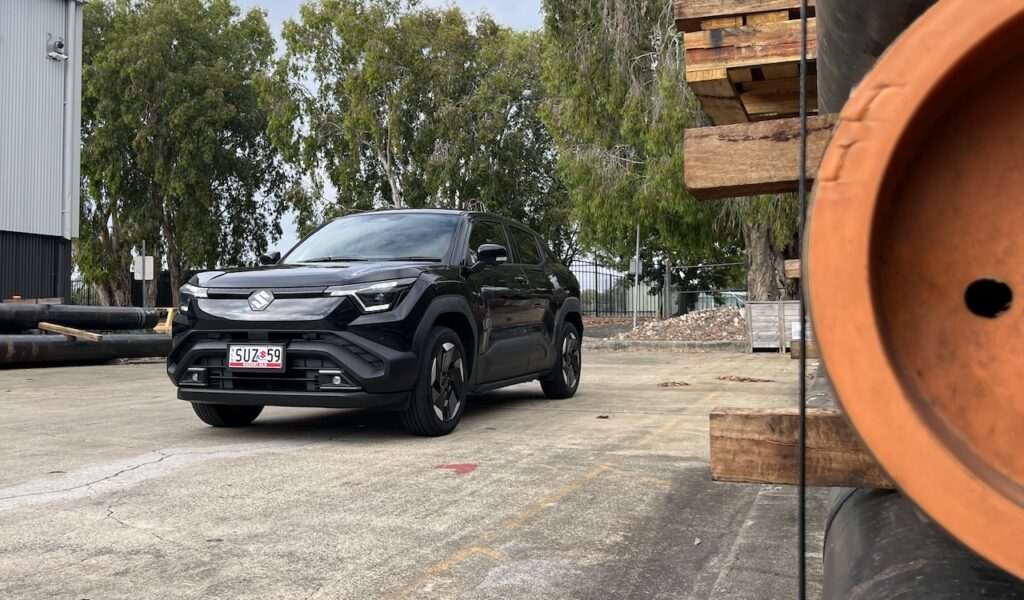
Made in India in collaboration with Toyota (its Urban Cruiser is its sister model), the eVitara holds some point-of-difference interest if you go for the Ultra AWD model. It brings some unsealed road potential, while most of the above are strict city slickers.
But price jumps significantly. Our test Suzuki eVitara Ultra AWD is $56,990 on the road, so it wants to impress.
We tested one over a week of family duties to discover its potential.
2026 Suzuki eVitara Ultra AWD price and equipment
There’s a cheaper single-motor eVitara Motion at $46,990 drive-away, making our twin-motor eVitara Ultra for an extra $10k feel too pricey.
But there are big differences under the skin. The Motion has a 49kWh battery and 106kW/193Nm motor driving only the front wheels, while our Ultra adds a rear motor to deliver 135kW/307Nm in total, paired to a larger 61kWh battery. Range jumps from 344km to 395km in the all-wheel-drive Ultra.
Flagship model inclusions include part faux leather trim, sunroof, Infinity audio, fog lights, wireless phone charger, auto high beam lights, power-adjust driver’s seat and heated front seats.
Shared with the lesser eVitara are 18-inch alloys, LED headlights, 360-degree camera, strong safety suite, keyless entry, 10.25-inch digital instrument cluster, 10.1-inch touchscreen, sat nav, wired CarPlay and Android Auto and wireless CarPlay.
But there are few “surprise and delight” things. No V2L, no reclining rear seats, no included charge cable, no Google Play, and no paddle shifters for regen braking. For those of us believing $50k+ for a car is a chunky amount, expecting such niceties is hardly far-fetched.
2026 Suzuki eVitara Ultra AWD: What we think
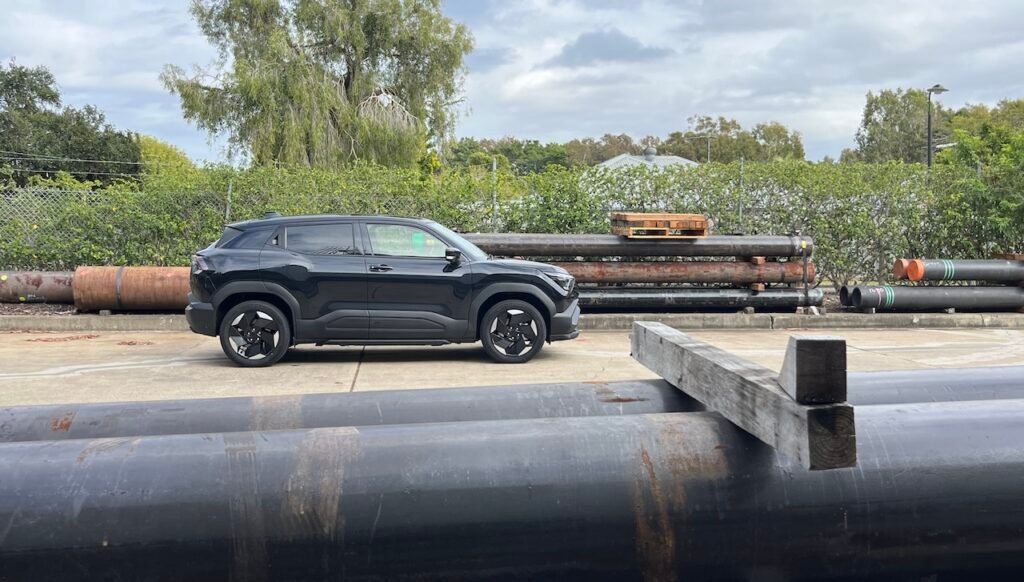
It’s a good-looking thing. Chunky, toy-like even. It reminds of Kia’s EV SUV line-up with its sharp lines, big slabs of plastic cladding and almost solid alloy wheels.
Unlike most rivals, our all-paw Ultra has a bit of unsealed road potential courtesy of Suzuki’s impressive AllGrip system, or “AllGrip-e” in our EV’s case. The independent electric motors aren’t linked by a physical driveshaft of course, so computers control torque distribution between front and rear wheels, sending it where it’s most needed.
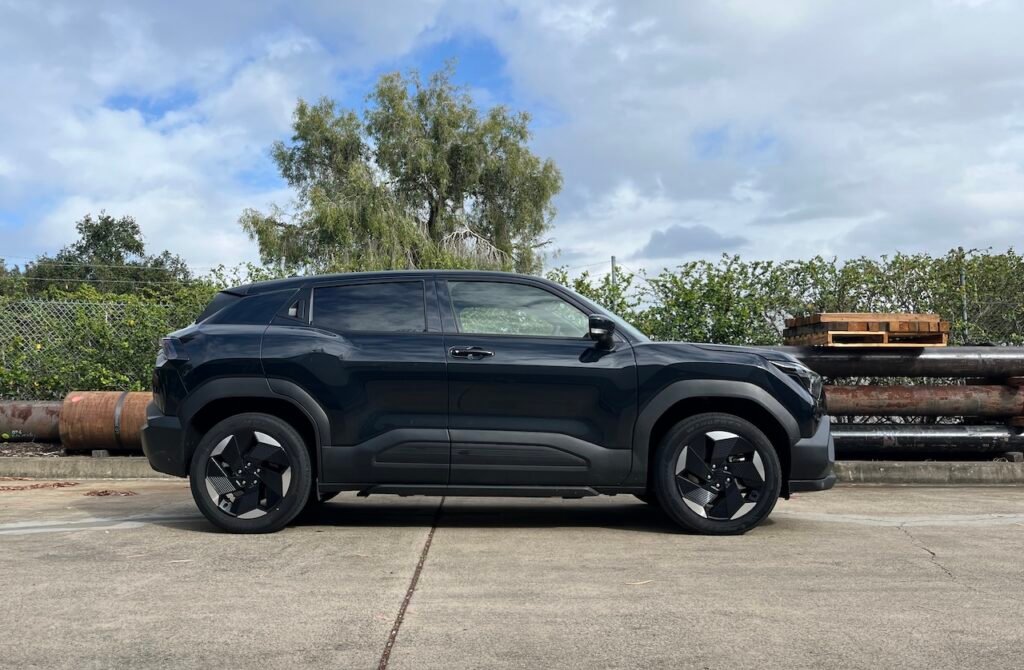
With an electronic brake-based e-limited slip differential, it proves a decent performer on the rough stuff, braking a slipping wheel and redirecting power to the opposing one.
It’s a real hoot on a dirt road, feeling secure if you keep things sensible, or sliding around in an easy, controlled manner when pushing things. You feel the electrics working, and it’s a chuckable little thing with surprising traction. Throw on some better tyres and it’d be an even better little adventurer.
On normal roads it has some shine too. Steering feel’s decent for an EV, ride quality’s comfortable if a bit spongy, and wet roundabout grip, for instance, ain’t bad. Cornering manners are fine if you play it sensible, but there’s body roll if over-keen. At 1860kg, it doesn’t feel as agile and light as most Suzukis, which is a shame.
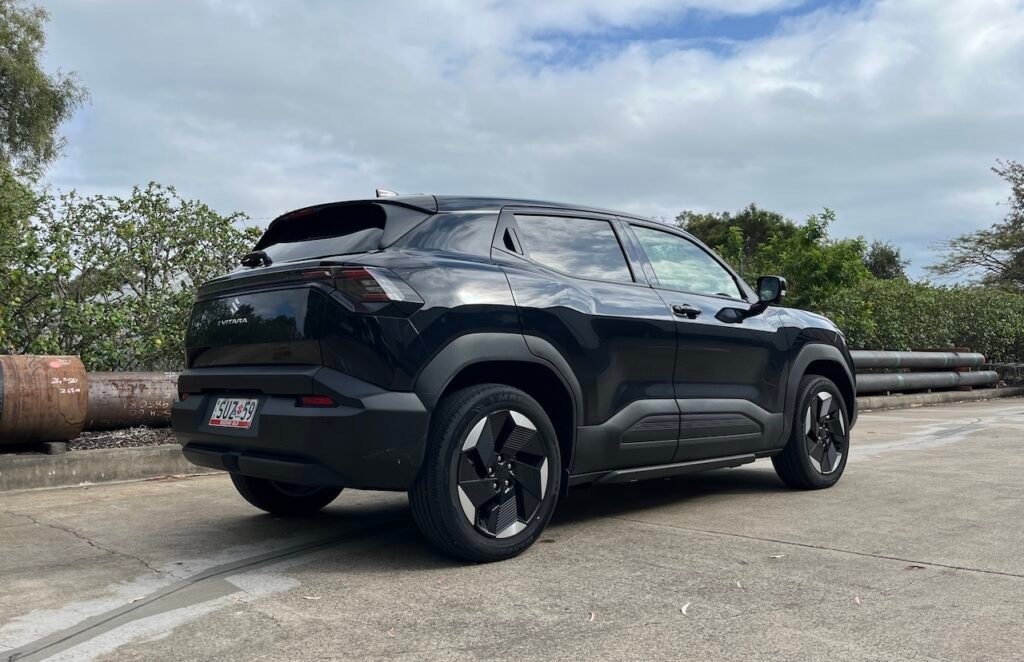
In Sport mode there’s some punch, but for real EV acceleration thrills you must buy elsewhere. Personally, I like the eVitara’s setup. It’s zippy and responsive with its instant torque, but not uncomfortably, unnecessarily fast like some rivals. A Volvo EX30 AWD small SUV cracks 100km/h in 3.7s for instance – totally unnecessary.
Road noise at speed is hard to mask – Suzukis never feel that solid-of-door nor well sound insulated – and the radar cruise control is excellent in traffic, but really struggles in corners. At least the long suite of driver assist kit is largely non-invasive unless you stuff up. Well done, Suzuki.
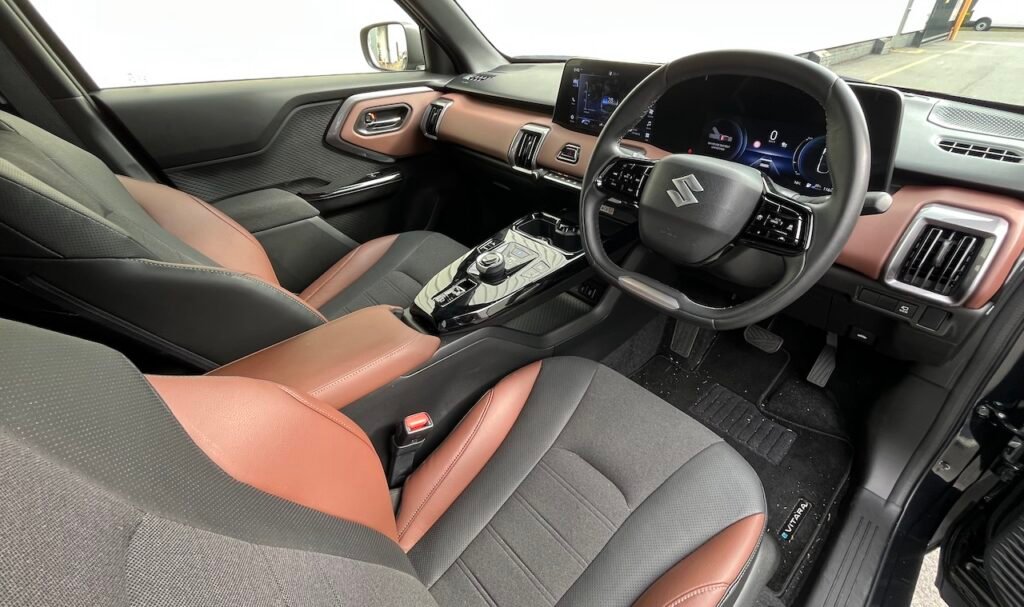
The cabin also presents very well – our tester’s was two-tone black and brown – although with typical Suzuki hard plastic for the dash top and doors, the latter feeling particularly thin.
There’s shades of Kia to the combined double screen (no bad thing); the infotainment is sensibly-sized rather than daftly huge, and the digital driver display also prioritises simplicity.
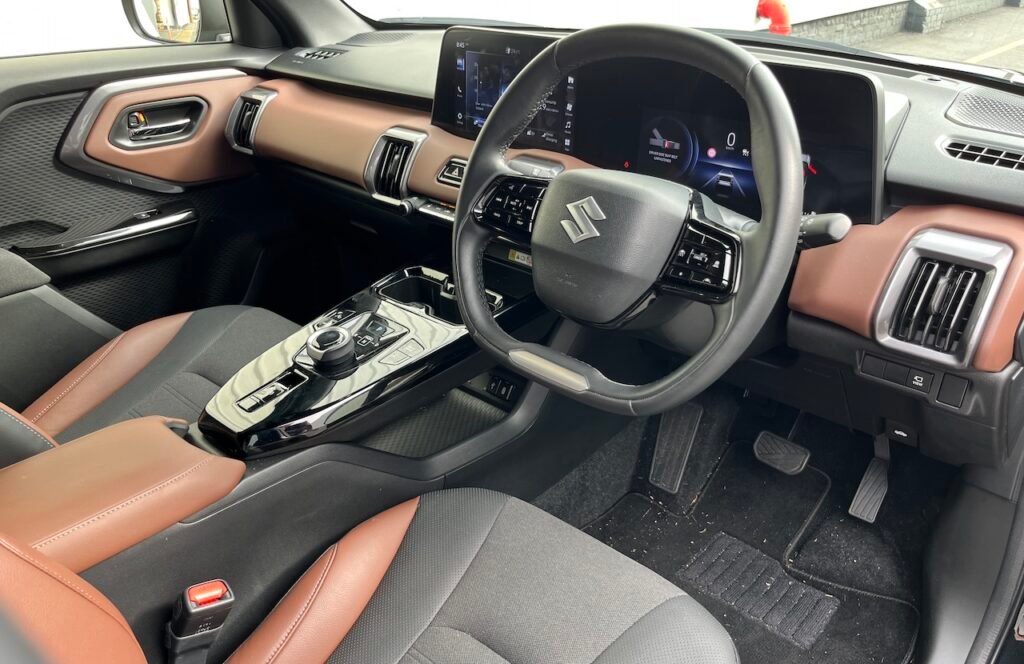
Colour navigation behind the steering wheel’s a nice touch, but good grief the reversing camera is sub-par. Chinese budget brands always chuck in pin-sharp cameras and screens, Suzuki must do likewise to keep up.
The steering wheel is almost a squircle with its flat base, and the comfy seats have brown leatherette bolsters to go with cloth centres, adding some jazz. Why the heated seats must be turned on through a screen menu is daft, though.
Thumbs up go to a wireless phone charger (although it needs rubberising to stop it sliding), subtle ambient lighting and climate control with proper buttons. But the piano black centre console also feels too-thin plastic, and cup holders refuse to fit larger coffee cups and bottles. When you do fit one in, it blocks the physical controls. Daft, as there’s loads of space to locate cup holders close to the armrest instead.
While I’m grumbling, it takes a long time for the cabin heating to kick in, and it’s hard to find the optimum temperature.
And the driver’s electric seat motor is amongst the loudest I’ve heard, reminiscent of a 1950s American car’s convertible hood.
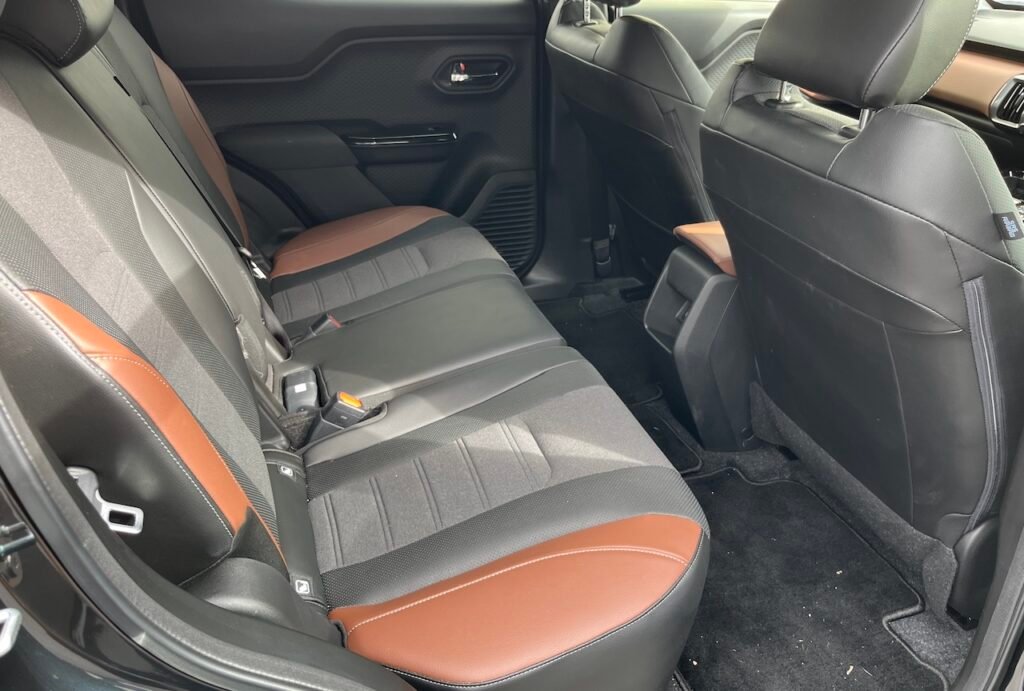
Rear seating offers solid leg room, which improves further sliding them back on runners. Head room is good for kids and fair for most adults, the centre arm rest is superbly comfy, but no rear air vents is stingy indeed. Only a sole USB-A and USB-C port back here.
The boot’s quite cramped at 238L, but the rear seats slide to allow 310L, and there’s handy storage under the boot floor, which is needed as there’s no frunk to be found. And as expected, just a tyre repair kit, no spare.
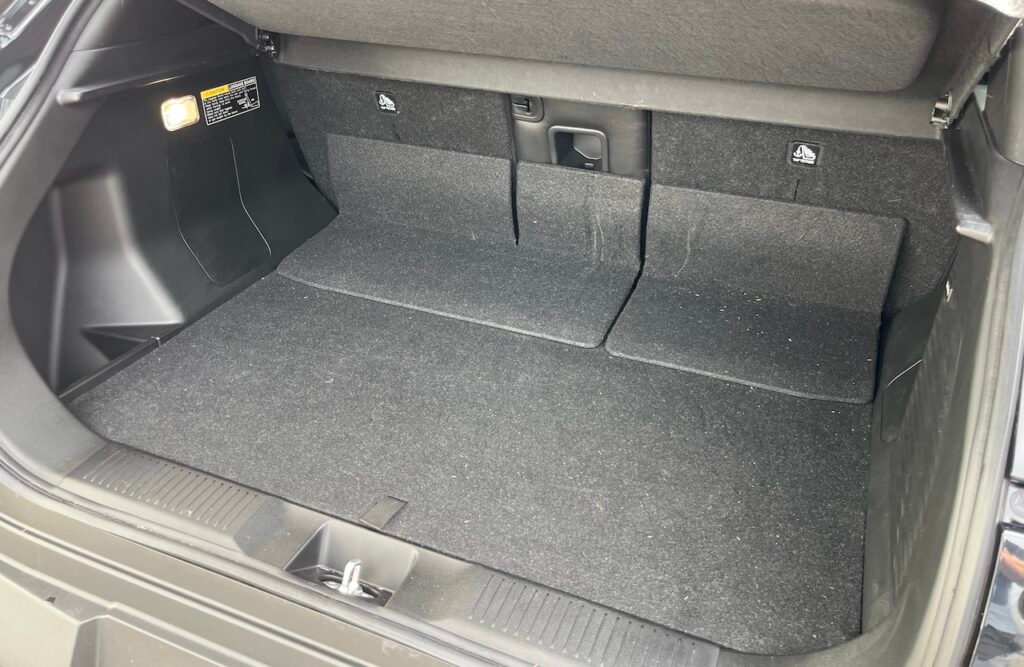
There’s a lot of what I call “average-ness” to the eVitara’s figures and drive experience.
Range of just under 400km is tolerable but not anxiety-reducing, especially as our test saw 350km to be more realistic. Overall energy use of 16.9kWh/100km isn’t great for a small SUV (I managed 14kWh in a Mazda 6e the week prior), while the 70kW DC charge speed is below-average and means you’re stuck at fast chargers for too long.
2026 Suzuki eVitara Ultra AWD: Verdict
Good-looking, generally nice to drive and sit in, while unsealed road abilities add a bit more versatility than typical small SUVs.
But there’s little to help the eVitara stand apart from core rivals; most offer higher luxury, performance, range and features.
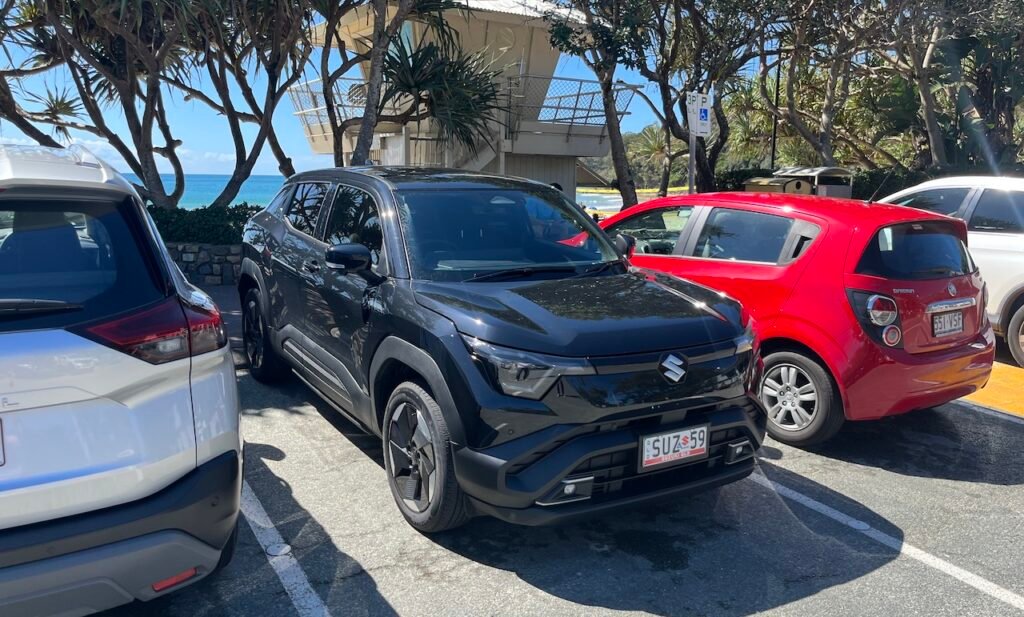
If it were $10,000 cheaper to take on the Chinese, this Suzuki would be a sure-fire winner, but for now, it’s simply too dear.
Score: 3/5
2026 Suzuki eVitara Ultra AWD price and specifications
Price: $56,990 drive-away
Basics: EV, 5 seats, 5 doors, SUV, AWD
Range: 395km (WLTP)
Battery capacity: 61kWh
Energy consumption: 16.5kWh/100km
Motors: 1 front, 1 rear 135kW/307Nm (combined)
AC charging: 11kW, Type 2 plug
DC charging: 70kW (10-80 per cent charge in about 45 minutes), CCS combo plug
0-100km/h: 7.4 seconds
The post 2026 Suzuki eVitara Ultra AWD Review: Fine effort, but here’s why it’ll struggle appeared first on EV Central.


