

Kia has confirmed its new PV7 electric van and people mover will come to Australia, with the PV5’s bigger brother locked in for a local launch in the final quarter of 2027.
Revealed in production form at the IAA Transportation show in Hannover, Germany, the PV7 is the second model in Kia’s dedicated Platform Beyond Vehicle (PBV) family and significantly ups the capability compared with the smaller PV5 already on sale in Australia.
Kia Australia has also confirmed the PV7 will undergo its local ride and handling development program ahead of launch, although pricing, model grades and final Australian specifications won’t be announced until closer to arrival.
READ MORE: Kia’s next electric van breaks cover! Bigger PV7 shapes up for Australia to battle Ford E-Transit, Farizon SuperVan, Renault Master E-Tech, LDV eDeliver9 and Mercedes-Benz eSprinter
READ MORE: Confirmed: Radical electric Kia PV5 people mover and cargo van coming to Australia. Ford Transit and Toyota HiAce fighter will make local debut this month
READ MORE: 2026 Kia PV5 Seven-Day Review: Who knew cargo vans only have two seats?
The headline numbers include a choice of 71.5kWh and 96.2kWh nickel-cobalt-manganese (NCM) batteries and an electric motor developing up to 200kW and 420Nm.
Front-wheel drive will be standard initially, but Kia has confirmed all-wheel-drive versions will be added later.
The Long Range Cargo fitted with the larger battery has a targeted WLTP driving range of more than 460km, although Kia says that figure is still subject to final homologation. Importantly for a working electric van, the PV7 steps up to an 800-volt electrical architecture.
Kia says that allows a 10-80 per cent recharge in the mid-20-minute range when connected to a 350kW DC fast charger.
In an unusual move, the PV7 can also be fitted with two charging ports: a front AC/DC connection and an optional AC port mounted towards the rear, potentially making it easier to plug in regardless of how the van is parked.
That represents a significant technical step beyond the smaller PV5 Cargo, which is already on sale in Australia from $55,990 plus on-road costs and uses a 71.2kWh battery, 120kW/250Nm front-mounted motor and 400V electrical architecture.
The seven-seat PV5 Passenger is also due in Australian showrooms in the final quarter of 2026.
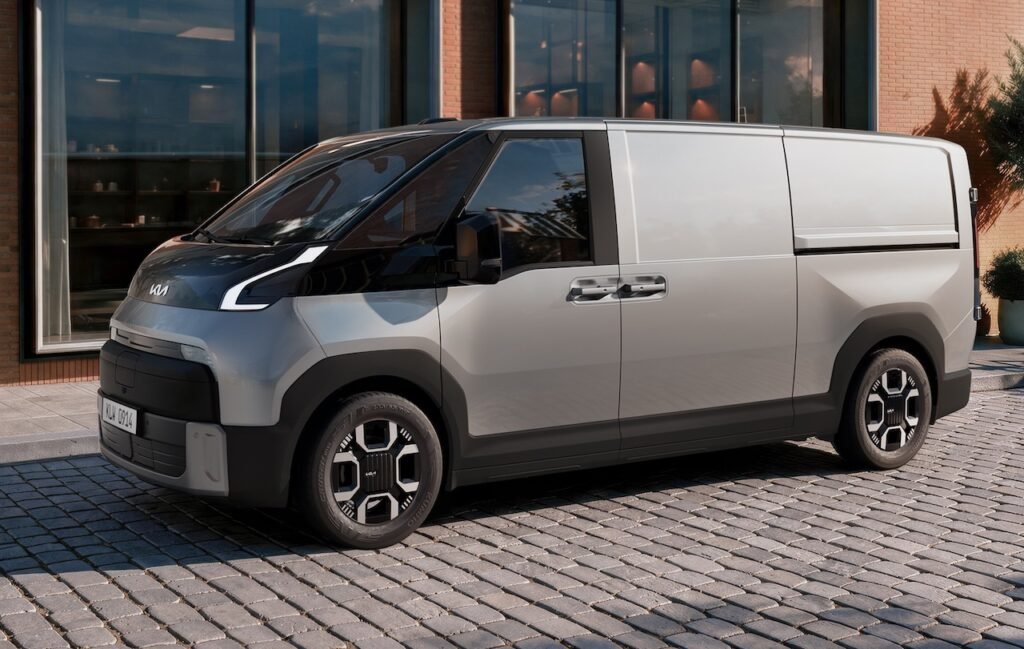
At 5350mm long, 1995mm wide and 1990mm high on a 3500mm wheelbase, the PV7 is substantially larger than the 4695mm-long PV5 and moves Kia into a bigger commercial-vehicle class.
That means its logical Australian rivals include larger battery-electric vans such as the Ford E-Transit, Farizon SuperVan, Renault Master E-Tech, LDV eDeliver 9 and Mercedes-Benz eSprinter.
Kia will offer both Cargo and Passenger versions globally.
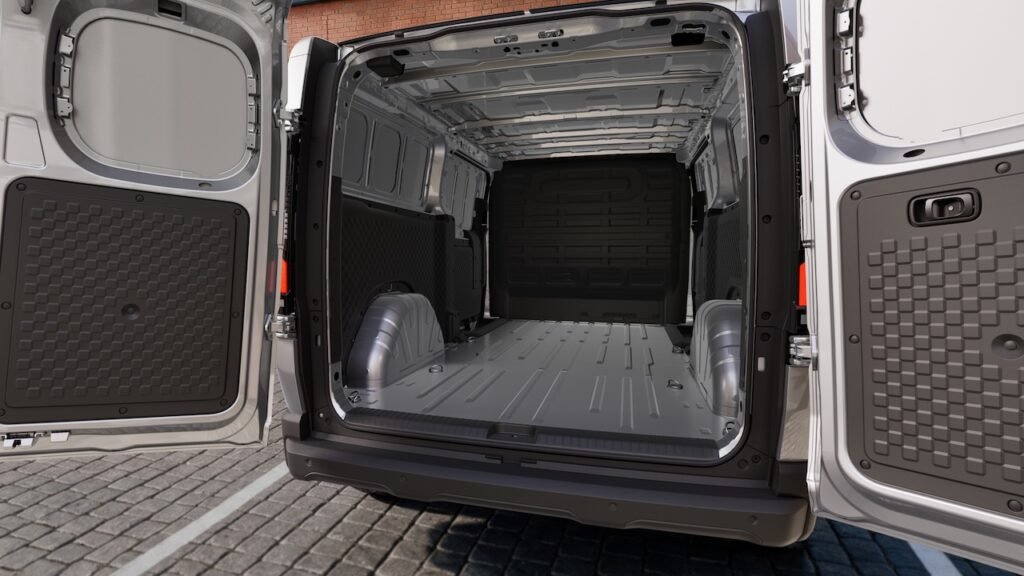
The PV7 Cargo Long provides up to 6.1 cubic metres of load volume, while the High Roof increases that to 8.0 cubic metres.
Maximum payload is rated at 1165kg for the Long and 1200kg for the Compact, while the Long has a low 550mm loading height and can swallow three Euro pallets.
Customers will eventually be able to choose between Compact, Long and High Roof Cargo bodies, Compact and Long Passenger versions and a dedicated Chassis Cab, along with various factory-backed conversions.
In all, Kia says it plans to develop 23 PV7 variants following the 2027 launch. An even larger PV9 is scheduled to follow in 2029.
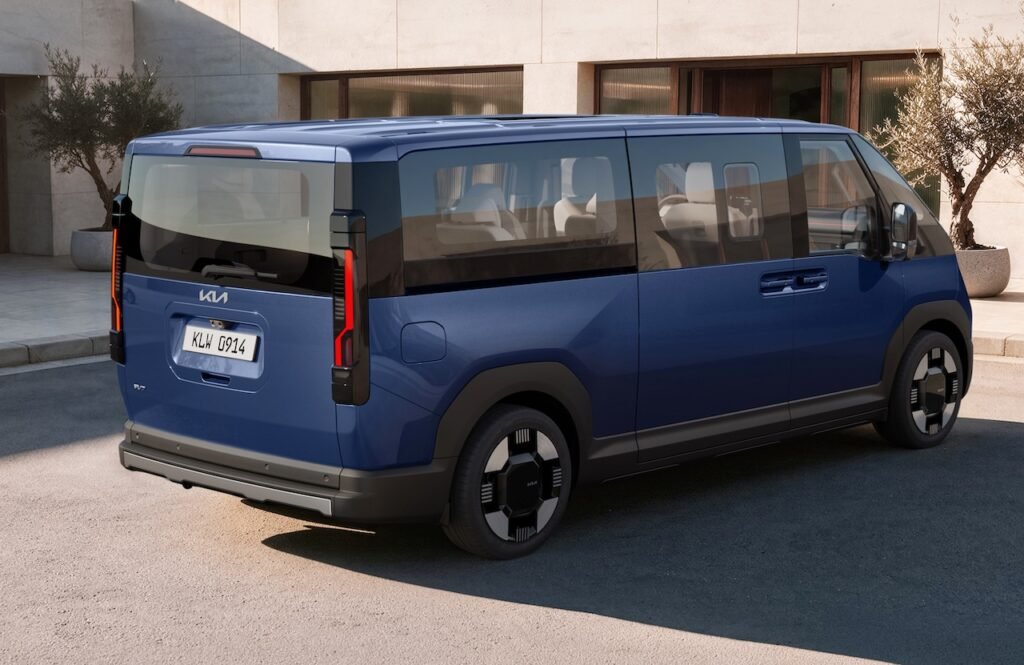
The Passenger is potentially just as interesting for Australia. Globally, the PV7 Passenger will accommodate up to nine people, while Korean versions can seat as many as 11.
The seven-seat version gets Kia’s Long-Rail Easy Remove Seats, while nine-seat versions can be configured with or without a fourth seating row. Rear climate control and available 100W USB-C outlets are also included among the passenger-focused features.
Kia has not yet said which seating layouts will be offered in Australia.
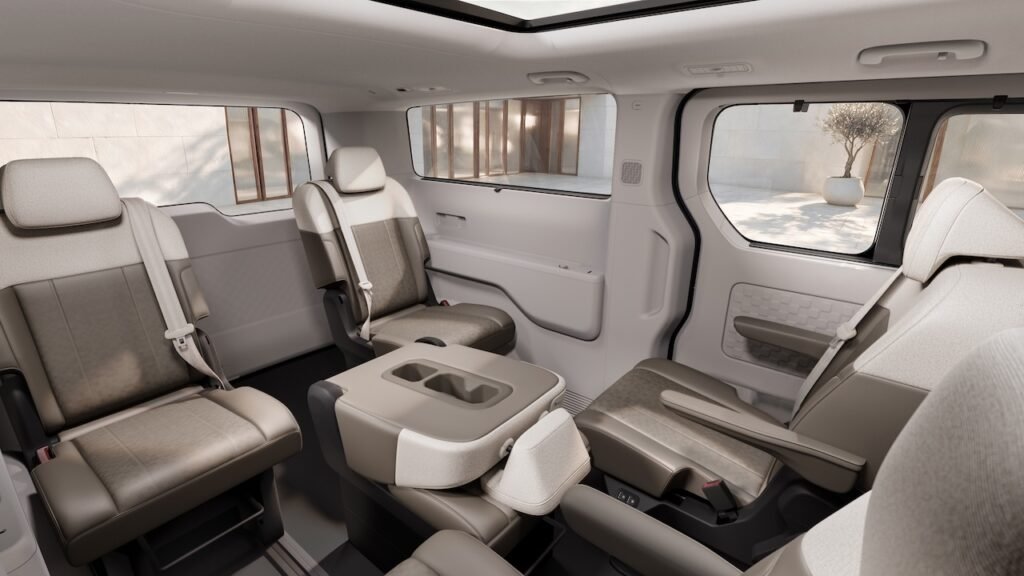
As with the PV5, the PV7 is based on Kia’s dedicated E-GMP.S electric commercial-vehicle architecture rather than being converted from an existing combustion-engined van.
Its flat-floor layout is designed to make it easier for Kia to develop different bodies and conversions, while the PV7 also gets Vehicle-to-Load capability for powering tools and other electrical equipment.
There’s also a dedicated heavy-load driving mode that alters vehicle behaviour according to payload.
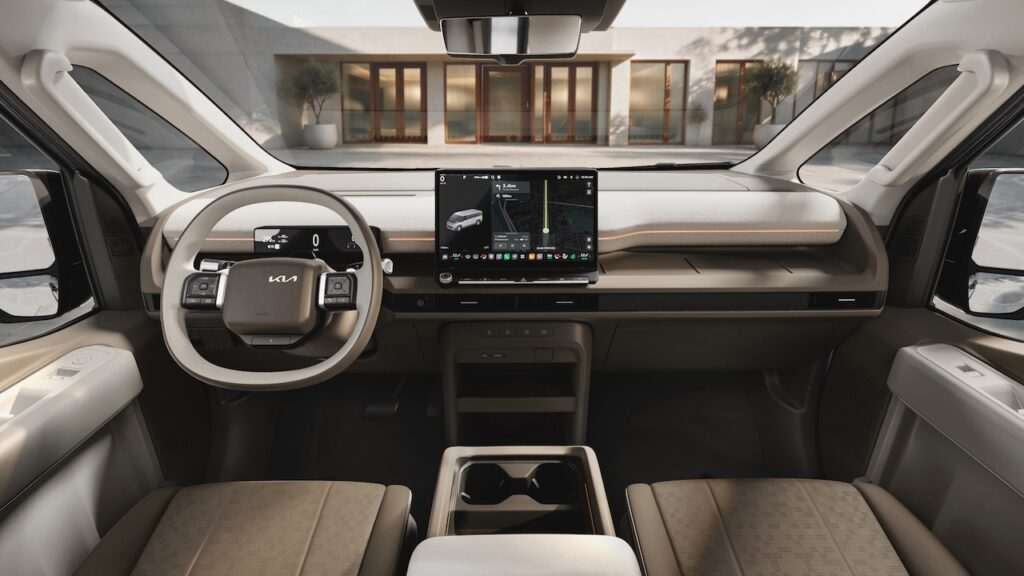
Inside, the PV7 gets 12.9-inch and 14.6-inch displays and Kia’s Android Automotive-based Pleos Connect operating system, including over-the-air updates, connected navigation and access to business-oriented applications.
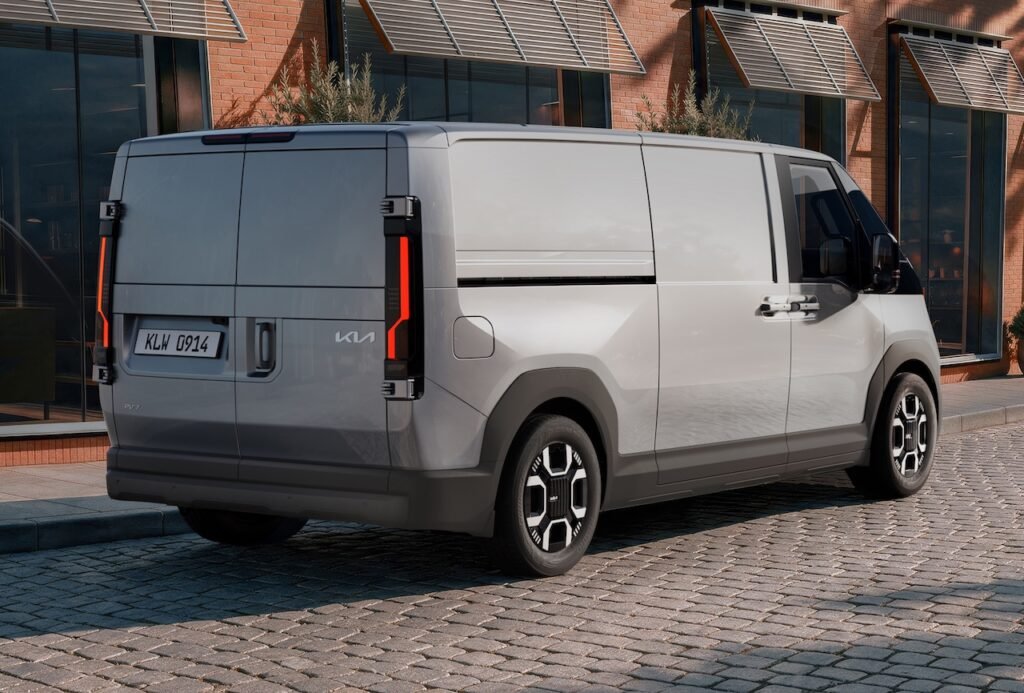
The PV7 van has also been designed with frequent stops in mind, with an A-pillar grab handle, revised seating position and step geometry intended to make repeated entry and exit easier.
Safety equipment includes seven airbags -– including an unusual roof-mounted front passenger airbag -– along with autonomous emergency braking, lane keeping assistance, Highway Driving Assist 2.0, surround-view monitoring and remote parking functionality, although final Australian specifications are yet to be confirmed.
The PV7 will initially launch in Korea and Europe in the second half of 2027 before expanding into other markets. Pricing remains the major unknown.
The post Revealed and confirmed! Kia PV7 electric van locked in for Australia with 460km-plus range, ultra-fast charging and up to nine seats appeared first on EV Central.


