
Airborne spore detectors can tell farmers when a fungal pathogen is present in their fields even before disease symptoms appear.
For those units’ developers, though, the next question is harder to answer: what should a farmer do with that information?
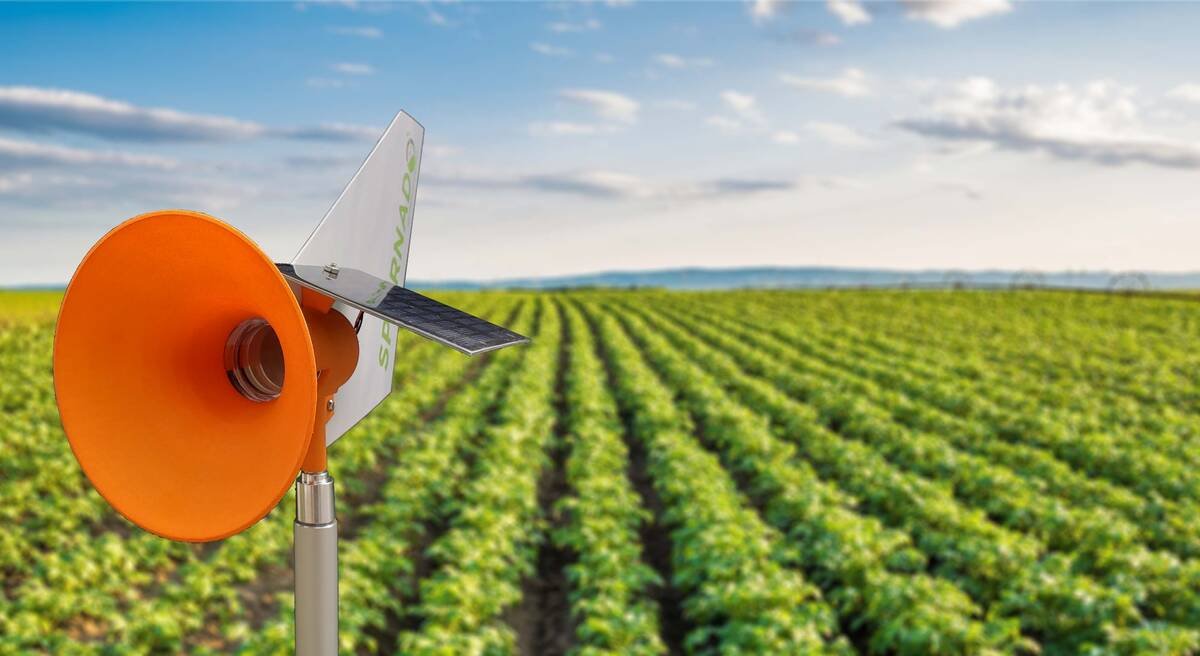
Toronto-based Spornado has spent years working on the first part of the equation. Its field samplers collect airborne fungal material on removable cassettes, which are sent to partner laboratories for DNA analysis.
Spornado now has molecular tests for about 35 pathogens across 18 crops and has deployed samplers in roughly 25 countries.
The company says it can detect some pathogens as much as two weeks before disease can be seen in the crop.
Yet chief technology officer Michael Saleh said being able to tell a grower there are thousands of spores in the air does not necessarily tell that grower whether to spray.
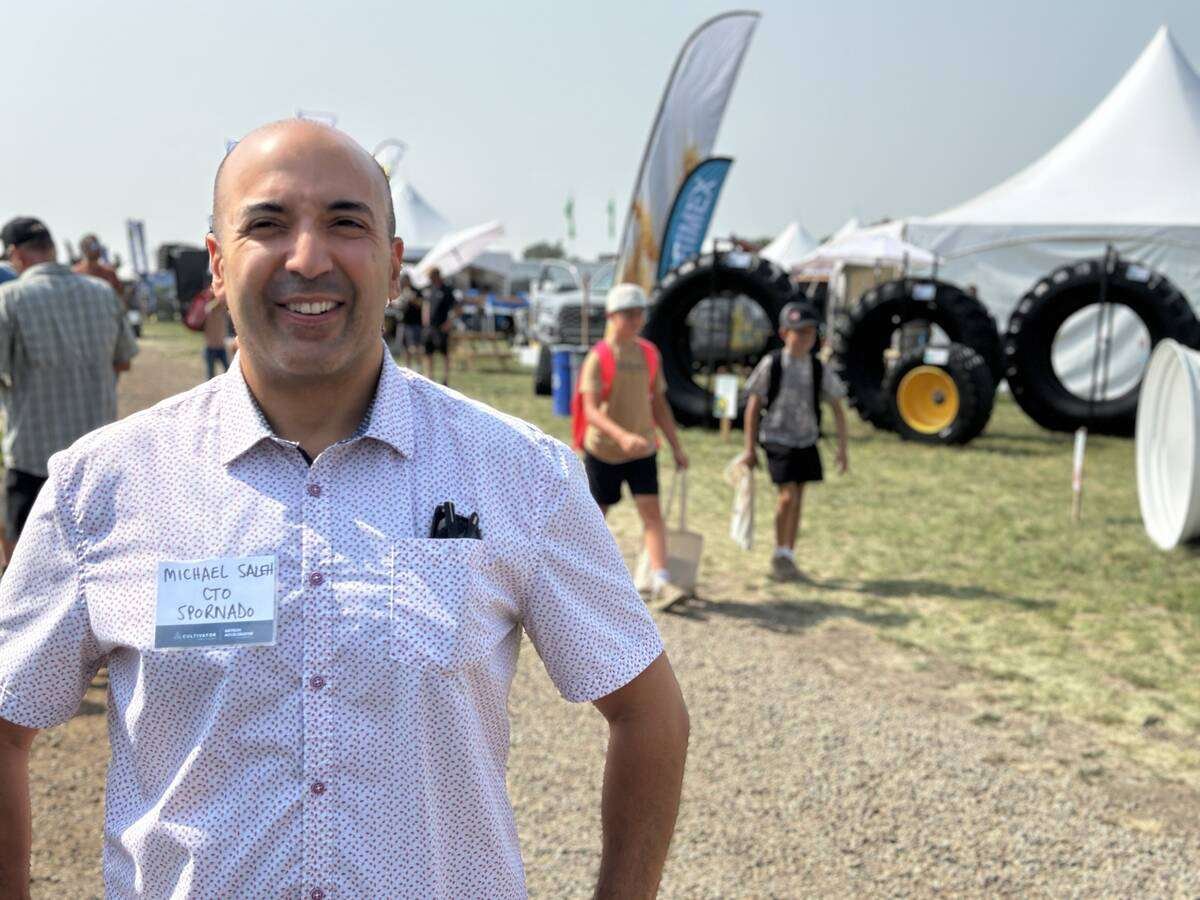
Spornado is one of several companies exploring different ways to turn airborne disease monitoring into a practical farm management tool.
Existing systems already provide varying levels of guidance to growers, but not the clear, field-tested trigger farmers are used to with established insect thresholds, for example.
“The winners are going to be the ones who can turn it into action statements to a grower,” he said.
“They don’t care that there’s 5,000 spores in their field. They need to know what it means and what they should do on that day.”
The missing side of the triangle
Keith Gabert, an agronomy specialist with Alberta Canola, said fungicide decisions are commonly framed around the disease triangle: a susceptible crop, suitable environmental conditions and the presence of a pathogen.
Growers can usually assess the first two. They know what they planted and can use weather, crop stage and provincial risk maps to check if conditions favour infection.
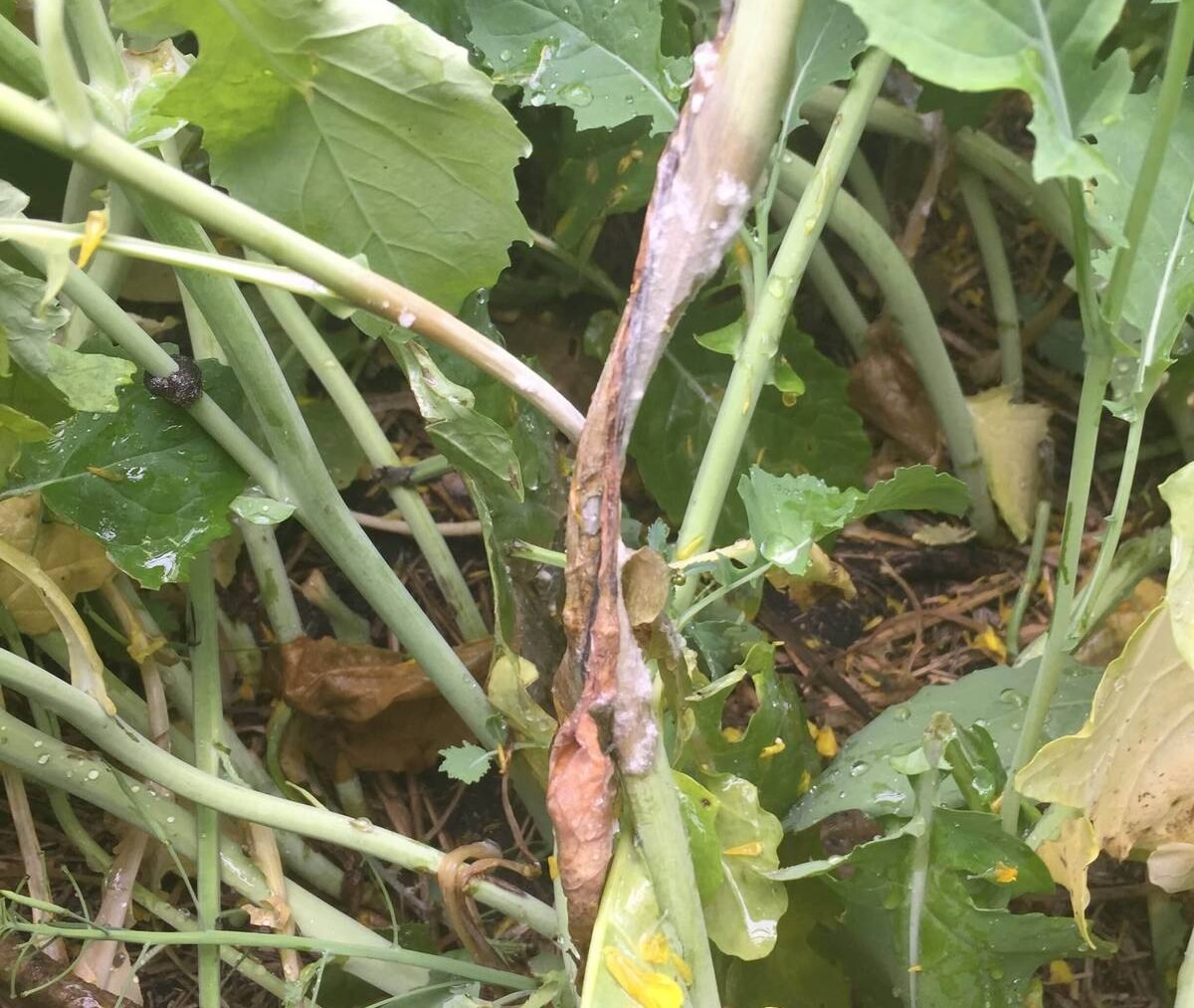
For canola diseases such as sclerotinia, where airborne spores drive infection, the pathogen side has largely remained invisible.
“The disease has been just a black box for us for decades,” Gabert said.
That uncertainty helps explain why growers sometimes spray as a precaution.
A grower may have an excellent crop entering flowering under wet conditions. They may know the consequences could be severe if sclerotinia develops. What they don’t know is whether enough inoculum is actually present.
A damaging outbreak every five or 10 years can be enough for a farmer to justify spraying in the intervening years, Gabert said.
Even without hard economic thresholds, spore detectors can help. Just a “no spores detected” reading could mean a field that otherwise meets the criteria for a fungicide application might be spared an unnecessary treatment.
“I think it really clears up a missing piece in managing the disease,” Gabert said.
The complication is that presence alone does not equal risk.
A small number of spores under ideal infection conditions could conceivably pose as much risk as a larger number when conditions are unfavourable.
That uncertainty limits the role Gabert sees for spore detection, at least for now.
“At the moment, I simply view it as refining the timing of a foliar fungicide,” he said.
Counting is not deciding
Spornado CEO Kristine White said the company initially envisioned the system as a way to reduce fungicide applications.
However, the growers who Spornado worked with were often less interested in eliminating applications than reducing risk. Adopting a new technology introduces risk of its own.
“Farmers care about ROI, at the end of the day,” said Saleh.
That means the thresholds need to be backed by enough field data to show when a fungicide application is, or is not, likely to pay.
Spornado’s relatively low-cost samplers have also allowed the company to deploy the units widely, generating a large historical data set.
“We have now deployed 1,600 of these worldwide,” White said.
“That’s our one advantage.”
Spornado is working with machine-learning specialists to link its historical spore counts with disease that later appeared in crops.
Those efforts are already producing results. By the 2027 growing season, Saleh expects Spornado to begin providing more direct spray-or-don’t-spray guidance, accompanied by a confidence level.
“It won’t be perfect, but it’ll be something more than they had before,” he said.
Eventually, the company wants to refine those estimates into disease-specific risk levels validated across enough field conditions to support broadly applicable but targeted management recommendations.
Saleh said that level of certainty would dramatically simplify the value proposition.
“But I can’t offer that yet,” he said. “No one can.”
Different routes to the field
Companies working in spore detection are taking markedly different approaches to that same commercialization problem.
Spornado uses a distributed service model. Farmers or organizations operate samplers and send cassettes to regional laboratories for molecular analysis.
That model has allowed producer associations to operate networks rather than requiring every grower to manage a complete diagnostic system.
White cited potato-growing regions where industry organizations have installed multiple samplers and share results with growers.
Spornado also sees independent agronomists and agricultural retailers as potential customers for similar networked use, sometimes in ways they hadn’t anticipated.
Saleh described one retailer who used early detection of southern rust in the U.S. Midwest to move fungicide inventory closer to the affected region.
“Lo and behold, three weeks later there was a southern rust outbreak everywhere,” said Saleh.
In-field imaging
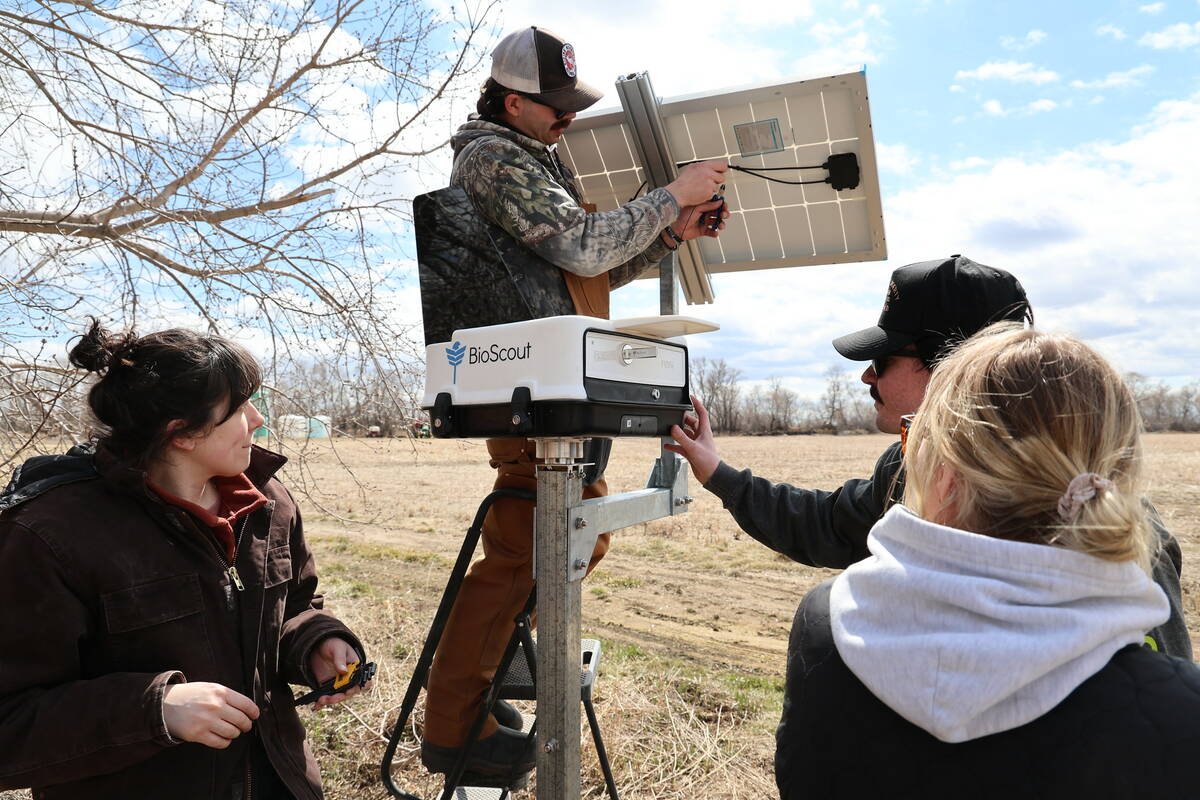
Australian company BioScout takes a different technical approach. Its automated system captures and images airborne material and then uses computer vision and artificial intelligence to identify spores without sending a cartridge to a laboratory.
BioScout presents spore pressure through a traffic-light system intended to help users interpret the results.
Chief science officer Michelle Demers said local conditions determine what a given spore count means for disease risk. Rainfall, crop stage, variety, available fungicides and other factors all must be considered.
“You can hand someone real-time spore counts but, without context, experience and locally validated guidance, they won’t necessarily know how to translate that into action,” she said.
The technology was field tested in Manitoba in 2026 through EMILI’s Innovation Farms program. Two BioScout stations were installed at J.P. Wiebe Ltd., a potato and grain farm near MacGregor, Man.
EMILI scouts the field weekly to compare BioScout’s airborne spore readings with what later shows up in the crop, while the farm continues with its normal disease-management program.
A model out west
Paramoria AgriScience, based near Lethbridge, has taken another route.
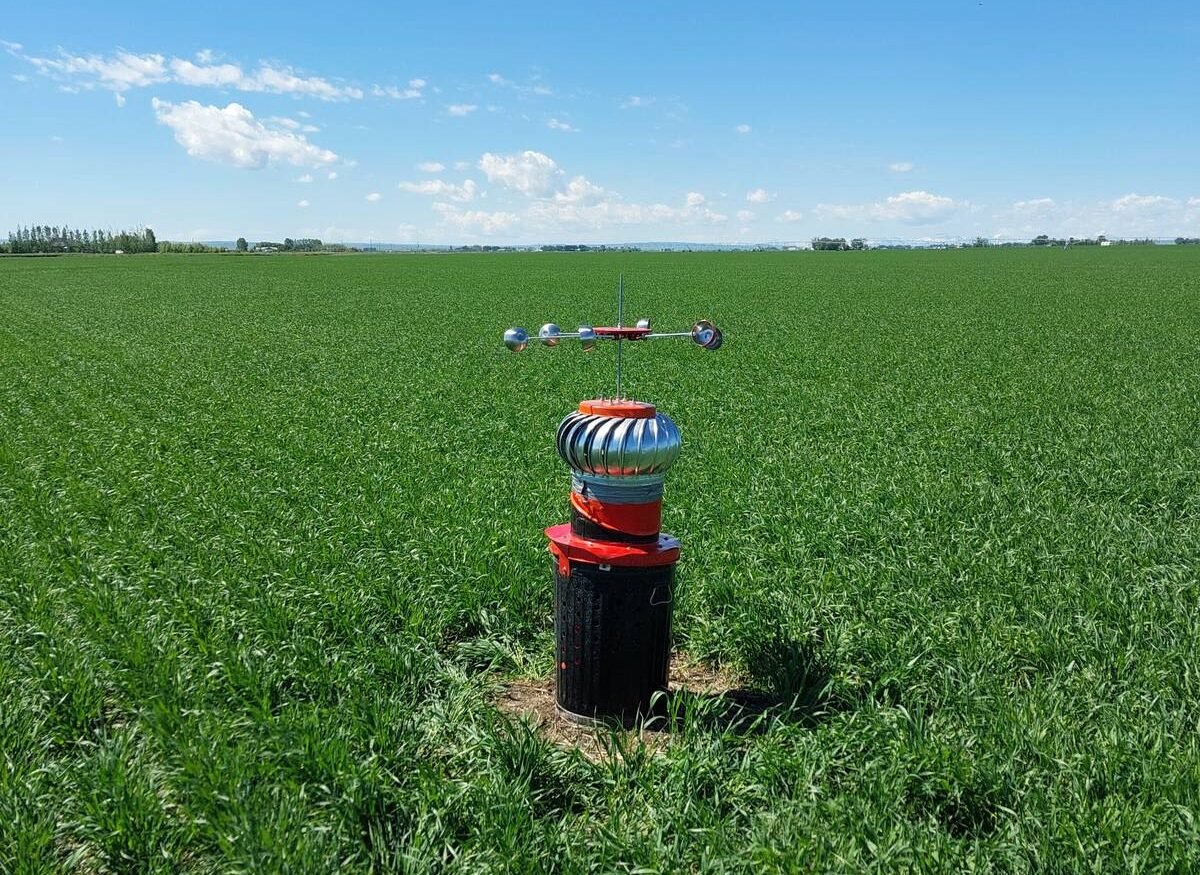
Co-founders Brent and Byron Puchalski developed the Spornik, a large, rugged sampler designed around Prairie broad-acre farms.
The device is deliberately simple. A wind-driven turbine pulls air through the crop canopy and collects biological material on filters. Paramoria then performs molecular testing for diseases including sclerotinia, fusarium head blight and stripe rust.
The company designs around quarter-section-scale fields and has found disease pressure can be surprisingly localized. Adjacent fields can produce dramatically different spore counts.
That makes local interpretation important.
Paramoria has taken a locally calibrated approach to the threshold problem. The company provides growers with disease-specific charts showing where their samples fall relative to working treatment thresholds.
“Since there are no established thresholds, we are building those ourselves,” Brent said.
Those thresholds draw on published research as well as Paramoria’s own field observations and experiments, and they vary with the biology of the disease.
For some pathogens, a particular spore level can trigger a fungicide recommendation. For others, the rate at which the spore population is increasing may matter more than a fixed number.
Crop stage can also override the count. Brent noted that fusarium head blight requires open flowers for primary infection, so even a significant spore count outside that window would not carry the same meaning.
However, the approach is difficult to scale. Paramoria is highly service oriented, with the company itself installing and servicing traps, collecting samples, performing testing and working directly with growers in southern Alberta.
That close connection between laboratory results, field observations and grower management allows Paramoria to develop and refine its own working thresholds, but it also makes expansion into another province far more complicated than simply shipping someone a piece of hardware.
What’s ahead
Brent said Paramoria is more interested in finding regional partners than suddenly taking on customers hundreds of kilometres outside its existing service area.
Molecular detection also creates a logistical challenge because samples must be analyzed after collection.
Paramoria, by being small and locally focused, can run tests in its lab and react relatively quickly. BioScout avoids the issue by using imaging rather than molecular analysis.
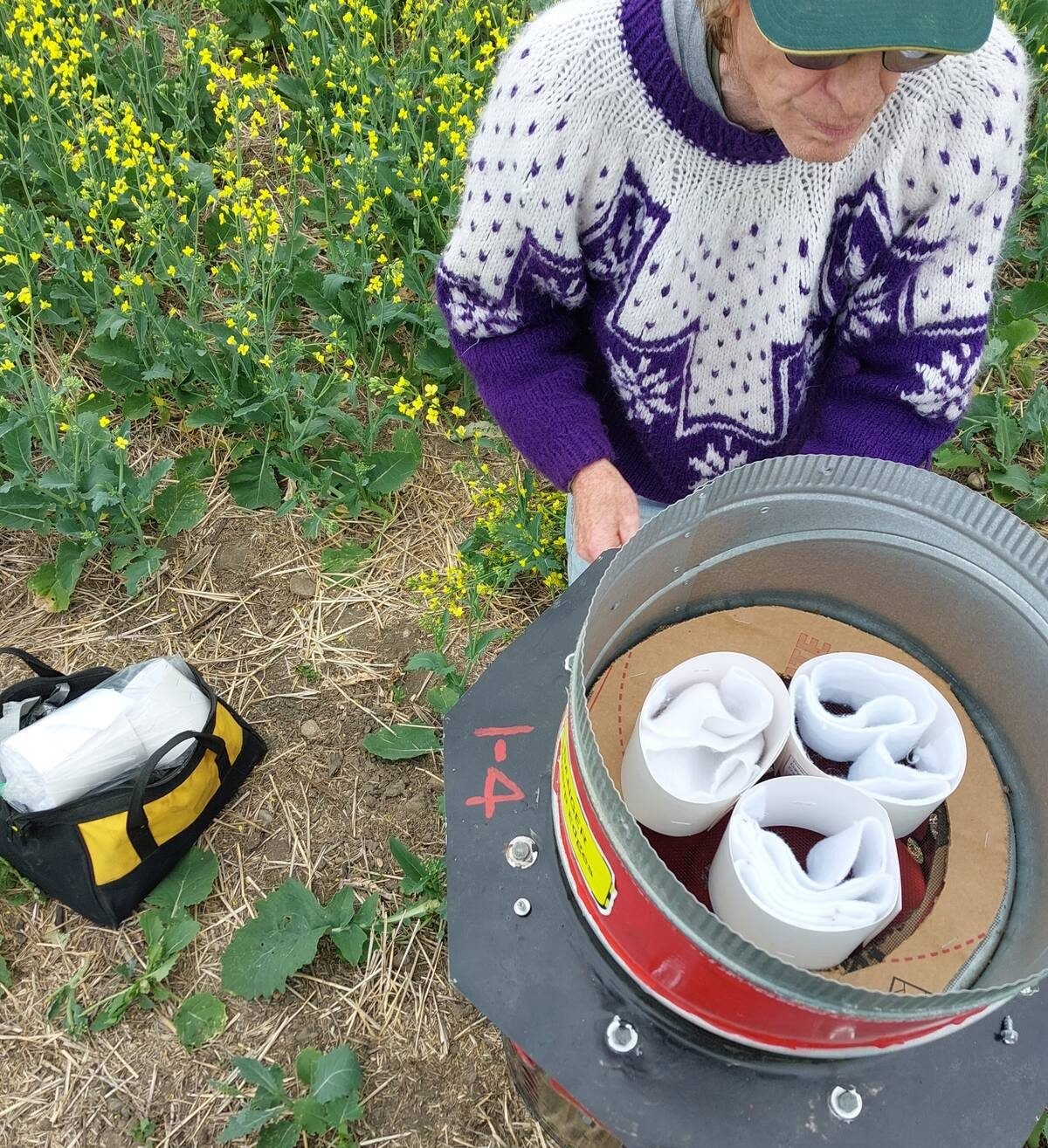
But for Spornado, cassettes must be collected, shipped and analyzed, making shipping one of the company’s largest logistical frustrations. The recurring laboratory analysis is also the larger cost for growers using the system.
Spornado has chosen to stick with molecular diagnostics because some pathogens can be difficult to distinguish by appearance alone. However, the company is working toward moving molecular testing into the field rather than replacing it with imaging.
Gabert said he hopes wider adoption will eventually generate enough information to build regional disease maps, refine fungicide timing and answer questions researchers have not previously been able to study.
For now, he sees a more immediate opportunity at the field level.
“If we can time the application of a foliar fungicide more effectively, that would be fantastic,” he said.
“If we can absolutely skip the application when it’s unneeded, that would be even better.”
Being first wasn’t enough
An Alberta spore detector reached the field years before today’s competitors, but never made it to market
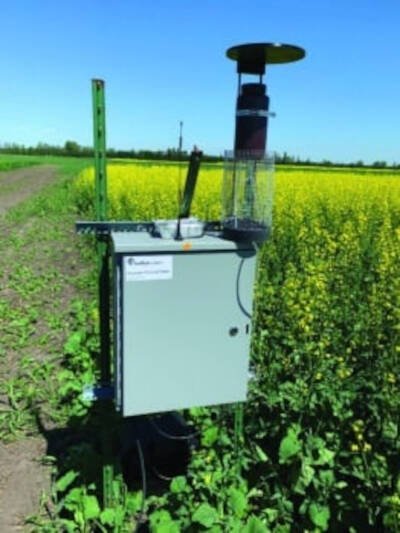
Alberta Innovates, through its subsidiary InnoTech Alberta, had been developing an automated sclerotinia detector for years, with the project discussed publicly as far back as 2016.
Principal investigator Xiujie (Susie) Li was awarded a patent for the nano-biosensor technology in February 2023, and said at the time she expected a commercial product within three years.
That put the project well ahead of today’s crop-disease monitoring companies, but the technology has since disappeared from view.
Alberta Innovates said the researchers directly involved are no longer with the organization, leaving no one currently available to provide a first-hand account of the project’s later stages.
The provincial agency cited changes in personnel and organizational priorities, along with shifts in the broader research and innovation landscape, as factors affecting work in the area.
Spornado chief executive officer Kristine White said she could not speak to the fate of the InnoTech project but noted that sclerotinia itself presents a difficult commercial target.
“The problem with sclerotinia is it’s such a small window that it’s a really small market,” she said.
The project’s disappearance offers a caution to researcher-entrepreneurs trying to beat competitors to market: being first out of the starting gate doesn’t guarantee you’ll cross the finish line.
The post Can disease-spotting crop spore detectors also advise farmers when to spray? appeared first on Farmtario.


