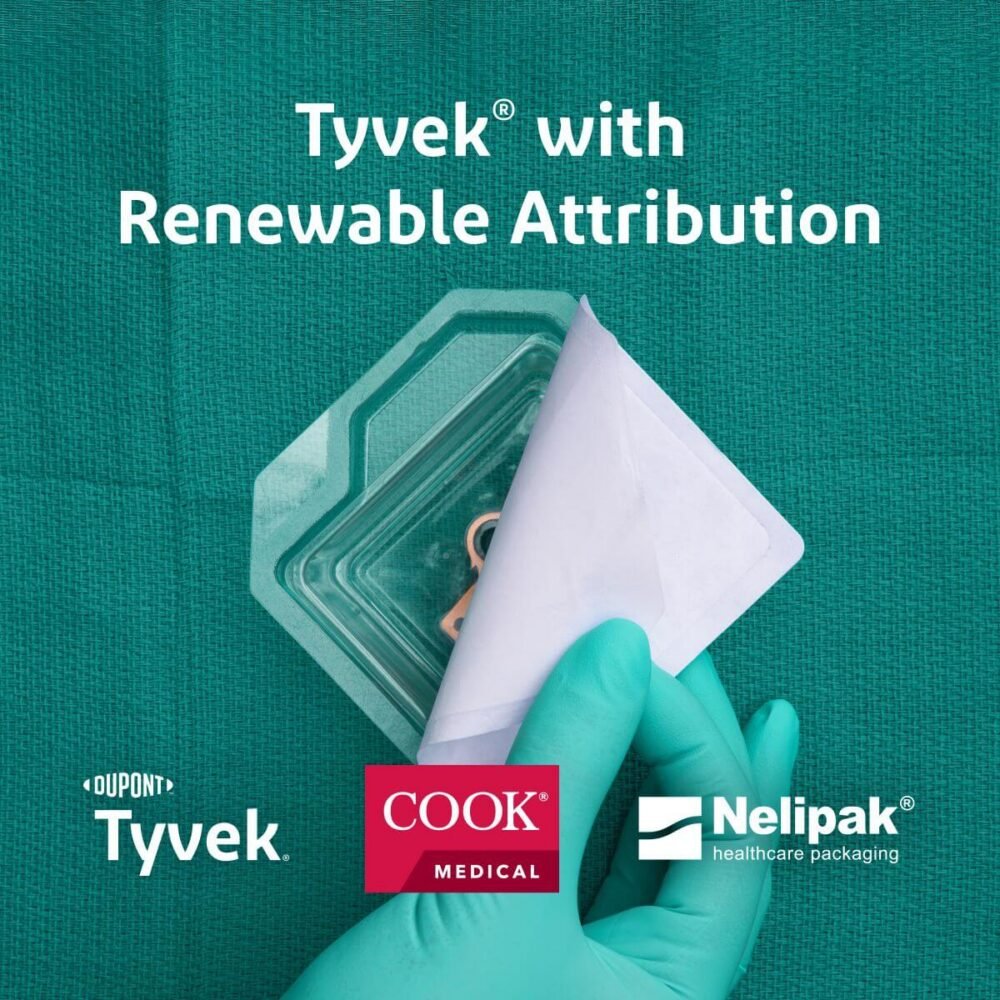
DuPont has launched Tyvek® with Renewable Attribution for consumer and industrial applications worldwide. The product extends the company’s biocircular material lineup into packaging, tags, labels, race bibs, wristbands and industrial uses.
The material links to ISCC PLUS-certified biocircular feedstock through a mass balance approach. Certified biocircular inputs enter the supply chain and get tracked upstream. That renewable content is then attributed to the purchased HDPE, reducing dependence on fossil feedstocks.
Customers can choose renewable attribution levels from 30% to 100%. At the 30% level, the material supports roughly a 30% reduction in carbon footprint compared to standard Tyvek®, based on peer-reviewed life cycle assessment data.
The biocircular feedstocks come from second-generation biomass, including waste and residues. These sources don’t compete with food production, avoiding added pressure on agricultural land or food supply chains.
Tyvek® with Renewable Attribution matches the specifications of conventional Tyvek®. Customers can adopt it without redesigning products or requalifying processes, making it a drop-in solution for existing users.
“Tyvek® with Renewable Attribution provides customers with a credible solution that maintains the performance they know while supporting progress on sustainable material sourcing,” said Jonathan Brunette, sustainability application development engineer at DuPont Tyvek® C&I.
DuPont holds ISCC PLUS certification at its Luxembourg and Richmond, Virginia manufacturing sites. Both sites undergo annual third-party audits to verify feedstock tracking and attribution.
The launch supports DuPont’s 2035 Sustainability Goals, which target circularity and reduced environmental impact across its product lines, including efforts to lower Scope 3 emissions for customers.
The post DuPont launches biocircular Tyvek® option appeared first on World Bio Market Insights.