
A powerful coalition is pushing back against U.S. President Donald Trump’s proposal to ban U.S. diesel exports.
In a letter to Trump, released Wednesday, the U.S. Chamber of Commerce, the National Association of Manufacturers and others said that export restrictions would increase fuel prices for Americans, not lower them.
Such a ban would spell trouble for Canadian farmers, because diesel prices are already through the roof.
And the resulting havoc would be felt especially by farmers in Eastern Canada, a region that depends much more on the U.S. for refined fuel, said Martin Pelletier, senior portfolio manager with Trivest Wealth at Wellington-Altus Private Counsel in Calgary
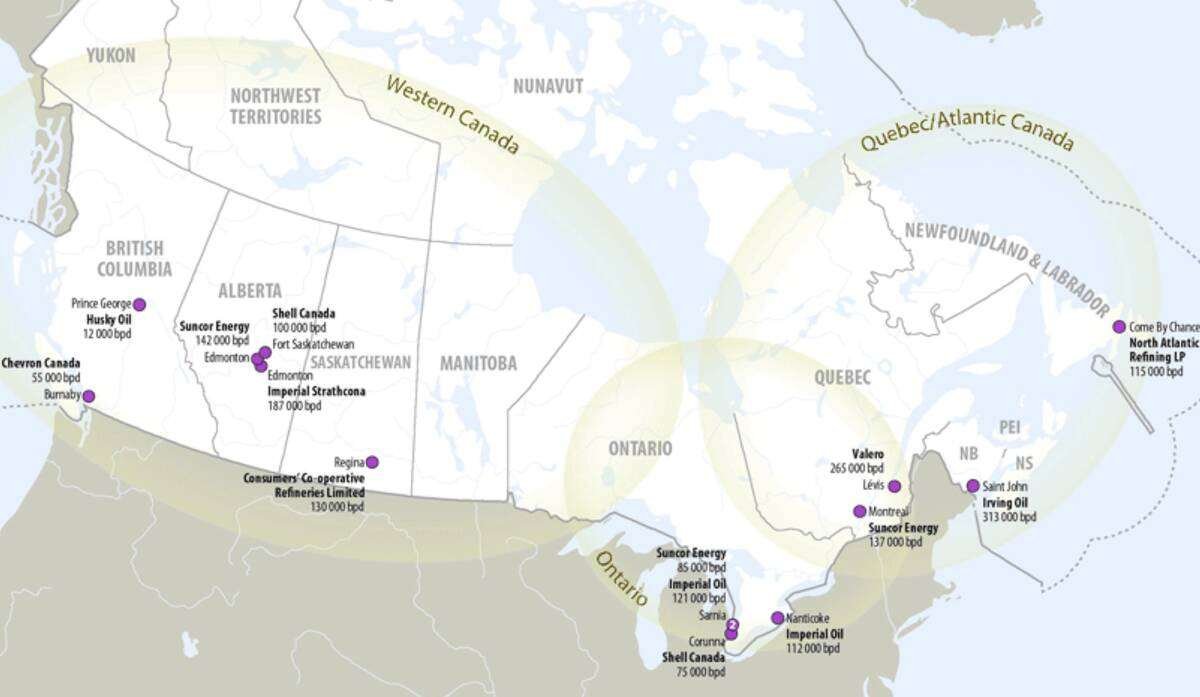
“Eastern Canada imports roughly 130,000 barrels of refined product” per day, he said.
Western Canada, meanwhile, is home to a signficiant refining industry and is a major exporter of refined fuels, so western Canadian farmers don’t depend on imports of U.S. diesel.
Nevertheless, a U.S. diesel export ban would be problematic for farmers, truckers and other consumers across the country, as global diesel prices would spike, said Carol Montreuil of the Canadian Fuels Association.
“We don’t rely upon the U.S (for diesel)… our vulnerability is very, very small,” he said. “Unfortunately, prices are global. Indirectly, the impacts will be felt on prices (in Canada).”
Speaking Tuesday at the United Nations General Assembly in New York, Trump expressed support for shutting down exports of U.S. diesel to lower prices for U.S. consumers.
“I’ve called for that, too. I’ve said, ‘Let’s not send out the diesel. We make a lot of diesel. That could have a little bit of an effect on regular automobile gasoline,’ ” he said.
Those comments provoked an instant reaction from the refining industry, including the American Petroleum Institute.
It said an export ban would “wreak havoc” on fuel markets in America and abroad.
In Western Canada, a number of refineries manufacture diesel and other fuels for domestic and global markets, includings Imperial Oil in Strathcona, Alta., Suncor in Edmonton and Federated Co-op in Regina.
Those facilities would protect western Canadian farmers and other diesel customers from global price spikes — somewhat.
If Trump follows through on an export ban, international diesel prices would explode.
“Initially, a diesel ban would send global prices skyrocketing.… A ban could raise world prices by as much as 100 per cent, given the fuel’s low price elasticity of demand,” energy economist Philip Verleger told Reuters.
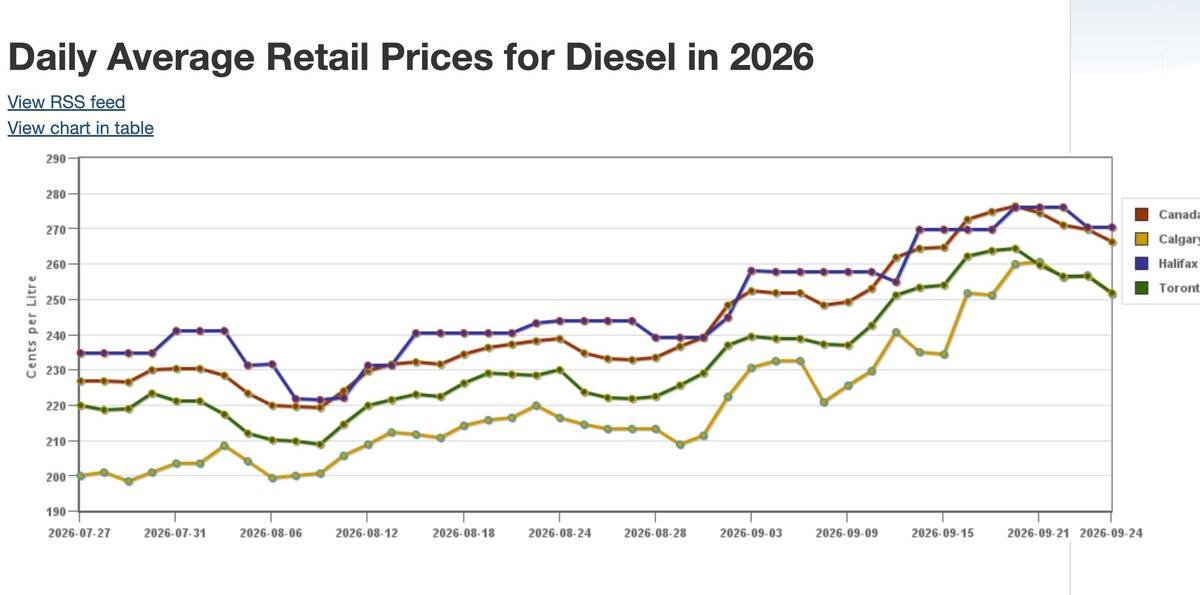
Prices may not rise as high in Western Canada because of the refinery capacity in Alberta and Saskatchewan, but farmers are already frustrated with the high price of diesel.
As of Monday, the average diesel price in Canada about about $2.74 per litre.
Will a ban actually happen?
U.S. senators from farm states are exerting pressure on the White House to do something about diesel prices, setting up a fight against politicians from states with refineries.
Pelletier doubts an export ban will happen because it would hurt the U.S. refinery industry and its ability to produce diesel in the future.
“If you restrain some sort of diesel (exports) … to have a near-term impact, in the longer (term) it will impact refinery runs and fill up storage,” he said.
But some reports say Trump isn’t listening to leaders in the U.S. petroleum industry, because he’s desperate to lower fuel prices and inflation in that country.
Instead of pushing for an export ban, U.S. industries that rely on diesel, such as agriculture, should consider the real cause of the spike in diesel prices, Pelletier added — that is, the U.S-Israel war on Iran and the closure of the Strait of Hormuz.
“If you want to reduce diesel prices … they should be lobbying the Trump administration to get some sort of resolution (with) Iran…. Get products flowing again.”
As of Monday, the average diesel price in the U.S. was $6.53 per gallon.
The post Ontario farmers would feel a U.S. diesel export ban appeared first on Farmtario.


