

UK developers have gotten very good at securing planning consent for 100 MW+ solar projects, but who is going to build them?
That was the question at the heart of a pv magazine moderated panel held at Solar & Storage Live UK in Birmingham. The September trade is the largest exhibition and conference for the industry in the country.
It was a lively session at the keynote Keynote Stage for the “Delivering the NSIP pipeline” panel discussion, which focused on the practicalities of building out Nationally Significant Infrastructure Project (NSIP) solar – projects of 100 MW or greater – as well as utility-scale solar projects more generally.
Like in many mature solar markets, securing planning consent is not the toughest challenge facing a UK solar project. Reaching financial close remains the major hurdle for utility-scale solar, but when asked if there is a disconnect between government ambition on clean energy and the revenue support on offer, Ben Fawcett, head of business development UK at Lightsource bp, warned that policymakers must do more to give investors revenue visibility for large-scale projects.
Despite a recent run of successful contracts for difference (CfD) auctions for solar, in which new records were set for procured capacity, Fawcett said the industry needs to see a ninth CfD tender if it is to secure the contracted revenues that will allow investors to back a growing pipeline of large-scale projects.
Skill shortage was another focus of the session. Large-scale assets require lots of skilled labor, and as more solar projects are connected to the transmission network the talent pool for engineers permitted to work at extra-high voltages could come under pressure.
Tracey Elliot, director at Eden Sustainable, recalled how previous periods of high-volume solar construction in the United Kingdom had relied on overseas labor. Creating skilled, meaningful work in the United Kingdom should be a focus according to Elliot and could go some way to building community support for developments.
David Hoare, technical director at RSK Group took the question of community objection further. RSK Group has worked on 40 NSIP projects that have secured development consent orders (DCOs), so the company has experience on delivering planning consent. Hoare warned that the industry standard approached to consultation until now – a kind of church hall diplomacy – may not be enough in the future, calling for developers to more actively engage with locals to overcome objections to large-scale solar.
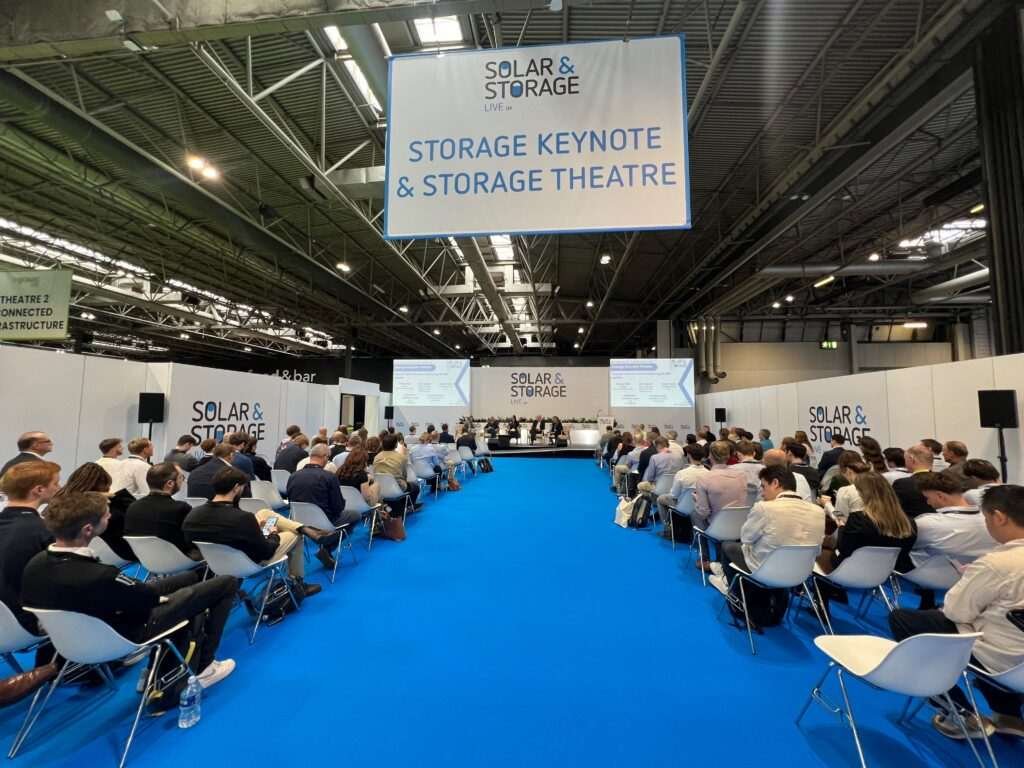
Despite the value of better consultation practices and the potential for developers to create new jobs roles, Simon Wheeler, director of development at Enso Energy, closed the session by warning that what the industry needs is regulatory stability, with no new mandatory provisions for solar developers who already have enough to manage when building major infrastructure projects.
Utility-scale was not the only focus at Solar & Storage Live UK, and the 2026 event followed the August introduction of plug-in solar regulations allowing consumers to self-install arrays up to 800 W. Despite the quick regulation change for plug-in solar modules – the UK government first committed to plug-in solar in February 2026 – there was a sense from some stands that this is an policy that has only been half cooked.
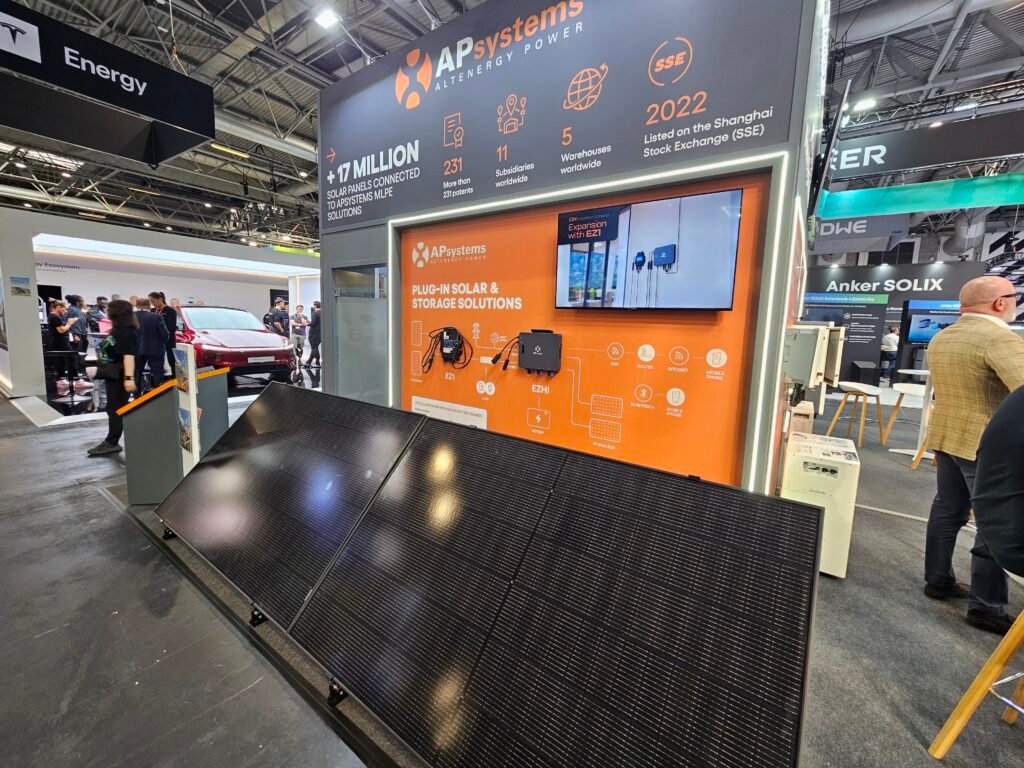
In leading plug-in markets such as Germany, consumers can buy and install plug-in solar and plug-in battery storage, however the UK regulations have not been updated to allow amateurs to install energy storage in this format. That’s a limiting factor in a market where energy storage attachment rates are growing. Solutions on the stands at Solar & Storage Live UK amounted to modules with a microinverter that connects to the households using a British Standards three-in plug, although there were plug-in battery products that could be seen. The manufacturers are ready, but an ongoing consultation on plug-in battery safety means it could be more than a year before regulations are implemented.
Despite this, one manufacturer told pv magazine they had good conversations with retailers and wholesalers on the exhibition floor. Plug-in devices have yet to make a splash on the UK high street – but major retailers have previously shown enthusiasm for the products, and more may appear on shelf soon.
The residential segment is also on track to benefit from a ramping up of policy support, with grants available through the UK government’s Warm Home Grants program, and more attractive financing terms expected soon through the Warm Home Loans – a government program that will see the state subsidize the risk of a solar loan, lowering the interest rate paid by consumers on their financed installation.
UK consumers also face a 4% energy price hike from 1 October when the price cap enforced by regulator Ofgem comes into force. The energy price cap protects around 22 million UK households on default tariffs by limiting the maximum rates and standing charges that energy suppliers can charge. Under the current price cap a typical households pays GBP 1,663 ($2,200) per year on gas and electricity, meaning the 4% increase would take an average bill to GBP 1,723 per year. There was an expectation among some exhibitors at Solar & Storage Live that even higher energy bills combined with anxiety over conflict in the Middle East will result in more retrofit solar and energy storage installations.
On energy storage, the United Kingdom has been a pioneering market for utility-scale battery energy storage systems (BESS) for some time and despite a challenging grid connections process, the pipeline remains significantly oversupplied. New measures such as introducing financial commitments for pipeline projects are expected in a bid to further rationalize the connections queue.
Residential energy storage has entered a major growth phase, and battery storage is now often installed without solar. Australian solar consultancy SunWiz showed pv magazine data at the show revealing standalone energy storage installations now exceed standalone solar in the United Kingdom. While the data did not distinguish between retrofits to buildings with existing PV systems or installations on buildings without solar, the opportunity to arbitrage energy via time-of-use tariffs offered by major UK utilities is making the case for household battery storage stronger.
Solar and Storage Live UK was held across Sept. 22-24 at the Birmingham National Exhibition Centre (NEC) The show will return to the Birmingham NEC on Sept. 21-23, 2027.
The post Key takeaways from Solar & Storage Live UK, Birmingham appeared first on pv magazine Global.


