
Verra’s carbon capture and storage (CCS) methodology has been approved by the Integrity Council for the Voluntary Carbon Market (ICVCM) under its Core Carbon Principles (CCPs).
The approval adds a major technology-based carbon removal method to the growing list of methodologies that meet the ICVCM’s high-integrity requirements.
Mandy Rambharos, CEO of Verra, says:
Inside Verra’s VCS Methodology VM0049
Verra’s Verified Carbon Standard (VCS) methodology VM0049 Carbon Capture and Storage, v1.0, sets rules for measuring greenhouse gas emission reductions and carbon dioxide removals from projects that capture CO₂ and store it permanently.
The framework also includes modules for direct air capture (DAC), CO₂ transport, CO₂ storage and bioenergy with carbon capture and storage (BECCS).
The approval comes at an important time for the voluntary carbon market. Buyers are paying more attention to whether carbon credits represent real and lasting climate benefits. For CCS projects, this is especially important because capturing CO₂ is only one part of the process.
Projects must also account for emissions from energy use and transportation and show that the captured CO₂ will remain safely stored.
Why ICVCM Approval Matters
The ICVCM created the Core Carbon Principles to set a common standard for high-quality carbon credits.
The organization reviews carbon-crediting methodologies to determine whether they meet requirements designed to support credible climate benefits.
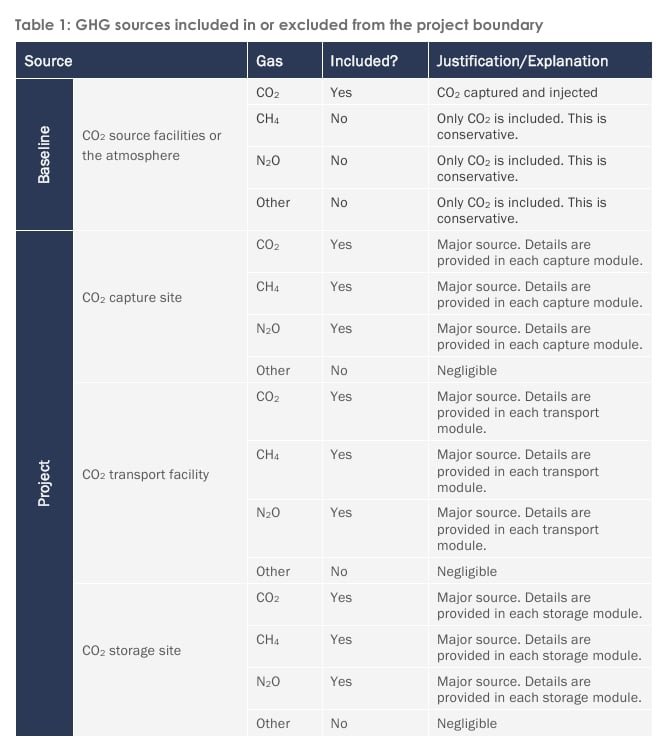
This process matters for CCS because these projects can involve several stages and technologies. A project may capture CO₂ at an industrial facility, move it through a pipeline, and then store it deep underground.
Each stage can create emissions or other risks that need to be measured.
As explained before, VM0049 provides rules for accounting for these activities. It is designed to calculate the emissions reductions and carbon removals linked to eligible CCS projects.
Thus, the ICVCM approval gives the methodology an additional credibility signal in the carbon market.
However, the approval applies to the methodology, not automatically to every project using it. Individual projects still need to meet the relevant VCS requirements and verification rules.
That distinction is important as companies look for higher-quality carbon removal credits.
One Framework Covers Several Technologies
One of the main features of VM0049 is its modular design.
Instead of requiring a completely separate methodology for every type of CCS project, Verra created a main framework that can work with different modules.
The approved modules include:
- VMD0056: Direct air capture
- VMD0057: CO₂ transport
- VMD0058: CO₂ storage
- VMD0059: Bioenergy with carbon capture and storage (BECCS)
This approach gives project developers more flexibility.
For example, a project could capture CO₂ at one location, transport it through a shared pipeline, and store it at a separate geological site. Multiple facilities could also potentially use the same transportation or storage infrastructure.
The framework can also support projects as they grow or add new technologies.
VM0049 has been active since June 2024 and can be used for eligible projects involving geological carbon storage around the world. The methodology was developed by the CCS+ Initiative, South Pole Carbon Asset Management and Perspectives Climate Group, with support from Verra.
Energy Use Is Also Important
Carbon capture can require large amounts of energy. Therefore, the source of that electricity matters when calculating the overall climate benefit of a project.
VM0049 includes specific requirements for projects that use renewable electricity.
Projects must show that their renewable electricity comes from newly developed renewable sources dedicated to the CCS project. They cannot simply rely on existing renewable generation and assume that the power has no additional climate impact.
This requirement is important because the amount of CO₂ captured does not tell the full story.
A project could capture a large amount of carbon but still have significant emissions from the energy needed to operate its equipment. A robust methodology therefore needs to look at the project’s wider emissions rather than only the captured CO₂.
CCS Could Support the Growth of Carbon Removal
CCS is becoming an important part of the technology-based carbon removal market.
Direct air capture is one example. DAC systems remove CO₂ directly from the atmosphere. The captured carbon can then be transported and stored underground.
BECCS takes a different approach. It uses biomass-based processes to generate energy or products while capturing the resulting CO₂ and storing it.
Both technologies depend on permanent storage and accurate measurement. This makes clear accounting rules important as the industry moves from small demonstration projects toward larger commercial facilities.
VM0049’s modular approach could help developers use one overall framework for different combinations of capture, transport and storage.
At the same time, the methodology can account for emissions linked to each stage of the process.
What the Approval Means for the Carbon Market
The ICVCM approval gives CCS developers another methodology that has met the organization’s Core Carbon Principles requirements.
For carbon-credit buyers, the approval can make it easier to identify methodologies that have gone through the ICVCM’s integrity assessment.
However, buyers will still need to examine individual projects. Factors such as the technology used, energy source, monitoring system, storage site, and verification process can affect the actual climate benefit of a project.
This will become increasingly important as the carbon removal market expands.
CCS projects are often complex and require significant infrastructure and capital. A clear methodology can help developers measure their climate benefits and give buyers a common framework for evaluating the resulting credits.
The ICVCM approval therefore marks an important step for technology-based carbon removal. It does not remove the need for project-level due diligence, but it gives the market another methodology that has passed an independent integrity assessment.
As more CCS, DAC, and BECCS projects move toward commercial scale, these standards could play an increasingly important role in building confidence in the carbon removal market.
The post Verra CCS Methodology Gets ICVCM Approval as Carbon Removal Market Grows appeared first on Carbon Credits.


