

Hyundai’s new-generation Tucson will arrive in Australia in mid-2027 with an exclusively hybrid launch line-up, as the Korean brand prepares to take on the Toyota RAV4 and an expanding wave of electrified Chinese competitors.
The fifth-generation of one of Australia’s most popular medium SUVs will also introduce a rugged-looking XRT variant locally, although the more capable XRT Pro and the plug-in hybrid offered overseas are not part of the Australian launch plans.
The Australian launch timing has been confirmed alongside the Tucson’s global unveiling in New York, following its initial appearance in South Korea in August.
READ MORE: Another electric van enters the fray: Hyundai Staria Load Electric lands at $70,990 with 450km range and ultra-fast charging
READ MORE: Hyundai’s battery breakthrough: Next-gen tech will back massive 100-model global launch program
READ MORE: Revealed: Hyundai’s 1000km-plus electric ute tech will debut in Santa Fe SUV range extender
Pricing for the new Tucson has yet to be announced. The current Australian range starts at $40,100 before on-road costs for the petrol front-wheel drive model, with the hybrid starting at $42,850.
The fifth-generation family SUV brings a larger body, a redesigned cabin and Hyundai’s next-generation hybrid technology.
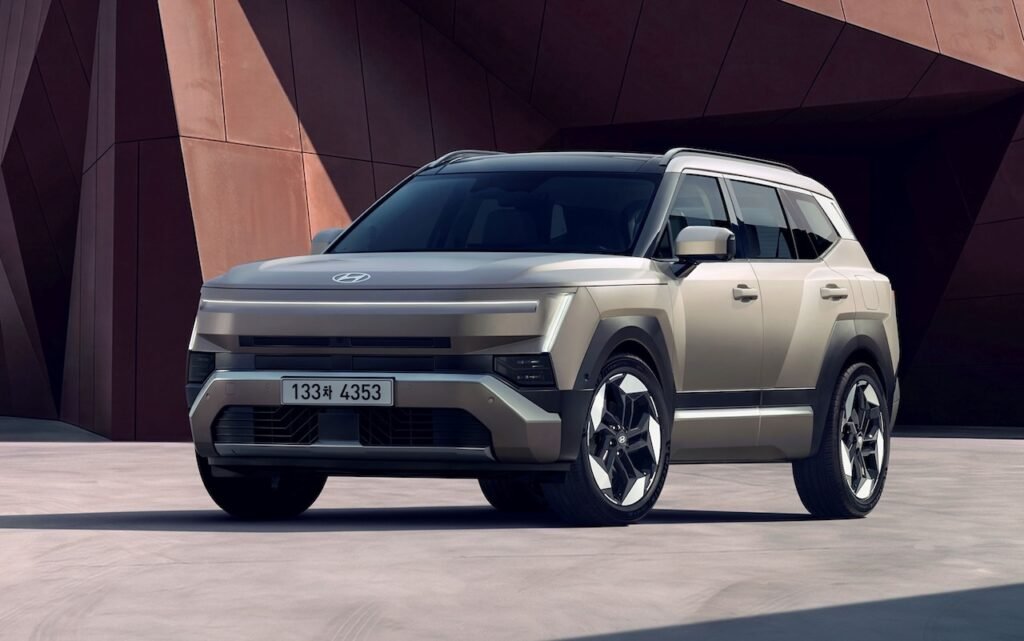
The Tucson’s increased emphasis on electrification comes as Chinese brands broaden the choices available to Australian family SUV buyers.
Alongside its established Toyota RAV4 rival, the Hyundai will compete with vehicles such as the BYD Sealion 6, GWM Haval H6 and Chery Tiggo 7 Super Hybrid, which have brought plug-in hybrid power into the mainstream medium SUV market.
At the centre of the new Tucson’s electrification push is a revised hybrid system combining a 1.6-litre turbocharged four-cylinder petrol engine with a new transmission incorporating two electric motors.
Overseas specifications put combined output at 174–180kW and 380Nm, compared with 172kW and 367Nm for the outgoing Australian Tucson Hybrid. The new system uses a six-speed automatic transmission and a 1.49kWh battery, with front- and all-wheel drive versions available. Final Australian specifications remain unconfirmed.
Hyundai’s new hybrid architecture adds a motor that handles engine starting and electricity generation, while the main drive motor provides propulsion and regenerative braking. Hyundai says the arrangement improves efficiency and refinement, with smoother shifts and reduced noise and vibration.
The new Tucson Hybrid also introduces an E-Traction function that manages driving torque to reduce wheel slip during cornering.
A Stay Mode allows occupants to use functions including air-conditioning, audio and device charging with the engine switched off while parked. Hyundai has not specified how long the Tucson can maintain those functions before the engine needs to restart.
Globally, the new plug-in hybrid pairs a 1.6-litre turbo-petrol engine with electric propulsion for a combined 215kW and approximately 380Nm.
Hyundai estimates an electric driving range of 81km, although the release does not identify the test cycle or battery capacity. A 7.2kW onboard AC charger is also specified.
A conventional 1.6-litre turbo-petrol engine with an eight-speed automatic remains part of the global line-up.
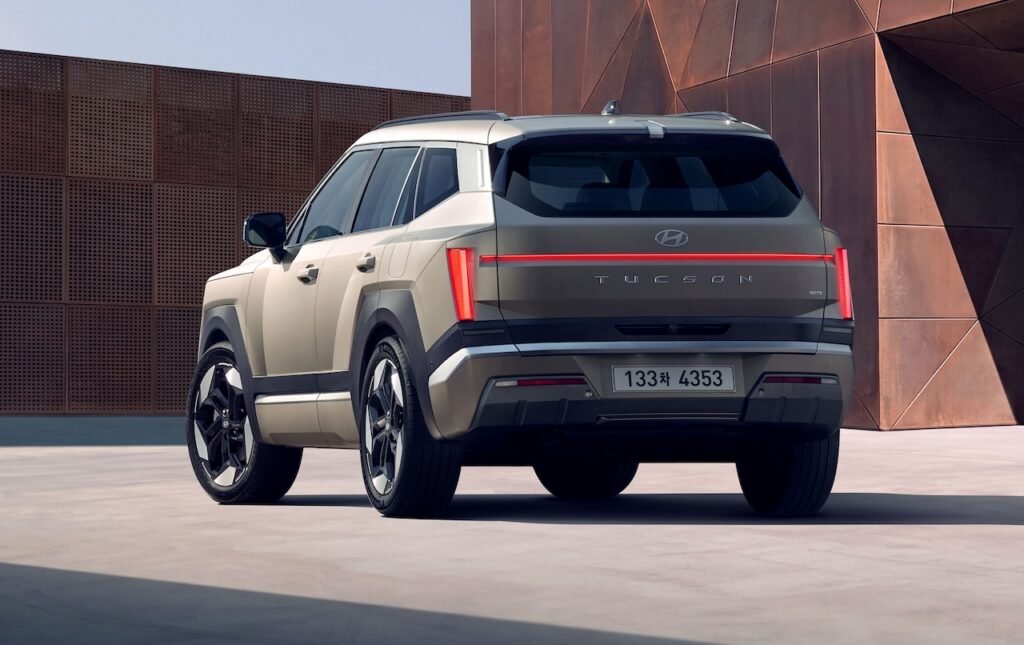
The new model also grows substantially. Australia gets the long-wheelbase version, measuring 4700mm long, 1905mm wide and 1685mm high. A short-wheelbase version is built for Europe.overseas
That makes it 60mm longer, 40mm wider and 20mm taller than its predecessor, providing more cabin space beneath the more upright and angular bodywork.
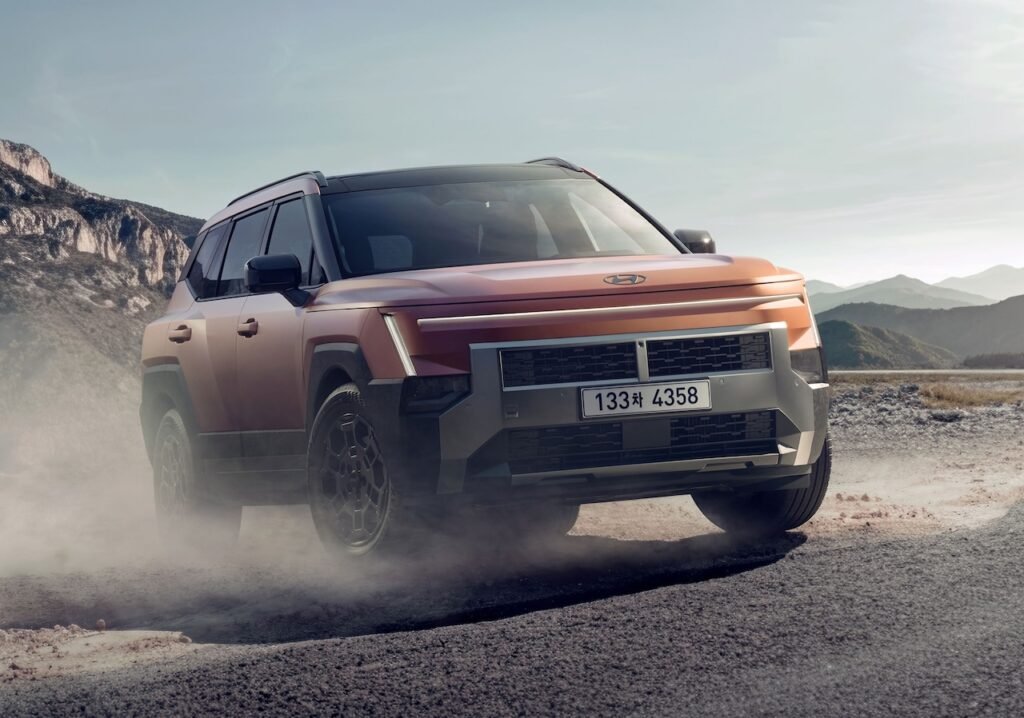
Its styling replaces the current Tucson’s intricate grille and sharply creased flanks with squared-off proportions, prominent wheelarches and a horizontal lighting theme framed by vertical lamps.
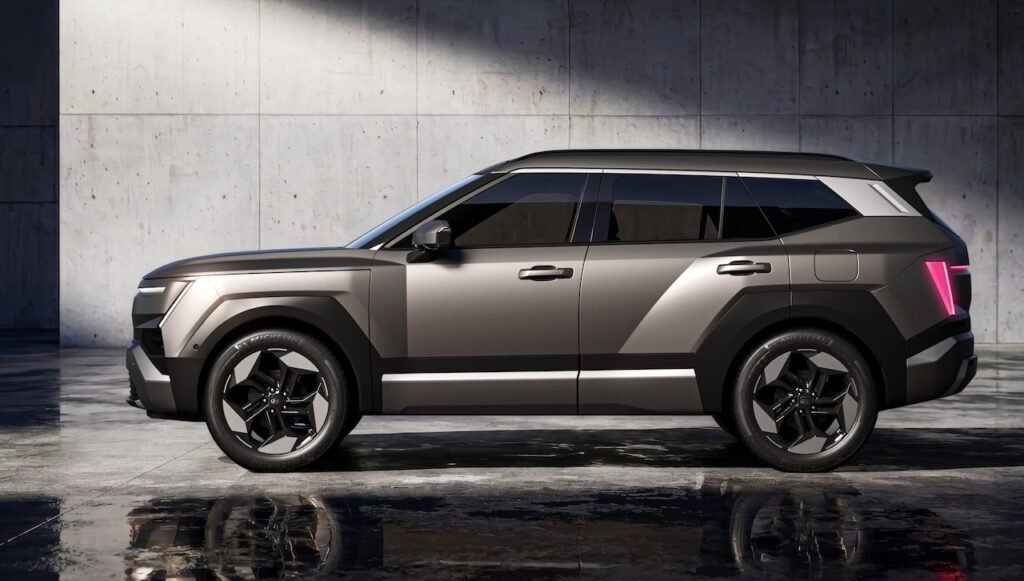
Rear doors now open to 83 degrees, compared with 73 degrees previously, to improve access.
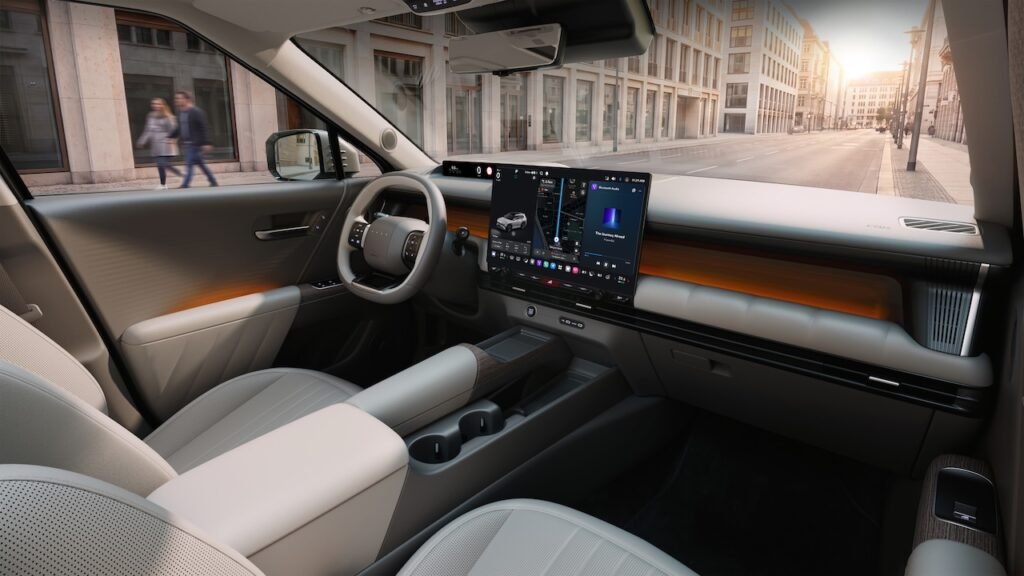
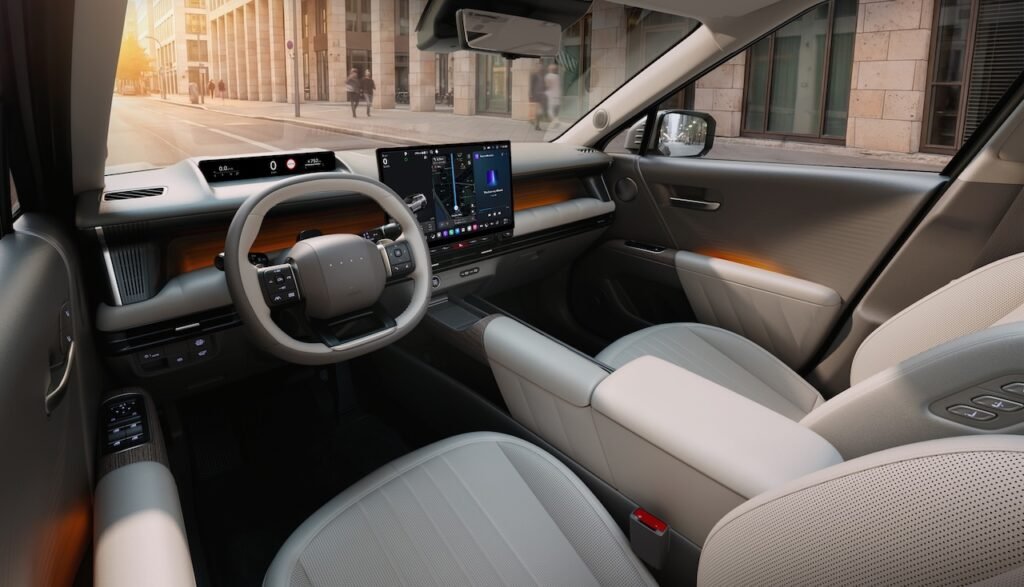
Inside, Hyundai has separated the driver display from the central touchscreen, replacing the current model’s paired-screen layout with a slim 9.9-inch instrument display and either a 12.9-inch or 17-inch infotainment screen, depending on specification.
Physical buttons remain for frequently used climate and audio functions, while the gear selector is mounted on the steering column.
Available equipment includes two 15W wireless phone chargers. However, three-zone climate control, front-seat massage and reclining relaxation seats are reserved for the short-wheelbase version Australia will not receive.
The Tucson also adopts Hyundai’s Pleos Connect infotainment system, based on Android Automotive, with over-the-air updates, downloadable applications and a conversational AI assistant called Gleo.
Beyond the road-focused versions, Hyundai has expanded the Tucson’s adventure offering with an XRT Pro that adds hardware upgrades to the tougher styling of the regular XRT.
The XRT Pro has all-wheel drive, all-terrain tyres, front recovery hooks and 210mm ground clearance — 30mm more than the standard model — along with revised approach and departure angles.
The XRT Pro also introduces Smart Terrain Assist, which assesses traction and wheel slip, and a low-speed control system that manages acceleration and braking between 2km/h and 25km/h.
Depending on market and specification, the Tucson also offers a camera view of the ground beneath the vehicle, assistance for reversing along a previously driven route and trailer reversing assistance.
Hyundai has announced improved towing capability overseas, but Australian towing limits remain unconfirmed.
A further sport-themed Tucson variant will be unveiled at the Paris motor show on October 12.
According to August year-to-date VFACTS figures, Hyundai sold 14,272 Tucsons in the first eight months of 2026, up 5.5 per cent on the same period last year. That placed it fourth among Australia’s best-selling medium SUVs behind the Tesla Model Y (31,454), Toyota RAV4 (26,585) and BYD Sealion 7 (17,277).
The post Confirmed for Australia in mid-2027: New Hyundai Tucson goes all-hybrid to battle Toyota RAV4 and an increasing number of Chinese rivals appeared first on EV Central.


