
The sustainable packaging renaissance has begun: Takeaways from SPC Advance 2026
As packaging professionals across the industry navigate new regulations, prepare to (collectively) contribute billions of dollars in EPR fees, and rethink their portfolios, GreenBlue Executive Director Paul Nowak recognized the people in the room as the “silent majority”: people who champion sustainability within their organizations, hear the loud voices on both sides of the aisle, but roll their sleeves up every day to move our industry forward.
During two days in San Diego, this majority didn’t shy away from the tensions across our increasingly complex packaging and policy landscape. Instead, they showed how policy, infrastructure investments, and technological transformations are closing persistent circularity gaps.
Sustana’s Barak Bright doubled down on that hopeful theme: “Right now, we’re in the beginning of a renaissance for sustainable packaging. For the first time, we have the infrastructure and legislation in place to get the traction we need.”
If that renaissance is underway, SPC Advance made clear what will move it forward: smarter policy plans, stronger infrastructure, and better technology.


The policy changes reshaping packaging strategies
At SPC Advance 2026, we heard a tale of two packaging bills.
The first is California’s SB 54 — one state EPR law that, in just four years, has completely transformed packaging strategies for the world’s largest producers. The second is California’s just-vetoed recycled content claim bill, AB 2253. Despite the veto, the bill still accelerated efforts to strengthen how recycled content claims are substantiated and communicated.
These policies paint a picture about the future of packaging: Even if regulations aren’t certain, the industry certainly needs to be able to adapt to regulatory changes.
Check out four policy shifts we heard about at SPC Advance that packaging and sustainability teams should be watching:
- 2027 source reduction under SB 54: Producers face a 10% source reduction target against a 2023 baseline, with at least 2% coming from reuse, refill, or elimination. According to CAA’s Shane Buckingham, PCR can do a lot of the heavy lifting, accounting for up to 8 percentage points of certain source reduction targets.
- Producers should get meaningful runway before any new eco-modulation fees hit. Buckingham said CAA aims to give companies roughly 12–18 months of notice on future fee structures to plan portfolio changes.
- Films and flexibles face market-access risk, but could see a longer compliance runway. Mars’ Eadaoin Quinn noted that materials not recycled at scale could face marketplace restrictions; meanwhile, CAA is developing unique challenge exemptions (UCEs) that could give formats like films and flexibles more time to meet recycling rate targets.
- Expect more scrutiny of recycled content claims. Speakers discussing the global trade of recycled materials agreed that the stakes for traceability, origin, and substantiation of PCR claims are rising.
Where recovery investments go next
It’s no secret that recyclers and reclaimers are reluctant to invest in expensive equipment for materials with weak end markets.
But look at Belgium. How do they have exceptionally high recovery rates for films and flexibles? “They don’t have some magic technology,” USFFI Executive Director Maite Quinn-Richards said. They do, however, have EPR support and long-term PRO contracts that helped reclaimers build sorting capacity.
As U.S. EPR programs mature, similar mechanisms could advance infrastructure needed to recover challenged materials at scale. For packaging teams, four factors are worth watching as recovery infrastructure evolves:
- Watch trade policy as closely as recycling policy. ReMA’s Natalie Betts noted that tariffs can raise costs for imported recycling equipment and components, while export restrictions can limit where U.S. recyclers sell recovered materials.
- Create demand, not just supply. Domestic PCR sourcing can give recyclers and reclaimers more confidence to invest in sorting and reprocessing materials. At SPC Advance, Camille Herrera said that while state-specific sourcing of PCR materials may not always be practical, regional sourcing can be, and California’s scale makes it potentially possible to specifically source PCR from in-state recyclers.
- Expect infrastructure strategies to vary by material. At SPC Advance, speakers emphasized that different materials face different gaps in collection, sortation, processing, and end markets.
- Monitor how collection models are evolving abroad. At SPC Advance and the How2Recycle Summit, Canadian PROs shared how they’re aligning collection where possible while accounting for provincial differences. Recycle BC and SK Recycles’ Lyndsey Chauhan also shared how flexible packaging volumes more than tripled in one community after they initiated curbside collection.
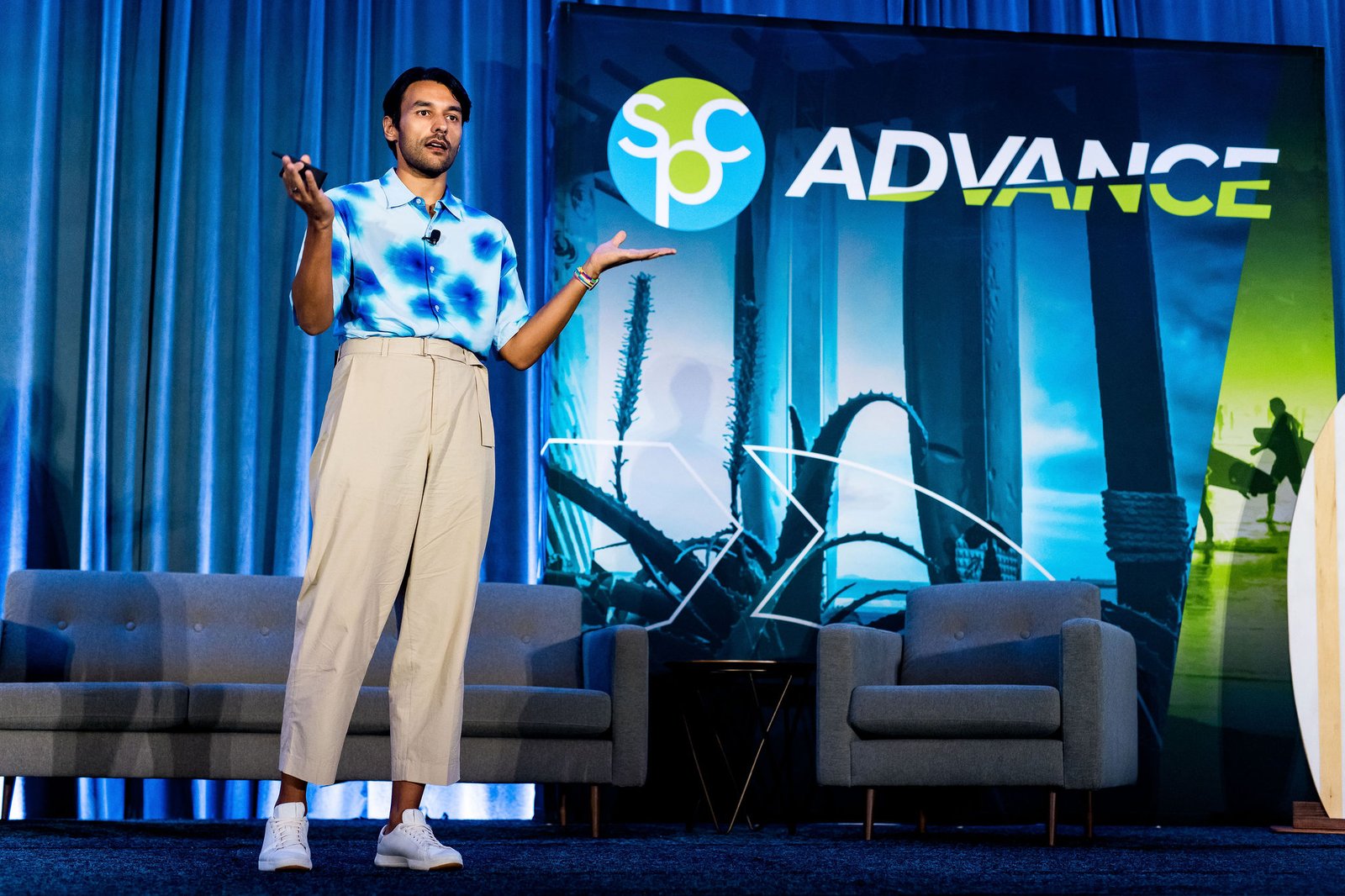

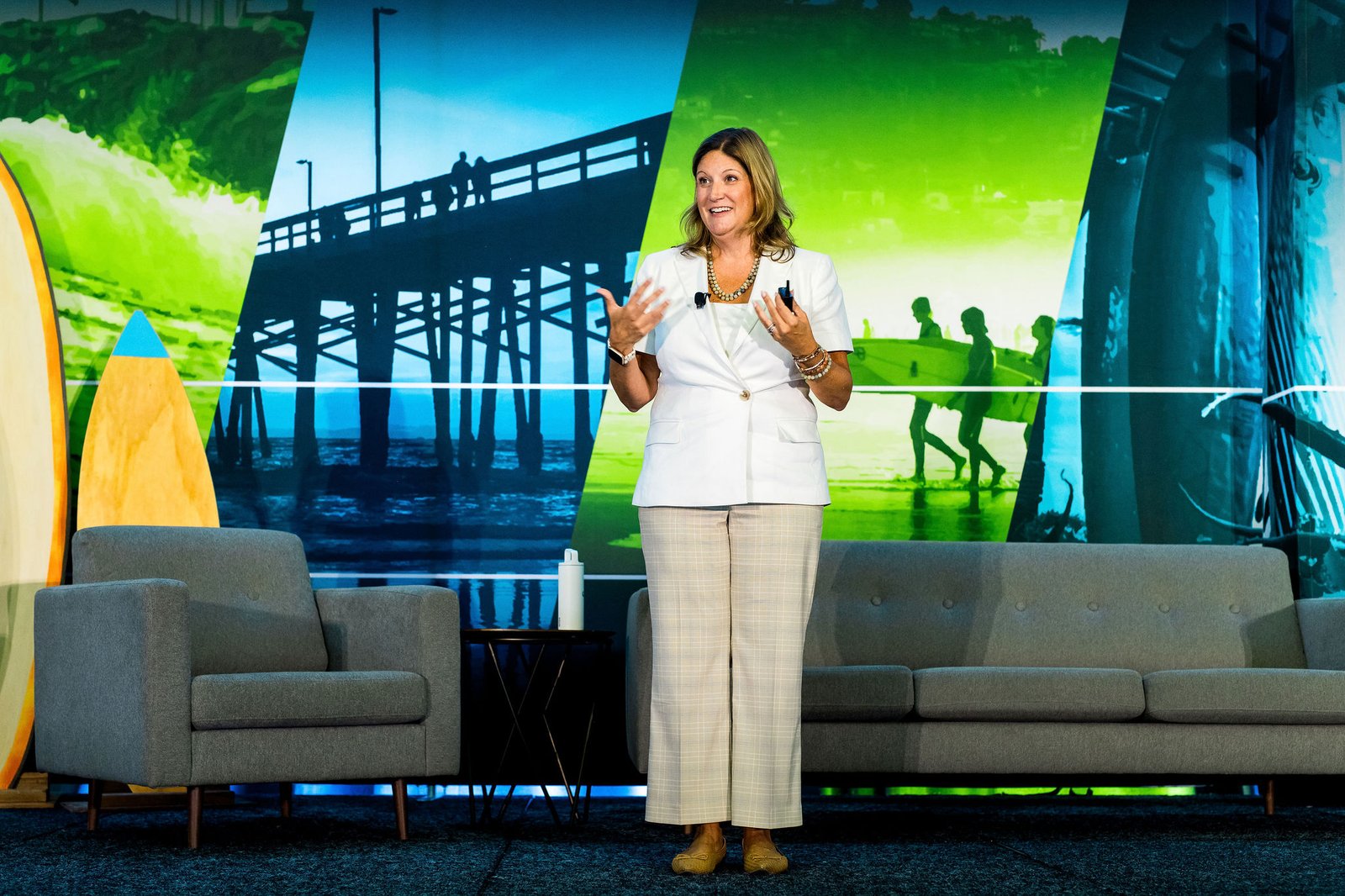
Embracing the liminal: Technology for the next era of packaging sustainability
NYU Stern’s Amy Skoczlas-Cole described this moment as liminal: a transitional, threshold period between an old sustainability world and the future that SPC Advance attendees are building.
We have tremendous new opportunities to AI-optimize recovery, compliance, and packaging design, but Skoczlas-Cole warned that the stakes for sustainability professionals are too high to let the robots run our plans.
AI agents are creatures of habit — pattern-recognition engines trained on historical data. Sustainability professionals have to design for the future. Here’s how sustainability leaders can keep preparing for our AI-empowered, human-led sustainable packaging future:
- Use data partners to strengthen EPR and packaging strategy. At SPC Advance, tools from partners like RecycleMe, Recyda, Aura, Lorax EPI, RLG, rePurpose Global, and MokshEPR reflected a broader shift toward using better data to manage EPR reporting, fees, and design decisions.
- Invest in better recovery data. AI waste intelligence platforms, like those demonstrated by Greyparrot’s Yaseed Chaumoo, can help teams understand how packaging moves through MRFs, where redesigns can improve recovery, and how to cut future EPR costs.
- Prepare for AI to change what MRFs can sort. WM’s Jim Marcinko described how AI-enhanced optical sorters can distinguish materials more precisely and improve recovery compared with older systems.



The people bringing us to our sustainable packaging future
GreenBlue Executive Director Paul Nowak opened SPC Advance by calling attendees to lean into realistic optimism — to see our challenges with clear eyes, but never lose sight of our power to change them. And at SPC Advance, Consumed author Saabira Chaudhuri closed the loop: human decisions built today’s packaging system, and human decisions will build a better, truly circular one.
If you’re interested in building that future with us, get involved with the Sustainable Packaging Coalition today.
The post The sustainable packaging renaissance has begun: Takeaways from SPC Advance 2026 appeared first on Sustainable Packaging Coalition.


