This is part three of the second conversation in our IWCA Conversation Series. This segment is taken from a digital roundtable held July 2026 with four honourees from the 2026 Influential Women in Canadian Agriculture program and moderated by agriculture editor Kaitlin Berger. For information on the honourees and the background of the Influential Women in Canadian Agriculture program, click here.
The honourees featured in this conversation are:
- Coreen Franke, Nutrien Ag Solutions
- Wen Chen, Agriculture and Agri-Food Canada
- Margaret Hudson, Burnbrae Farms
- Andria Jones, University of Guelph
This transcription has been edited for clarity and length.
On supporting other women in agriculture
Kaitlin Berger: There’s different formal programs out there designed to connect or highlight women and then there’s also informal ways that we do that. I’m just curious, what’s your experience been with those, with the formal programs and then with the informal avenues of connecting with other women in agriculture and supporting each other?
Andria Jones: I’m in academia and, with the exception of, I can think of two non-women that I have had in my lab over the years. I would say, in my sector of academia, it’s predominantly women that are applying to graduate school. And then in the vet program, it’s a majority of women now as well. And so I’ve had lots of ample opportunity to pass the baton and work with women.
And now that I’m at the age and stage that I am, I consider my purpose now is to bring other women in equity-deserving groups up the ladder. And so, for me, it’s mostly good news stories, at least in the time since I’ve been a faculty member. 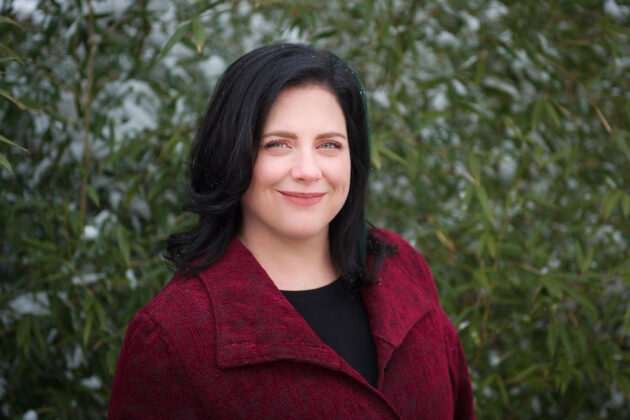
I can remember stories of like, from when I was still a vet student, and on an externship, and I’d show up with the other woman vet and farmers saying, “when’s the veterinarian getting here?” And explaining we are the veterinarian and it not going over very well initially. But that was 30 years ago, so hopefully we’ve made some strides since then. And then eventually, the women vets I worked with did eventually win folks over because they’re amazing veterinarians, but there was just that belief that vets are men.
Coreen Franke: But you had to work harder to earn that respect, right?
AJ: Oh, for sure. And in academia, we do still see women making less or not being promoted as quickly. Yeah, so there’s still that too. But I’m getting on the academic side less of the ag side.
Wen Chen: I was on the executive board for the Canadian Phytopathological Society. I think, in the past, we didn’t have that many female presidents, but it changed, right? We start to see more vice presidents, even younger, younger female scientists being elected. And I think, you know, and actually we are, when we were on the board that we intentionally to bring more women to the standing committee as the chair and also in the executive board. So, I think that that’s, for this society, it’s a correct move, but you still see lots of the dominant is still male scientists.
So, I mean, I think most of my male colleagues are quite supportive, as well. I did get nominated to editor positions from them, and I think we work really well together. But then thinking about opportunities for younger female scientists, they’re still much less, I would say. I currently have a postdoc and she really is fantastic. She’s very smart, very driven. And she was on maternity leave and then sick leave for a couple of years. And when she came back, she couldn’t find a faculty position because, constantly from the selecting board, they were asking, what did you do during that several years, and there’s a break in your publication records and she applied to about 10, or more than 10 jobs, for the past year or two and it has been very challenging. So I think, you know, that’s just one case, right?
I just read about all the barriers, all the things that, yes, I think I agree, I personally experienced that. But what’s the solution? What we can do to help? I think that’s more important.
And then I had another postdoc and she, as the first-generation, not even Canadian yet, she had to go back to school to redo another PhD to be able to stay in Canada just because she couldn’t find a job without Canadian status. So, I think all those things are really very real and especially for the young women, as the first-generation immigrants. I think I would like to do more for them. I think many of them are very, really love the country. That’s why they come in the first place and they’re very smart, right, because they come here with a PhD or at least want to pursue a higher education and want to contribute. But many of them just left in the market and without anything and they have to stay at home.
And so I think I was reading the UN International Year of the Woman Farmer. I enjoy reading it, but the one thing I feel they listed lots of barriers. I think, probably, another way is to list the solutions, talk more about, for each of the barriers listed there, what we can do together to help at least. So, I think, you know, that’s the thing, I just read about all the barriers, all the things that, yes, I think I agree, I personally experienced that. But what’s the solution? What we can do to help? I think that’s more important.
CF: I do think within the science aspect of it, the research, the academia, we are seeing growth a little quicker than some other aspects of agriculture, where we are seeing more women. And I agree, I’ve been a member of the Canadian Phytopathological Society for 30 years. And I agree, back in the early days, there were no female presidents or very few. And now, like Wen said, the shift in the prominence of women leading some of these bigger societies is definitely there. As far as, just to speak to Wen’s and these unfortunate people that come in and have the skills but can’t find a job, I think there’s, it’s more than just being a woman.
I think these days, for sure, like the state of the current global economy and the unpredictability and everything that’s going on there. You see a lot of financial volatility. And so that means for research budgets are becoming really conservative. And so everybody’s being asked to do more with less, and the jobs just aren’t available. And it’s scary because with things like, we are seeing climate change. And from my end of it, that means there’s new pests. There’s pests that didn’t overwinter before that maybe are starting to become a problem because they can survive. And then in the new reality, we see pathogens that are shifting more quickly or adapting more quickly to overcome resistance that’s out there.
So, you know what, there’s a lot of work to be done. And that’s an exciting part to some degree because there’s a lot of work to be done. But on the other hand, there’s a lot of work to be done. And when we see these conservative budgets and cutbacks and whatever. I’m not sure that the research is going to get done to meet those needs in time for some of it. Which doesn’t address your question at all, but it was just something that Wen said that set me down a rabbit hole.
MH: I think it’s so interesting. I’m learning things here. I’d love to spend more time talking […]. Even in our industry, which we’re talking about, with regard to climate change and bird flu, because climate change impacts the migratory patterns of the wild birds and how long they stay and where they go. And we’ve seen, you know, bird flu becoming more endemic.
And to your point, though, if the economies are tight, if we’re not doing well, research dollars being pulled back, how are we going to understand how to adapt to all of this or come up with a vaccine? Like you almost need, we need to develop a bird flu vaccine that the world will accept. And it needs to be like the flu vaccine. It just needs to adapt every season to the changing bird flu, right? Like how much like human flu changes, so that we can protect our birds. But anyway, I never thought of that perspective on just adapting to climate change through research and the need for more research, not less, and more of those skills.
CF: Well, everything is connected, right? It’s a network, and yet it’s the butterfly effect. You mess with one little part of the network and it affects everything, and then you have new issues arise and the problems need to be solved.
WC: Yeah, I remember I was reading a paper in Nature in 2012, I think, and they already, the scientists noticed that the pathogens, the fungi, the oomycetes, they are moving towards the pole several kilometres a year, and because of global warming, right, and then when the ice melts and then there might be something buried under that could expose to the air and that could cause problems and the new disease that we didn’t even know for millions of years. So, that is all evidence that people are tracking these kind of changes. Very real thing.
CF: Now is not the time to be cutting back on research dollars.
WC: And it’s very true, Coreen. You said they expect more with less money. That’s just the trend.
CF: And AI is not going to fix that.
AJ: No, and the issue, especially with public health, like when public health is well funded, disease incidents decrease. And then it’s like, well, why are we giving public health so much money? We don’t have the diseases here, right? And then public health funding gets cut and we see diseases go up. And then it’s like, well, these public health people aren’t doing what they’re supposed to do, right? So, it’s like this paradox where they can’t get it right on either side.
Special thanks to Farm Credit Canada, gold sponsor of 2026 Influential Women in Canadian Agriculture.