
What We’re Watching
Corn: Large U.S. supplies are weighing on Ontario prices at harvest.
Soybeans: Heavy speculative buying has left the market vulnerable if demand disappoints.
Wheat: Strong bids deserve a hard look, but weather remains important for planting progress.
Livestock: Margins challenged, but harvest brings feed buying opportunities
Kernel of wisdom: A stretched rubber band
WHY IT MATTERS
Harvest is shifting the market from estimates to actual results. As combines roll, yields and deliveries matter most. Futures are part of the picture. Ontario basis levels, storage costs and cash flow needs warrant equal attention.
Corn: Big stocks meet a big harvest
The USDA estimated U.S. corn stocks on Sept. 1 at 2.10 billion bushels. That was up 35 per cent from a year earlier, providing a substantial cushion as freshly harvested corn enters the pipeline. Even strong demand may not prevent local price pressure this fall.
The U.S. weekly crop report estimated corn harvest at 23 per cent complete as of Oct. 4. That was up from 18% a week earlier.
Expensive diesel is pressuring margins, raising the cost of harvest, trucking and grain movement. A pullback in crude won’t immediately solve the issue of tight diesel supplies.
Ontario’s crop looks large from the road. The real test is what the combines reveal. Actual yields and quality results over the next six weeks will determine the extent of pressure on the cash market.
For producers who need space or cash, an attractive local bid could matter more than waiting for a recovery in Chicago futures that pulls the entire Ontario market higher again.
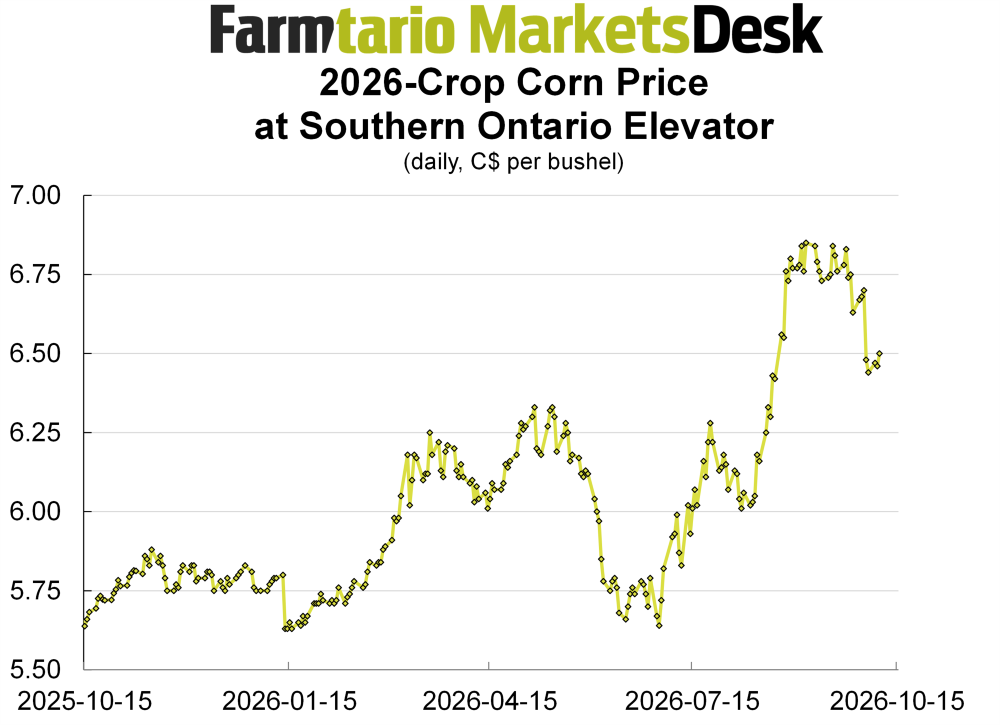
After a sharp summer rally, Ontario corn bids are sliding.
Soybeans: Crowded trade tested
The absence of soybeans from the latest U.S.-China tariff concessions disappointed a futures market positioned for good news. Speculative funds were holding a near-record net long position in late September. That makes prices sensitive to any further demand disappointment.
Bruce Burnett examined both issues in his latest Ontario market analysis on Farmtario.com.
There is a counterweight. Wet weather has slowed deliveries to some U.S. processors, creating some spot premiums. Those nearby shortages will end once harvest accelerates.
The U.S. weekly crop report estimated soybean harvest at 25 per cent complete as of Oct. 4. That was up from 17% a week earlier.
In Ontario, the weak Canadian dollar is offering support to the basis. Cash prices have eased with futures but remain near the top of the range of the past year.
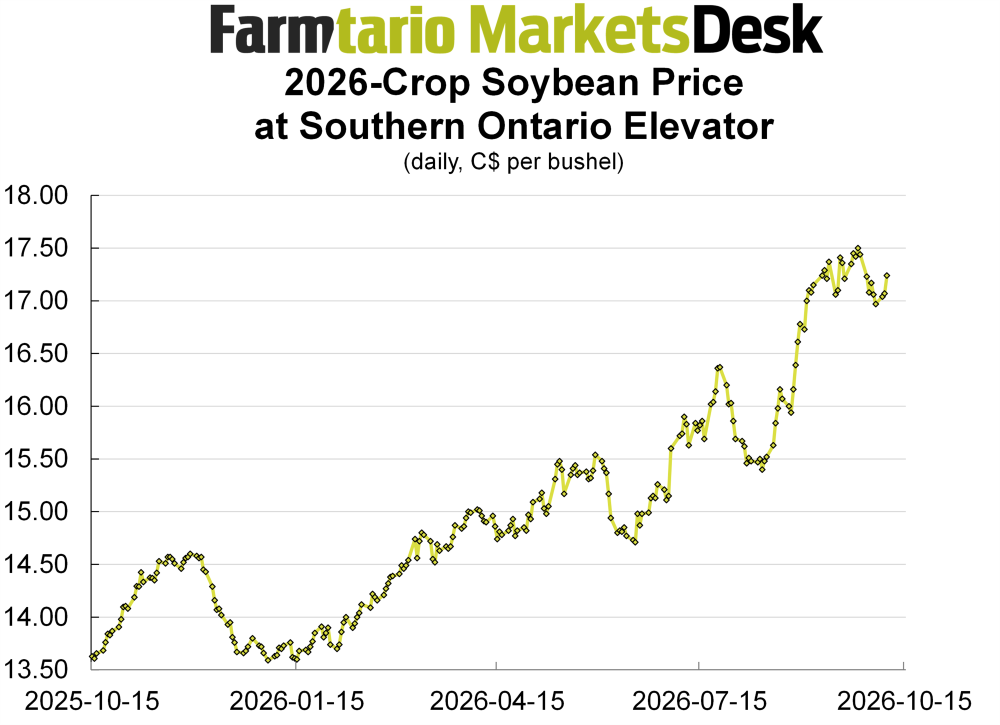
Ontario soybean prices are down only slightly from their highs.
Wheat: Winter wheat planting advances
Ontario planting was around half done by early October. The weather forecast looks decent for the next couple of weeks for both remaining planting and establishment.
Across the U.S. soft red winter wheat belt, planting is moving in fits and starts. The U.S. weekly crop report estimated planting at 36 per cent done nationwide on Oct. 4. That was up from 27% a week earlier but behind 46% normally.
As wheat goes in, producers often think about a new-crop sale. Ontario prices have eased over the past month. However, with bids still around $8.50 per bushel, it’s worth running the numbers and mapping out a marketing plan for 2027 wheat.
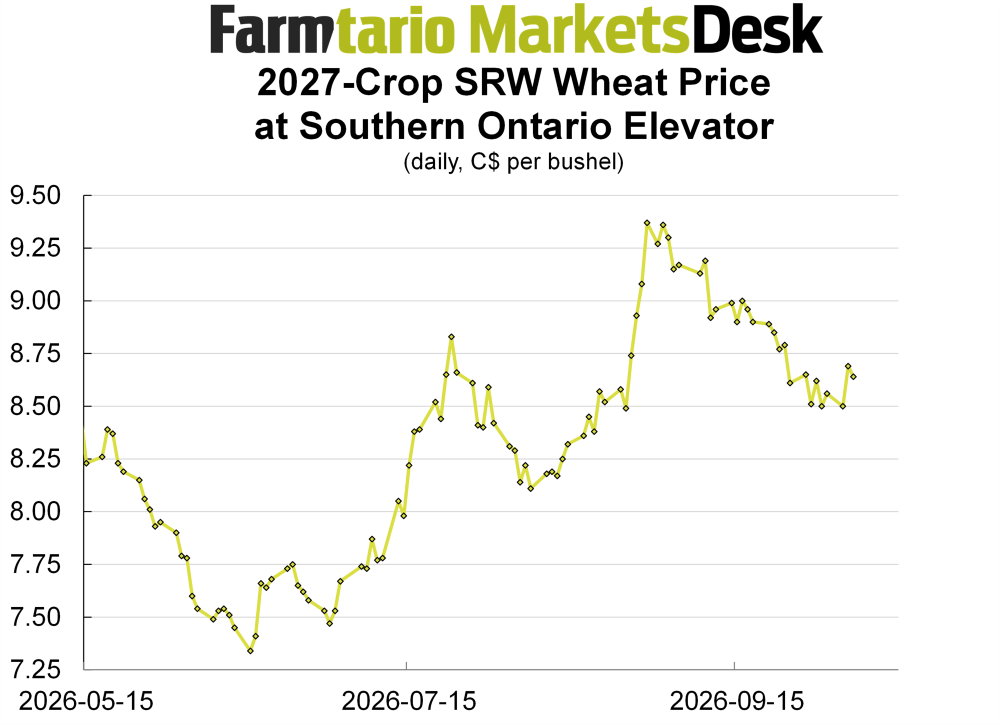
2027 harvest prices are in the middle third of their range since May.
Canadian dollar and interest rates: Mixed signals
The Canadian dollar is at 70.5 cents U.S. That’s down 3 cents since August, which is a mixed blessing. The weakness supports Canadian cash prices for commodities priced in U.S. dollars. It can also raise costs for fuel, equipment and other inputs.
Meanwhile, global bond yields remain high. Even without an immediate Bank of Canada interest rate change, longer-term lending rates are rising. For farmers making storage decisions, carrying costs need to be calculated, not assumed. The same also applies to borrowing costs for major purchases.
Cattle: High values do not eliminate margin pressure
Tight cattle supplies continue to underpin prices, but high feeder costs complicate returns for finishers. Feed, financing and the price of replacement animals all matter. A strong sale price does not necessarily mean an attractive feeding margin.
Hogs: Smaller inventory, seasonal weakness
The futures market suggests hog prices will weaken this fall before recovering modestly in the spring. With the cash market near US$80 per hundredweight, futures imply values of US$70 by mid-December, then rebound to the high $70s and low $80s by April and May. Those expectations can help producers assess marketing and risk management decisions for the months ahead.
The USDA counted 74.3 million hogs and pigs on U.S. farms as of Sept. 1. That was down two per cent from a year earlier. The June-to-August pig crop was also smaller. Those numbers offer some price support but do not remove normal fall price and slaughter-volume pressure.
For Ontario producers, monitor the marketplace for seasonal buying opportunities in corn, prepared feed and soybean meal.
Soybean meal: Watch the crush and the funds
Heavy soybean processing creates meal even if oil demand is the driver. Livestock producers should book a portion of their requirements if seasonal pressure offers a favourable opportunity. That is a margin decision, not a bet on the absolute low.
Seasonally, it often pays to book an increment of meal in October.
==
Kernel of Wisdom: A stretched rubber band
Speculative positions in corn, soybeans and soybean meal have become increasingly crowded on the long side. Traders are positioned for prices to move higher.
Think of a rubber band. It can stretch farther than expected. Markets can keep rising, and speculative buying can keep lifting prices. But as more people crowd into the same bullish outlook, the market becomes more vulnerable to a turn.
Timing is hard to predict. So, producers can consider this a warning, not a prediction. Know what price meets your margin and cash-flow needs before a crowded trade begins to unwind. When a heavily long market reverses, the move can happen faster than many expect.
Next Markets Desk Report: Oct. 21.


