

Disagreeing with Porsche engineers feels rather like telling Paul McCartney his songwriting’s a bit crap.
Even so, I’m here to inform the Zuffenhausen magicians there is such a thing as too much power and too much performance.
Namely, in the Porsche Cayenne Turbo Electric.
Boasting 850kW, 1500Nm with Launch Control; and 0-100km/h in 2.5 seconds, it’s the most powerful production Porsche yet offered. And despite weighing 2645kg, is an eye-blink off being fastest accelerating Porsche too.
READ MORE: 2027 Bentley Torcal: Brit brand’s debut EV with pace, grace and ultimate sound innovation
READ MORE: Rolls-Royce Spectre: 8 things you need to know about a car that is and isn’t an EV benchmark
READ MORE: No Lambo-greeny: Lamborghini Lanzador EV cancelled as supercar maker refocuses efforts on hybrid V8 and V12s
Look, I’m a car bloke and love those above numbers (except the lardy weight one), but surely they belong with a sleek, two-door, aero-equipped and unhinged hypercar attempting Nürburgring records?
Yet they’re attached to a five-seat family SUV.
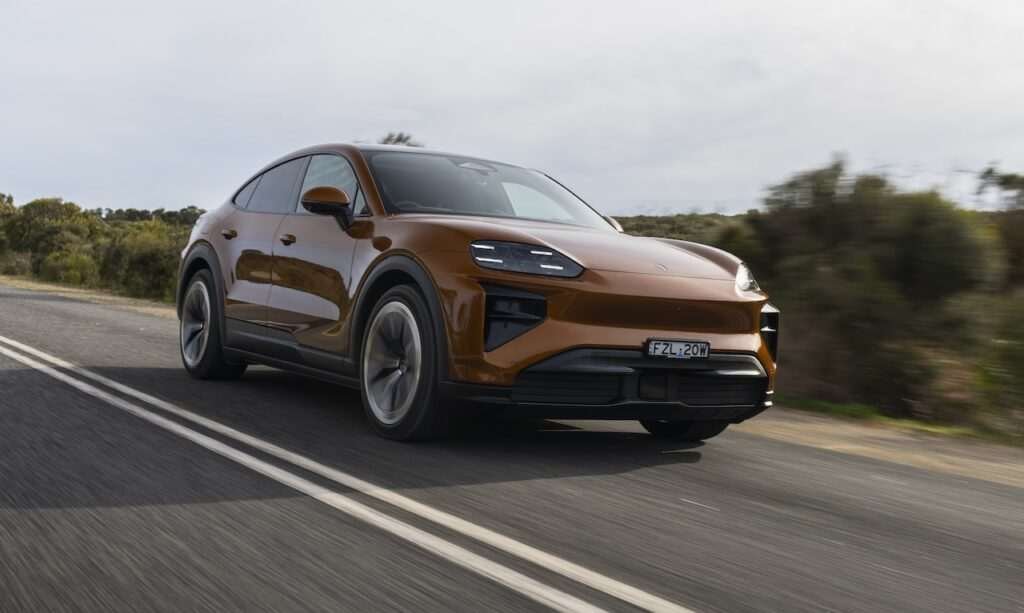
And even though $259,900 for an electrified Cayenne Turbo is hardly chump change, that’s a full $40,000 under the cheapest available 911 Carrera. It is a wonderful sportscar, but its 290kW, 450Nm and 4.1 seconds to 100km/h feel a bit pfft next to the giant EV’s crushing figures.
The Cayenne Turbo Electric has just landed in Australia, and I had a test drive along some of Adelaide’s beautiful, twisty and hilly roads.
I’d sadly not been able to make the previous day’s excitement, where journos had a closed runway to pin it and enjoy the horizon arrive at warp speed through the Turbo’s windscreen.
While I was kicking myself for missing out, runways are not where owners take Cayenne large SUVs. They also don’t take them to racetracks, nor drag strips. And, this being Australia, none of us has an unrestricted Autobahn in our back yard either.
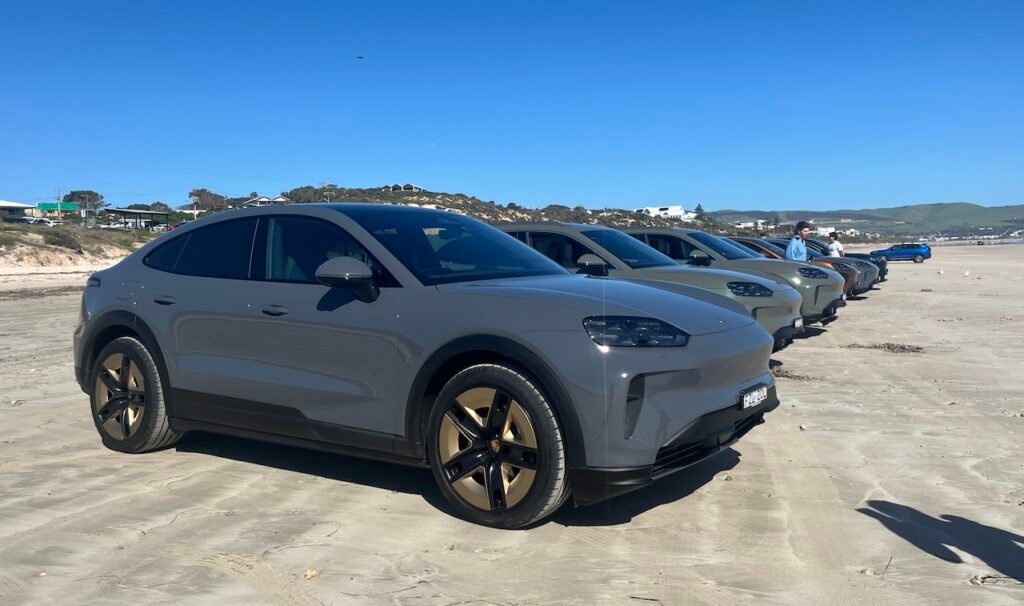
In short, my highway, city and country road test was far more relevant to expected use cases. And here, that kind of performance and acceleration are not only irrelevant, but a near guaranteed way of losing your licence with every over-enthusiastic toe squeeze.
If you told teenage me in the 1990s I’d be writing an article about a Porsche being too quick and with too many horsepowers and torques, I’d have thrown my Matchbox 930 Turbo at you.
But as with many hyper-rapid EVs, just because you can, doesn’t mean you should when it comes to off-the-charts numbers.
Late last year I was at the Cayenne Electric’s unveiling in (core market) Dubai. I had a decent chat with Michael Schaetzle, President of the Cayenne model line, and he said: “A lot of people told me I’m crazy to put so much power into this car,” and I nodded along, sharing such a sentiment.
I suggested it’s too much. It’s fine and brilliant for certain Porsches, but majorly OTT for an SUV.
“We didn’t want to give the customer a reason not to buy the car,” he continued, and I think we both then silently acknowledged there is a buyer type simply seeking the vehicle with the most brag-worthy power and torque figures.
You’ll have met such folk. Doesn’t really matter the badge on the front, as long as they can say to the next guy: “Mine’s faster than yours.”
It’s why people drop roughly $600,000 on a Porsche 911 Turbo S, when proper car folk will tell you the base 911 is the better thing to drive.
Another thing Schaetzle said of the Cayenne Electric was: “We did more than one million kilometres of testing, and not one engineer said it has got too much power. All said it’s crazy, but it’s great.”
Hmmm. I suppose the German lot actually do have an Autobahn in their back yard, so this potentially makes sense.
Take it from me, once you engage Launch Control and uncork this Turbo, it’s utterly ludicrous. Blood to the back of the head, feeling a bit dizzy, then a pretty mighty adrenalin comedown. Entertaining? Yes. But like when you’ve touched an electric fence, you’re in no mad rush to do it again.
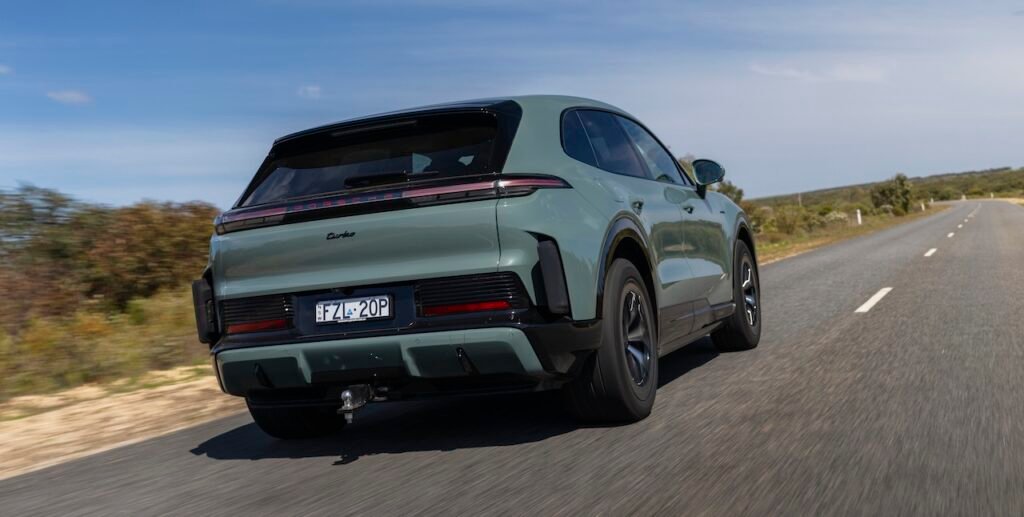
So, if you’re reading this as an Australian Cayenne Electric buyer, I’d compel you to choose one of the two “lesser” models. The Turbo is a bloody good luxury large EV, but so are its stablemates costing a lot less.
There’s a $167,800 base model, or if funds allow, an ‘S’ grade starting from $193,100. It’s over $65,000 more to jump up to the Turbo.
The bones are shared no matter what you spend. All are twin motor all-wheel-drives, use a massive 113kWh battery (108kWh usable) with ultra rapid 390kW DC charging, feature active air suspension and tow 3500kg. And all can be had with a Coupe body shape for a few grand extra.
The base (325kW/835Nm) and S (490kW/1080Nm) find 100km/h in 4.8s and 3.8s respectively, and if you keep your sensible hat on, those are more than plenty for the family large SUV.
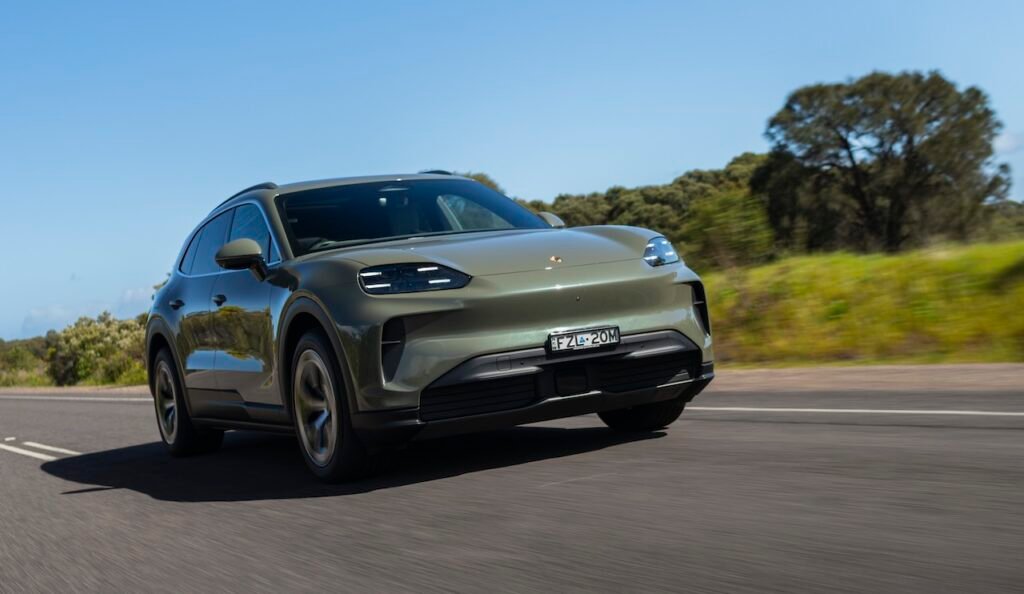
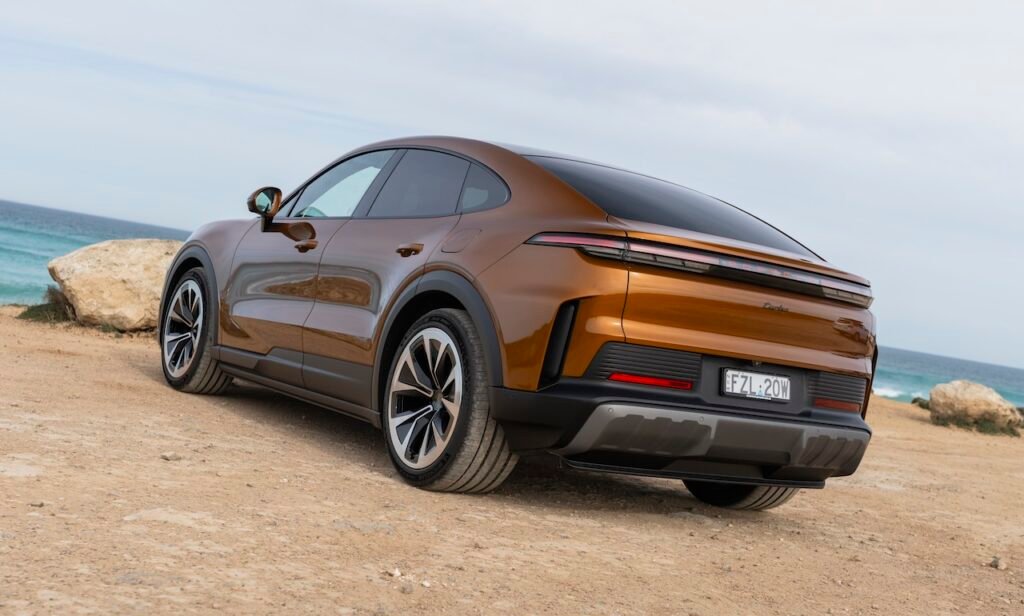
The Turbo gets some exclusive goodies like HD Matrix LED headlights, very cool Active Aeroblades behind each rear wheel, Porsche’s Torque Vectoring Plus, 22-inch wheels and massive 420mm front brakes with 10-piston calipers.
Even so, don’t you think all these Cayenne Electrics look a bit “soft” at the front? A lack of large front grille doesn’t help, and it fails to look as purposeful as its Macan EV little brother.
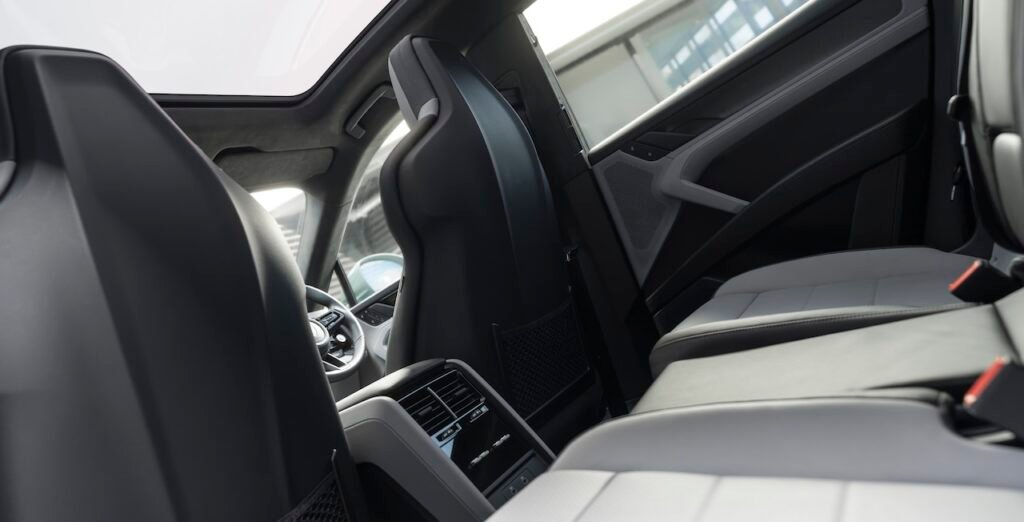
Anyway, if you buy the Turbo you score fancier interior decoration and open-pore carbon loveliness, then luxuries such as memory seats, ventilated front seats and heated rear seats.
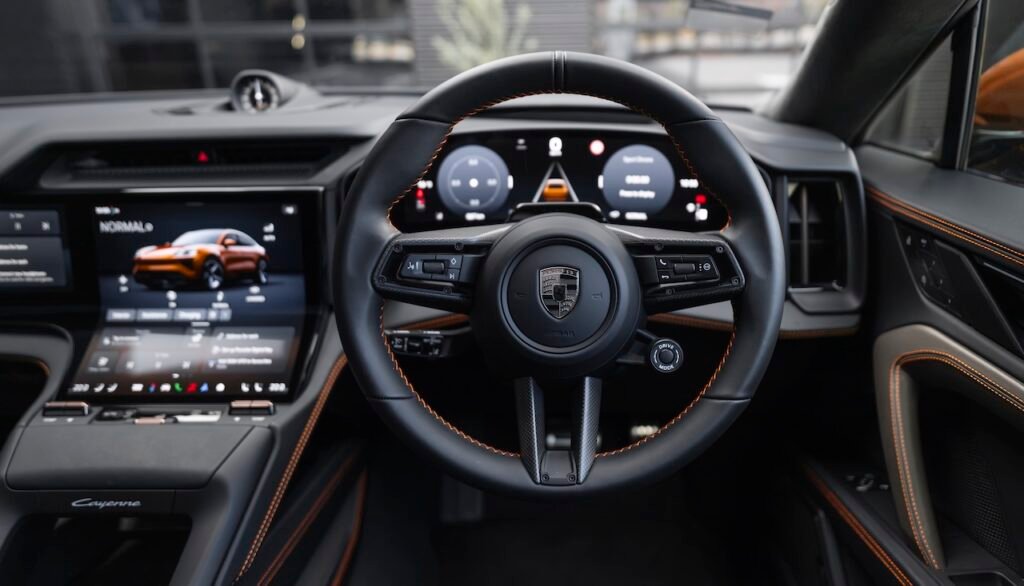
But the other Cayenne Electrics are also beautifully appointed, sporty feeling and with decent spec. A 14.2-inch digital driver display has excellent customisation, there’s classiness to fonts and graphics (expected) while cameras are crystal clear.
Centrepiece is a curved 12.2-inch touchscreen display with padded handrest for easy use. Smartly, knurled metal toggles sit at the screen’s base to quickly operate temperature and fan speed. Only an overly-plastic centre console sliding cover lets down the quality feel.
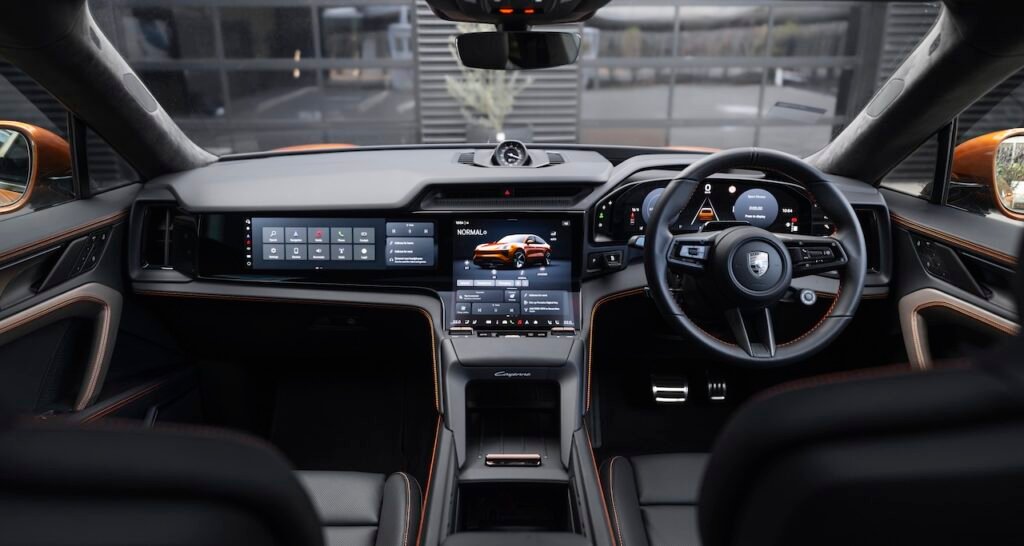
There’s wireless CarPlay and Android Auto, Porsche Connect, six USB-C ports, electric steering column, heated steering wheel and a mixture of partial and artificial leather trim for power heated seats, dash, doors and armrests.
In short, no matter which Cayenne EV you choose, it’s a delightful, sporty feeling place to settle.
I don’t mean to throw stones, but the Turbo also has shortest EV range with 537km. The base and S offer 542km and 571km respectively; the S lasting longer thanks to more advanced thermal management for the rear e-motor and battery pack, boosting efficiency.
As for ride quality, my test circumstances meant it was hard to judge how a standard model would perform. All the Turbo models on launch had a $17,480 Active Ride option, giving real-time pitch and roll control.
From my seat, for road use there was no discernible nasty body roll or anything but limpet-like flat handling… you’d expect nothing less at legal speeds and after dropping so many dollars on the trick suspension. Weight’s well hidden, but don’t go expecting two-door Porsche coupe agility.
Thing is, the base model I drove (with as-standard adaptive air suspension and PASM), cornering manners were also excellent. Of course they were. It’s a Porsche and we’re at normal/enthusiastic road speeds. Just like Cayenne owners will be.
I came away from the test finding the entire Cayenne Electric range something of a triumph. Porsche may have got itself in all sorts of financial strife with its too-early EV moves, but there’s no doubt the Germans build superb electric vehicles.
The Turbo is madly excessive performance-wise, and for this reviewer, it proves an unnecessary distraction when the cheaper grades – also very quick machines – better suit the large SUV EV brief.
Any would be lovely to live with, but you’ll not keep your licence long if entering Turbo land.
But perhaps I’ve misread the room?
Maybe an army of Cayenne Turbo buyers will hit our nation’s racetracks and drag strips to enjoy the extreme sugar rush of otherworldly acceleration?
But a word of warning. You’ll save a fortune on tyres, brakes and court fees if you stick to the simpler sugar rush of just telling your mates how big your numbers are.
2027 Porsche Cayenne Turbo Electric specifications
Price: $259,900 (wagon) / $272,100 (Coupe) plus on-road costs.
Basics: EV, 5 seats, 5 doors, SUV, AWD
Range: 537km (WLTP)
Battery capacity: 113kWh lithium-ion (108kWh usable)
Battery warranty: 8 years/160,000km
Energy consumption: 23.2kWh/100km (WLTP)
Motors: 2, up to 850kW/1500Nm with Launch Control
AC charging: 11kW, Type 2 plug
DC charging: 390kW
0-100km/h: 2.5 seconds
The post 2026 Porsche Cayenne Turbo EV Brief Drive: This vehicle is brilliant, but all sorts of wrong appeared first on EV Central.


