

Nissan’s China-built Frontier Pro plug-in hybrid ute will arrive in Australia in 2027 wearing the Navara Pro badge, with a locally selected 2.0-litre turbo-petrol powertrain, claimed 3500kg towing capacity and up to one tonne of payload.
The five-seat dual-cab will be Nissan Australia’s first plug-in hybrid, joining an increasingly crowded ute segment that includes the BYD Shark 6, Ford Ranger PHEV, GWM Cannon and Cannon Alpha PHEVs and JAC Hunter.
Chery’s diesel-electric Stockman is also scheduled to begin Australian customer deliveries in February 2027, adding another competitor before the Nissan arrives.
READ MORE: Nissan Pixo revealed: Here’s another cool European EV that looks set to bypass Australia
READ MORE: Nissan unveils two PHEV concepts in Beijing, including a 4×4 Toyota Prado rival already under study for Australia
READ MORE: Range extender overhaul: Nissan Qashqai goes all e-POWER for 2026 as pricing shifts upward
Nissan has yet to announce pricing, a precise launch date, battery capacity, electric-only range or charging specifications. Australia and New Zealand will be the first right-hand-drive markets to receive the electrified ute.
The Navara Pro is the vehicle previously revealed internationally as the Frontier Pro, developed and built in China through Zhengzhou Nissan, Nissan’s joint venture with Dongfeng. It is a separate vehicle from the Mitsubishi Triton-based diesel Navara currently sold in Australia.
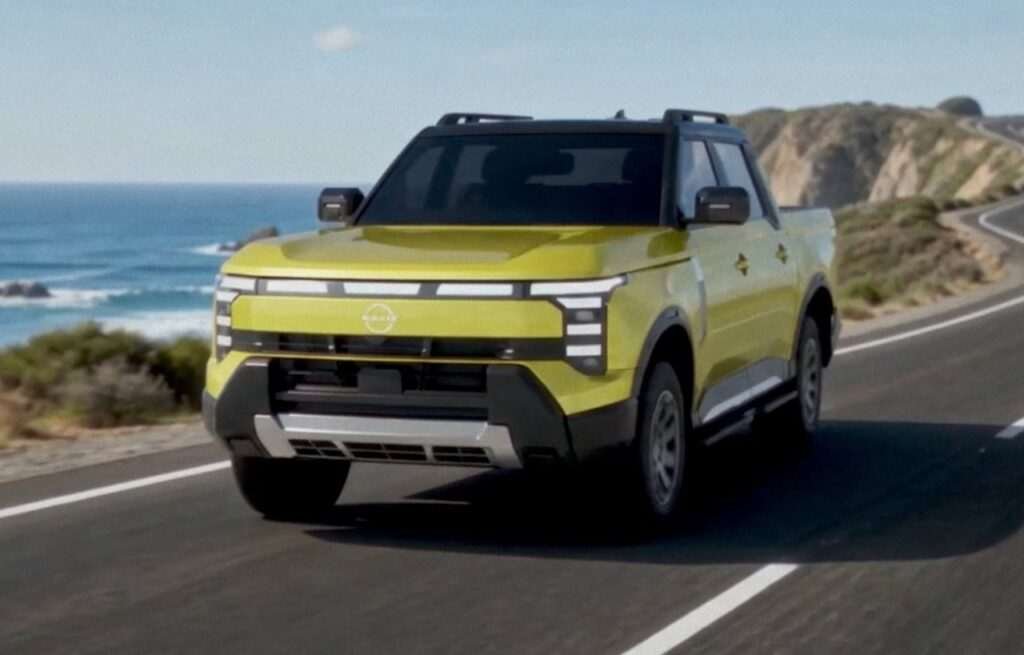
Importantly, the Australian version will differ from the 1.5-litre turbo-petrol PHEV specification announced at the Frontier Pro’s Shanghai motor show debut.
Nissan says local testing of both that drivetrain and a new 2.0-litre alternative led it to select the larger engine for Australia and New Zealand, particularly to meet towing, payload and sustained-performance requirements.
The Oceania powertrain combines the 2.0-litre turbo-petrol engine with an electric motor integrated into an eight-speed automatic transmission.
Preliminary combined outputs are 300kW and 800Nm, subject to final homologation.
That matches the GWM Cannon Alpha PHEV’s 300kW while exceeding its 750Nm torque claim. The smaller Cannon Hi4-T produces 310kW and 750Nm, while the Ford Ranger PHEV develops 207kW and 697Nm.
BYD’s Shark 6 Premium produces 321kW and 650Nm, while the Performance delivers 350kW and 700Nm. The Nissan therefore has less claimed power than either BYD, but more torque.
Chery quotes 350kW and 800Nm for the forthcoming Stockman, while JAC claims 360kW for its Hunter, placing the Nissan below the segment’s highest power outputs.
Nissan’s preliminary 3500kg braked towing capacity puts it alongside the Ranger PHEV, both GWM plug-in utes, JAC Hunter and Shark 6 Performance. The Shark 6 Premium retains a 2500kg limit, while Chery’s latest Stockman specifications list 3495kg.
The Nissan’s targeted payload of up to 1000kg would also be competitive. Published figures for rivals include 915kg for the JAC Hunter, 835kg for the Cannon Hi4-T, 790kg for the Shark 6 Premium and 685kg for the Cannon Alpha PHEV. Final Nissan figures and grade-by-grade capacities remain unconfirmed.
Electric driving range remains a significant unanswered question. The overseas Frontier Pro’s previously publicised 135km claim should not be treated as an Australian specification, given the different powertrain and the absence of a confirmed local battery or test-cycle figure.
The Navara Pro will use mechanical four-wheel drive, with low-range capability and differential locks.
Nissan says it has evaluated front, rear and combined differential-lock configurations, but has not yet confirmed the final Australian arrangement. Leaf-spring and multi-link coil-spring rear suspension systems have also been tested, with the production choice still to be announced.
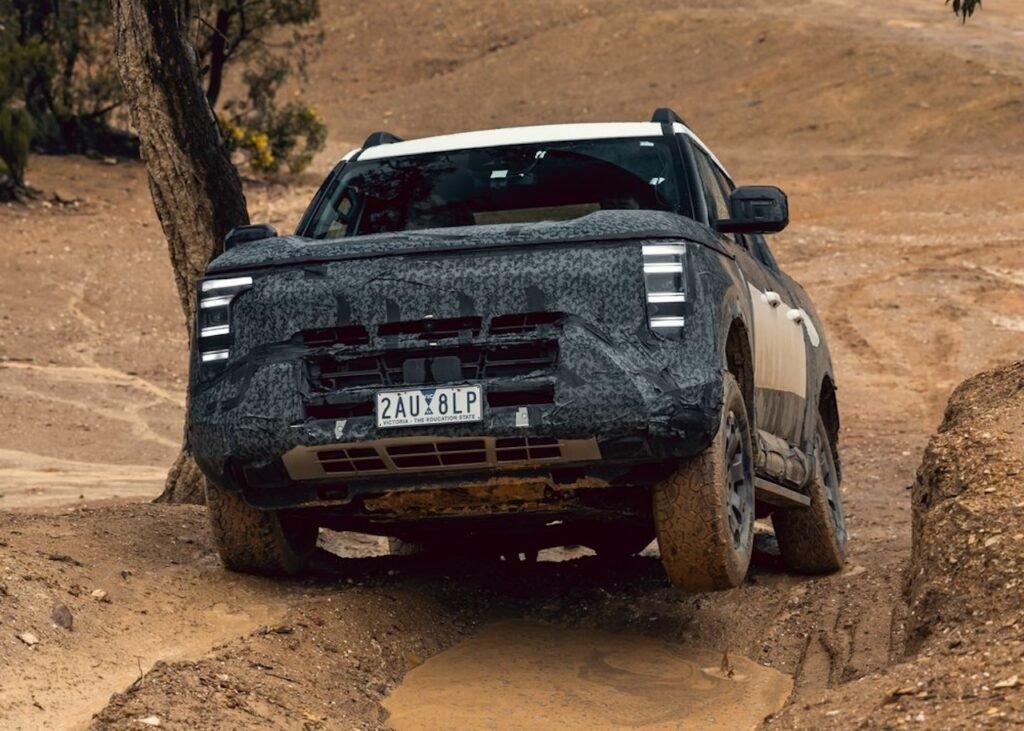
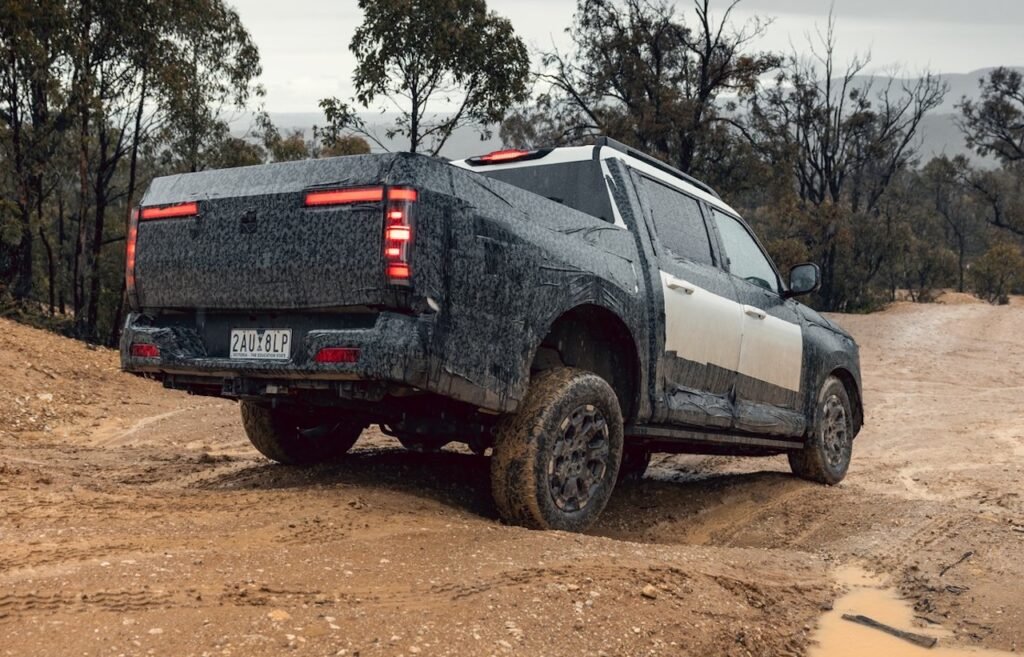
Five development and prototype vehicles have been brought to Australia since 2025, collectively covering more than 20,000km so far.
The program has assessed powertrains, suspension, driver-assistance calibration, tyres, drive modes, towing and load carrying, with input from Nissan teams in Australia, Japan and China.
“Australia wasn’t simply where we tested Navara Pro PHEV. It was one of the markets helping shape it,” Nissan Oceania managing director Steve Milette said.
Four drive modes and seven terrain modes are listed, while vehicle-to-load capability will be available. Its electrical output has not been disclosed.
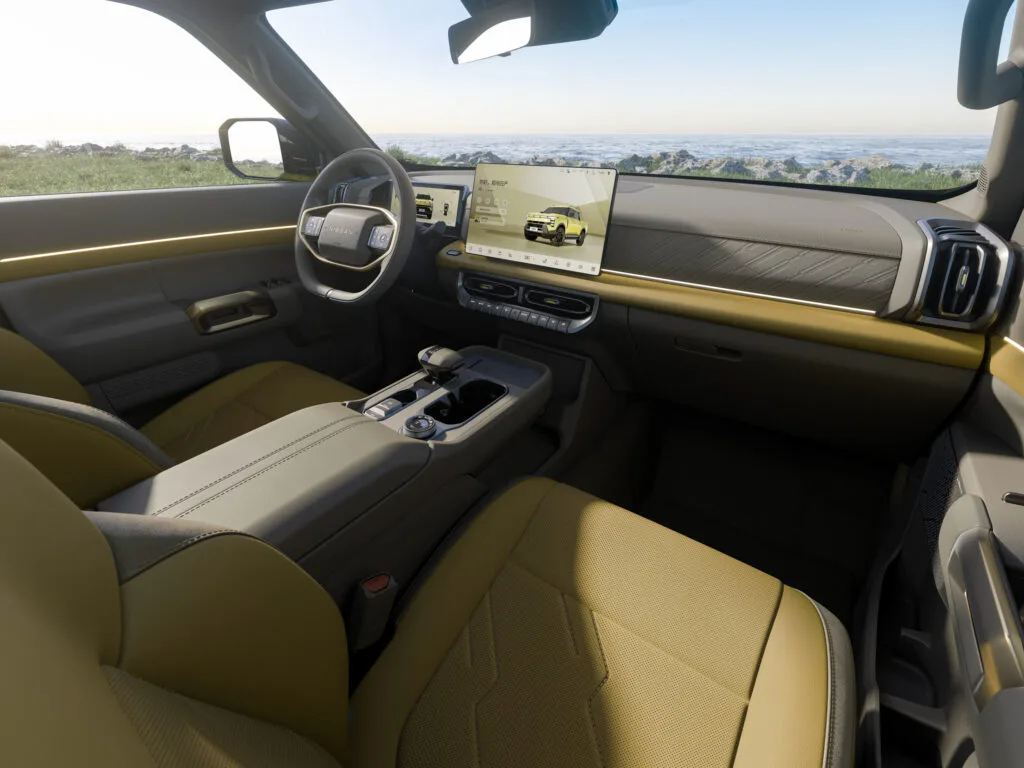
Depending on grade, equipment could include a large touchscreen, digital instrument display, panoramic sunroof and heated and ventilated front seats. Nissan has yet to confirm the Australian line-up or standard equipment.
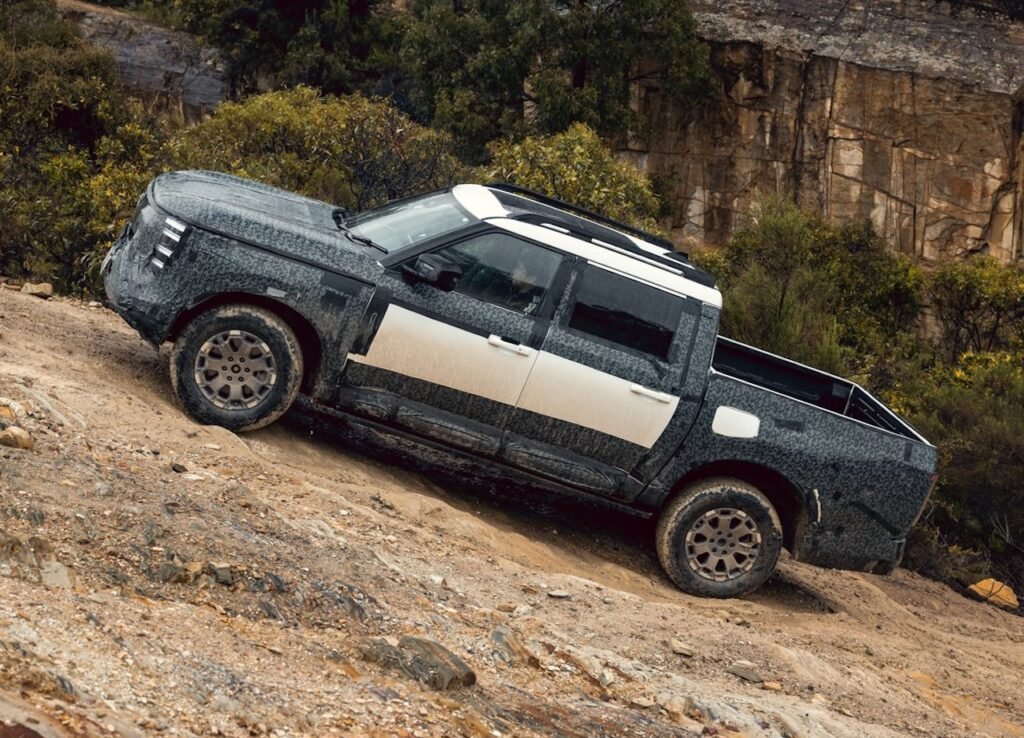
The ute also advances Nissan Australia’s shift towards Chinese-developed vehicles, with further electrified SUVs and potentially sedans previously identified as part of its product expansion.
That direction comes as Nissan passes over European electric models such as the Renault-based Micra and Pixo, both of which have been ruled out for Australia despite right-hand-drive availability.
The Navara Pro will be eligible for Nissan’s service-activated warranty of up to 10 years or 300,000km, whichever comes first, when the required servicing is completed through authorised Nissan dealers. The underlying vehicle warranty is five years with unlimited kilometres.
The post Frontier Pro becomes Navara Pro: Nissan confirms China-built PHEV ute for Australia with 300kW and 3.5-tonne towing appeared first on EV Central.


