
Autumn in the UK used to mean crisp mornings, turning leaves, and the first excuse to dig out a decent coat. Lately, it also means watching the sky with a growing sense of dread. The Met Office has already issued stark warnings about the months ahead, and the phrase “prepare for the unthinkable” is not hyperbole. It is the new normal.
Last winter saw communities in Yorkshire and the Midlands underwater for weeks. Roads became rivers. Homes that had never flooded before took on feet of murky water. And here is the uncomfortable truth: those events are becoming more frequent, not less. Our Victorian drains, our paved-over floodplains, our houses slabbed onto clay; none of it was designed for summers this wet or storms this slow-moving.
Why Autumn Flooding Is Getting Worse
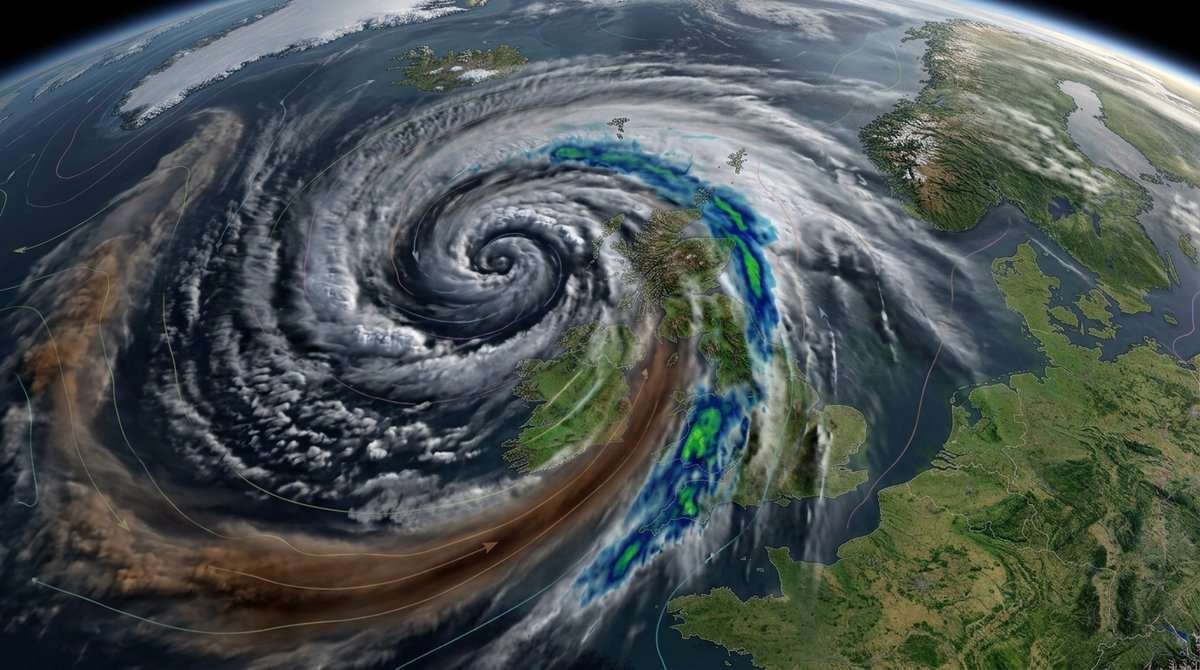
The science is not ambiguous. Warmer air holds more moisture. For every degree Celsius the atmosphere heats, it can carry roughly 7% more water vapour. When that saturated air meets the cooler conditions of a British autumn, the result is intense, prolonged rainfall that overwhelms drainage systems designed for a different era.
The Met Office’s latest projections show a clear trend toward wetter autumns and winters across much of the UK. This is not a distant future scenario. It is already measurable in the data. The UK Met Office ‘Danger to Life’ Warning Amid Severe Rain and Floods from earlier this year underscored how quickly conditions can deteriorate from “heavy rain” to “life-threatening emergency.”
What makes autumn particularly dangerous is the combination of factors. Saturated ground from summer rainfall leaves nowhere for water to go. Leaf litter clogs drains. Shorter daylight hours mean flooding often hits in darkness, when people are less prepared to respond. And storm systems are increasingly stalling over the same areas, dumping exceptional rainfall totals in concentrated bursts.
The IPCC’s Sixth Assessment Report identified compound flooding as a critical emerging risk for northwest Europe. This is where coastal, fluvial, and surface water flooding coincide, creating impacts far worse than any single source would produce alone. The UK, with its extensive coastline, dense river networks, and urban sprawl, is acutely exposed.
Understanding Your Real Flood Risk
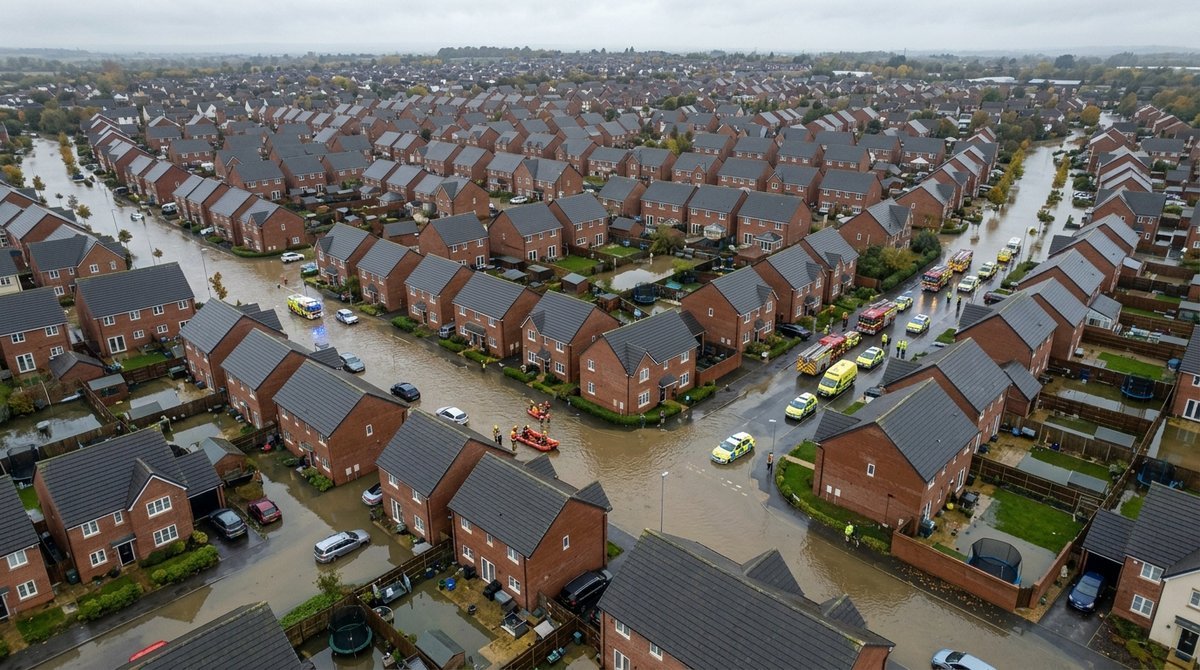
Most people dramatically underestimate their flood risk. If you do not live beside a river or the sea, you might assume you are safe. You are probably not. Surface water flooding, where rainwater simply cannot drain away fast enough, now accounts for the majority of flood risk in England. It can hit anywhere, including areas with no history of flooding whatsoever.
The Environment Agency’s long-term investment scenarios make for sobering reading. Annual flood damages in England could rise steeply by the 2080s without further intervention. Lower emissions help. They do not eliminate the problem.
Here is what the data shows about current UK flood exposure from official sources:
| Flood Category | Properties at Risk (England) | Source |
|---|---|---|
| Fluvial (river) flooding | Approximately 2.4 million properties | Environment Agency, 2022 Long-Term Investment Scenarios |
| Surface water flooding | Approximately 3 million properties | Environment Agency, 2022 Long-Term Investment Scenarios |
| Coastal flooding | Approximately 520,000 properties | Environment Agency, 2022 Long-Term Investment Scenarios |
Notice that surface water risk exceeds river flooding. This is the hidden threat that catches people out. Your postcode might show low river flood risk while concealing significant surface water vulnerability.
Checking your risk properly means going beyond the basic postcode search. The Environment Agency’s flood maps show river and sea risk. For surface water, you need to check with your local council, which holds detailed drainage and topography data.
Practical Steps for Flood Preparation UK
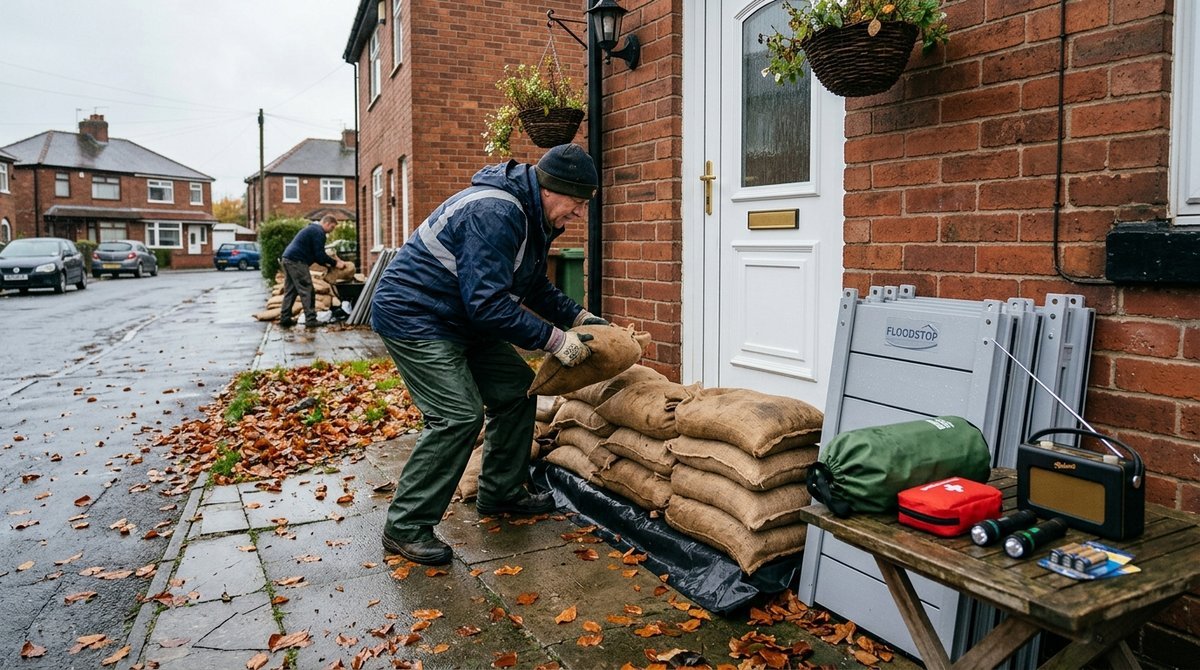
Knowing the risk is only useful if it leads to action. The good news is that individual and community preparation genuinely reduces damage and speeds recovery. The bad news is that most people wait until water is at the door.
Effective flood preparation uk follows a hierarchy: protect, prepare, respond, recover. Each layer matters, and skipping any of them leaves you exposed.
Start with your property’s physical defences. These are the most cost-effective investments you can make:
- Install flood barriers or airbrick covers if your property is in a known flood zone; the National Flood Forum estimates these can reduce damage by 80% or more when deployed correctly
- Move electrical sockets, wiring, and boilers above likely flood levels; the typical cost is far less than replacing everything after inundation
- Use water-resistant materials for ground-floor renovations; ceramic tiles, lime plaster, and sealed concrete perform vastly better than carpet and standard plasterboard
- Fit non-return valves on drains and pipes to prevent sewage backflow, which is often the most distressing aspect of flooding
- Keep a stock of sandbags or modern alternatives like FloodSax; many local authorities provide limited free supplies to at-risk households
Your emergency flood plan needs to be written, rehearsed, and updated. Not vague intentions. Actual specifics. Where will you go? What route avoids low ground? How will you move pets? What documents must you grab? The mental load during an actual emergency is immense; decisions made in advance are decisions made well.
Insurance deserves serious attention. Standard buildings and contents policies increasingly exclude flood damage in high-risk areas, or impose punitive excesses. The Flood Re scheme provides a backstop for domestic properties built before 2009, but it is not infinite and it does not cover businesses or newer construction. Check your policy’s exact terms. Document your possessions. Understand your excess. If you cannot afford the excess, your insurance is essentially useless.
When the Warnings Come
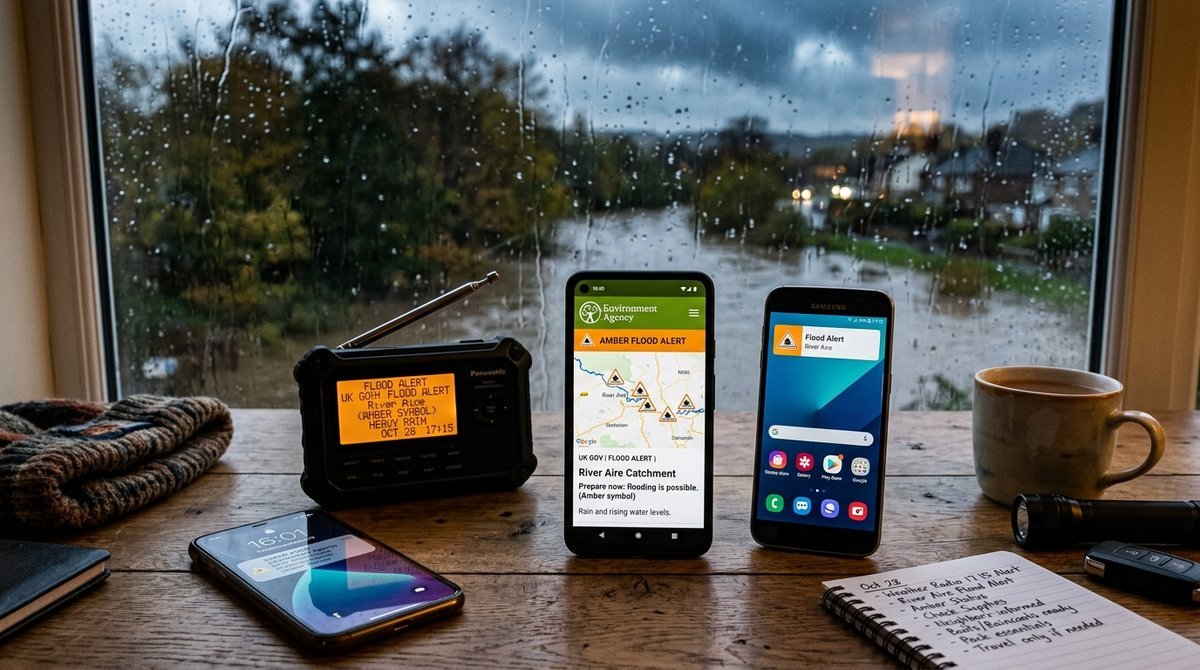
The UK’s flood warning system has three tiers: Flood Alert, Flood Warning, and Severe Flood Warning. Understanding the distinction matters. A Flood Alert means “be prepared.” A Flood Warning means “take action now.” A Severe Flood Warning means “danger to life.”
Sign up for alerts from the Environment Agency and your local council. Do not rely on seeing something on social media. Flood events move fast, and by the time a video goes viral, the water may already be rising outside your window.
When a warning hits, the window for effective action is narrow. Move vehicles to higher ground immediately. Deploy any flood barriers you have. Turn off gas, electricity, and water if safe to do so. Move essential items upstairs. Grab your emergency kit and documents. Then leave if instructed. The temptation to stay and protect property is strong and often fatal.
The challenge of enhancing building resilience in the face of climate change extends well beyond individual homes. Tarmac and concrete now cover vast swathes of what once absorbed rainfall naturally. Reversing this at scale will take decades. Individual choices still matter enormously; a permeable driveway here, a rain garden there. But the systemic shift required is staggering.
The Bigger Picture: Climate, Policy, and Justice
Individual preparation is necessary but insufficient. The scale of the challenge demands systemic response. The UK has made significant investments in flood defence infrastructure, but the funding gap remains substantial. The National Audit Office has repeatedly noted that maintenance of existing defences is as critical as building new ones, yet receives less political attention.
There is also a profound justice dimension. Flood risk is not distributed equally. Deprived communities often occupy cheaper land in floodplains. They have fewer resources to prepare, less insurance coverage, and slower recovery when hit. The catastrophic flash floods in Pakistan in 2022 showed how climate impacts devastate nations with minimal historical emissions. Within the UK, similar inequities play out at smaller scale between regions and communities.
Climate change flooding is not a future problem to be solved by some future technology. It is the water coming through your door this autumn. The carbon we have already burned has locked in worsening impacts for decades to come. Cutting emissions remains essential; it cannot undo what is already in motion. Adaptation is not giving up on mitigation. It is dealing with reality while still fighting to limit the damage.
The world remains on track for catastrophic 2.6C warming under current policies, according to UNEP’s Emissions Gap Report. Each tenth of a degree shapes what floods look like. At 1.5C, some homes stay dry that would drown at 2C. Livelihoods survive. People live. The margins are brutal and they are real.
Frequently Asked Questions
Understanding Flood Risk and Warnings
How do I know if my home is actually at risk from autumn flooding?
Check multiple sources, not just one. The Environment Agency’s online flood maps cover river and sea risk but miss surface water flooding, which affects more properties. Contact your local council for surface water flood maps specific to your area. Look at historical records; streets that have flooded before often flood again. Speak to long-term neighbours. They know things no database captures.
What is the difference between the flood alert levels?
The three-tier system is straightforward but frequently misunderstood:
- Flood Alert: Flooding is possible. Prepare your defences, monitor conditions, and be ready to act
- Flood Warning: Flooding is expected. Deploy protection, move valuables, and consider evacuation
- Severe Flood Warning: Severe flooding with danger to life. Follow evacuation instructions immediately
Sign up for free alerts at gov.uk/flood or call Floodline on 0345 988 1188.
Does standard home insurance cover flood damage?
Sometimes, but increasingly with restrictions. Since 2016, the Flood Re scheme has helped keep premiums affordable for eligible properties, but it only covers homes built before January 2009. Newer properties in floodplains may face uninsurable status or very high excesses. Always check your policy documents for specific flood exclusions. Document your contents with photographs and keep records off-site or in cloud storage.
Preparation and Protection
What should be in an emergency flood kit?
Pack for at least 72 hours away from home. Essentials include:
- Original or certified copies of insurance documents, passports, and birth certificates
- Essential medication and prescription details
- Battery-powered or wind-up radio and torch, plus spare batteries
- Bottled water and non-perishable food
- Warm, waterproof clothing and sturdy footwear
- Phone chargers and a power bank
- First aid kit and any specific medical supplies your household needs
- Cash, as card payment systems may be disrupted
Are sandbags still the best option for home protection?
Not necessarily. Modern alternatives like FloodSax, HydroSacks, and rigid flood barriers are lighter to store, faster to deploy, and often more effective. Sandbags weigh a tonne, eat storage space, and sometimes leach contaminants. Councils have largely stopped handing them out; many now run community flood stores stocked with kit that actually works. See what yours offers before spending your own money.
How can communities prepare together?
Community resilience consistently outperforms individual effort in flood events. Formalise a flood action group through the National Flood Forum. Identify vulnerable neighbours and assign specific people to check on them. Map what you have: higher ground for parking, buildings that can serve as temporary shelter, equipment stores. Practice your plan annually, before autumn. When the water rises, coordinated communities save lives and property that isolated households lose.
Sources
- Environment Agency, 2022. Long-Term Investment Scenarios 2022. https://www.gov.uk/government/publications/flooding-in-england-long-term-investment-scenarios
- IPCC, 2021-2023. Sixth Assessment Report, Working Group I and II Contributions. https://www.ipcc.ch/assessment-report/ar6/
- Met Office, 2024. UK Climate Projections and Severe Weather Warnings. https://www.metoffice.gov.uk/ [VERIFY exact warning page URL]
- National Audit Office, 2022. Environmental Audit: Flood Risk Management in England. https://www.nao.org.uk/reports/environmental-audit-flood-risk-management-in-england/
- UNEP, 2023. Emissions Gap Report 2023: Broken Record. https://www.unep.org/resources/emissions-gap-report-2023
- National Flood Forum, ongoing. Flood Protection Product Guidance and Community Resources. https://nationalfloodforum.org.uk/
This article is for informational purposes only.
Reference: https://www.bbc.com/news/articles/cm4g1pqyqzqwo
The post Prepare for the unthinkable’ warning over autumn flooding appeared first on Green.org.


