
You know all the names: Horsch from Germany, Väderstad from Sweden, Agrifac from the Netherlands. All of these agriculture machinery companies and more have either started distributing or expanded their presence in Canada over the past decade.
So where has this interest in the Canadian market come from?
A likely starting point is the provisional use of the 2017 Canada-European Union Comprehensive Economic and Trade Agreement (CETA), which has — as per the European Commission on Trade and Economic Security — abolished 99 per cent of all tariff lines among participants as of 2024.
Harder to quantify is the role of the United States’ now-50 per cent tariffs on steel and aluminum and whether that has led to Canadian dealerships actively seeking trade with European builders.
Nancy Malone, senior vice-president of the North American Equipment Dealers Association (NAEDA), does not think such a shift is happening at scale, although she acknowledges NAEDA doesn’t track such activity. Instead, she believes uncertainty accelerated by the tariffs is having a greater effect on dealerships’ trade decisions than the substance of the tariffs themselves.
“I haven’t heard of any dealers desperately casting about for an alternative product because the one they were purchasing from the U.S. has gotten too expensive. That’s just not happening yet,” says Malone.
Whatever the origins, Terry Swystun, general manager of the Saskatoon branch of Full Line Ag, is seeing more European brands on both his showroom floor and throughout Canada, singling out Germany’s Fendt tractors as a particular success.
Swystun simply wants to see the duties end.
“I’d like the trade wars to settle down so we can get back to business as normal,” he says.
“We’re fortunate that we have good brands that are built in Europe to offer farmers, but we still need the Americans to settle things down for us.”
A long time coming
Statistics show the rest of the world, but particularly some countries in Europe, have been building market share in the Canadian ag equipment sector in recent years.
According to data derived from the World Integrated Trade Solution (WITS) — a repository of international trade data developed by world trade organizations — Canada imported $688.73 million worth of machines in the combine harvester-thresher category in 2020 compared to$1.52 billion in 2024. Germany, Belgium and Italy saw some of the highest growth in this class over the time period.
On a micro level, Swystun says French-built Massey Ferguson tractors and Fendt tractors have been particularly strong movers at Full Line Ag. Swystun says these brands are selling simply because farmers like the products.
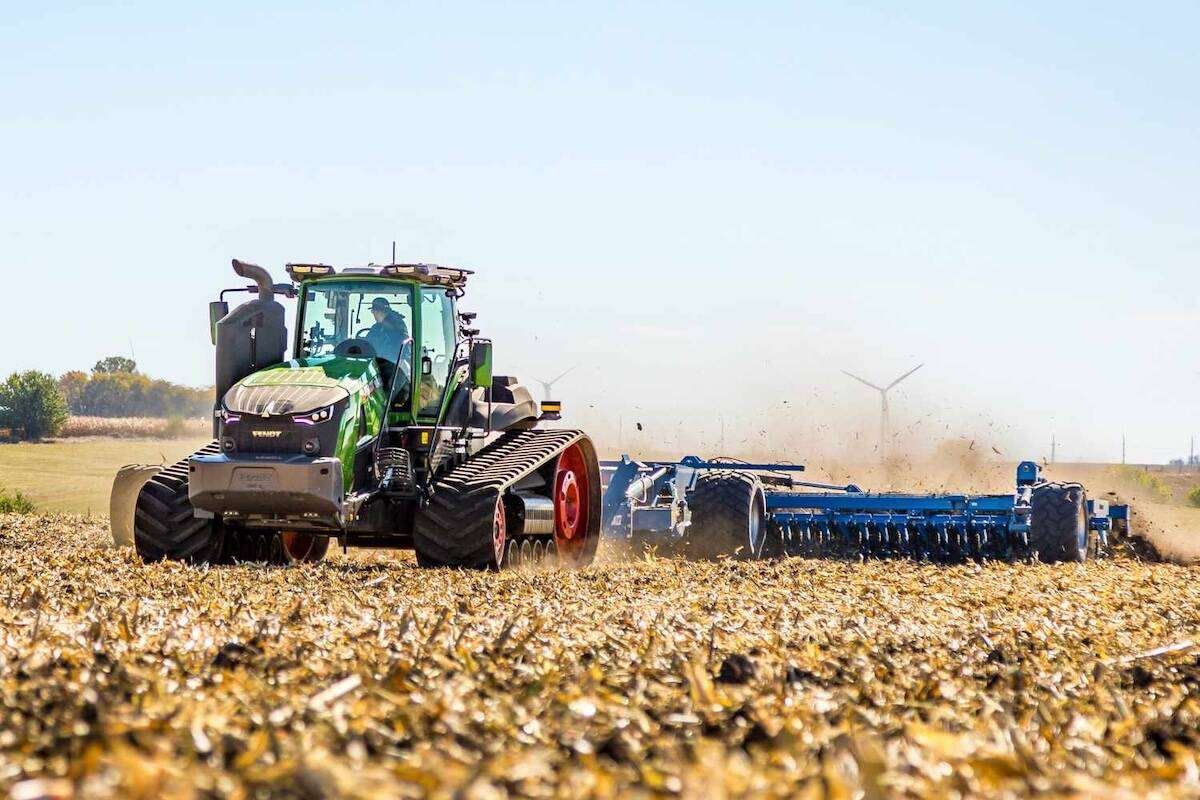
He also lauds European manufacturers for early adoption of new technology, such as advanced fuel efficiency technology and autonomous master-slave tractor systems.
“If you go back years and years, the Europeans seem to be just a little bit ahead of us in some of the technologies, and the quality of the product seems to be coming out a little bit better than the rest of the companies are offering.”
Going all in on European procurement isn’t a cure-all, says Leigh Anderson, senior economist with Farm Credit Canada, because many of those countries have their own U.S. tariffs affecting pricing decisions.
CETA a springboard
Although Anderson doesn’t have quantifiable data on how CETA is driving European investment in Canada’s ag space, speaking anecdotally, he says the impact appears significant.
One example is an influx of high-clearance European sprayers into Canada, including the Netherlands’ Agrifac and Denmark’s Hardi.
“You’re seeing a lot more European brands come into Canada. I think there’s a lot of interest from producers in finding that equipment that works best for the farm.”
The potential advantages of CETA aren’t a one-way street, he says, pointing to the CNH and Bourgault alliance, which has a secondary goal of expansion into the European market.
Although also anecdotal, a quick look at farm trade shows such as Ag in Motion reveal more European participation than in past years.
“Walking around those trade shows, it’s like you’re seeing those different brands pop up … trying to get farmers to come talk to (them) and see what’s different with technology or even on the pricing side for your farm,” says Anderson.
Compounding tariff possibility
Whether the new round of U.S. tariffs is causing dealerships to look across the Atlantic or not, it can be argued they’re being set up to do so.
Although the recent U.S. tariffs include some Canadian farm equipment, many would agree the lion’s share of impact on Canadian manufacturers has come from the indirect effects of steel and aluminum tariffs.
Anderson doesn’t have exact numbers outlining that impact, but he guesses it’s been “fairly significant,” considering the high level of integration among manufacturers on both sides of the border.
There’s a strong possibility some equipment component parts, including steel and aluminum, are getting hit with multiple tariffs as they cross the border repeatedly, he says.
“It’s hard to quantify, but I did hear that a concern when they first put (the tariffs) on was if things cross more than once and then go back, it compounds. And I think we heard the same thing in the automotive sector.… It really ends up being a very expensive product in the end.”
While Malone believes producers are paying more for new equipment, she’s not convinced it’s the sole effect of U.S. tariffs and Canadian countermeasures.
Thanks to federal programs such as tariff remission, which reimburses qualifying Canadian companies for money spent on U.S. goods subject to counter-tariffs, she believes the countermeasures are not having as much of an impact on Canadian buyers as some may think.
Rather, she says, equipment price increases are largely based on regular price increases that occur every few years.


