Triple Danger Season is coming to a close, leaving broken heat records and dozens of heat-related deaths in its wake. These staggering numbers—even with undercounted heat-related deaths—bode badly for next summer, which could be hotter due to warmer global temperatures from a combination of fossil fuel-driven climate change and the Super El Niño.
This year, Phoenix, Arizona confirmed its first heat-related death in April. More than a dozen of the 29 people who died heat-related deaths in New Jersey over the Fourth of July weekend were unhoused, in what the New Jersey Coalition to End Homelessness called a “mass casualty event.” By early August, 50 people in Maryland had died due to heat-related causes, breaking the state’s record. And in early September, Obed Azahel Hernández Perez, a 24-year-old man from Mexico died in North Mississippi from prolonged heat exposure while harvesting sweet potatoes.
I don’t share statistics and news reports of heat deaths lightly. I’ve written before about my loved ones whose health and safety have been threatened by extreme heat exposure. The thought of my dad, a skilled tradesman, not coming home at the end of a day’s work is one of my biggest fears, and that fear has been reality for far too many families. In fact, the number of people who die in part because of heat has been vastly undercounted.
It’s worrying that, even as 2026 broke many heat records, 2027’s might be even worse. That’s why we need to do everything in our power now to protect people from extreme heat.
Record-breaking 2026 may be outdone by 2027 El Niño-charged heat
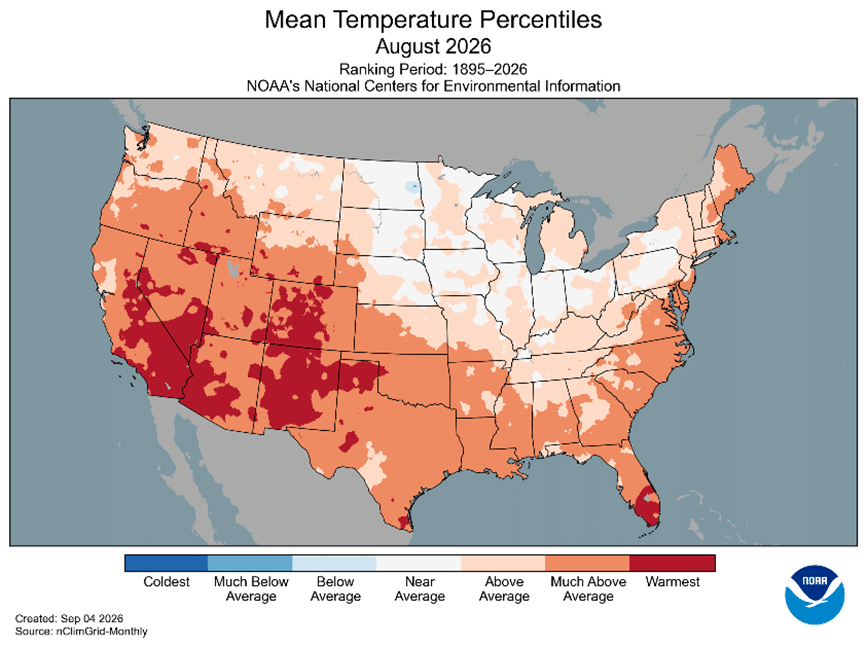
The months of July, August, and September 2026 each broke heat records, and summer 2026 was the hottest in the United States in the 132-years since records have been kept. Arizona tied for its warmest year on record, while New Mexico, Utah and Colorado had their warmest recorded summers.
On top of this, we can expect the combination of fossil fuel-driven climate change and the super El Niño to bring record-breaking, deadly heat in 2027 globally.
“El Niño events are characterized by warmer-than-usual ocean surface temperatures in the eastern Equatorial Pacific off the coasts of Ecuador and the Galapagos Islands… They affect weather patterns around the world,” explains Dr. Marc Alessi, UCS climate scientist.
“While El Niño is a natural cycle in Earth’s climate system, fossil fuel-driven climate change is not. When you combine an El Niño event with the overall warming of Earth due to emissions from heat-trapping fossil fuels, you get an exceptionally warm planet,” Dr. Alessi adds. We know that the planet will be warmer over the next year, which will increase the chance of heatwaves, and though we cannot pinpoint exactly where these heatwaves will occur in the world, we know we aren’t prepared for the heat we’re already experiencing in the US.
One heat death is one too many
Heat is the leading cause of weather-related deaths despite the fact that heat illness and death are preventable with the right safety measures. Every heat death tells us that we are not doing enough to keep people safe from the dangerous heat we face today, and if we don’t act urgently and strategically at every opportunity, heat-related illnesses and deaths will continue to mount as our world warms.
A study by Boston University and NPR found that “on average between 2018 and 2025, we estimate that some 9,000 deaths each year in the country are impacted by heat—a factor of five higher than the official average over that same period. Some years, heat-related deaths can top 10,000.”
Extreme heat is taking an immense toll on human health and well-being, and human-caused climate change is increasing people’s risk. Climate change accounted for an average of 27% emergency room department visits for heat-related illnesses, suggesting that hospitals may need to plan additional staffing in ERs during heat season, a new scientific study found.
To understand exposure to extreme heat, heat surveillance is a crucial baseline of information for local leaders to know what is happening in their communities so that they may identify and implement effective, tailored interventions to keep people safe.
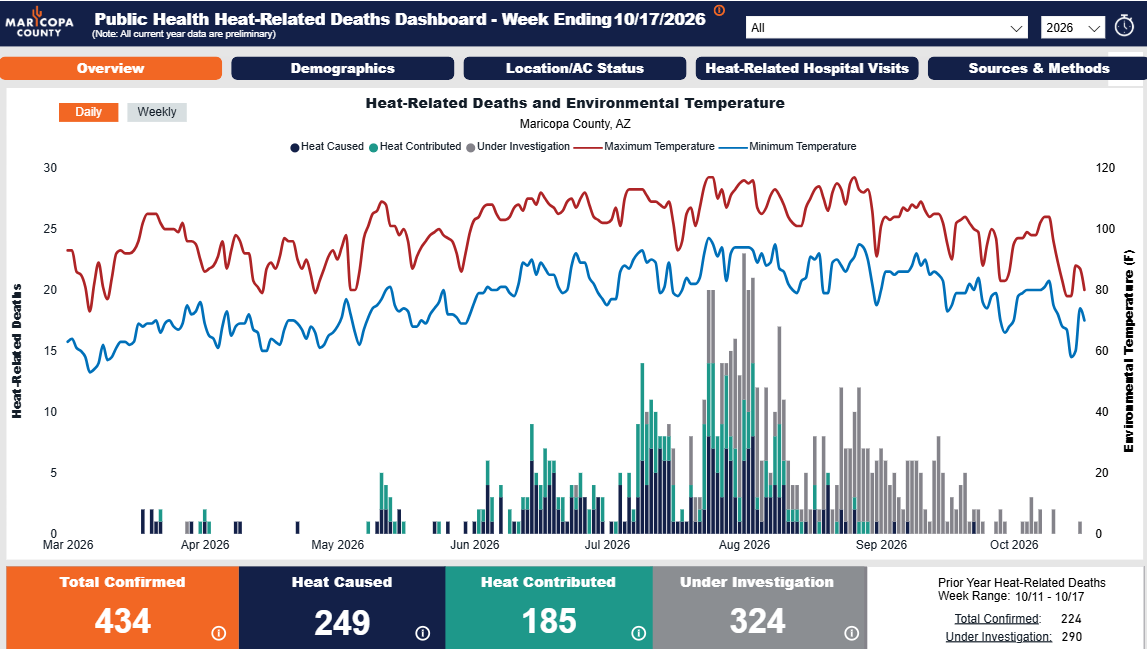
Maricopa County in Arizona is leading the way in heat surveillance by tracking heat-related deaths and hospital visits on a public dashboard. You can see the staggering numbers of confirmed deaths and those that remain under investigation this year, and how those numbers compare with the date range in the previous year.
Health systems across the US should invest in tracking and investigating heat-related deaths and illnesses to the best of their ability to understand the complex health and socioeconomic factors putting people at risk.
Enforceable worker heat protections are long overdue
When the heat index—the combination of heat and humidity—is high, everyone including young, healthy adults can be at risk of heat illness or death. People who work in hot environments, both indoors and outdoors, are even more susceptible to heat illness and death.
Agricultural workers are 35 times more likely to die from heat-related occupational deaths and construction workers are 13 times more likely to die. Employers must provide employees with a workplace “free from recognized hazards that are causing or are likely to cause death or serious physical harm to his employees” per the Occupational Safety and Health Administration (OSHA) General Duty Clause. Additionally, OSHA’s Heat National Emphasis Program (NEP) aims to reduce worker heat illness, injury, and death through inspections, employer outreach, and compliance assistance.
However, workers continue to get sick and die due to exposure to extreme heat on the job and worker advocates say that OSHA guidelines and the NEP are not a substitute for a permanent, enforceable standard—and they are significantly under-resourced. For example, there is only one OSHA inspector for every 84,937 workers.
Several states have enacted worker heat protection standards in the absence of a federal rule, and these standards vary in enforceability and effectiveness. At the recent Arizona State University Heat Health Governance Symposium, Dr. Vibhu Krishna, of the University of California San Francisco, told the story of Maria Isabel Vásquez Jiménez, a pregnant 17-year-old farmworker who died after her body temperature reached 108 degrees Fahrenheit.
Maria’s death came after California passed the most rigorous heat rules, but “state labor inspectors found more than half of the employers they audited were violating the rules.” Dr. Krishna emphasized the need for enforceable work standards because, “without that, people like Maria slip through the cracks.”
In fact, a new policy brief estimates that “extending California’s heat protections to the entire United States could prevent roughly 1,000 to 1,500 worker deaths per year.” Why should we choose California’s standard to follow? The key is in its enforceability. Researchers found that California’s protections have reduced heat-related deaths by an estimated 51 percent, only after the policy was updated to include enforcement and further revised in 2015. Clearly, enacting a standard is the first step, but it is crucial to enforce and revise implementation to ensure the intended benefits are achieved.
“Heat is everyone’s problem, but nobody’s responsibility”
Heat can affect us all, but we are not all equally affected. It is important for all of us individually to learn how to keep ourselves, our loved ones, and neighbors safe, but it is beyond time for policymakers to take responsibility and act.
“Heat is everyone’s problem, but nobody’s responsibility,” Dr. Jenni Vanos, Associate Professor in the School of Sustainability at Arizona State University, said during the same ASU symposium.
Here are a few urgent opportunities for leaders to act to keep people safe ahead of another hot and dangerous summer headed our way.
The Trump administration must finalize OSHA’s Heat Injury and Illness Prevention in Outdoor and Indoor Work Settings rule
In 2024, the Occupational Safety and Health Administration (OSHA) published the proposed rule: Heat Injury and Illness Prevention in Outdoor and Indoor Work Settings. This rule would “clarify employer obligations and the steps necessary to effectively protect employees from hazardous heat,” also stating that its “ultimate goal is to prevent and reduce the number of occupational injuries, illnesses, and fatalities caused by exposure to hazardous heat.” The rule has gone through years of development and extensive public comment with support from leading labor, union, and health advocates. After years of public comments, the OSHA standard needs to be rolled out as it stands to protect US workers. Instead, the Trump administration is delaying the rulemaking and narrowing it to be less protective and putting more workers at risk.
Congress must:
- Pass the bipartisan Asunción Valdivia Heat Illness, Injury, and Fatality Prevention Act
If the Trump administration fails to implement the OSHA standard, or weakens it, then Congress must pass the Asunción Valdivia Heat Illness, Injury, and Fatality Prevention Act. This bill would finally ensure that employers give workers water, rest, and shade among other commonsense safety measures to prevent heat illness and death. The legislation is supported by members on both sides of the aisle in the House and the Senate.
- Oppose H.R. 6213
Some members of Congress are actively seeking to prevent OSHA from implementing a heat standard. H.R. 6213 would “prohibit the Secretary of Labor from finalizing, implementing, or enforcing a proposed standard with respect to heat injury and illness prevention.” UCS joins dozens of advocates in opposing this effort that would continue to put workers at risk. House Representatives of all stripes should care about this, as new research from Climate Central revealed that human-caused climate change has warmed every US congressional district since 1970. Every elected official should be doing everything to understand how their residents are at risk in a warming world, not blocking life-saving measures.
State and local leaders must pass heat policies
Policymakers across states and local governments can use the Heat Policy Agenda which provides hundreds of examples of actions to create, develop, and inform their own heat protection standards. Use this checklist for a model heat illness prevention rule.
Workers must hold employers accountable and advocate for each other
In 2023, I wrote about the Teamsters union’s campaign to get UPS to implement cooling equipment in their fleet vehicles to protect delivery drivers from dangerous heat conditions. The Teamsters successfully won a contract requiring UPS to increase air-conditioning available in vehicles, and to provide cooling stations and clean, cool drinking water. Unions across the country are working to win heat protections in their contracts and helping to train each other to stay safe in dangerous conditions. Learn more from the National Council for Occupational Safety and Health’s Fired Up! Workers for Heat Justice campaign and heat organizing toolkit.
The cost of inaction is too high
There is also an economic cost to killer heat. Research by UCS found that if we don’t take action on climate change, extreme heat would cause tens of millions of outdoor workers in the US to risk losing a collective $55.4 billion in earnings each year by midcentury. While lost wages and productivity costs are important and should motivate employers to do better on heat adaptation, people’s lives are invaluable.
Moreover, a new study suggests that the argument against heat standards is misguided: “Opponents of heat standards claim that such regulations will negatively impact outdoor industries…We found no evidence that California’s heat standard negatively affected the state’s construction or agriculture sectors.”
The cooler months ahead offer us a brief respite from the heat but are not an excuse for a break from action. We know that 2027 is going to be dangerously hot as we experience the combination of climate change and a super El Niño. As the death count rises in 2026, it is apparent that as a nation we are not doing enough to keep people safe from killer heat. Our leaders must pursue ambitious actions to protect people from heat in advance of next year. Every leader, from the neighborhood level to Congress has an opportunity to act. The time is now to assert that any heat death is unacceptable and put people’s lives first by enacting and implement lifesaving measures.