
Farmers think they know how well they are managing calves, but they often lack the data to measure success.
Humans believe they understand how well they’re doing at something, but when tested, results are poorer than they expect, says Shari van de Pol, CEO of Cattleytics, an Ontario-based company that harvests and interprets data for dairy farmers.
Calf care metrics vary significantly from farm to farm. Some do very well, says veterinarian and farmer Jodi Wallace from Ormstown, Que. Wallace has focused on reducing calf death loss and treatment to zero through intentional farm processes.
Speaking at Canada’s Outdoor Farm Show, Van de Pol talked about some of the work Cattleytics has been doing with Wallace.
“I think I give my colostrum within four hours most of the time. And then when you look at the numbers of what’s actually happening, you’re finding that’s the wrong case,” van de Pol says.
Colostrum quality
Do you use a Brix refractometer to measure the quality of colostrum? They’re about $30 on Amazon, says van de Pol, so there’s little excuse not to use one. The quality of the transition cow program also plays into colostrum quality, and without measuring, one doesn’t know if it’s working around colostrum quality.
“Your transition cow program success has an impact on your calf success,” she says.
Colostrum quantity
Calves need eight to 10 per cent of their body weight in colostrum within six hours of birth. The quicker the better, says van del Pol, as the gut lining closes over time after birth and the opportunity for colostrum absorption declines.
The quantity, along with the Brix level (which measures sugars), can be put into a Cattleytics calculator, and it will report the immunoglobulin G (IgG) levels for each calf. That helps keep calf feeders honest about their work with calves.
At some farms, a timer starts when a calf is born, letting the people caring for the calves know when they need to make sure to have fed colostrum.
Limiting bacterial load
Wallace aims to reduce exposure of calves to bacteria, and she will routinely test calf feeding equipment, like bottles, for bacteria. Van de Pol says she sometimes finds a high bacterial load on bottles, even when washed.
Cattleytics finds that having easily accessible training options, including videos, makes a big difference in how new and experienced workers follow best practices. They now use Meta glasses to record simple videos, which take someone through the exact process, such as washing bottles, through the trainer’s eyes.
Naming responsibilities also helps make sure they get done and, in Cattleytics’ system, a farm can set up who is responsible for each step in calf raising. Those people have tick boxes to make sure things are done. Some farms might want two items, and some might want eight.
This step isn’t just about people management, as that information can also be used to monitor calves.
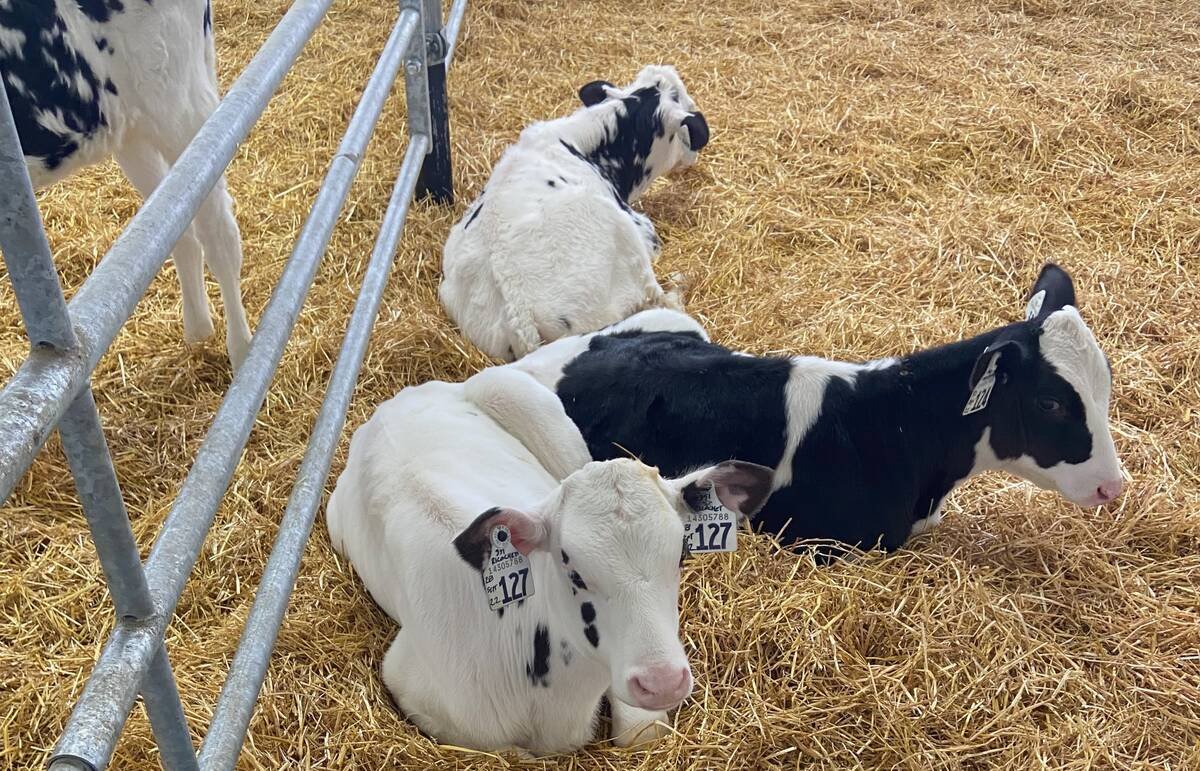
Farms can customize the information they want recorded, so everyone can see the observations. If a calf is off feed one time, it might not be a big deal, but if it’s recorded two or three times, then an action is needed.
“If I noticed her two days ago, then everybody knows to keep a better eye on her,” she said.
Research at the University of Guelph published in 2017 shows that early calf disease can have life-long repercussions. Lung consolidation during their first 56 days of life results in an average 525-kg decrease in first-lactation milk production over 305 days.
“These are lifelong damage moments,” says van de Pol. “With loss from pneumonia, with diarrhea, and it’s preventable. But we have to help people with systems that will make it easy to do those things and for everybody to get on the same page. You don’t rise to your rules; you fall to your habits.”
Quick cattle ID in the barn
Cattleytics aims to make animal identification and data gathering as easy as possible and relies on new uses for old technology to do that.
Users of the company’s software can now scan a cow or calf’s ear tag with their phone, and the scan will bring up the data about that animal on the screen. That means there’s no need to get closer to a cow or restrain it to identify it using RFID from the ear tag. There’s no typing of ear tag numbers into a device to pull up the data.
The company is also working with Meta glasses for farm workers who need to be hands-free while in the barn. A person wearing the glasses looks at an ear tag, and the data from that cow appears in the glasses. This helps people working on herd health or hoof trimming. Glasses wearers can scroll through data or move through menus by using hand motions.


