

Japanese electronics manufacturer Panasonic Holdings announced it will start full-scale mass production of glass-based perovskite solar panels for applications in building-integrated photovoltaics (BIPV) one year ahead of schedule.
The company had originally planned to start production in fiscal year 2030, which in Japan runs from April 1, 2030, to March 31, 2031.
“Ahead of full-scale mass production, we began commercial activities in September 2026 by selling pre-production products manufactured at Panasonic HD’s development facility in Moriguchi, Osaka Prefecture,” the company said in a statement. “Going forward, we aim to establish mass-production technologies at our Nagahama facility and accelerate market development through the commercial deployment of these initial products.”
“Panasonic HD was selected for a Green Innovation Fund project by the New Energy and Industrial Technology Development Organization (NEDO) in September 2025 and has since been developing mass-production and installation technologies for glass-based perovskite solar cells,” it went on to say. “Given the progress in these technologies, growing market demand, and supportive government policies, the company has decided to bring forward the start of full-scale mass production from its original schedule.”
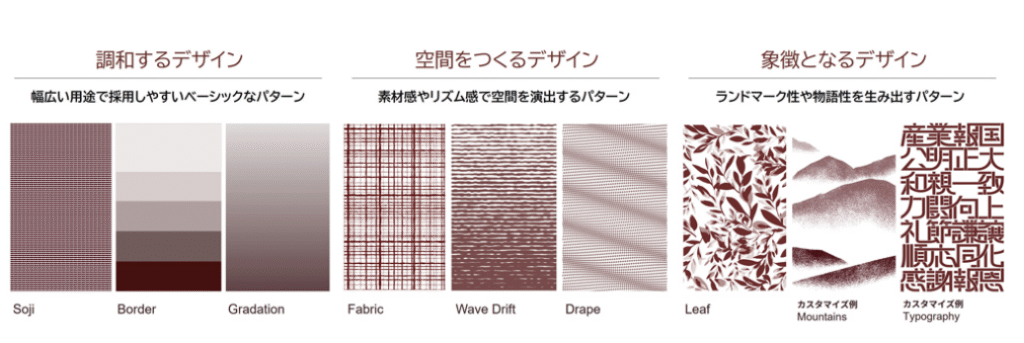
Panasonic said its pre-production glass-based perovskite solar panels feature a laminated-glass structure, with maximum dimensions of 1.8 m × 1.0 m and glass thickness configurations of 3+3 mm or 6+6 mm. The products are available with float glass or high-strength glass and support customized decorative designs.
The mass-produced products, scheduled for launch in April 2029, will feature larger dimensions of up to 1.8 m × 1.2 m and additional glass thickness configurations of 4+4 mm and 5+5 mm. They will also be available in laminated insulating glass configurations, with tempered glass offered as an additional option.
According to the company, both product generations comply with Japanese building standards and have passed internal tests based on IEC 61730 and IEC 62790. Panasonic also said it plans to pursue module certification in line with customer requirements and market developments.
The company uses inkjet coating, laser processing and glass encapsulation technologies in the manufacturing process. It said the technology enables customized dimensions, transparency levels and decorative patterns, making the products suitable for building-integrated photovoltaic applications, including windows and facades.
Panasonic did not disclose the modules’ power conversion efficiency, rated power output, temperature coefficient, expected service life or pricing.
The Japanese electronics manufacturer has been developing perovskite solar technology for more than a decade. In 2020, the company unveiled a lightweight perovskite solar module with a power conversion efficiency of 16.09% and an area of 802 cm², manufactured using an inkjet coating process.
In 2023, it began testing glass-based perovskite solar panels in a building in Fujisawa, Kanagawa Prefecture, in cooperation with property developer Mitsui Fudosan Residential. The company subsequently achieved a certified efficiency of 18.1% for an 802 cm² device.
More recently, in December 2025, Panasonic and Japanese building materials manufacturer YKK AP tested the technology in office windows, focusing on installation methods and design flexibility.
The commercialization efforts come as the Japanese government seeks to establish a domestic perovskite solar industry. In November 2024, the Ministry of Economy, Trade and Industry (METI) announced a target of deploying around 20 GW of perovskite solar capacity by 2040.
The government also outlined plans to support domestic manufacturing and reduce production costs to JPY 14 ($0.09)/W by 2030 and JPY 10/W by 2040. In September 2025, the Ministry of the Environment introduced subsidy programs to support early deployment of perovskite solar cells and their integration with battery storage systems.
Japan has since stepped up its support for the technology. In May 2026, NEDO opened a supplementary funding call under its Green Innovation Fund to advance mass-production technologies for single-junction perovskite solar cells.
In September, the Ministry of the Environment announced plans to exclude conventional silicon solar panels from newly introduced subsidy programs starting in fiscal 2027, prioritizing perovskite and other next-generation solar technologies. The policy shift is intended to strengthen Japan’s industrial competitiveness and accelerate the commercialization of emerging photovoltaic technologies.
The post Panasonic begins sales of glass-based perovskite solar panels appeared first on pv magazine Global.


