
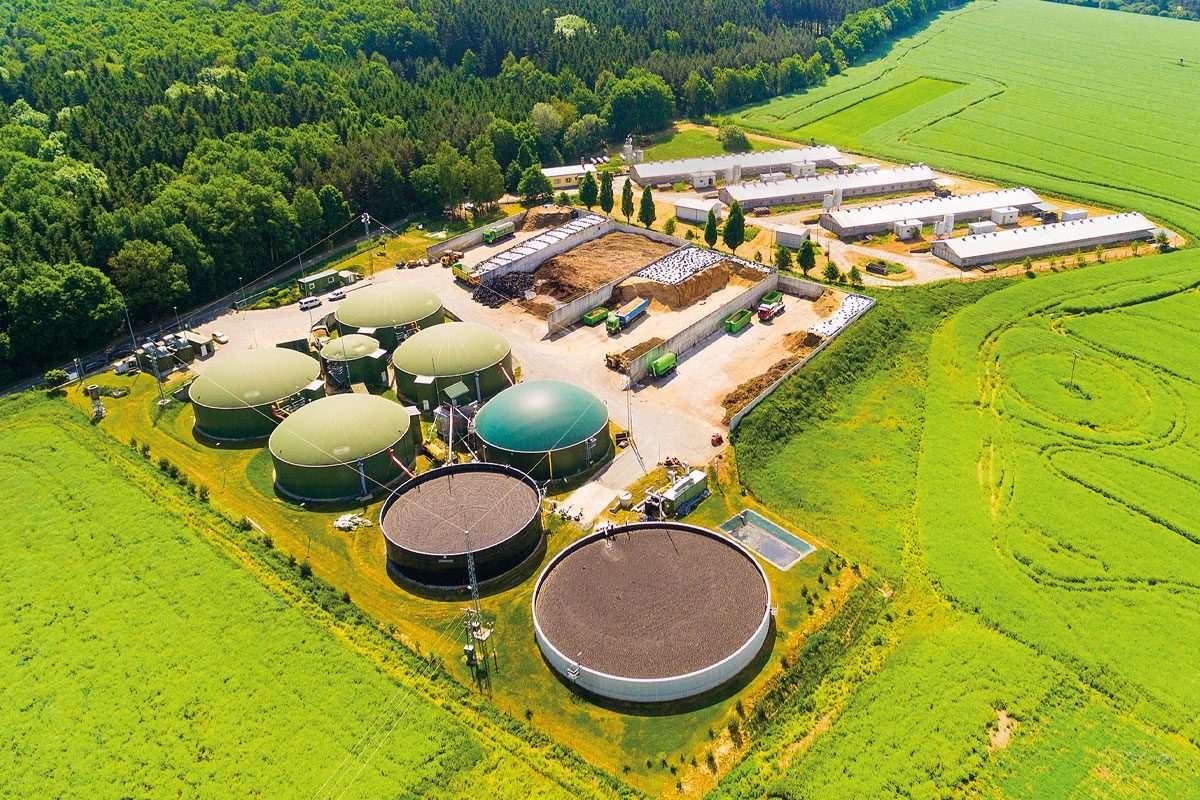
Previous carbon capture allocation arrangements have excluded many smaller biomethane producers from opportunities to store biogenic CO₂, potentially overlooking a relatively low-cost source of greenhouse gas removals, according to a new report from gas network operator Cadent.
The report, published on 23 October, argues that the UK’s carbon capture and storage (CCS) allocation processes have historically favoured large industrial projects connected directly to CO₂ transport pipelines. This has disadvantaged smaller, geographically dispersed biomethane plants, many of which would need to transport captured carbon dioxide by road.
Cadent, which has 47 biomethane production plants connected to its gas distribution network, says removing these barriers could create a new revenue stream for producers while reducing the public subsidy needed to support renewable gas production.
According to the company’s analysis, revenues from selling verified greenhouse gas removals could be worth up to £20 per MWh of biomethane produced, potentially reducing subsidy requirements by around one-third. The estimates depend on the economics of capturing, transporting and permanently storing the CO₂, as well as the value of removal credits.
Capturing a by-product
Biomethane is typically produced by upgrading biogas generated through anaerobic digestion of organic materials, including food waste and agricultural residues. The upgrading process separates carbon dioxide from methane, creating a relatively concentrated stream of biogenic CO₂.
Unlike carbon capture from conventional industrial exhaust gases, this process does not necessarily require the same energy-intensive separation of CO₂ from dilute flue gases. If the recovered biogenic carbon dioxide is permanently stored underground, it can contribute to net greenhouse gas removals, subject to lifecycle emissions and appropriate verification.
Cadent estimates that a UK biomethane sector producing 120 TWh annually could generate approximately 17 million tonnes of biogenic CO₂ each year. This is an estimate of the sector’s potential rather than a forecast of actual production. Even at half that level, the company suggests biomethane could make a substantial contribution to the UK’s engineered carbon removal requirements.
The transport obstacle
A central difficulty is the location and scale of biomethane facilities. Many are situated in rural areas, where constructing dedicated CO₂ pipelines would be prohibitively expensive.
An alternative would involve collecting CO₂ from individual plants by road tanker, combining deliveries at aggregation facilities and transferring the material into larger carbon transport and storage networks.
Cadent argues that previous CCS allocation arrangements have not adequately accommodated this approach, effectively preventing many smaller producers from accessing geological storage infrastructure.
However, government policy is beginning to change. The East Coast Cluster’s Non-Pipeline Transport Pathfinder process, launched in April 2026, allows projects to seek access to geological storage without a direct pipeline connection. The Government has also acknowledged the potential contribution of biomethane-derived removals.1
Important restrictions remain. Under the Pathfinder’s greenhouse gas removals business model, projects must capture an average of at least 30,000 tonnes of CO₂ annually, although multiple facilities can be combined in one application. Each participating facility must capture at least 5,000 tonnes annually. Independent intermediaries purchasing CO₂ from producers are not currently eligible under the process.2
These conditions could continue to limit participation by smaller biomethane plants, despite the introduction of non-pipeline transport.
Cadent is calling for wider access to CCS infrastructure, pilot projects to demonstrate CO₂ aggregation and further work on the economics of capturing and transporting biogenic carbon dioxide.
Dr Angie Needle, Cadent’s director of strategy, said the opportunity had been largely overlooked, adding that the benefits of biomethane production extended beyond renewable gas to include fertiliser production and potentially lower government subsidies.
The report suggests that overcoming the remaining infrastructure and commercial barriers could allow biomethane producers to supply both renewable gas and permanent carbon removals, improving the economics of a sector whose future expansion will depend partly on government support.
Cadent’s report Reducing Green Gas Costs with BioCO2 is available here.
Notes
[1] Department for Energy Security and Net Zero, Independent review on greenhouse gas removals: government response, 17 July 2026.
[2] Department for Energy Security and Net Zero, CCUS NPT Pathfinder selection process: clarification questions, updated 27 May 2026.


