

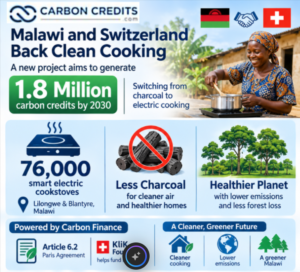
Malawi and Switzerland have approved a clean cooking project that aims to generate nearly 1.8 million carbon credits by 2030. The project will help households switch from charcoal to electric cooking, funded by the international carbon market.
Climate technology company ATEC Global plans to distribute 76,000 smart electric cookstoves to homes in Lilongwe and Blantyre, two districts in Malawi. The stoves will help families reduce their use of charcoal, which contributes to climate change, forest loss, and unhealthy indoor air.
The project is part of a climate agreement between Malawi and Switzerland under Article 6.2 of the Paris Agreement. This agreement allows countries to pay for emissions cuts made in other countries and count those cuts toward their climate targets.
The deal shows how carbon finance can help bring cleaner cooking technology to more households while supporting efforts to reduce emissions.
How Malawi and Switzerland Will Finance Emissions Cuts
Malawi and Switzerland signed a climate cooperation agreement in 2022. Under the deal, Switzerland can buy approved emissions reductions from projects in Malawi.
The Swiss KliK Foundation helps fund these projects by agreeing to buy the resulting carbon credits. This money can help pay for equipment, support households, and cover project costs.
Each carbon credit represents one metric tonne of greenhouse gas emissions reduced or removed. The project aims to generate nearly 1.8 million credits by 2030, but this is a target, not a number of credits already issued. Before the credits can be transferred to Switzerland, the project must meet the agreed rules and show that it has reduced emissions.
The two countries must also prevent double counting. This means Malawi cannot count the same emissions cuts toward its own climate target if Switzerland also claims them. The countries use a process called a corresponding adjustment to avoid this problem.
76,000 Electric Stoves to Replace Charcoal
Many households in the target areas still use charcoal as their main cooking fuel. Making charcoal can contribute to forest loss, while burning it releases greenhouse gases and smoke.
ATEC plans to provide 76,000 smart induction cookstoves to households that have access to the electricity grid. These stoves use electricity to heat pots and pans instead of burning charcoal.
The change could bring several benefits. Families may use less charcoal, reduce smoke inside their homes, and put less pressure on nearby forests.
The stoves also have built-in meters that record electricity use and send the data to a monitoring system. This helps project managers track how often households use the stoves and estimate the emissions they save.
This data is important because the project must show real results before it can claim carbon credits. The number of credits will depend on verified emissions cuts, not simply on how many stoves are distributed.
Carbon Payments Could Help Families Afford Electric Cooking
Buying an electric stove can be expensive for families with limited incomes. Without financial support, many households may continue using charcoal even when cleaner options are available.
The project uses a system called “Cook-to-Earn” to encourage households to use their new stoves. Under the scheme, families can receive payments based on verified stove use. The KliK Foundation says payments can reach up to $50 per household.
Carbon finance also helps cover project costs and make the stoves more affordable. ATEC says the project would not be financially viable without this support.
The model links funding to actual use. Instead of paying only to distribute the stoves, the project also rewards households for using them. This could help the programme reach more families and keep the stoves in regular use. However, results will depend on whether households can access reliable electricity and continue using the equipment.
- RELATED: Verra Approves Rwanda’s 5.69 Million Article 6 Carbon Credits, A Major Boost for Clean Cooking
Project Targets Cleaner Air, Forest Protection and Jobs
The project aims to deliver benefits beyond lower emissions. Replacing charcoal stoves with electric cookers can reduce smoke inside homes. This may help protect health, especially for women and children who are often more exposed to cooking smoke.
ATEC estimates that the project could save women around 8 to 10 hours each month by reducing time spent on cooking tasks. It also expects the programme to create about 300 jobs in stove distribution, sales, transport, and maintenance. Using less charcoal could also help reduce pressure on forests.
These are expected benefits, and the project must be carried out successfully to deliver them. Access to electricity is also essential because the programme targets households connected to the power grid.
Clean Cooking Credits Face Price Pressure
Clean cooking is an established part of the voluntary carbon market. By August 2025, cookstove projects had issued more than 181 million carbon credits, according to an RMI analysis. However, oversupply has weighed on prices.
The Clean Cooking Alliance reported that unsold credits reached 124.4 million in 2024, while average prices fell from about $12 per credit in early 2022 to around $5 in 2024.
Major buyer sectors include energy, professional services, and financial services. Prices vary by credit quality and eligibility.
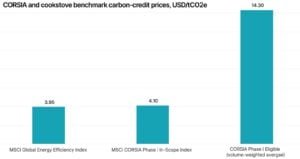
MSCI reported in May 2026 that cookstove credits eligible for CORSIA, the international aviation offsetting scheme, traded above $14 per tonne, compared with about $4 for the broader clean cooking market. These figures show how quality standards can influence demand and prices.
Malawi Expands Its Carbon Market
The project is part of Malawi’s wider effort to attract international funding for climate action. Article 6.2 of the Paris Agreement allows countries to work together to reduce emissions. Under this system, one country can fund a climate project in another country and receive approved emissions reductions in return.
For Malawi, this can bring money and technology into projects that may struggle to secure enough funding on their own. For Switzerland, it offers a way to support emissions cuts abroad and use approved reductions toward its climate commitments.
The system also requires countries to track emissions reductions and record credit transfers. These safeguards are important to help ensure that the claimed climate benefits are real and are not counted twice.
The next step is to turn the project’s plans into measurable results. That means distributing the stoves, ensuring households use them, and checking the emissions reductions before credits can be transferred.
Can Carbon Finance Help Scale Up Clean Cooking?
The Malawi project shows how carbon markets can help fund practical changes in people’s daily lives. By supporting electric cooking, the project aims to reduce charcoal use, cut emissions, and improve conditions inside homes. Carbon payments could also help households afford the switch and support local jobs.
However, the target of nearly 1.8 million credits by 2030 will depend on the project’s actual performance. The stoves must be used, emissions savings must be measured, and the results must meet the agreed rules.
For Malawi, the project offers a way to attract climate funding while expanding access to cleaner cooking. For Switzerland, it provides another potential source of approved emissions reductions under their bilateral agreement.
Its progress will help show whether carbon finance can make electric cooking more affordable and deliver climate benefits at scale.
The post Malawi, Switzerland Approve Clean Cooking Project Targeting 1.8M Carbon Credits appeared first on Carbon Credits.


