
Feed Probe could provide farmers with an affordable, user-friendly, reliable and speedy tool for measuring silage moisture.
Feed Probe cuts silage moisture measurement time from 10-20 minutes to 60 seconds, allowing farmers to adjust feed rations to current conditions.
Problem to prototype
Mahla Mirali, founder and chief strategy officer of GrAIn Data Solutions, developed the prototype following a conversation with a frustrated dairy farmer at a University of Guelph workshop connecting farmers to researchers.
“(The farmer said,) ‘Whenever the weather is changing, the amount of moisture is changing and I do not have a user-friendly, reliable solution for it,’” Mirali shared.
Her research showed existing tools were either time-consuming or not user-friendly, with results taking 10-20 minutes to several days, while more effective options required a significant investment of several thousand dollars.
Mirali said they’re still in the prototype stage but estimates the Feed Probe will likely cost between $500 and $700, adding “there will be a one-time purchase price, including the app.”
Simple and accurate
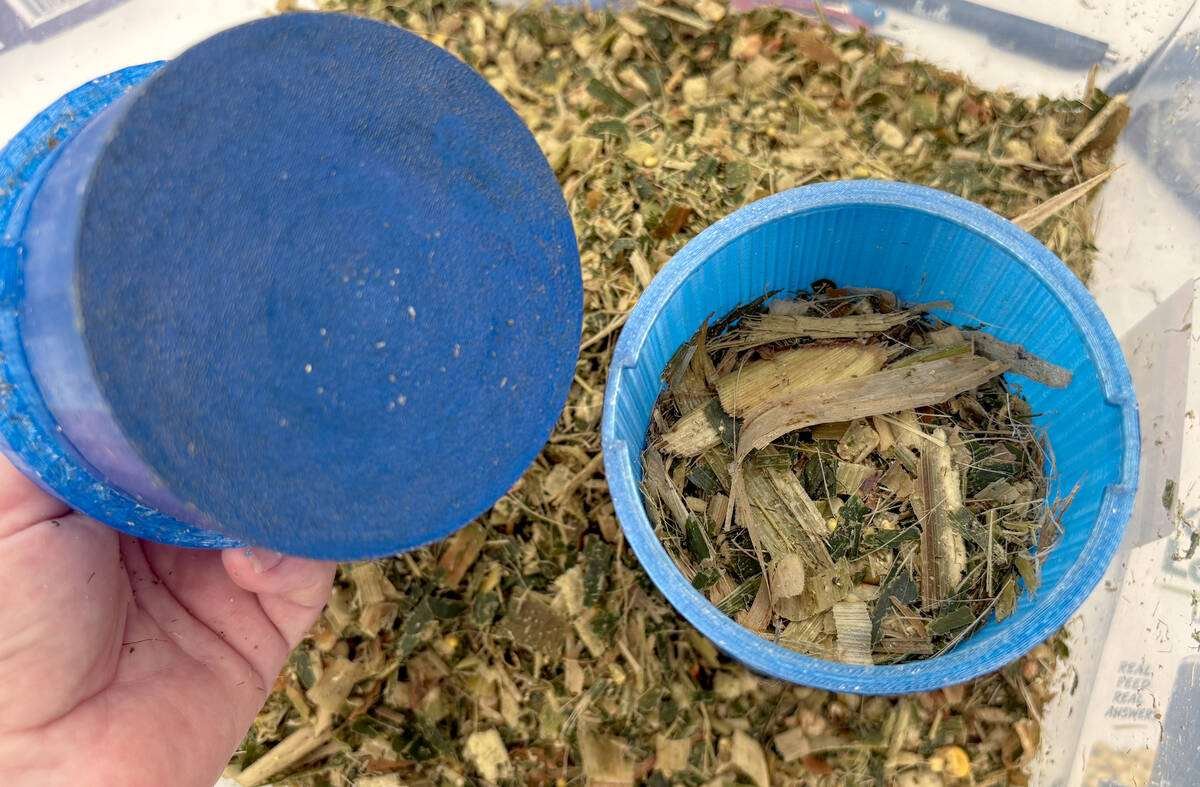
The Feed Probe process is simple. A farmer places three silage or TMR samples from across the bunker into the Feed Probe. The sensors measure silage moisture in three seconds and send the results to the app. After repeating the process three times, the farmer has a reliable picture of bunker-wide moisture within 60 seconds.
“(A farmer) doesn’t have that much time to take extra samples, so we thought maybe three is just enough,” Mirali said. “If they take more samples, it will show a m3ore accurate (reading) and the variation will be lower.”
Jeremy Snodden and his son Clayton spent time learning about the Feed Probe at Canada’s Outdoor Farm Show in September.
Snodden, who runs a 100-cow dairy and Claire Snodden Farm Machinery in Sunderland, Ont., said fluctuating moisture levels, especially with tower silos, require frequent retesting and, given his current method, are time-consuming.
On-farm testing
“(It) takes about two hours to do a sample, and if you’re running around and you forget about it, you burn it or don’t cook it enough,” Snodden said. “It’s just hard to get an accurate test when you’re always running around.”
Because of that, he tends to put off testing, but if the Feed Probe works as promised, he said it could be a game changer for addressing feed problems faster.
Fluctuating moisture levels can disrupt dry matter intake, affect rumen health, reduce production and increase somatic cell issues.
“It could solve a lot of problems if it works,” he stated. “(For) the next generation, if it’s easier for them to come in, test the feed and know what to do with cows —everything you can do makes things better,” said Snodden.
Ration accuracy
Moisture levels can shift with bunker-face variation, humidity and weather. These changes affect the true loading weight and can make feed rations less consistent.
The app converts the moisture reading into a dry matter weight that matches the target scale, helping farmers avoid overfeeding, underfeeding and waste while maintaining consistent production, Mirali explained.
“The amount of load is just based on the (dry matter) assumption that the nutritionists have, but you should know the amount of moisture for today so that you can know how to adjust that load,” she said.
Calibration
Mirali is working with one farmer but wants to partner with more and expand the probe’s calibration for different silage and TMR chop sizes and bunker influences.
“With the next farmers, we wanted to make sure that there will be a primary calibration so that it will work well under operation,” she explained.
In the future, she’d like to expand the Feed Probes range to grains and increase its marketing to livestock farmers.
CLICK HERE if you’re looking for more information on beta-testing a Feed Probe.


