
Scientists gathered at COP31 warned that the planet is entering a more dangerous phase of climate change, as warming accelerates and strains the vital life-support systems of Earth.
The high-level dialogue, convened November 16 in Antalya by COP31’s Turkish Presidency, the Potsdam Institute for Climate Impact Research and Future Earth, brought climate science directly into the negotiations of this year’s United Nations climate conference.
The programme drew on the 10 New Insights in Climate Science, an annual synthesis of the latest peer-reviewed research, to shape a discussion that connected the latest evidence on planetary limits, extreme weather, health, economics, adaptation and just transitions
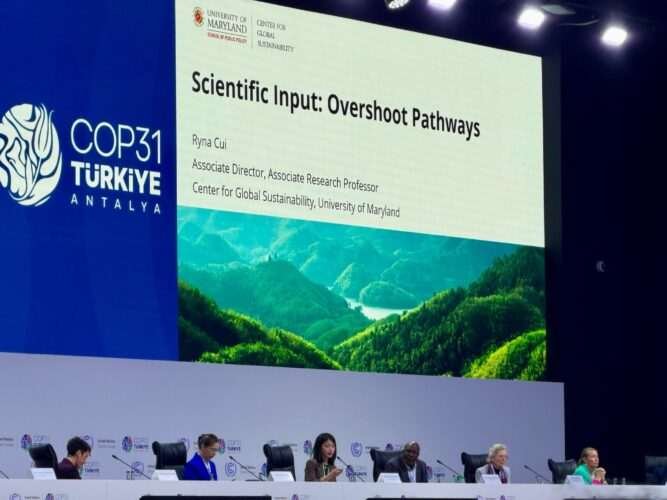
A central message from the event was how the Paris Agreement has helped bend the global curve of carbon emissions, but that current action is still too slow and unambitious to prevent a breach of 1.5°C of warming.
“Every fraction of a degree matters. And so does every year above 1.5°C,” said João Paulo Ribeiro Capobianco, the Brazilian Minister of the Environment and Climate Change, stressing that countries must now limit both the scale and duration of any temperature overshoot.
Johan Rockström, co-chair for the Earth Commission, an initiative from Future Earth, underscored how seven of nine planetary boundaries have already been breached, while the rate of warming over the past decade has more than doubled. He said rising heat, melting ice, declining forests and a growing Earth energy imbalance are weakening the planet’s capacity to absorb carbon and remain stable.
“The window is still open, but it’s narrowing very fast,” Rockström said.
For many, the impacts are no longer theoretical. Scientists pointed to the Amazon, coral reefs, ice sheets and ocean circulation as systems approaching potential tipping points. They also warned that a return from overshoot does not guarantee a return to safety. Some impacts, especially those in mountainous regions, small islands and vulnerable communities, may be permanent.
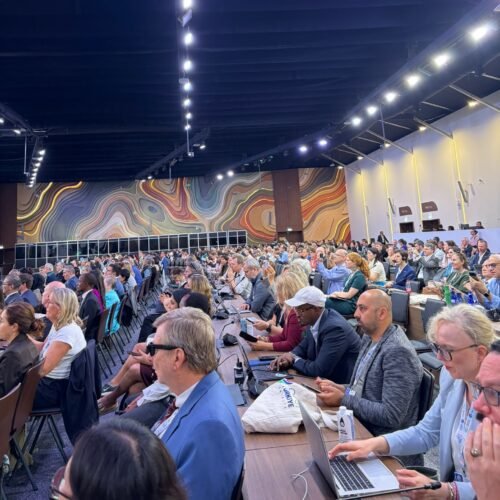
Speaking at the event, Nepal’s Minister for Agriculture, Forests and Environment Gita Chaudhary said her country had experienced this reality firsthand after a glacier collapsed in August, triggering a rapid and devastating flood that killed thousands and swept away communities.
“For us, 1.5C is a threshold to hold, not a detour to manage,” the minister said, calling for science to reach the rooms where policy is drafted, not only after disasters strike.
The session also highlighted reasons for cautious optimism.
Rapid growth in renewables, batteries and clean mobility could trigger “positive tipping points,” making climate action cheaper and easier as it scales. Speakers argued that the task now is implementation: cutting emissions rapidly, protecting forests and oceans, transforming food systems, and scaling carbon removal.
But the scientists were clear that delay carries a high price. Rockström said global emissions would need to fall by around 6% a year to put a brake on warming, while a ten-year delay could lock the world onto a pathway that makes returning to safer temperatures far harder.
The dialogue was important because it moved beyond a general warning about climate change and gave negotiators a specific, evidence-based picture of what is at stake, and what must happen next.
As former Irish president Mary Robinson told the audience: “We need more sessions like this at COPs.”


