
In 2025, consumer demand for organic and regenerative dairy is at an all-time high, with the U.S. organic milk market projected to exceed $2.4 billion by 2026.
Health-conscious buyers are increasingly seeking milk that is A2/A2 certified, grass-fed, and pasture-raised, as studies show such milk can contain up to 62% more omega-3 fatty acids and better support digestion. Alexandre Pastures is one of the leading names meeting this demand through its sustainable, soil-first approach.
Alexandre Family Farm, based in Northern California, is widely recognized as America’s first certified regenerative dairy. Their mission wraps around three core values: soil health, animal welfare, and fair operations—forming the foundation of their organic, pasture-raised A2/A2 milk.
Alexandre’s milk stands out as a premium dairy product. It comes from pasture-raised cows bred to produce only the A2 beta-casein protein, which many people find easier to digest than conventional A1/A2 milk. In addition, the cows graze on nutrient-rich, organic pastures, resulting in rich, flavorful milk.
Principles of Organic Farming at Alexandre Pastures
According to 2025 USDA reports, more than 6.7 million acres of U.S. farmland are certified organic, and Alexandre Pastures contributes significantly with its 9,000-acre operation.
Organic farming practices are proving critical for climate resilience, helping soils store up to three times more carbon than conventionally farmed soils and improving long-term productivity.
A. Certified Organic Land
Alexandre operates on 9,000 acres of certified organic land spanning several California counties. The land has been pasture-only—no synthetic pesticides, herbicides, or fertilizers—often for decades.
Their farming method instead emphasizes enriching soils with compost, cover crops, and crop rotation to improve soil fertility, carbon retention, and biodiversity.
B. Organic Feed and Forage
The cows feed exclusively on organic grasses, legumes, hay, and silage, especially for their 100% grass-fed variants. Alexandre also offers other options like 6% whole milk, derived from cows with 80% forage and 20% certified organic grains.
C. Commitment to Animal Welfare
Alexandre’s certification with ROC (Regenerative Organic Certified) and Land to Market indicates high standards for animal welfare—free access to pasture, humane handling, and no routine antibiotics or synthetic hormones. Only sick cows get antibiotics, and their milk is excluded from the supply until cleared.
“Pasture-Raised” Difference: Grazing Practices
Recent studies show that pasture-raised dairy farms can improve soil organic matter by 30–40% in less than a decade and cut greenhouse gas emissions by as much as 50% compared to confinement operations. Pasture-based systems also produce milk with higher antioxidants, making them a healthier choice for consumers.
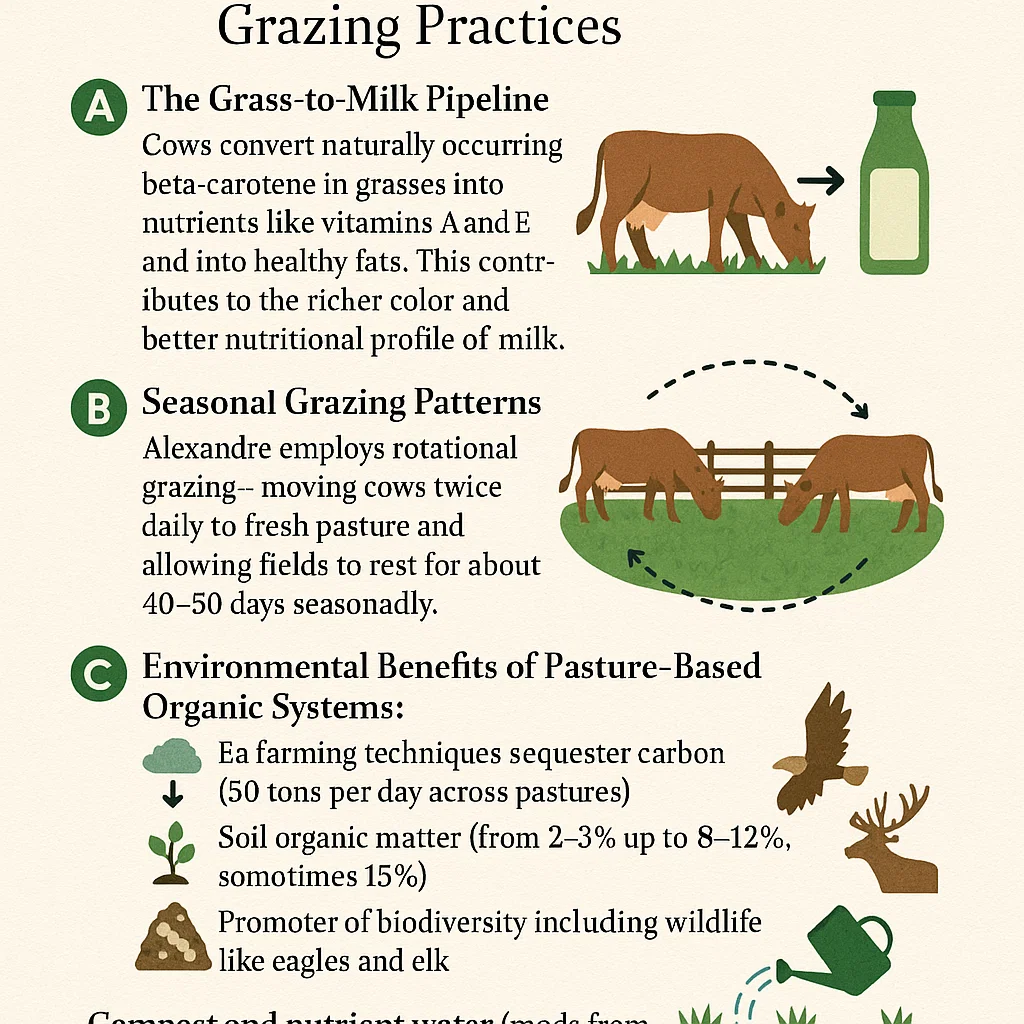
A. The Grass-to-Milk Pipeline: Cows convert naturally occurring beta-carotene in grasses into nutrients like vitamins A and E and into healthy fats. This contributes to the richer color and better nutritional profile of milk.
B. Seasonal Grazing Patterns: Alexandre employs rotational grazing—moving cows twice daily to fresh pasture and allowing fields to rest for about 40–50 days. This approach fosters soil resilience and influences milk flavor and fat content seasonally.
C. Environmental Benefits of Pasture-Based Organic Systems: These farming techniques sequester carbon (estimated at 50 tons per day across their pastures), enhance soil organic matter (from 2–3% up to 8–12%, sometimes 15%), and promote biodiversity including wildlife like eagles and elk.
Compost and nutrient water (made from manure, local wood, fish waste, etc.) enrich pastures without chemical runoff.
Qualities of Alexandre Pastures Organic Milk
Nutrition research from 2025 confirms that grass-fed milk contains up to 147% more omega-3 fatty acids than conventional milk and is significantly higher in vitamins A, E, and K2. These benefits are driving premium organic milk sales, which are growing 8–10% annually in the U.S.
A. Nutritional Profile
-
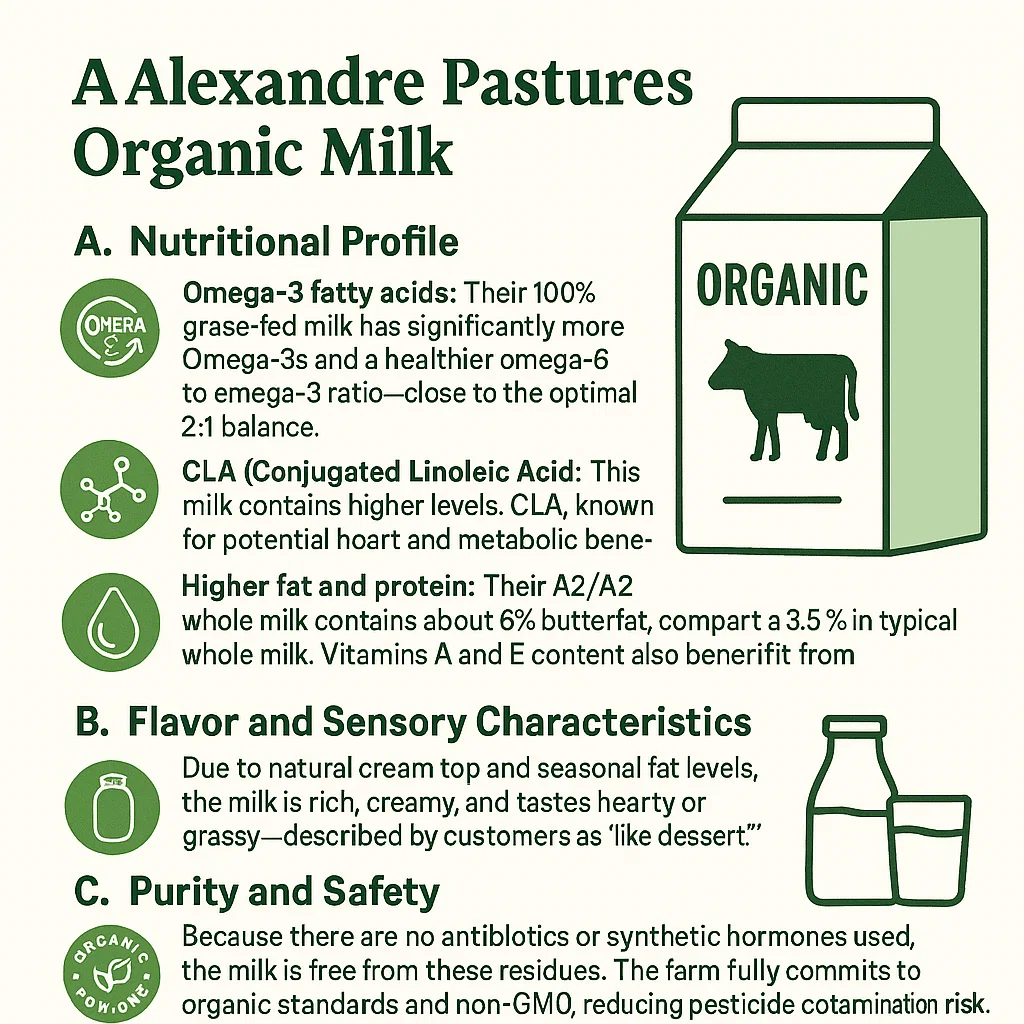
Omega-3 fatty acids: Their 100% grass-fed milk has significantly more omega-3s and a healthier omega-6 to omega-3 ratio—close to the optimal 2:1 balance.
-
CLA (Conjugated Linoleic Acid): This milk contains higher levels of CLA, known for potential heart and metabolic benefits.
-
Higher fat and protein: Their A2/A2 whole milk contains about 6% butterfat, compared to 3.5% in typical whole milk. Vitamins A and E content also benefit from the beta-carotene-rich grass diet.
B. Flavor and Sensory Characteristics
Due to natural cream top and seasonal fat levels, the milk is rich, creamy, and tastes hearty or grassy—described by customers as “like dessert.” The color is deeper, thanks to beta-carotene.
C. Purity and Safety
Because there are no antibiotics or synthetic hormones used, the milk is free from these residues. The farm fully commits to organic standards and non-GMO, reducing pesticide contamination risk.
The Broader Impact of Choosing Alexandre Pastures Milk
Sustainable dairy choices are shaping consumer behavior, with 2025 surveys showing that 68% of U.S. consumers prefer brands that demonstrate environmental responsibility. Choosing regenerative products like Alexandre’s milk helps drive industry change.
A. Supporting a Sustainable Agricultural Model: By choosing Alexandre’s milk, consumers back a regenerative system that stores carbon, improves soil, and combats climate change.
B. Ethical Consumerism: Buying this milk promotes high animal welfare—cows with pasture access, no distress, and ethical treatment.
C. Supporting Local/Regional Economy: Though Alexandre is larger than a small farm, their brand remains family-owned, regionally grounded, and independent of big dairy corporations or cooperatives.
How to Identify and Use Alexandre Pastures Milk
Reports show that in 2025, more than 80% of organic dairy buyers check labels for certifications such as USDA Organic or A2/A2 protein content before purchasing. Knowing what to look for helps consumers choose the highest-quality milk.
A. Label Recognition: Look for labels like “USDA Organic,” “Regenerative Organic Certified,” “Land to Market,” and “A2/A2”—all indicate desired integrity.
B. Where to Find It: This milk is available at natural food stores and high-end grocers, including outlets like Whole Foods Market, and regional shops such as OtterBee’s Market.
C. Culinary Uses: Alexandre’s cream-top milk is excellent for drinking, making yogurt, cheese, butter, or creamy sauces—its richness adds depth and texture naturally.
Conclusion
Alexandre Family Farm demonstrates a powerful connection between organic pasture-based farming and top-quality, nutritious, ethically-produced milk. Their holistic system—from healthy soil to richly nourished cows—yields a product that supports consumer health, environmental sustainability, and animal welfare.
For people seeking dairy that’s good for the body and Earth, Alexandre’s milk stands out as a meaningful choice.


