
Austrian alt meat startup Revo Foods is targeting profitability by the third quarter of 2027 as it scales up its patented 3D-printing tech to make whole-cut alternatives to fish and chicken.
The Vienna-based firm expects sales to grow 80-90% this year after triple digit growth in 2025 supplying mostly branded products to the retail market, CEO David Petuzzi told AgFunderNews at the Future Food-Tech summit in London.
“We closed H1 with 70% growth compared to last year, so this year we’ll probably make around €1.5 million ($1.7 million) in sales,” said Petuzzi, who moved from CFO to CEO around a year ago. “Our goal is to become profitable by Q3 of next year.”
Revo is currently raising €2 million ($2.26 million), of which €1 million ($1.13 million) has already been secured, he said.
‘Maybe plant-based is not really a VC case anymore’
Founded in 2021, Revo has previously raised money from business angels, crowdfunding campaigns and Austrian public grants.
But Petuzzi said the investment proposition for companies such as Revo Foods has shifted as venture investors have become more focused on businesses capable of generating very large outcomes.
“I think we see in the industry that maybe plant based is not really a VC case anymore. They’re all looking for unicorns, and I don’t think that in our industry there will be a lot of unicorns.”
Instead, he said, family offices and business angels may be comfortable backing companies where potential exit values are “somewhere between €50 and €300 million, which I think is possible.”
Lessons learned
Revo’s recent growth has come from a mixture of new listings and velocity gains from existing retail accounts, with Germany and Austria currently accounting for around 80% of revenues, said Petuzzi.
Performance varies significantly depending on where products are stocked, he said. “We have to be in the right supermarkets. In some we have really high velocity whereas in some in the countryside you will barely be purchased.”
He added: “You need to be differentiated in the market, and you have to deliver on all aspects. The taste must be at least as good as the conventional one. You must deliver on the nutrition, especially the protein. You must deliver on texture, and you must deliver on price. If you combine all those, you will be successful.”
Scaling 3D printing: ‘A product every three seconds’
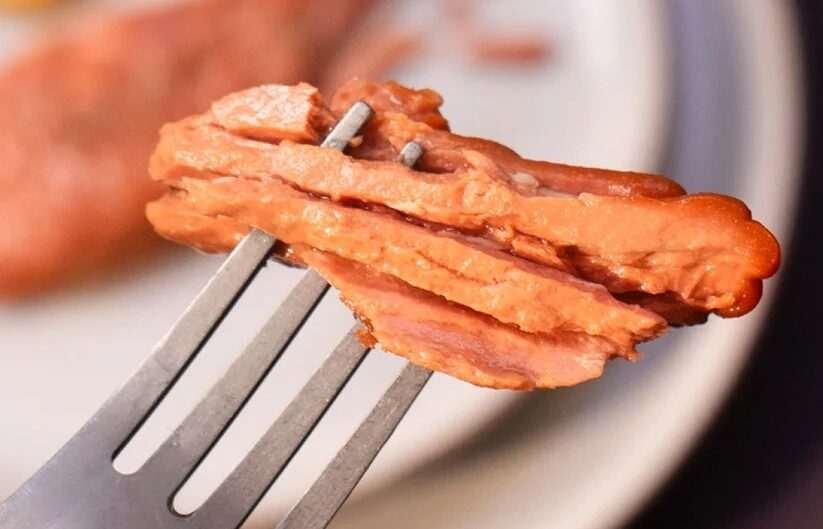
Revo initially focused on recreating the texture and flakiness of salmon, turning to 3D printing as a way to integrate protein and fat into layered structures.
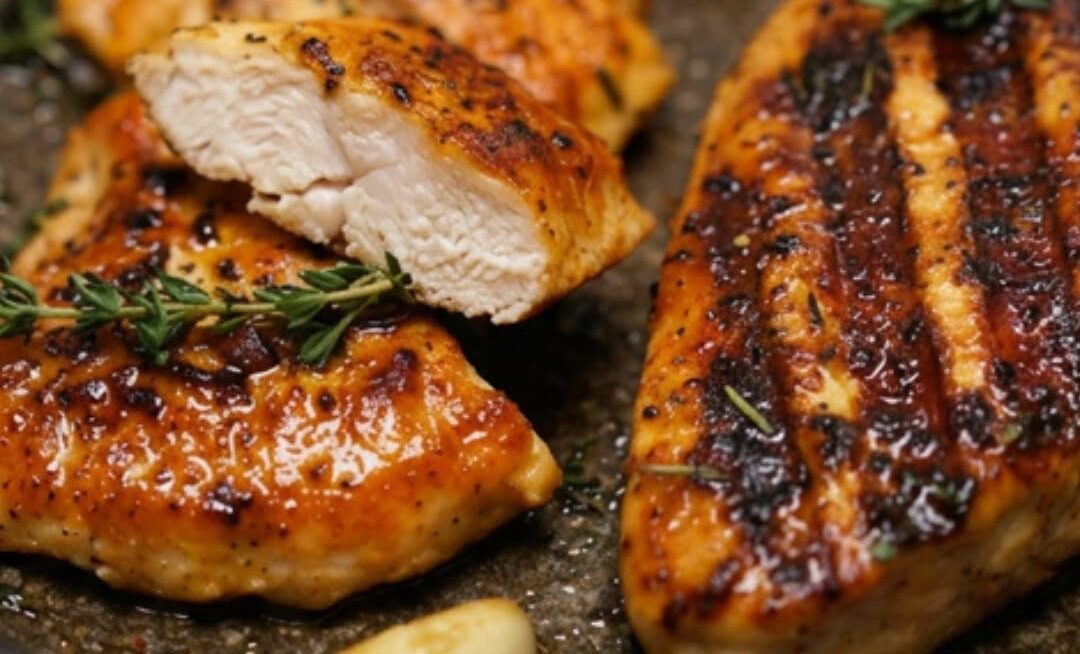
It has since expanded into other seafood products and this summer launched a chicken alternative called El Pollo using mycoprotein sourced from a third party.
A key challenge from the outset was turning 3D food printing from a batch process into a continuous one, Petuzzi said. “We were the very first ones to crack this and start a continuous production process with food material.”
Revo subsequently developed a multi-nozzle system with 16 nozzles per printer, enabling each machine to make eight fillets simultaneously. With six printers operating at its production facility north of Vienna, Revo can now turn out product every three seconds.
Scaling, argued Petuzzi, does not therefore require ever-larger machines. “You multiply the nozzles; you multiply the amount of printers.”
The modular setup also enables Revo to take individual machines offline without shutting the whole line and easily switch between products, he said.
“The printers are capable of printing a range of viscous materials, so on one day we can do the white fish filet, the next day the salmon filet, and the other day the chicken.”
Petuzzi claimed the components for each machine currently cost around €25,000 ($28,300), giving Revo an ROI of less than two months on additional printers.
While developing the technology was R&D intensive, “the printers themselves are not expensive,” he said.
From salmon to cottage cheese
Revo is also moving beyond products manufactured using its 3D-printing platform.
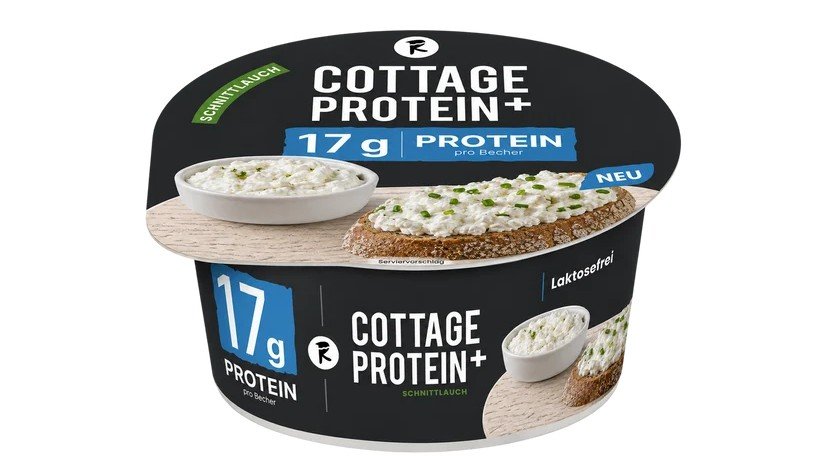
Its newest launch, Cottage Protein+, is a fermented cottage cheese alternative made from apricot kernels, salt water and fermentation cultures, said Petuzzi.
“This product has same protein content [as conventional cottage cheese] and it’s higher in fiber. With the current cottage cheese shortage, I think we very much go into the zeitgeist.”
The product has already secured listings with Rewe and Edeka in Germany, he said, with Revo now looking to increase production in response to demand.
Juicy Marbles partnership opens US market
Revo Foods is accessing the US market through a partnership with Slovenian whole-cut specialist Juicy Marbles [disclosure: AgFunderNews‘ parent company AgFunder is an investor in Juicy Marbles], which sells Revo’s salmon and whitefish products under its own brand.
“We all want the industry to succeed, and that’s why we’re trying to do collaborations with others,” said Petuzzi. “They have a fantastic brand.”
For Revo, the immediate priority, however, is reaching the point where continued expansion no longer depends on external capital, he said.
At that point, Revo will have the option of raising additional growth capital or expanding more organically, he said. “We just need another million, and with this, we can achieve break even.”
Further reading:
Impossible Foods makes UK retail debut at Tesco… without its flagship heme protein
Beyond Meat leans into Europe, Canada, as US sales continue to slide
Heura Foods hits positive EBITDA in Q1: ‘a turning point for the European plant-based sector’
The post Austrian alt meat startup Revo Foods targets profitability by Q3 2027 as 3D-printing scales up appeared first on AgFunderNews.


