
Which route will autonomous machinery operation take in agriculture? Small, precise and high value? Or retrofitted on the largest equipment on the market?
Farm equipment companies are targeting both ends of the market, although there are definite differences between the companies behind small- and large-tractor autonomous systems.
Smaller autonomous units like the FarmDroid or AgXeed are new companies compared to established, generational companies like John Deere and Case IH, which are focused on automating their current tractors.
A lot of it comes down to who has already-built power units.
John Deere, Case IH and Agco already have high-performing full lineups of tractors. It makes sense that those companies want to tack on autonomy to already-existing power units for which they have sales, parts and manufacturing infrastructure.
It also makes sense that slow-moving, agile autonomous robots for high-value crops that are doing precise work like weeding, microdosing fertilizers or planting would be smaller.
That’s an area ripe for innovation and startups. It’s not where the large equipment companies will spend much time.
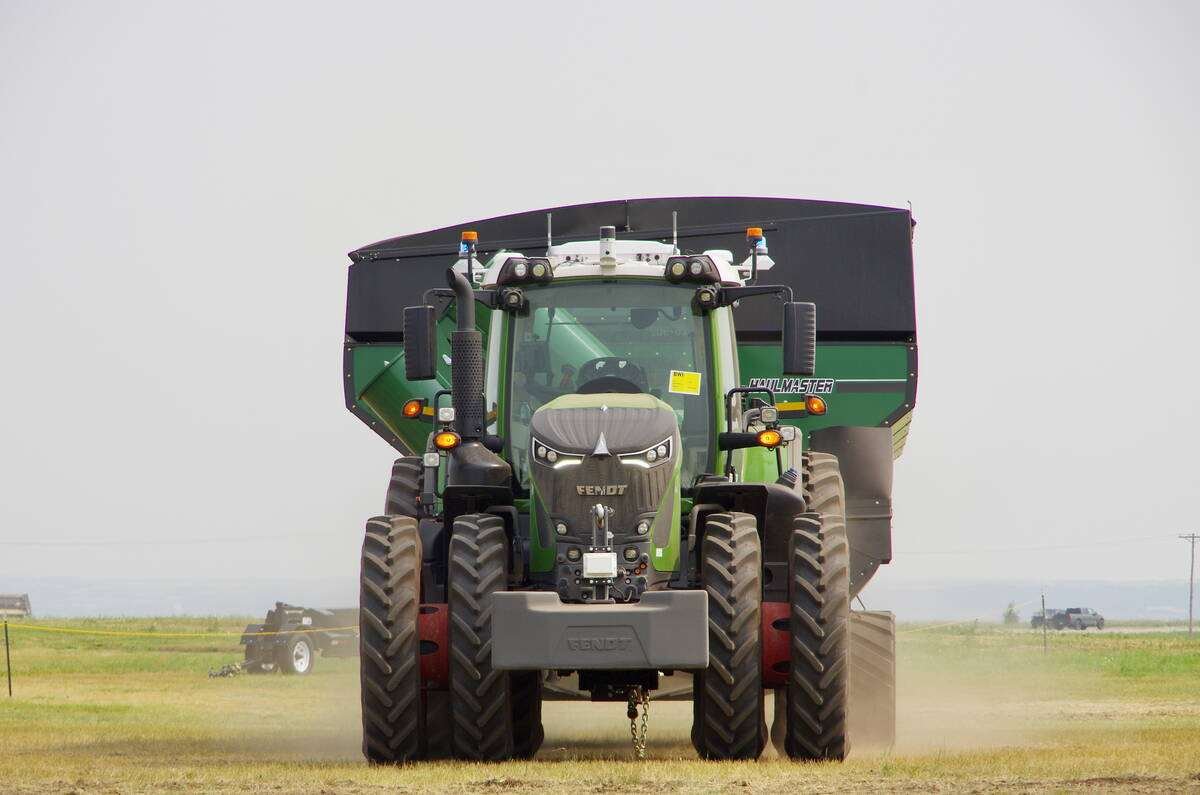
I’ve seen numerous autonomous units here in Ontario. I spent a recent week in Saskatchewan at the Ag in Motion show, and there, autonomy was on the largest machines on the market, including PTx’s OutRun Autonomy on John Deere 9Rs and Fendt 900s.
Agrifac was running one of its large sprayers using autonomous software from Canadian company Mojow.
After attending Agritechnica last fall in Germany, I was pretty convinced that small units, with specific uses that lend themselves to autonomy — slow-moving laser weeders or vegetable planters — were going to be where we see autonomy adopted. Large tractors would be peripheral.
However, after spending time with the large autonomous units and talking to companies and farmers, there will be use cases for autonomous large tractors. It will take a certain farm operation, with a willingness to manage even more complex machines and certain needs that don’t just include labour. The cost of the systems is more expensive than the labour they would replace, but in areas where not having that labour means expensive crop harvest or management delays, there will be uses.
The post Autonomous tractors large or small? appeared first on Farmtario.


