
Successful sire selection blends genetics, herd objectives and management practices, leading to improved herd performance and beef quality.
If one or more of these elements fall out of alignment, producers struggle to maximize genetic potential, regardless of the expected progeny differences (EPDs).
“(EPDs) are fairly accurate in terms of birth weight, weaning weight, all those kinds of things,” said Scott Cornish, regional coordinator with EastGen, during Beef is ON’s November sire selection webinar. “Every bull or sire you select should have good feet, good legs — then you get into other traits the different breeds have.”
However, genetics can only take you so far, with outside influences like nutrition, exercise and gestation length, and uncontrollable environmental elements like drought, flooding and geography, contributing to genetic success, or not.
WHY IT MATTERS
Phenotype, structure and expected progeny differences, when balanced with breeding soundness exams and management practices, enable producers to maximize herd performance through sire selection.
Quality wins
Consumer demand for grade improvements like AAA Prime or Choice Prime in the U.S., and for consistent quality, started in the 1980s and 1990s and has since advanced significantly, said Anne Wasko, Gateway Livestock analyst, at the Jan. 7, 2026, Grey Bruce Farmers’ Week (GBFW) Beef Day.
“Producers in the room heard the message. Our fed cattle slaughter in 2025 will be 80 per cent AAA or higher,” Wasko said. “When we changed the grading system in the early 90s, we were only 18 per cent.”
According to Wasko, in 2025 the sector hit a 40-year high in beef demand, in part because beef quality remains high and the industry has seen significant improvement in the average steer carcass weight from 725 pounds in 1972 to 925 pounds today.
“The beast we are feeding has changed in Canada, and I would argue, based on demand, to the better,” she said. “I think it’s an efficiency story, doing more with less, and that’s a good story to tell.”
Cornish said ideal numbers for birth, weaning, yearling weights, milk and other traits vary by breed, sire offspring percentiles and herd goals. To enhance herd performance, he recommended consulting the producer — whether a breeder, bull buyer or AI user—when selecting sires.
“A lot of us assume that higher milk is better, lower birth weight is better, higher weaning is better, higher yearling is better, but not necessarily for your program,” said Cornish.
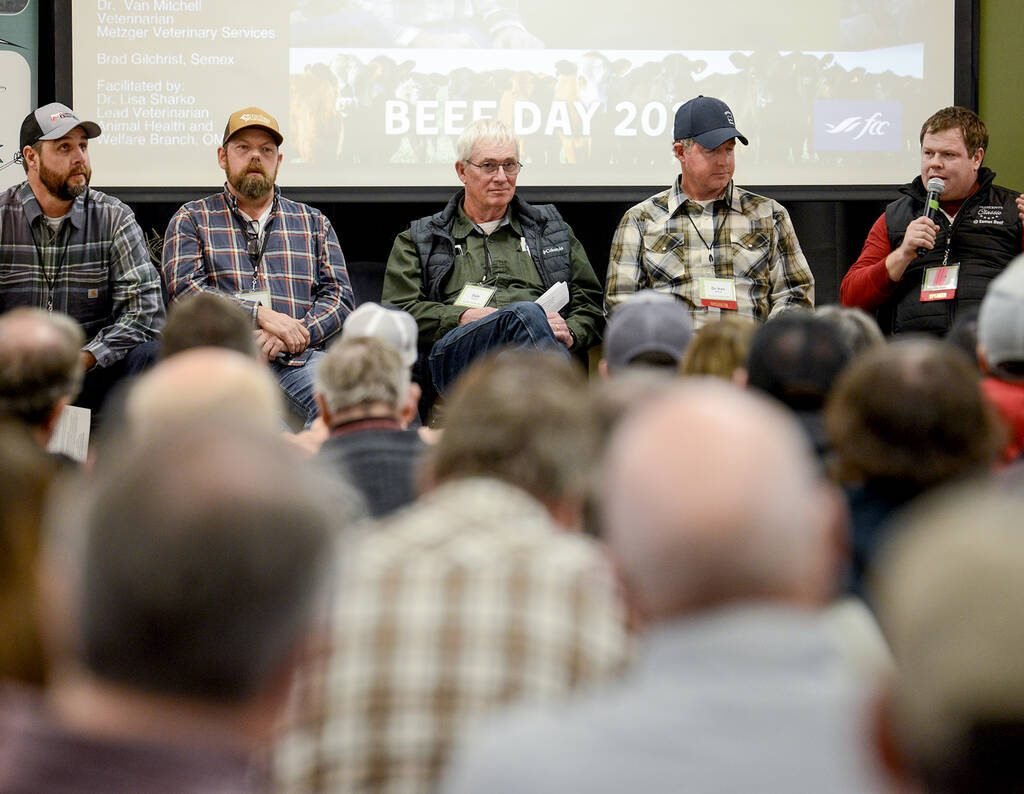
GBFW panellist Dr. Van Mitchell, senior veterinarian at Metzger Veterinary Services, said appropriate heifer-bull selection and breeding soundness exams could help prevent easily avoidable issues.
“We pull a lot of calves, we do C-sections on a fair amount of cattle, and it often ends up being a heifer bred to a really big bull,” said Mitchell.
He suggested that bull selection based on a good heifer-appropriate-sized calf in year one, and a “cracker jack” calf in year two, has more value than losing both to a difficult birth. Breeding soundness exams ensure an animal is at its peak and anatomically correct, excluding those with deformities such as a corkscrew penis or those that turn back on itself.
Disposition counts
Tom Cunningham, a fourth-generation commercial cow-calf producer at Cunningham Farms, has a lengthy non-negotiable list, including structural soundness in feet and legs, spine length for hidden pounds, a deep body, chest, depth of rib and forage capacity, but if he hammers down his absolutes, it’s temperament.
“That really hits home with me when I’m farming with my kids,” he said. “You corner them and see what that bull is going to do. Honestly, if he lifts his head or snorts or does anything, you cross them off the list, you move on.”
Don’t be married to a bull, Cunningham advised. Rather than wait for improvement, if it’s a bad selection, cut your losses because it takes too long to recover from a bull that throws bad calves, he said.
“We’ve culled bulls after one year of breeding, and not cheap bulls, $10,000 to $20,000 bulls,” said GBFW panellist Darrell Saunders, of Saunders Charolais. “It hurts a bit at the time, but in the long run, for our operation, the benefits far outweigh the consequences.”
Saunders, who produces 35 to 40 bulls a year, said he doesn’t chase high EPDs, but looks for a good, balanced EPD platform on all fronts, weighted against appearance and strong structural soundness.
Cunningham and Saunders agreed it’s important to align sire genetics with management practices and herd development goals when purchasing a bull.
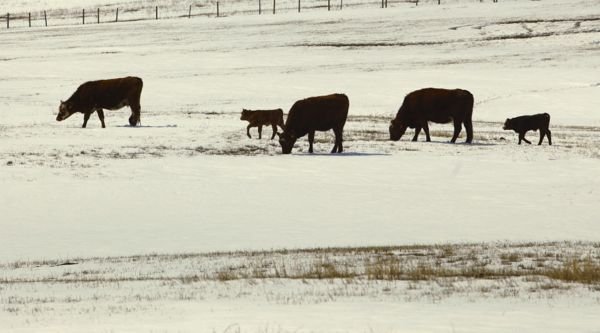
“My cows aren’t raised in a feedlot, my cows are out in the snow, eating snow for water, they’re trudging through the weather,” Cunningham said. “I need a bull that’s going to survive on cat tails, canary reed and cedar brush.”
Full spectrum
For optimal sire selection, Saunders advised discussing your genetic and operational goals because a seller will know which bulls will meet your needs beyond EPDs and physical traits.
Chad Mader, Ontario Ministry of Agriculture, Food and Agribusiness beef cattle specialist and Beef is ON webinar moderator, said EPD numbers reflect genetic potential, but they must fit within your system. For example, a low-maintenance system might not prioritize maximum milk production, and a grass-fed operation may prefer a lower frame score over a higher one to achieve its goals.
“There are lots of tools, breeders, EPDs, genetic evaluators — there’s lots of options,” said Cornish. “Sire selection comes secondary (to knowing your cow herd and goals) as opposed to trying to find a sire that’s going to do everything for you.”
Brad Gilchrist, Semex global beef supply chain manager, said that aside from EPDs, producers with a strong reputation for breeder integrity serve as indicators to buyers and breeders about the quality of cattle health and management, influencing who they choose to purchase from.
“If I’m a feed yard, yes, performance, ribeye carcass, the way you get paid out is really, really important,” said Gilchrist. “But if I select for only (for that) and I don’t look at some of those other traits, then I’m going to get myself into real trouble with maternal and some of those fertility challenges, health and other things that maybe come along with it.”
Dale Pallister, Pallister Farms Livestock Ltd. feedlot operator, said sire selection in the feedlot sector “falls on its backside,” as it’s hard to source ideal cattle with the right vaccine protocol, conformation and structure-based visuals in the ring or on the screen.
“We lose a lot of what everybody’s striving to get when we’re buying. We’re looking at conformation and structure, but it’s all visual,” Pallister said. “And hoping it’s the right genetic package. Ninety-five per cent of the time we haven’t got a clue what the sire is.”
While Pallister believes there’s room for improvement, he doesn’t see the beef sector focusing on a few select genetic packages, as reflected in the Holstein terminal approach to genetic selection in beef-on-dairy animals.
With 80 percent of Canadian beef at AAA grade and demand increasing, he questioned whether the key to success lies in the variety of operations, management styles and genetics within the sector.
“Maybe we’re doing things a whole lot better than we give it credit for,” he said.
The post Balanced beef genetics, operational goals influence sire selection appeared first on Farmtario.


