
Gardening and caring for plants is more than a hobby — it’s a passion for me. But in the busy rhythm of daily life (and especially when travel or work takes me away), remembering to water each plant can become a challenge. That’s why automation can be a real game changer.
In this blog post, I’m reviewing the Beday Solar Automatic Drip Irrigation System — a self-watering drip irrigation device designed for potted plants (indoor or balcony/outdoor) — based on my own experience and available research. If you want a “set and forget” solution for your plants, this may be exactly what you need.
What is Beday Solar Automatic Drip Irrigation System?
The product is a solar-powered automatic drip irrigation and watering system designed for small gardens, houseplants, balcony pots, and indoor/outdoor container plants. In simple words you connect a water container, attach the 50-foot tubing, place the solar panel where it gets sunlight (or use USB if sunlight is insufficient), and the system will automatically water up to 15 potted plants according to your schedule or soil moisture.
It aims to deliver precise, root-level watering without daily manual effort. This is not a full farm-scale irrigation setup; rather it’s geared toward houseplants, balcony gardens, container gardens, small vegetable patches, or ornamental flowering plants.
Because it’s solar-powered with built-in battery plus optional USB recharge, it promises to work even when you’re away — a key advantage for busy gardeners or frequent travellers. Here is a quick overview of the main features of the Beday Solar Automatic Drip Irrigation System (50 ft / 15-pot version):
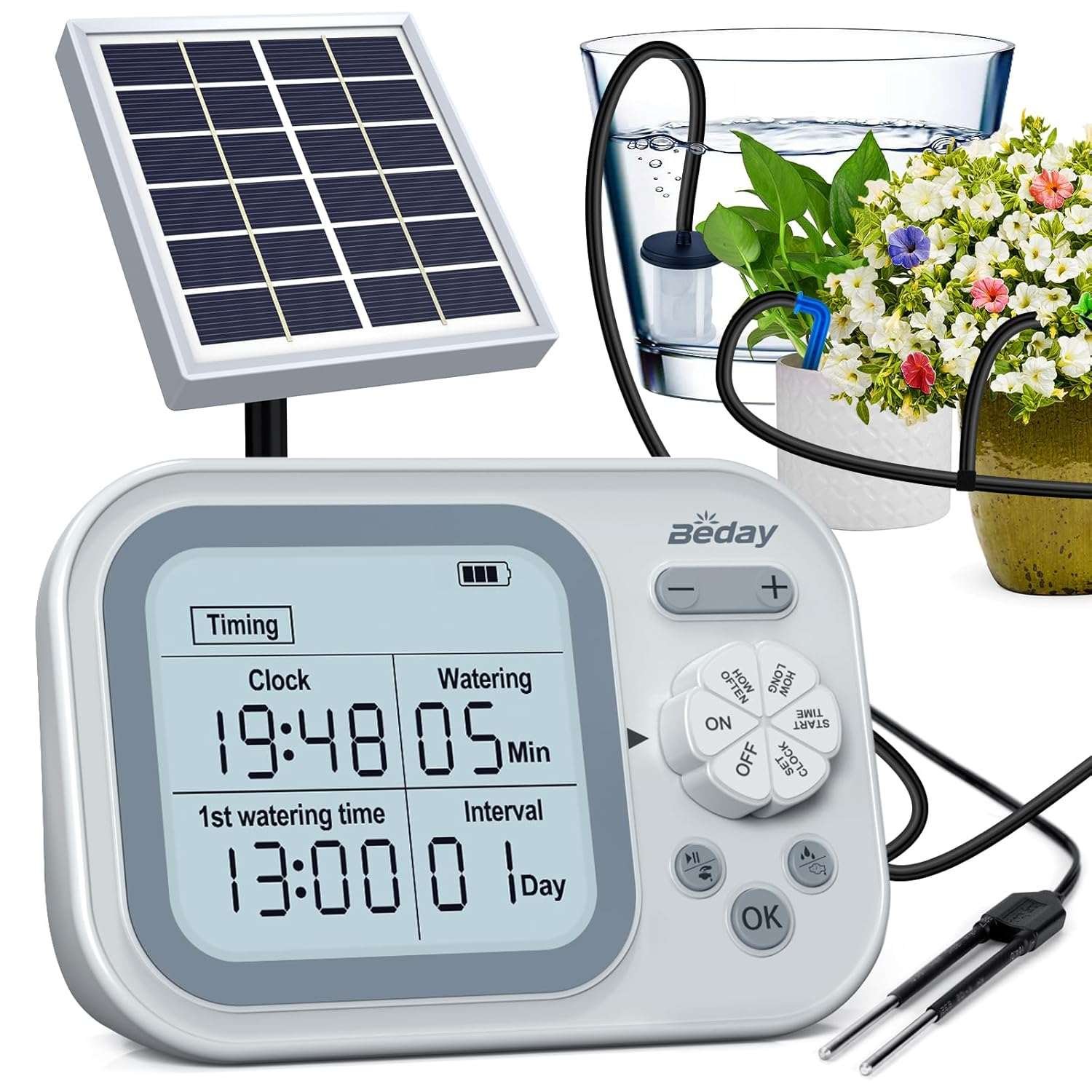
Power Source & Charging: Solar panel + built-in lithium battery; also supports USB charging for cloudy days or winter.
Watering Modes: Timer mode (scheduled watering), Soil-moisture (humidity) mode (automatic based on soil moisture sensor), and Manual mode (instant watering).
Coverage: Up to 15 potted plants, with 50 ft tubing, watering stakes/spikes, T-joints, filter, anti-siphon component.
Ease of Setup: DIY-friendly; no special tools or technical expertise required. The user manual + plug-and-play components let you set it up yourself for balcony, patio, or indoor/outdoor garden.
Water Efficiency: Delivers water directly to root zones, minimizing waste from runoff, evaporation, or overwatering.
Flexibility: Usable indoors or outdoors; works in winter or cloudy weather thanks to dual charging (solar + USB).
Maintenance: Basic — keep the water source filled, ensure anti-siphon part stays above water, occasional tube checks to avoid leaks or clogs.
In short — this is a compact, water-smart, low-effort watering system for small-scale gardening/houseplants that caters both to convenience and sustainability.
Pros & Cons of Beday Solar Automatic Drip Irrigation System
| Pros | Cons |
|---|---|
 Automatic watering — once set up, plants get water without daily attention Automatic watering — once set up, plants get water without daily attention |
 Limited capacity — 15 pots and 50 ft tubing may not suffice for larger gardens or many plants Limited capacity — 15 pots and 50 ft tubing may not suffice for larger gardens or many plants |
| Solar + USB dual power — works even on cloudy days or indoors |
Relies on initial water container — if water source runs dry, plants can dry out |
| Water-saving and precise watering, minimizes waste and overwatering |
Plastic parts — risk of UV wear, leaks or cracks over time if not handled carefully |
| Easy installation — DIY, no special tools needed |
For very water-demanding plants or large pots — may need frequent refills or extended tubing |
| Soil moisture sensor and timer modes — flexible, smart watering options |
Moisture sensor may need calibration or occasional accuracy checks |
| Suitable for indoor/outdoor use, balcony or small gardens — ideal for urban gardening |
Not suitable for lawns or large-scale agriculture — designed for small potted plant setups |
Why Solar Auto Drip Irrigation Matters?
Water is the most critical input for plants. Yet globally—and especially in arid/semi-arid regions—freshwater scarcity is a major challenge. Traditional watering methods (sprinklers, surface flooding, overhead watering) often waste a substantial portion of water due to evaporation, wind drift, runoff, or overwatering areas where plants don’t need water.
In contrast, drip irrigation — and by extension, drip-based automatic watering — delivers water directly to the root zone, ensuring that most of the water benefits the plant. This reduces waste significantly. Research on various drip systems shows water-use efficiency of about 90–95%, compared to much lower efficiency in sprinkler (≈ 65–75%) or surface irrigation systems.
Because water is applied slowly and precisely, soil absorbs it fully, reducing runoff and evaporation losses. This leads to deeper root development, better water retention, and less stress on plants. Over time, plant health and yields or growth quality tend to improve with consistent and correct watering.
For small landholders, urban gardeners, balcony-growers, or container plant enthusiasts, efficient water use is not just about convenience — it’s also about sustainability. One study from Pakistan showed that low-cost drip irrigation increased yields by more than 20% compared to furrow irrigation, while cutting irrigation costs nearly in half.
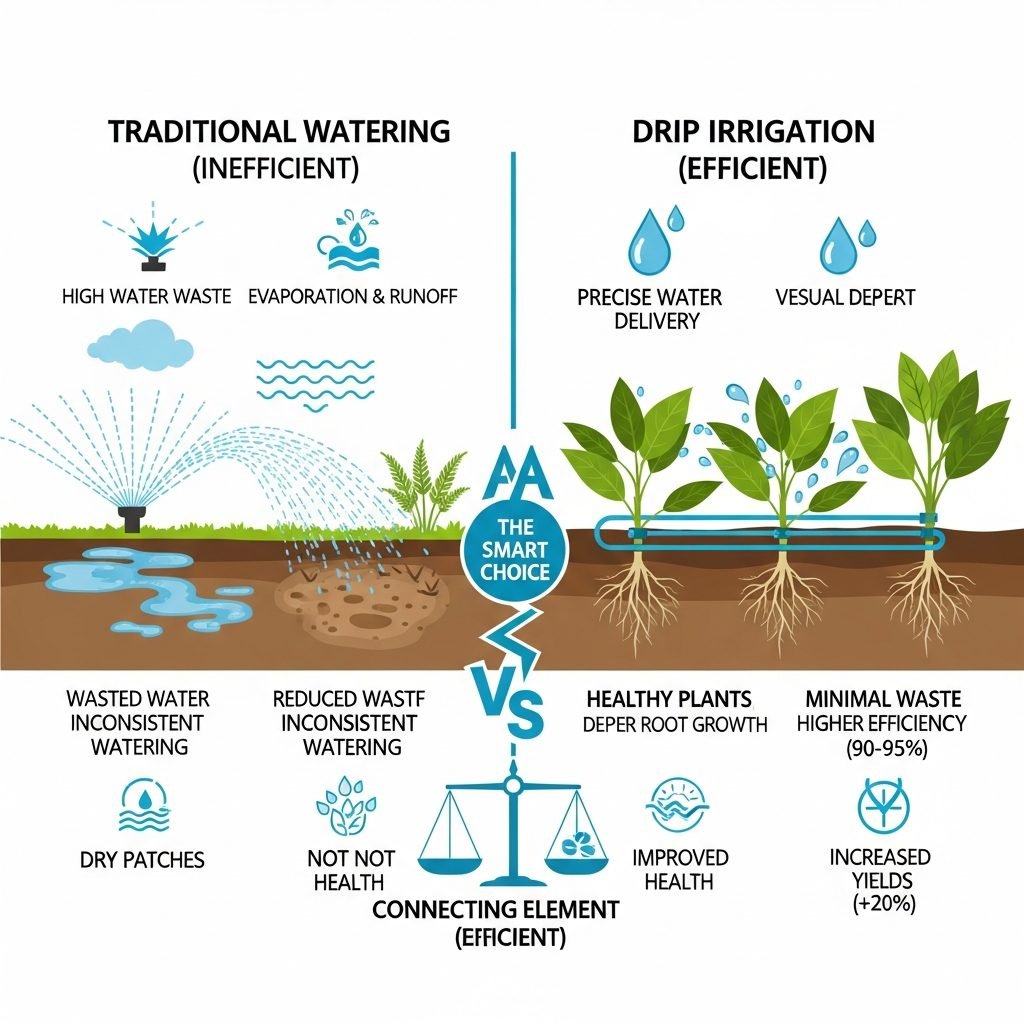
Moreover, by reducing water and fertilizer wastage (fertigation is more precise), drip systems help conserve resources, improve soil health, and reduce environmental impact. For houseplant growers or small-garden owners especially in water-scarce or drought-prone regions — such as many areas in Punjab — this kind of system can offer steady plant care with minimal resources and maximum efficiency.
Here are some data and research-backed numbers that illustrate why drip (or micro) irrigation — such as in a system like the Beday automatic drip device — is a smart choice: Drip irrigation systems can achieve 85–95% water-use efficiency, compared to 60–70% for surface irrigation and 65–75% for typical sprinkler systems.
When properly installed, drip systems can reduce water usage by 30–60% compared to traditional watering/sprinkler methods. In a field study in Pakistan, shifting from furrow to drip irrigation resulted in 50% cost saving for irrigation and 27–54% increase in net revenue for vegetable and fruit crops.
Water Use Efficiency (WUE) under drip irrigation in that study ranged from 3.91–13.30 kg produce per m³ water, compared to 1.28–4.89 kg/m³ under furrow irrigation — showing significantly better productivity per unit water used.
Drip systems also help reduce weed growth (because water is applied only where needed) and limit fertilizer leaching when fertigation is used — saving both water and nutrients.
My Experience with Beday Solar Auto Irrigation System
As someone with a passion for agriculture and gardening — and living in a region where water resources are precious — I decided to test the Beday solar automatic drip irrigation system with 10 of my potted plants on the balcony + 5 plants in window-side containers. Here’s how I set it up and how it went:
Setup: I placed a 20-liter water bucket near my balcony rail, connected the 50 ft tubing, inserted the watering spikes into each pot, and mounted the small solar panel on a sunny spot on the balcony. Setup took me about 25–30 minutes — no tools needed, just manual connections.
Configuration: I used the timer mode initially — set to water every morning at 6:00 AM for 15 minutes. Later I switched to soil-moisture mode (using the included sensor) for my flowering plants, so they get watered only when the topsoil becomes slightly dry.

Observation (first 4 weeks): I noticed that soil moisture remained fairly constant, and plants looked healthier compared to when I watered manually (which often resulted in irregular watering). Leaves were greener, growth seemed steadier. I didn’t observe overwatering or waterlogging.
Convenience: The biggest benefit — I didn’t have to remember to water. Even when I travelled for 5 days, plants remained healthy. No wilting, no dryness.
Water Use & Savings: Because water was delivered slowly and directly to pots, I had to refill the bucket only once every 4–5 days (for 10–15 small to medium pots). That’s far less water than I used when watering by hand, which often involved overwatering or some runoff.
So far (2 months of use), the system has shown consistent, reliable performance — solar powered, charged well during sunny hours; on occasional cloudy days I used USB charging to keep the system running. The automatic timer worked perfectly, and soil-moisture mode adjusted watering intelligently for plants with different demands.
Performance of Beday Solar Automatic Drip Irrigation System
Overall performance of the Beday system — from water delivery to reliability — was very good. More detailed observations:
a. Water Delivery: Each plant received slow, steady watering via drip stakes — ideal for root absorption. No water wasted on pot rims, paths, or non-planted areas.
b. Consistency: Watering happened at scheduled times (timer mode) or when soil was dry (moisture mode). This avoided the extremes of overwatering or underwatering.
c. Dependability: Even during moderately cloudy days, the built-in lithium battery held enough charge (especially with occasional USB charging) to run watering cycles.
d. Flexibility: I could customize watering frequency depending on plant type — e.g. succulents needed less frequent watering via moisture mode, while leafy flowering plants got regular timer-based watering.
e. Limitations Noted: For larger pots (big containers), the watering might be a little light if tube spacing is tight or flow rate is low. Also, the plastic tubing and spikes feel thin — while fine for balcony plants, for rough outdoor use or long-term heavy-duty use durability remains uncertain.
Practical Tips for Beday Solar Automatic Drip Irrigation System
Based on my experience and what I know about drip irrigation science, here are practical tips if you use such a system (especially in hot, sunny, or water-limited climates):
i. Use a bucket or water container with a lid to minimize evaporation of stored water (especially in hot sun).
ii. Place your solar panel where it gets maximum sunlight — morning to early afternoon — to ensure battery remains charged.
iii. For mixed plant types: group plants with similar watering needs together, or use tubes with adjustable emitter flow rates (if available).
iv. Use soil-moisture mode for drought-tolerant or moisture-sensitive plants (like succulents, herbs) so you don’t overwater.
v. Check tubing and spikes occasionally for leaks, clogs, or UV damage — especially if system is outdoors and exposed to sun — small leaks or blockages can compromise water distribution.
vi. Keep water container filled — automatic systems rely on a stable water source; if it dries, plants risk drought. Consider a large water reservoir if you plan to leave plants unattended (vacation, long trips).
vii. Combine drip irrigation with mulch or soil cover — this reduces evaporation from soil surface and further improves water retention, especially in hot weather. (For general garden mulch benefits see common gardener practices.)
Comparisons with Alternatives Drip Irrigation System
To better understand the value of this product, it helps to compare with common alternatives:
| Feature | Beday Solar Drip System | Generic Solar Waterer A | USB Auto Water Pump B | Mechanical Timer Drip Kit C | Traditional Manual Watering |
|---|---|---|---|---|---|
| Power Source | Solar + USB | Solar Only | USB Only | No Power Required | None |
| Watering Modes | Timer / Moisture / Manual | Timer Only | Timer Only | Manual Timer | Completely Manual |
| Water Efficiency | High (Targeted Drip) | Medium | Medium | Low–Medium | Low |
| Suitable For | Up to 15 Pots (Indoor/Outdoor) | 8–12 Pots | 4–10 Pots | Small Garden Beds | Any Plants (Requires Daily Effort) |
| Ease of Use | Very Easy | Medium | Easy | Requires Setup | Time-Consuming |
Final Recommendations
After two months of use, I can say with confidence: if you are a plant lover — whether you grow houseplants, balcony vegetables/herbs, small garden vegetables or ornamentals — the Beday Solar Automatic Drip Irrigation System is a very worthy investment. It provides:
- Consistent, efficient watering without daily effort
- Major water savings (via precise root-level drip delivery) — good for water-scarce climates
- Flexibility (timer mode / soil-moisture mode / manual mode) to adapt to different plant types
- Low maintenance and easy DIY installation
- Great convenience especially if you travel or are busy
That said, it’s best suited for small to medium-scale gardens or container/houseplant setups. If you have a large farm, open field, or lawn, you’d need a much more robust irrigation system. Also, for large containers or water-thirsty plants, make sure your water reservoir is large enough or refill frequently.
In conclusion: If you want to keep 5–25 plants — be they potted flowers, herbs, veggies, or ornamental plants — and wish to reduce water waste while ensuring regular watering (especially if you often forget or are away), then go for it. For me, this system transformed my balcony gardening — I now enjoy healthy plants, water savings, and stress-free watering even on busy days or during travel.


