
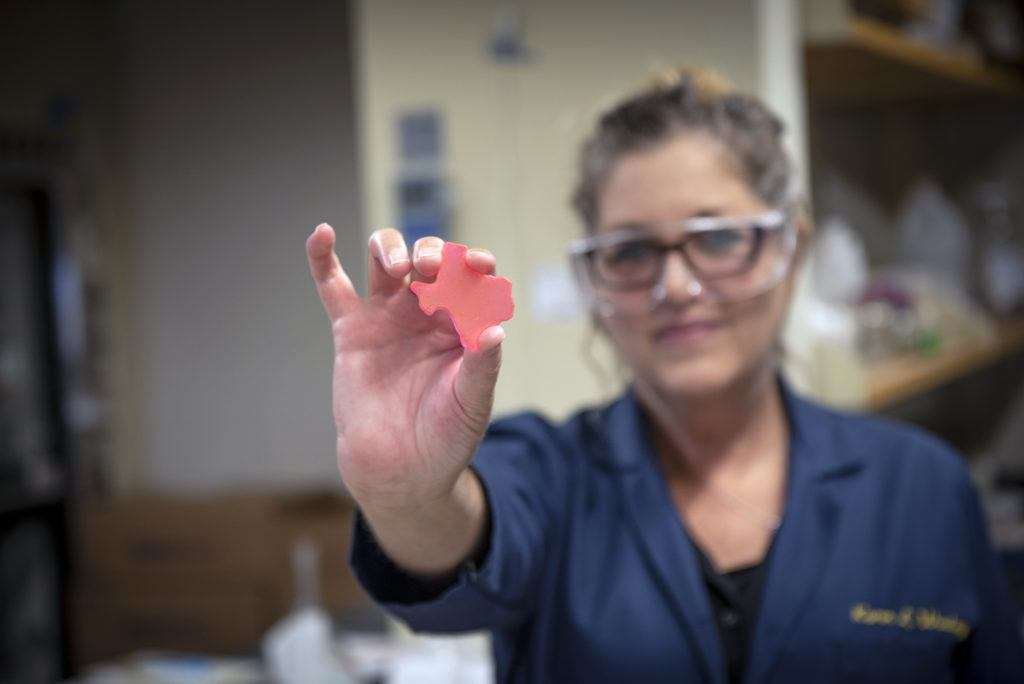
A major science prize has been awarded to the developers of chemistry to replace toxic, petroleum-derived plastics with safe, degradable alternatives made from agricultural waste
The 2026 Hill Prize in Physical Sciences – which recognises breakthrough research with strong societal and commercial impact – has been given to a joint venture between Teysha Technologies and Texas A&M University, specifically Dr Karen Wooley and Matthew Stone, along with team members Dr Senthil Kumar Boopathi and Dr Ashlee Jahnke.
Wooley and Stone were recognised for their patent-pending polymer chemistry, which converts plant-derived sugars and natural phenolic compounds into high-performance alternatives to bisphenol A (BPA). These materials are engineered to match or exceed the durability and functionality of conventional plastics, while safely degrading at end of life, eliminating long-term environmental and human health risks. By focusing on safe and sustainable replacements for BPA, an ca. $20B USD/yr chemical of concern that is utilized as a monomer building block across polymer materials types, there is opportunity for enormous environmental, health and economic impacts.
The Hill Prize is one of the world’s most competitive awards for early-stage scientific research with strong societal impact. It provides $500,000 in non-dilutive funding to accelerate the translation of breakthrough science into real-world applications, supporting projects at the critical point between laboratory validation and commercial deployment.
In this case the award directly supports the scale-up and commercialisation of this technology through Teysha Technologies, the materials company founded by Stone. Teysha’s KarmaCane biopolymer platform translates this chemistry into commercially viable materials already validated across packaging, cosmetics, 3D printing and durable goods.
Unlike many bio-based plastics, KarmaCane materials are compatible with existing manufacturing infrastructure and can be engineered as solids, liquids or water-based coatings. They are fully degradable into natural sugars and designed to be cost-competitive at scale, addressing one of the key barriers to widespread adoption of sustainable plastics.
KarmaCane has also undergone rigorous real-world performance validation. In 2025, materials produced by Teysha were manufactured into functional products and tested during a world-record Mount Everest expedition, withstanding temperatures below –40°C, extreme UV exposure and prolonged mechanical stress. This field testing demonstrated that sustainable polymers can meet the demands of extreme conditions without compromising performance.
“The Hill Prize recognises the urgency of moving beyond incremental improvements in plastics,” said Dr. Karen Wooley, Chief Technology Officer of Teysha Technologies and Distinguished Professor and W. T. Doherty-Welch Chair in Chemistry at Texas A&M University. “This funding allows us to accelerate the transition from university lab-scale innovation to materials that can be adopted by industry, without sacrificing performance or safety.”
Matthew Stone, CEO and Founder of Teysha Technologies, added: “This award validates the idea that sustainable materials must work within existing industrial systems. With the Hill Prize, we can scale KarmaCane faster and support partners who are actively looking to replace toxic plastics with practical, high-performance alternatives.”
The funding will support expanded production, process optimisation and equipment acquisition, strengthening Teysha’s manufacturing pathways in the US and Europe and accelerating engagement with global brand and manufacturing partners.
“As regulatory pressure mounts around hazardous chemicals and persistent plastics, the Hill Prize positions Teysha at a critical inflection point, helping bring next-generation polymer solutions to market at the pace industry now requires,” said an announcement from the group.


