
By Vanessa Hunt, ASA Director of Publications & Visuals
As trade policy and geopolitical dynamics continue to create economic uncertainty around the globe, a robust domestic biofuel market would provide much needed stability and market opportunities for U.S. soybean farmers.
Instead of continued imports of biofuel and biofuel feedstocks that leave our value chain vulnerable to supply chain manipulation, ASA is advocating for policy outcomes that strengthen domestic soy demand and support U.S. soybean farmers.
Biofuel is a broad term that includes biodiesel, renewable diesel and sustainable aviation fuel, as well as the smaller markets of soy-derived naphtha, liquified petroleum gas and home heating oil.
The domestic biofuel industry can play a critical role in national security and economic stability – and biofuel is produced right here on U.S. soil. Roughly half of all U.S.-processed soybean oil is used in biomass-based diesel, making biofuel one of the most significant domestic markets for soybeans.
The Current State of Biofuel
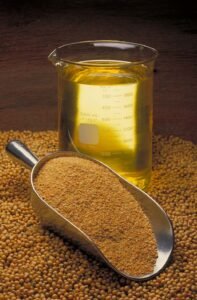 Biofuel encompasses a wide range of fuels, feedstocks and policy frameworks, but ASA is currently focused on two specific policy issues – the Section 45Z Clean Fuel Production Credit and the Renewable Fuel Standard (RFS) renewable volume obligations (RVOs). Clear guidance aligning with recently enacted amendments to the 45Z tax credit will help determine the economics of producing low-carbon fuels, while RVOs for 2026 and 2027 will establish the level of biofuel blending required under the RFS. Both directly affect soybean oil utilization, domestic crush expansion and market certainty for farmers. When U.S.-grown soybean oil is used in domestic biofuel production, it strengthens rural economies, reduces greenhouse gas emissions and lowers reliance on finite energy sources. How these policies are structured ultimately determines whether American clean fuel policy delivers its intended economic and environmental benefits to U.S. farmers and consumers alike.
45Z Tax Credit
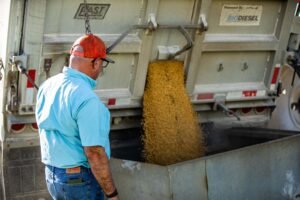 In July 2025, the 45Z tax credit was amended through the One Big Beautiful Bill Act (OBBBA) to enhance benefits to soy-based biofuel, but final guidance from the U.S. Department of the Treasury has yet to be completed. ASA is advocating for swift draft guidance from the Treasury Department to ensure timely implementation. The tax credit is important to soybean farmers because it incentivizes fuel producers to purchase soybean oil for biodiesel and renewable diesel.
To qualify for the 45Z tax credit, fuel producers must utilize feedstocks produced in North America. Finalization of 45Z is critical because it will boost domestic feedstock demand and support stronger soybean prices. The tax credit also protects domestically grown agricultural feedstocks and removes incentives for imported waste feedstocks, which have exponentially increased market share in U.S. biofuel production over the past five years.
“We led advocacy efforts and did so in coordination with other ag commodity groups and soybean processors as Congress was developing tax code changes in the OBBBA,” said Alexa Combelic, executive director of government affairs for ASA. “These advocacy efforts led to an incredible win for ASA in relation to the 45Z tax credits. We were able to remove the indirect land use change penalty on agricultural biofuel feedstocks, which effectively doubles the value of the tax credit for soy biofuel. In addition, we were able to address the surge of imported feedstocks entering our biofuel production value chain through new limitations on tax credit eligibility.”
Up until the week before the OBBBA was passed, Combelic said it wasn’t clear if the North American feedstock “ringfence” would be included in the final bill. Through significant grassroots stakeholder mobilization and advocacy leadership, ASA was able to ensure the tax credit would focus on biofuel feedstocks grown and produced in North America rather than overseas.
Additionally, through months of education on the impacts of agricultural indirect land use change (ILUC) penalties, ASA was able to double the 45Z credit rate for soy-based biofuel. The ILUC penalty was an arbitrary tax on U.S. farmers, and its removal means the carbon intensity of soy is based on its direct impacts and not tied to a calculation model that penalizes U.S. grown crops for farming behavior in South America.
This win was not only the product of the hard work of ASA Government Affairs, but also of the efforts by farmers who helped ensure lawmakers were hearing directly from their constituents about the importance of the tax credit amendments to the soybean industry. The 45Z credit was first established under the Inflation Reduction Act (IRA), which restructured biofuel tax credits based on carbon intensity and initially disadvantaged agricultural feedstocks. Through mechanisms like ILUC, the IRA policy created an incentive for imported waste feedstocks like tallow, primarily from Brazil, and used cooking oil, primarily from China. Now, the 45Z tax credit as updated by the OBBBA disincentivizes those imports by prioritizing feedstocks available at home through a North American ringfence of eligibility and by removing arbitrary credit reductions for agricultural products.
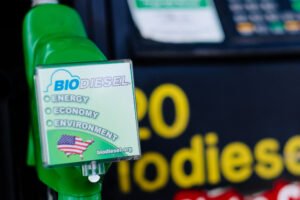 The next step to ensure utilization of 45Z is for the Treasury Department to develop tax guidance that outlines how biofuel producers can utilize this tax credit after the statutory changes enacted through OBBBA. At this time, ASA is continuing to engage with the Treasury Department and administration to highlight the sense of urgency. While interim or draft guidance is expected this winter, final guidance will only be published after a public comment period and agency review.
“We anticipate full final guidance by spring or summer,” Combelic said.
RVOs
The RVO rule for compliance years 2026 and 2027 as proposed by the Environmental Protection Agency (EPA) will lead to an increase in blending volumes for biomass-based diesel – a policy that supports soybean farmers, soybean processors and biofuel producers. Released by EPA in June 2025, this was the strongest proposed RVO rule ever published. It was the direct result of continued advocacy with this administration.
“The previous Trump administration was not the biggest advocate for biofuel, so we were thrilled to see this change in tune,” Combelic said. It shows a clear focus on wanting to be a partner as we seek to increase domestic markets for soybean oil. Based on the two-year draft rule, if finalized, the biofuel value chain would absorb 10% of the average soybean sales to China in the first year and 20% of soybean sales to China in the second year.
The current RVOs, released under the Biden Administration EPA in 2023, underestimated industry capacity, weakening demand for soybean oil. The 2023-2025 RVOs did not reflect the expansion of the biofuel value chain – production and soybean crush. At that time, ASA was disappointed that blending volumes were not higher. The 2026 volumes versus the 2025 volumes shows an increase of over 2 billion gallons. This is a historic increase in volume requirements for biomass-based diesel. ASA applauded the proposal but continues to push for higher volume targets going forward in order to stabilize the market and secure long-term growth.
2025 marked the 20th anniversary of the RFS, and the EPA proposal in June marked a perfect reason for ASA to celebrate the program. The RFS program was enacted in 2005 through the passage of the Energy Policy Act and has been improved over the years, resulting in a new era that puts farmers first and strengthens the domestic biofuel industry. When President Trump began his term, he signed an Executive Order that created policy in support of American energy dominance. Domestic biofuel production fits right into that idea as from soil to final fuel production, it can be produced exclusively within the United States.
While soybean farmers have struggled to maintain biofuel feedstock market share amid the rapidly surging flood of cheap, foreign feedstocks, the proposed 2026-2027 RVO rule addresses concerns of fraudulent used cooking oil coming into the United States through a novel proposal to reduce Renewable Identification Number (RIN) credit values by 50% for imported biofuel and biofuel made from imported feedstocks. It encourages domestic biofuel production, strengthening domestic soybean markets and making domestic feedstocks more competitive. The 50% RIN credit reduction proposed by EPA is yet another opportunity to continue disincentivizing foreign feedstocks from being imported into the U.S.
A Bipartisan Issue
Because domestic biofuel creates a market for farmers and provides a boon for rural communities, lawmakers on both sides of the aisle support biofuel policies which increase domestic production, making it a true bipartisan issue. Domestic biofuel production creates jobs, opens a market for soybean farmers and bolsters the use of a product planted, harvested, created and consumed all within the United States. Biofuel policy is a flexible issue that supports the values of both political parties – a win-win for all.
ASA saw additional success on Capitol Hill last year as there was a strong coalition of advocates who helped them see bipartisan caucus support using agriculture feedstocks. When the 45Z Clean Fuel Production Credit was first released, the North American ringfence was only included in the House of Representatives, with the Senate later striking the measure. However, through ASA’s targeted and continued engagement, an ad hoc coalition of biofuel producers, soybean processors and farmers from a variety of commodities advocated for the ringfence to be reinstated, and it was restored in an updated version of the text released by the Senate the week of passage, ensuring eligible feedstocks will be permanently limited to North American origin points for the life of the 45Z tax credit.
The Future of Biofuel
 Looking to the future of biofuel, ASA is calling for the completion of EPA’s proposed 2026-2027 Renewable Fuel Standard renewable volume obligations and issuing timely Treasury guidance for the revised 45Z Clean Fuel Production Credit to reflect enacted changes that prioritize domestic agricultural feedstocks. On Nov. 12, 2025, ASA and the National Oilseed Processors Association (NOPA) sent a letter to President Trump urging swift finalization of these key federal biofuel policies which are critical to strengthen domestic demand and support farmers who are facing continued market pressure.
As ASA continues to advocate for the good of the soy community, the Association is continuously engaging with USDA, EPA, Treasury, the U.S. Trade Representative and additional senior staff at the White House. Biofuel policy is an issue that spans beyond one agency. It takes a team effort to make a difference, and ASA is focused on coalition building, legislative education and advocacy at the highest level of government.
The post Biofuel: Staying Competitive appeared first on American Soybean Association.


