

BMW’s first production hydrogen fuel-cell electric vehicle is targeting up to 750km range, a sub-five-second 0-100km/h sprint and sub-five-minute refuelling, but the German brand has confirmed there are currently no plans to bring it to Australia.
The BMW iX5 Hydrogen is progressing through vehicle testing and manufacturing preparations ahead of a planned 2028 production start.
It will complete a global five-powertrain line-up for the new-generation X5, joining battery-electric, plug-in hybrid, petrol and diesel versions.
READ MORE: 2026 BMW iX3 50 xDrive Review: Our first Australian test proves the hype is real! The all-new iX3 EV is a great drive with a huge real-world range.
READ MORE: New BMW X5 revealed: The fifth-generation luxury SUV will include an iX5 EV for the first time
READ MORE: BMW M3 EV revealed! Stunning wide-hipped concept previews 750kW production Neue Klasse electric weapon
Australia will take the other four powertrain types, with BMW’s local operation pointing to the ownership experience and supporting infrastructure as the reasons hydrogen remains outside its plans.
“BMW’s approach is always driven by the customer ownership experience. While the BMW iX5 Hydrogen has been confirmed globally for series production, there are currently no plans for Australia,” BMW Australia said.
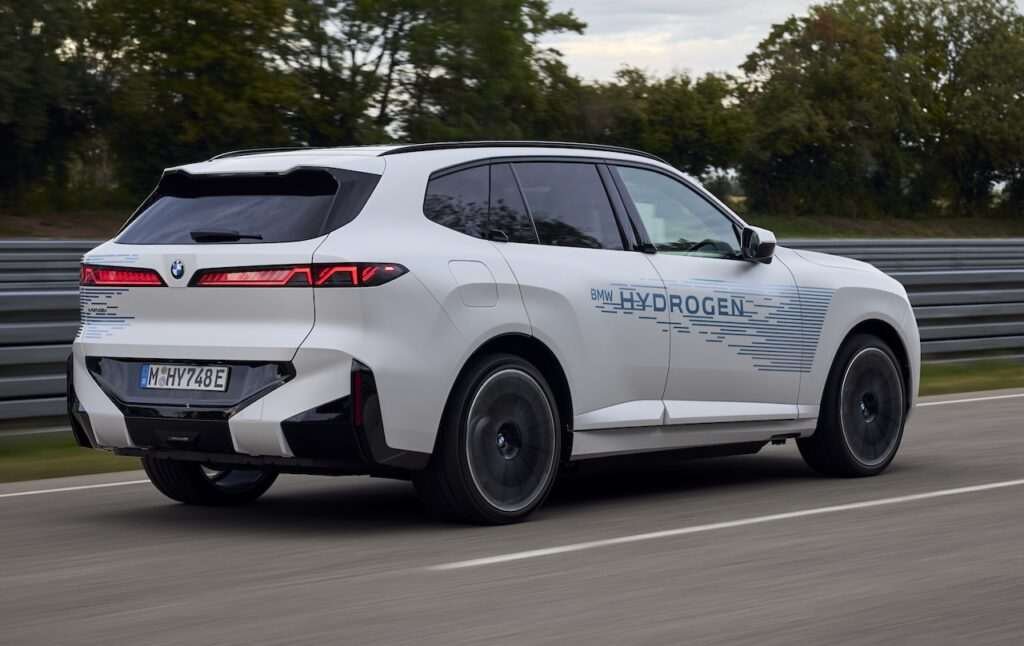
“For any new technology to be successful, customers need confidence that the supporting ecosystem, including refuelling infrastructure and service support, is in place.
“At present our focus for the new X5 for the Australian market will comprise the combustion engine (petrol and diesel), plug-in hybrid and fully electric models.
“The combustion engine variants will go on sale this quarter followed by the electric and plug-in variants in H1 2027.”
The new diesel X5 40d xDrive is priced from $143,900 before on-road costs, while the petrol X5 40 xDrive starts at $145,900. Both feature six-cylinder engines and 48-volt mild-hybrid technology.
The battery-electric iX5 60 and plug-in hybrid X5 50e will broaden the Australian range next year.
For the hydrogen version, BMW’s latest development work centres on the interaction between its fuel-cell system, electric motor, high-voltage battery, hydrogen tanks and control electronics.
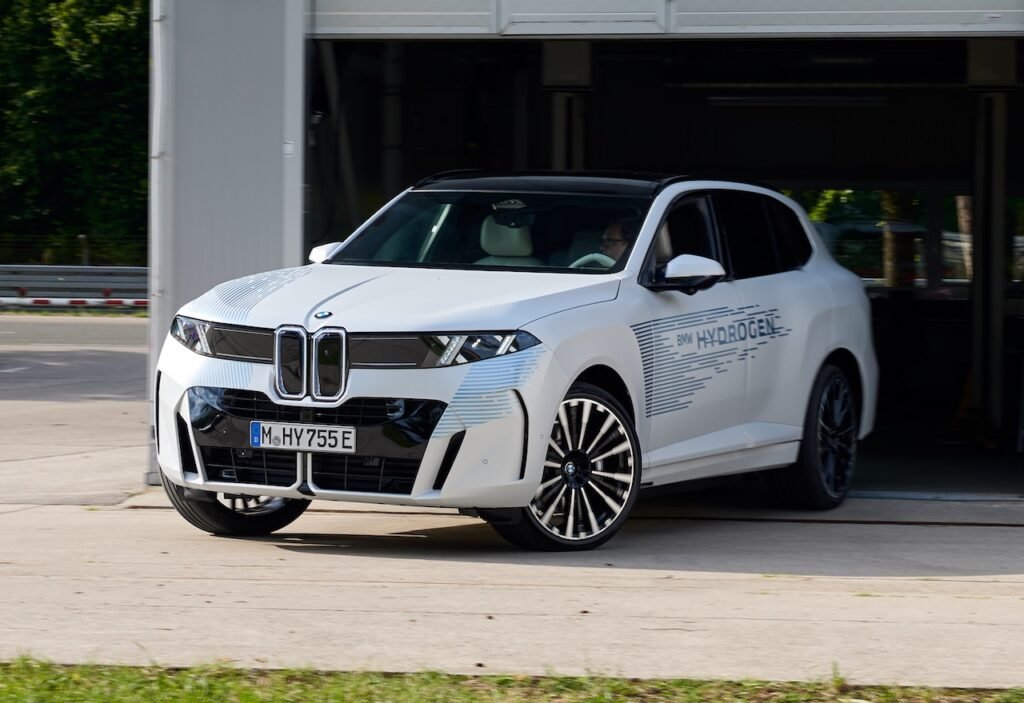
Engineers are testing the integrated system under demanding environmental conditions and high loads, while also developing its efficiency and driving dynamics.
BMW is targeting a 0-100km/h time of less than five seconds, with performance intended to be on a par with the battery-electric iX5.
The claimed range of up to 750km on the WLTP cycle and refuelling time of less than five minutes also remain development targets. BMW says binding WLTP consumption figures are not yet available for the prototype.
The iX5 Hydrogen uses a third-generation fuel-cell system co-developed with Toyota.
Rather than burning hydrogen in a combustion engine, it combines hydrogen from its tanks with oxygen from the surrounding air in an electrochemical reaction that generates electricity for the electric drive system.
A high-voltage battery works alongside the fuel cell, while BMW’s Energy Master control unit manages the high-voltage system. BMW says the battery and electronics allow greater energy recovery under deceleration, improving overall efficiency.
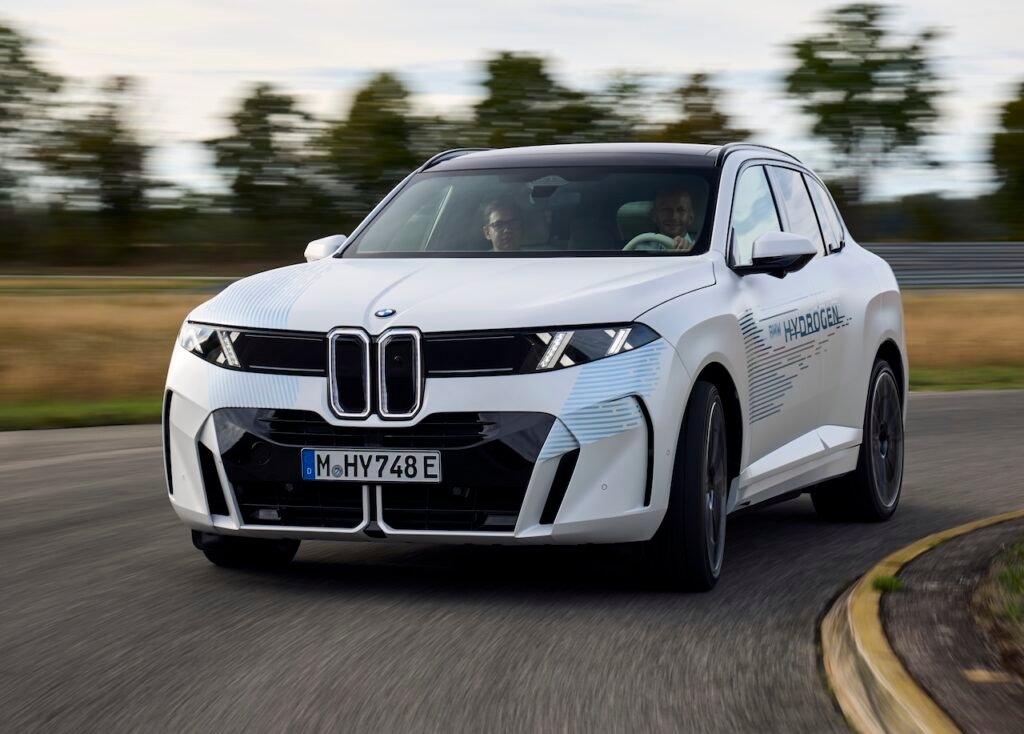
Power and torque figures for the production model have not been announced in the latest update.
A significant change from BMW’s earlier hydrogen prototypes is the new Hydrogen Flat Storage system.
Previously detailed by BMW, it comprises seven interconnected carbon-fibre composite tanks housed in a metal frame, storing around seven kilograms of hydrogen at 700 bar.
The flat arrangement occupies the installation space used by the battery-electric model’s high-voltage battery, preserving cabin space and allowing the hydrogen version to share a production line with other X5 powertrains.
Sharing components, packaging and manufacturing processes is central to BMW’s efforts to reduce the cost of fuel-cell vehicles. www.bmwgroup.com
Alongside vehicle testing, BMW is beginning another prototype assembly phase for the fuel-cell system at its Hydrogen Competence Centre in Munich.
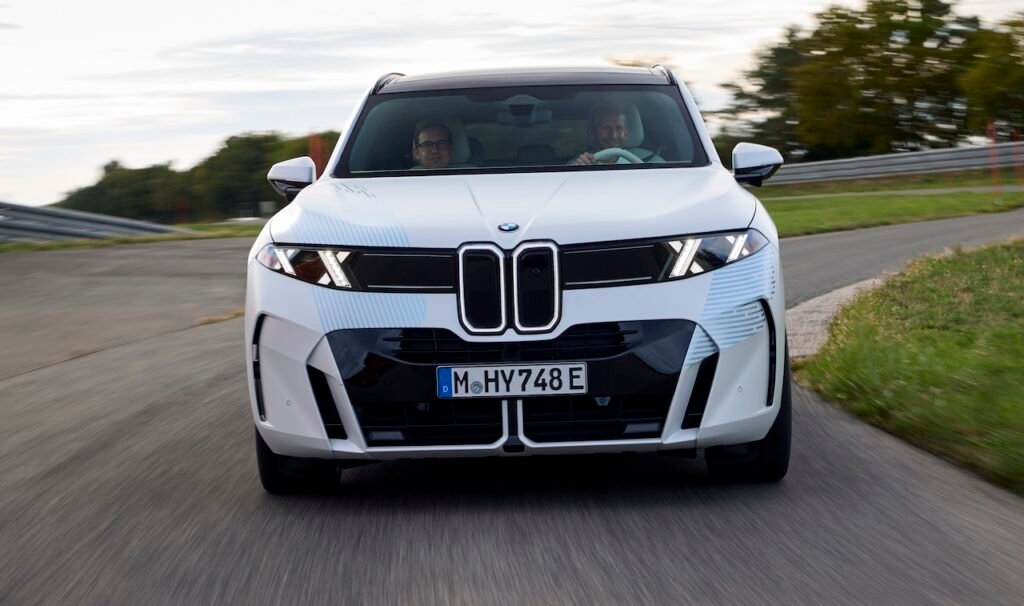
The earlier phase concentrated on component manufacturing feasibility and initial supplier qualification. The next stage focuses on validating testing methods and preparing manufacturing processes for series production.
BMW’s Steyr engine plant in Austria will produce the fuel-cell systems. Initial test benches and manufacturing equipment have already been installed, with staff training underway.
Additional system components are being manufactured at BMW’s Landshut facility in Germany.
The production program represents a substantial step beyond the two previous-generation iX5 Hydrogen prototypes BMW brought to Australia in 2024 for testing and demonstration duties.
Those vehicles were part of a global pilot fleet of almost 100 examples. When EV Central’s Bruce Newton drove one at the Lang Lang proving ground in Victoria, BMW was still considering whether to approve a production fuel-cell vehicle. www.carsales.com.au
The X5 has since been selected and production scheduled for 2028. But while BMW continues to develop hydrogen as an alternative electric powertrain globally, its Australian X5 expansion will focus on battery-electric and plug-in hybrid models.
The post BMW’s fuel cell iX5 aims for 750km range, sub-five-second 0-100km/h and sub-five-minute refuelling appeared first on EV Central.


