
Transformative change begins when knowledge is co-produced, trusted, and translated into action.
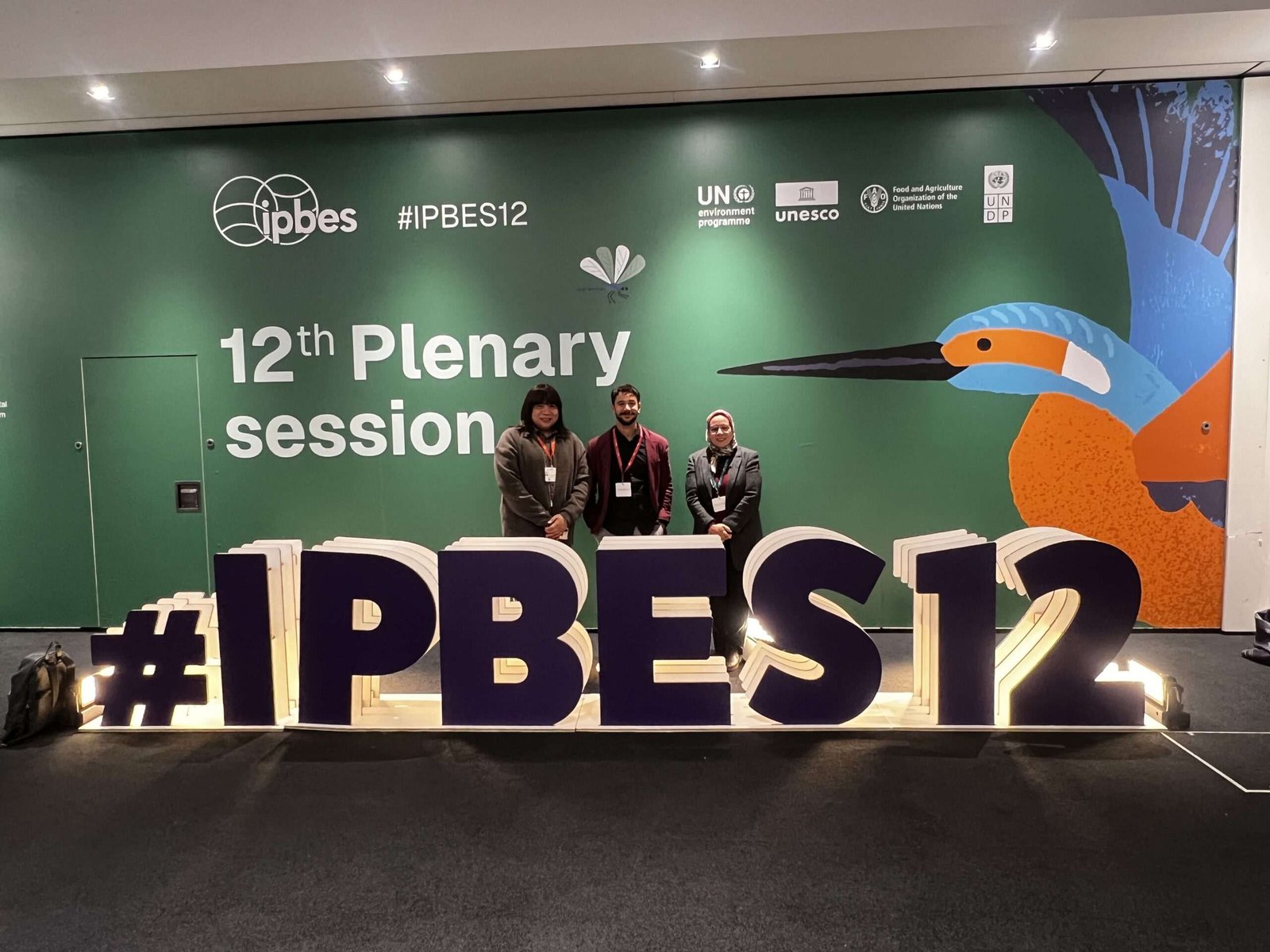
The twelfth plenary of the Intergovernmental Science-Policy Platform on Biodiversity and Ecosystem Services (IPBES-12) marked a critical moment for the global sustainability community. Bringing together governments, scientists, Indigenous Peoples and local communities, and stakeholders from around the world, the meeting demonstrated how knowledge is negotiated, validated, and translated into decisions that shape our collective future. As participants supported by Future Earth, we, Gibran Oliveira and Dalton Baltazar, had the opportunity to observe this process from within. What we witnessed was not only the approval of a major assessment, but a living example of the science-policy interface in action: complex, collaborative, and essential for achieving transformative change for nature and people.
Why IPBES-12 matters for transformative change
IPBES-12 demonstrated how science, policy, and Indigenous and local knowledge can come together to shape global decisions on biodiversity and ecosystem services. For Gibran, the Business and Biodiversity Assessment highlighted that transformative change requires more than technical solutions. It depends on inclusive governance and meaningful participation from Indigenous Peoples and local communities. By integrating diverse knowledge systems into the Summary for Policymakers and the Key Messages, the plenary strengthened the legitimacy and relevance of biodiversity policy across regions.
For Dalton, another important lesson was the central role of collective action. Transformative change rarely begins within a single institution or discipline. It emerges when different actors work towards shared goals. Bringing together governments, researchers, practitioners, and communities increases the likelihood that biodiversity commitments translate into long-term societal change. IPBES-12 showed that this momentum is possible when dialogue remains open and evidence remains central to decision-making.
Inside the science-policy interface
One of the most insightful aspects of the plenary was observing how scientific evidence was negotiated line by line with policymakers and national delegations. For Gibran, discussions around the Business and Biodiversity Assessment illustrated the complexity of translating research into language that is scientifically robust yet politically meaningful. This process showed that the science–policy interface is not only technical. It is relational. It depends on dialogue, trust, and representation across knowledge systems.
For Dalton, it was equally striking to see how participants approached disagreement. Delegations often brought different priorities and interpretations of evidence, yet there was a clear willingness to listen and move forward together. These exchanges demonstrated that progress does not require consensus on every detail. It requires commitment to shared objectives and respect for different perspectives. Watching this process unfold offered a practical example of how global environmental governance operates in real time.

What we learned for our research and practice
Several moments during the plenary stood out as especially meaningful. For Gibran, one of the most impactful experiences was contributing, alongside the International Indigenous Forum on Biodiversity and Ecosystem Services and the Brazilian delegation, to the inclusion of references to Indigenous Peoples and local communities in the Key Messages on Business and Biodiversity. This experience demonstrated how collective advocacy can reshape global narratives and strengthen the visibility of historically marginalized voices in international biodiversity policy. It reinforced the importance of justice and representation in sustainability research.
For Dalton, stakeholder day and the regional consultations created valuable opportunities to connect with researchers, practitioners, and organizations working across different contexts. Representing both Future Earth and Fera Science in the United Kingdom also opened opportunities to engage with discussions in Asia and Europe. These exchanges highlighted how biodiversity challenges are shared across regions, yet shaped by local governance priorities. They also emphasized the value of global research networks in supporting collaboration beyond single projects or institutions.
Looking ahead, these experiences will shape our future work in several ways. They strengthen our commitment to linking scientific knowledge with Indigenous knowledge systems and policy action. They also encourage us to develop collaborative research on biodiversity governance, nature-based policies, and interdisciplinary monitoring approaches that support national and international decision-making. In particular, Dalton aims to build partnerships with organizations and networks encountered during IPBES-12 to advance work on biodiversity governance and nature-based policy implementation across regions.
From knowledge to action: what comes next
A clear priority emerging from IPBES-12 is the need to create permanent and meaningful spaces for Indigenous Peoples and local communities within science-policy platforms. For Gibran, participation should move beyond consultation towards co-production of knowledge and shared decision-making. Strengthening links between global assessments and national implementation will also be essential if biodiversity commitments are to deliver measurable outcomes.
For Dalton, another priority is behavior change across societies. Transformative change depends not only on policy frameworks but also on shared values. Information campaigns, inclusive dialogue, and education can help build common understanding of biodiversity loss and intergenerational responsibility. When societies recognize the importance of nature for wellbeing and resilience, support for long-term policy action becomes stronger and more sustained.
For the global sustainability research community, IPBES-12 reinforced the importance of collaboration across disciplines, sectors, and regions. Networks such as Future Earth play a critical role in connecting knowledge producers with decision-makers and communities. The challenge now is to maintain this momentum and ensure that the insights generated through IPBES continue to inform practice on the ground.


